

Affiliate Disclosure: I earn commissions if you shop through the links below at no additional cost to you.
Last Updated on February 14, 2026 by Jeremy
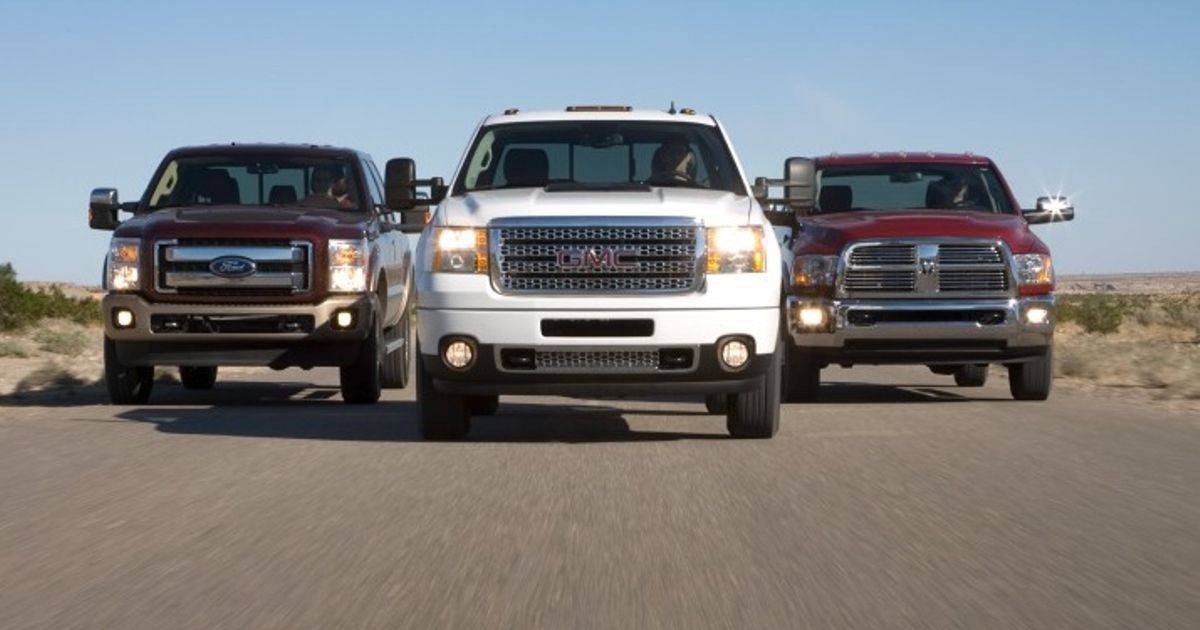
Chevy vs Ford vs Ram. Everybody has a “winner,” and most of those opinions were formed in a parking lot with a coffee in one hand and zero trailer behind them.
I’ve owned an ’84 GMC ½-ton 4×4. I towed with a 3.5L EcoBoost F-150 (and yes, I miss trailer assist). I currently run a Ram 1500 Classic 5.7 Hemi that’s hauled our trailer through Central America. And my dad drives a 3500 dually with a fifth wheel — I’ve driven that setup too.
So this isn’t a badge-war article. It’s a towing reality check that’s actually useful for RVers.
TL;DR
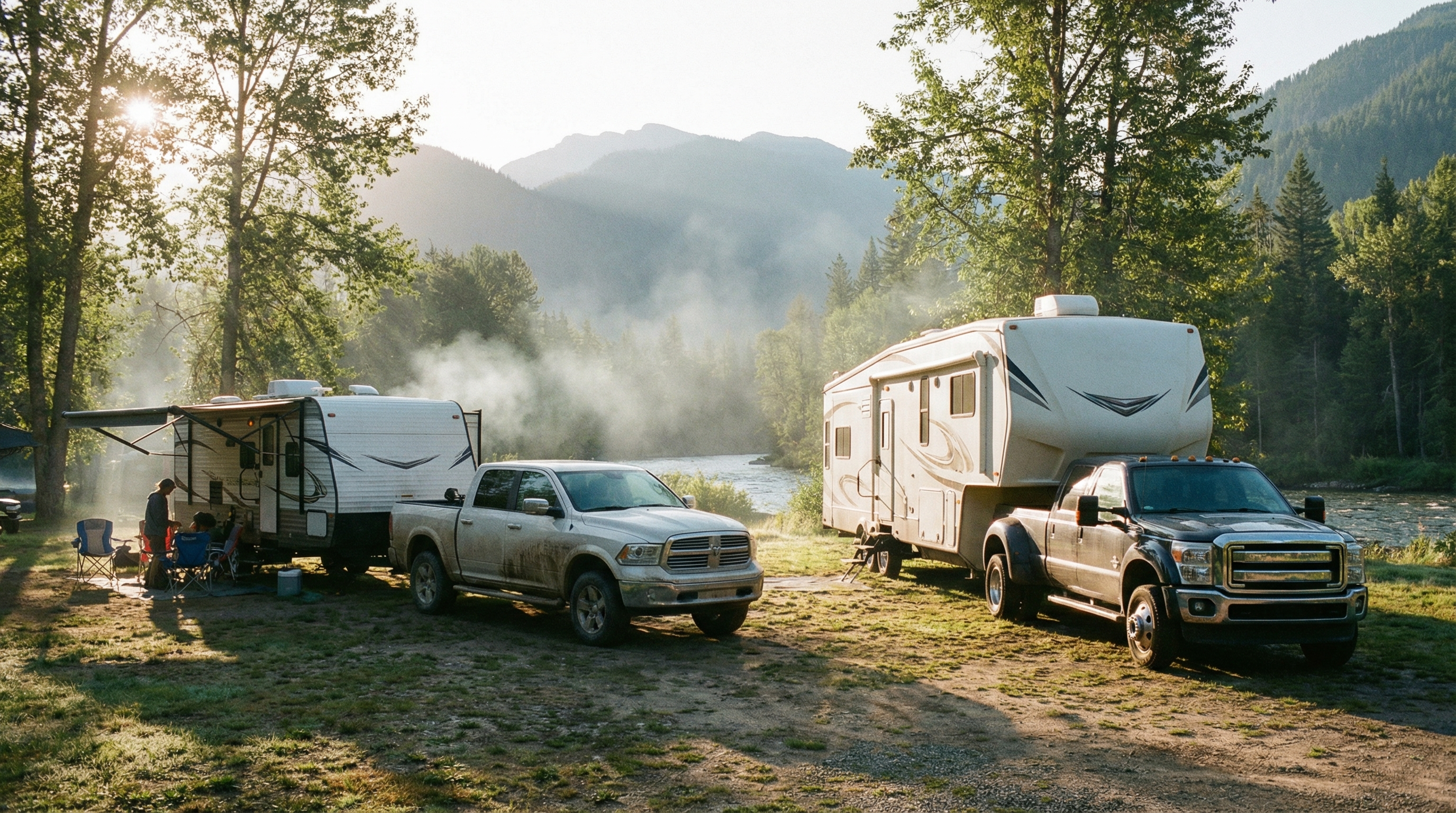
If you’re towing a properly matched travel trailer, a well-equipped half-ton can be the sweet spot. If you’re towing a fifth wheel with real pin weight, you’re usually in 2500/3500 territory. Payload is what sneaks up and ruins “tow rating confidence.”
First, the definitions that keep people out of trouble
Before we get into brands, here are the numbers that actually matter:
GVWR / GAWR
GVWR is the maximum loaded weight of the truck. GAWR is the maximum weight each axle is rated to carry. If your rear axle is overloaded, it doesn’t matter what your tow rating is. (This is literally how the terms are defined.)
External reference: NHTSA definitions — GAWR & GVWR (source)
Payload vs Tow Rating
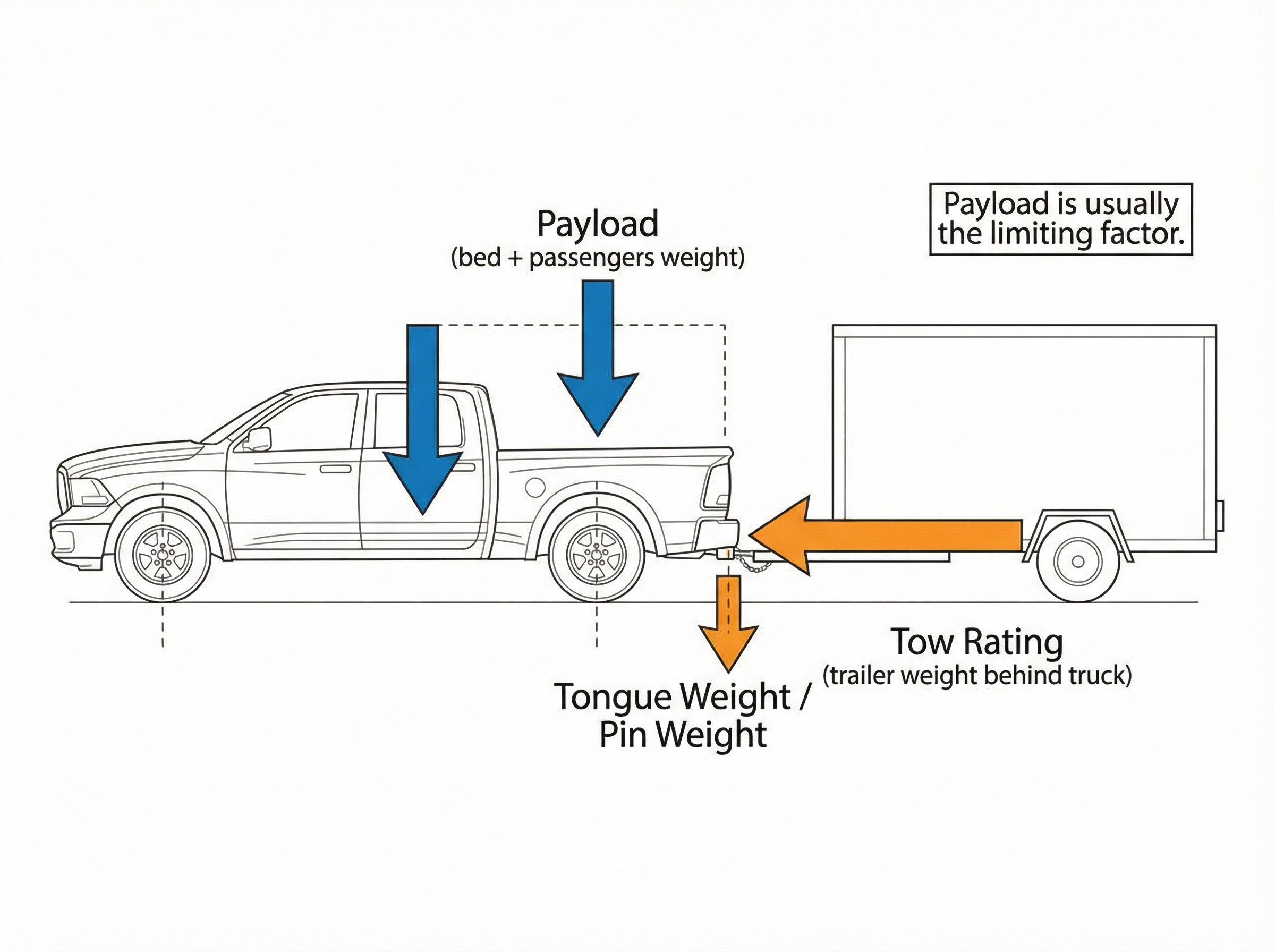
Payload = how much weight the truck can carry (people, gear, hitch, tongue/pin weight). Tow rating = how much it can pull. Most RV towing problems happen because payload gets exceeded first.
External reference: Kelley Blue Book payload guide (source)
The quick mental model
Travel trailer tongue weight is often around 10–15% of the trailer’s loaded weight. Fifth wheel pin weight is commonly higher. Your family, cooler, generator, dogs, tools, and “just in case” bins all live in payload land.
External reference (general towing framework): KBB towing capacity guide (source)
Half-ton vs 2500 vs 3500: what actually changes
Here’s the honest breakdown, without the brochure perfume:
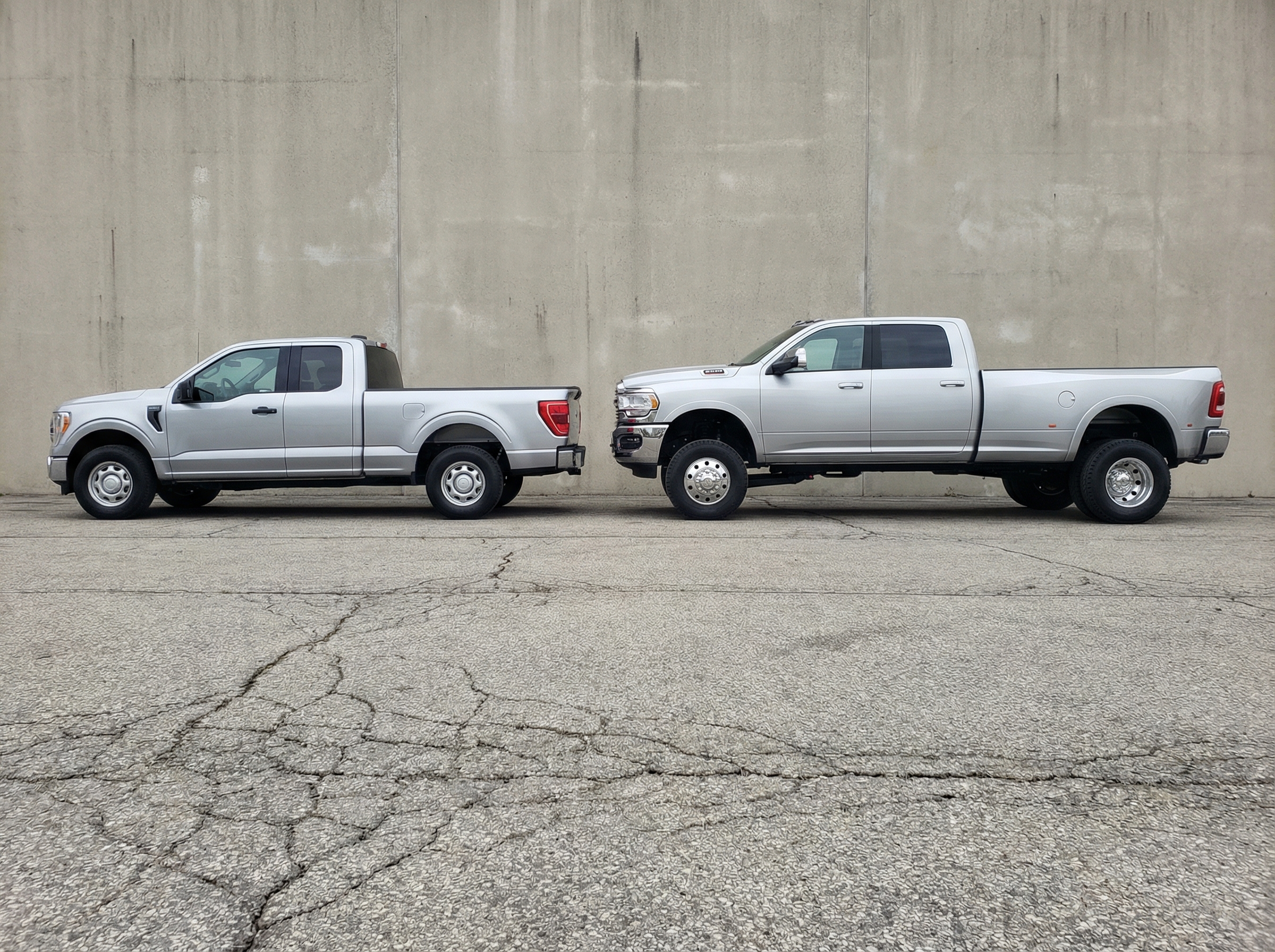
- Half-ton (1500 / F-150 / 1500 Classic): best mix of daily driving + moderate towing when you stay inside payload.
- 2500 / F-250 / 2500HD: stronger frame/axles/suspension; a “comfort sacrifice” for real towing stability and payload.
- 3500 / F-350 / 3500HD: where fifth wheels start feeling normal instead of “white knuckle.” Dually adds stability and payload headroom.
Note: exact payload varies wildly by cab/bed/trim/engine/options. Always confirm on the door jamb sticker for the specific truck.
The payload math (with two real-world examples)
I’m not going to throw a pile of fake “exact” numbers at you. But I will show you how people accidentally over-truck themselves.
Example A: Travel trailer (half-ton territory if spec’d correctly)
- Trailer loaded: 8,000 lbs
- Tongue weight at 12%: 960 lbs
- Family + stuff in cab/bed: ~600 lbs
- Weight-distribution hitch hardware: ~75–100 lbs
You’re easily at ~1,600+ lbs of payload used before you even count firewood, bikes, or the “one extra tote.” This is why some half-tons feel amazing until they don’t.
Example B: Fifth wheel (HD territory fast)
- Fifth wheel loaded: 14,000 lbs
- Pin weight at 20–25%: 2,800–3,500 lbs
That pin weight alone can exceed many half-ton payload ratings. This is where 2500/3500 trucks stop being “nice to have” and start being the correct tool.
If you want to run your exact numbers (and avoid guessing), use the tools: RV Towing Calculator RV Weight Balance Tool
Gas vs diesel: what it feels like when you’re actually towing
Here’s the part most “truck comparison” posts miss: towing isn’t just “can it move.” It’s how it behaves for hours, in wind, on grades, while you’re tired.
3.5L EcoBoost (my F-150)
- Turbo torque hits early, which feels strong pulling away and climbing.
- Paired with modern transmissions, it stays in the power band well.
- Trailer Assist is a legit advantage when backing up. Ford explains it here: Pro Trailer Backup Assist.
5.7 Hemi (my Ram 1500 Classic)
- Power delivery is predictable and linear.
- Feels “workhorse” under load, especially on long rolling highway.
- It pulled our setup through Central America. If you want the route + realities, it’s here: Canada to Costa Rica.
Diesel (HD world)
Diesel shines when you’re heavy, long, and consistent: more low-end torque, better sustained pulling, and stronger engine-braking behavior on grades. It’s not mandatory for everyone, but it’s hard to argue with when you’re living in fifth-wheel territory.
Why dually trucks feel calmer with fifth wheels
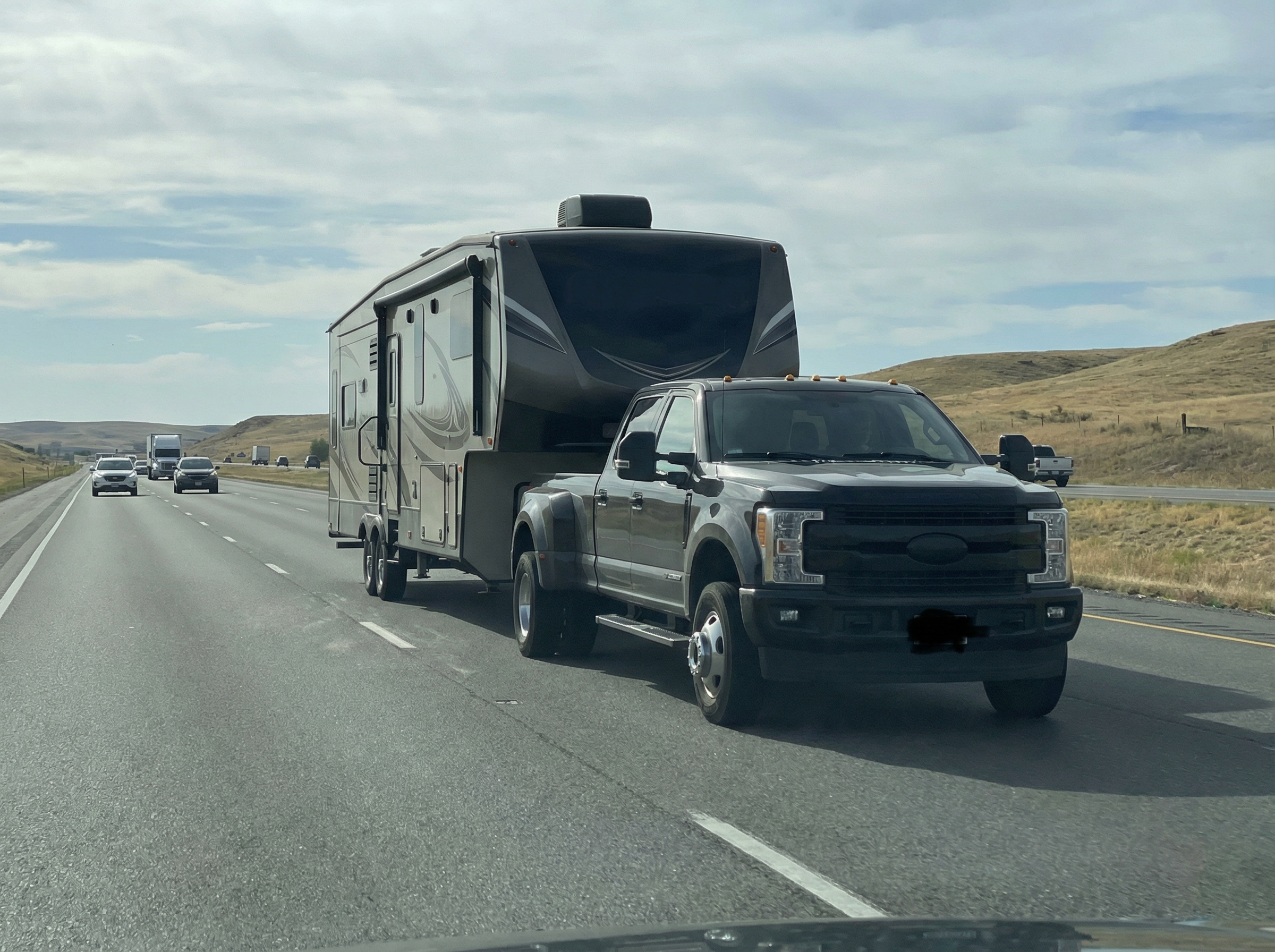
When I drive my dad’s 3500 dually with a fifth wheel, the word I’d use is calm.
- Wider rear stance reduces sway and side-to-side “push” from wind and passing semis.
- More rear tire contact patch = better stability under pin weight.
- Higher payload headroom means you’re less likely to be right on the edge of ratings.
It doesn’t mean a dually is always the answer. It means: if your trailer is heavy enough, it becomes the right answer.
Chevy vs Ford vs Ram: a practical “who it fits” guide
Instead of declaring a winner, here’s a cleaner way to think about it.
Ford tends to fit you if…
- You value towing tech and driver assists.
- You want a big ecosystem of towing guides and specs you can actually find.
- You like tools like Trailer Backup Assist and towing packages that feel “engineered.”
External reference: Ford towing guides commonly reference SAE J2807 testing (example guide)
Ram tends to fit you if…
- You want comfort in the half-ton class without giving up towing confidence.
- You like the feel of a naturally aspirated V8 (Hemi) under load.
- You’re realistic about matching trailer weight instead of chasing max tow numbers.
Chevy/GMC tends to fit you if…
- You want a straightforward work-truck approach and strong HD platforms.
- You prioritize simplicity, parts availability, and “get it done” towing setups.
Use this “weight band” cheat sheet
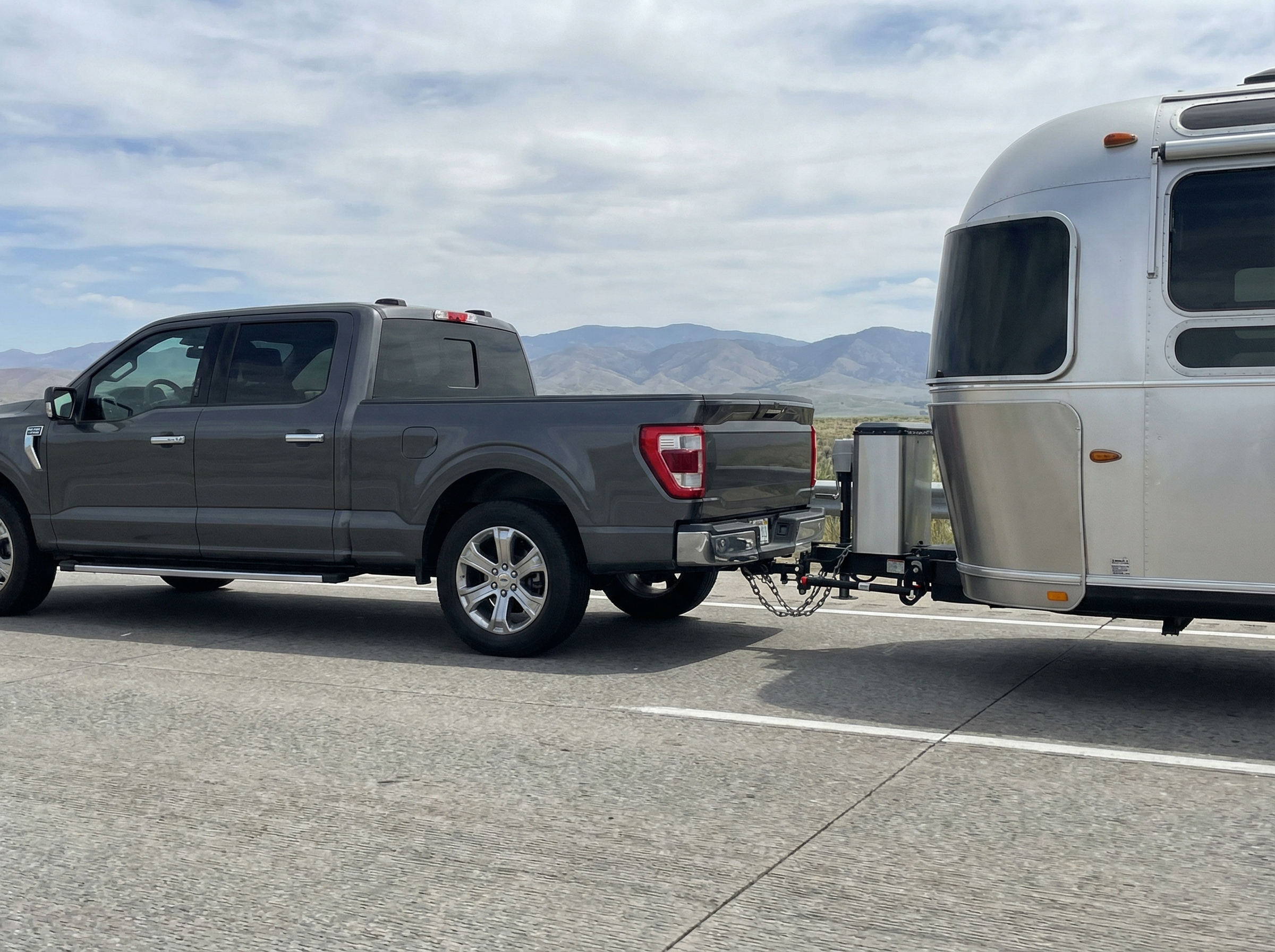
This is the part readers usually say “I wish someone told me earlier.”
- Under ~7,000 lbs loaded travel trailer: many half-tons work great (if payload checks out).
- ~7,000–10,000 lbs loaded: half-ton can still work, but you’re living in payload math. Many owners move to a 2500 for comfort and margin.
- 10,000+ lbs travel trailer or frequent mountain towing: 2500/3500 starts making life easier.
- Most fifth wheels: 2500 minimum, and very often 3500 is the smarter long-haul option.
- Big fifth wheels / heavy pin weights: 3500 dually is where “stable” becomes normal.
If you’re torn between trailer types, the towing setup changes a lot: Start with the towing calculator
Want the boring truth in 60 seconds?
Plug your truck, your trailer, and your real cargo into the calculator. You’ll get a clearer answer than any brand debate can give you.
Run the RV Towing CalculatorFAQ
What matters more: tow rating or payload?
Payload. Because tongue/pin weight, passengers, and cargo all consume payload. Tow rating is a pull number, not a carry number. For a plain-language explainer, see KBB’s payload guide: payload guide.
Can a half-ton tow a fifth wheel?
Only a small subset of very light fifth wheels can fit within half-ton payload limits. Most fifth wheels overwhelm payload due to higher pin weight.
Is diesel worth it?
Diesel shines for sustained heavy towing and grades. For moderate travel trailers and mixed daily driving, gas can be the better value and simpler ownership.
Where do I find the real ratings for my specific truck?
Door jamb sticker (payload / tire & loading info) and your owner’s manual towing section. Also watch GAWR/GVWR definitions and limits — NHTSA defines the terms here: GAWR/GVWR definitions.


Leave a Reply