

Nomad Internet markets plug-and-play mobile internet built for RVers, nomads, and remote workers. The pitch is simple: portable modem, nationwide coverage, month-to-month plans, and “no data limits.” If you’re tired of campground WiFi roulette, that promise is hard to ignore.
The reality is more mixed. Some RVers report strong speeds and an easy setup. Others report billing disputes, cancellations that get messy, and customer support that feels like it disappears when things go sideways. This page is built to help you decide whether Nomad fits your risk tolerance and travel style.
Disclosure: This page contains affiliate links. If you purchase through them, we may earn a commission at no extra cost to you.
Quick gut-check: If internet is mission-critical for work, plan a backup (hotspot, Starlink, or a second carrier). If you want a simple travel connection and you’re comfortable reading the fine print, Nomad may be worth a look.
Why Choose Nomad Internet?
Nomad appeals to RVers who want internet that feels “appliance simple.” No mounting antennas, no complicated routers, no juggling SIM cards every time you cross a state line. Plug it in, connect your devices, and get back to the trip.
- Plug-and-Play Setup: Designed for quick deployment inside an RV.
- Multi-Device Friendly: Supports up to 60 connected devices.
- Travel Flexibility: Often marketed as month-to-month with no long contract lock-in.
- 5G/4G LTE Where Available: Speeds depend on local tower coverage and congestion.
- Designed for RV Use: Built around “move often” travelers.
Want a broader comparison before committing? Start here: RV WiFi Systems: 5 Reliable Options for Staying Connected on the Road.
Top Nomad Product for RVers
Nomad Air 5G Home & Travel Internet Modem
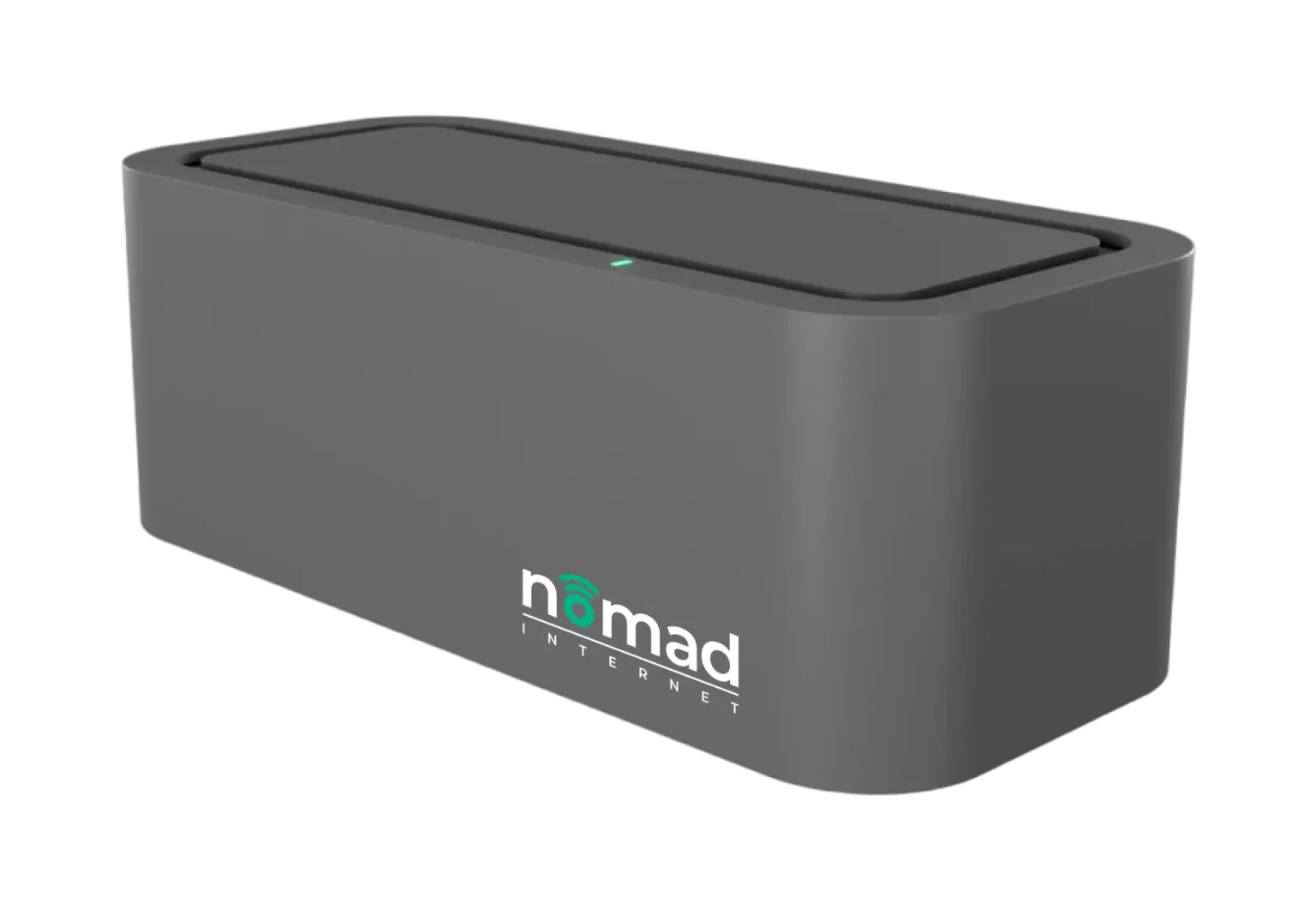
This is the core “take it anywhere” modem option Nomad is known for. It’s aimed at RVers who want a single box to handle work, streaming, and day-to-day connectivity without rebuilding their setup every stop.
- Portable: Designed for travel and quick setup.
- Handles Multiple Devices: Useful for families and remote work setups.
- Marketed as No Data Limits: Always confirm plan details and terms before purchase.
- Coverage Dependent: Your experience is only as good as the carrier coverage where you camp.
Real-world expectations: The advertised “range” or “works everywhere” claims in RV internet almost always collapse in dead zones. If you boondock in remote valleys, you need a plan B.
Pros & Cons
Pros
- Simple setup compared to DIY router + booster stacks.
- Works well for many travelers in strong coverage areas.
- Portable approach fits RV life better than fixed-home internet.
Cons
- Mixed reports about billing, cancellations, and customer support.
- Not a guaranteed solution for truly remote campsites.
- Upfront hardware cost can be higher than basic hotspot options.
Who Should Consider Nomad?
- RVers who want a simple travel-internet setup without complex installs.
- Seasonal travelers who may want flexibility month-to-month.
- Users who are comfortable reading terms and keeping a backup option available.
If internet is critical for remote work, consider pairing any cellular solution with a backup path (second carrier hotspot, Starlink, or a dedicated booster depending on where you travel).
Explore Nomad Internet Plans & Availability
Plug-and-play RV internet built for travelers who want simplicity on the road.
Explore Nomad Internet