


If you’re looking at Eco-Worthy, there’s a good chance you’re trying to solve one of the classic off-grid power headaches: batteries that do not keep up, generator noise, shore power dependency, or a “solar kit” that sounded simple until you started matching real loads.
Eco-Worthy is a value-focused solar brand that covers the practical building blocks: solar kits, lithium batteries, and expandable system components that work for RVs, cabins, vans, and small off-grid setups. If your priority is usable power without premium pricing, this is one of the brands worth putting on the shortlist.
Disclosure: This page contains affiliate links. If you purchase through them, I may earn a commission at no extra cost to you.

Quick fit check: Eco-Worthy is a strong match if you want a cost-effective path into solar or lithium, and you are okay doing a little planning so your system actually matches your RV life.
Start Here Before You Buy Anything (Solar Hub)
Solar gets expensive when you guess. The easiest way to buy once is to start with your real daily loads, then choose a system path that fits your style of camping.
Use this first: Solar Power Hub + RV Solar Calculator. It helps you estimate daily watt-hours, solar wattage, battery storage, and a realistic inverter size.
Why Choose Eco-Worthy?
- Budget-friendly builds: practical components without premium brand pricing.
- Solid lithium options: LiFePO4 batteries aimed at real-world off-grid use.
- Scalable approach: start small, expand later as your needs grow.
- DIY-friendly: kits and bundles that reduce the “what am I missing?” problem.
Most people are not trying to build a solar showcase rig. They are trying to keep the fridge alive, charge devices, and stop worrying about batteries every day. That is the lane Eco-Worthy fits well.
Top Eco-Worthy Picks (Curated for RV and Off-Grid Use)
1) Eco-Worthy 12V 314Ah LiFePO4 Battery (Bluetooth + Low-Temp Protection)

If you’re tired of “battery anxiety,” a higher-capacity LiFePO4 bank is where your off-grid life starts to feel normal. This battery is built around the features RVers actually care about: monitoring, protection, and usable capacity.
- Best for: RV battery banks where you want longer runtime without babysitting.
- Why it matters: Bluetooth monitoring helps you stop guessing and start managing.
- Cold-weather note: low-temperature charging protection is a big deal if you camp shoulder season.
Battery capacity only helps if your charging plan keeps up. Match solar wattage to your daily use: Solar Power Hub.
2) Off Grid Home Power Bundle: 5kW Inverter + 48V 100Ah Server Rack Battery

This is the “I need real power” bundle. If you’re setting up a cabin, workshop, tiny home, or a serious off-grid backup system, a 48V rack-style approach is often cleaner and easier to scale than piecing everything together one part at a time.
- Best for: off-grid cabins, workshops, home backup, and higher-demand systems.
- Why it matters: 48V systems can be more efficient for bigger loads and cleaner installs.
- Reality check: if you are only trying to run basic RV loads, this may be more system than you need.
If your goal is “solar runs A/C,” you are in system-build territory. The calculator will flag that quickly: Solar Power Hub + RV Solar Calculator.
3) Eco-Worthy 12V 100Ah LiFePO4 Battery (Bluetooth)
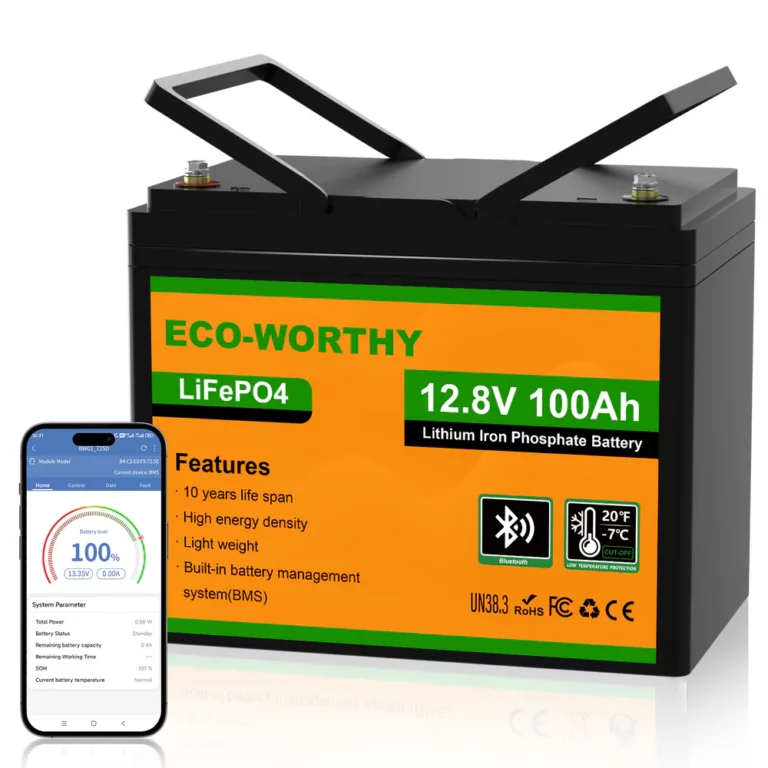
This is a common entry point for RVers upgrading from lead-acid to lithium. It is a practical size for smaller battery banks, weekenders, and rigs that do not run heavy loads all day.
- Best for: simple RV battery upgrades and smaller off-grid setups.
- Why it matters: a basic lithium upgrade can reduce voltage sag and improve usable power.
- Upgrade path: start here, then expand once you know what you actually use daily.
Pros & Cons
Pros
- Strong value: good performance for the price in kits and components.
- DIY-friendly options: practical bundles and parts for real-world installs.
- Lithium lineup: LiFePO4 options with monitoring and protection features.
- Scalable builds: easy to grow your system without starting over.
Cons
- Planning required: solar is not “buy kit and forget.” system matching matters.
- Support speed varies: some users report slower response times.
- Not the premium tier: if you want top-tier ecosystems and app integration, other brands may fit better.
Who Should Use Eco-Worthy?
- RVers upgrading on a budget: a solid path into lithium and solar without premium pricing.
- Boondockers: who want more independence and less generator time.
- DIY builders: comfortable following guides and building a system that fits their needs.
- Cabins and tiny homes: where scalable off-grid power is the goal.
If you are unsure what size system you need, run your loads first. It prevents the two classic mistakes: underbuilding (frustration) and overbuilding (overspending). Solar Power Hub + RV Solar Calculator.
What Customers Say (Quick Themes)
- Value for money: “works well for the cost” is a common theme.
- DIY wins: many buyers like that kits and bundles reduce guesswork.
- Lithium upgrades: monitoring and protection features are frequently praised.
- Support: occasional complaints about response time, not usually about product function.
Translation: Eco-Worthy is often a smart buy when you plan your system and set realistic expectations. Start with your loads and build from there.
Final Thoughts: Is Eco-Worthy Worth It?
Eco-Worthy is a strong option if you want off-grid power that is practical, scalable, and budget-friendly. The smartest approach is simple: decide what you want to power, run the calculator, then choose the kit or battery path that matches your real usage.
Want the fastest path to “buy once”? Start here: Solar Power Hub + RV Solar Calculator.
Shop Eco-Worthy Solar and Off-Grid Power
Budget-friendly solar kits, lithium batteries, and scalable off-grid solutions for RVs, cabins, and tiny homes.
Shop Eco-Worthy DealsNot sure what size system you need? Use the hub first: Solar Power Hub + Calculator.