

There’s a point in a lot of RV trips where “cell service” becomes a rumor. You’re at a lake, up a logging road, tucked behind a ridge, or parked in a campground where the map says you’re connected, but your phone says otherwise.
Starlink is satellite internet built for those moments. If you need real internet access beyond towers and town limits, it’s one of the most practical upgrades RVers can make.
Disclosure: This page contains referral or affiliate links. If you purchase through them, I may earn a commission at no extra cost to you.
Who this is for: full-time RVers, remote workers, content creators, and boondockers who regularly camp where towers don’t.
Why Starlink Makes Sense for RV Life
1) Work from anywhere (for real)
Video calls, uploads, banking, admin work, and business tools become possible outside town limits.
2) Less signal hunting
Fewer “drive around the campground” laps just to send an email or load a map.
3) Better for longer stays
If you stay off-grid more than a night or two, consistency matters more than peak speed.
4) It’s real internet, not just “data”
When you rely on stable tools, cloud work, or larger uploads, Starlink often fills the gaps cellular can’t.
RV reality check: Starlink is powerful, but placement and power matter. A clear sky view and a stable power plan make a bigger difference than most people expect.
Our Real-World Take on Starlink
We know a lot of people who’ve been running Starlink for a while now. For the longest time, we tried to avoid it. Not because it didn’t work, but because of the price.
That hesitation lasted through our winter in Costa Rica last year. We borrowed the campground owner’s Starlink when we needed reliable internet, and it worked consistently. Fast forward to the summer season in Canada, and we started seeing more and more RVers relying on it as their primary connection.
Eventually the math changed. Mobile data options work well until they don’t. When extended use starts adding up, especially with heavier workloads, Starlink becomes less of a “luxury” and more of a practical tool. That’s when we finally bit the bullet and bought our own unit in Costa Rica this winter.
For lighter or short-term connectivity needs, we still use mobile options like Roamless . But when consistent internet matters, Starlink has been the more dependable fallback.
Starlink Options RVers Actually Care About
The “best Starlink” choice usually comes down to how you travel: do you stay mostly in one place, or do you move often? RVers tend to look at Roam first because it’s built around travel flexibility.
Roam (RV travel flexibility)
If you move between campgrounds, boondock spots, and travel routes, Roam is typically the “RV-friendly” path. It’s built to work where you are, and it’s designed for changing locations.
Starlink Mini (quick setup mindset)
Mini is attractive if you care about portability and quicker deployment. For some RVers, smaller and simpler beats “maximum everything,” especially when you’re aiming for minimal fuss at camp.
Planning note: if your campsites are heavily treed, you’ll want a plan for dish placement. Obstructions matter.
Top “RVer Problems” Starlink Solves
- Remote work stability: fewer dropped calls and less scrambling for upload windows.
- Trip logistics: maps, weather, and bookings still work when towers don’t.
- Security + comms: easier to keep cameras, messaging, and family check-ins consistent.
- Backup internet: when campground Wi-Fi is unusable, you still have a plan.
Pros & Cons
Pros
- Often works where cellular coverage is weak or nonexistent.
- Enables real remote work and uploads from more locations.
- Reduces “plan your route around signal” behavior.
Cons
- Needs a clear sky view to perform well (trees and ridges can hurt).
- Requires a reliable power plan in your RV.
- Ongoing cost can feel steep if you only need internet occasionally.
What RVers Commonly Say
The feedback patterns are pretty consistent:
- “I can finally work while boondocking” without planning everything around towers.
- “It works in places I didn’t expect” provided there’s a clear sky view.
- “It’s not magic” in heavy trees or bad placement, but it’s a major step up from zero service.
Practical note: “perfect everywhere” isn’t realistic for any option. Your results depend on sky view, congestion, and setup. But if your current situation is “no service at all,” Starlink is often the upgrade that changes the game.
Images: Starlink in the Real RV World
Starlink Setup Mounted on an RV
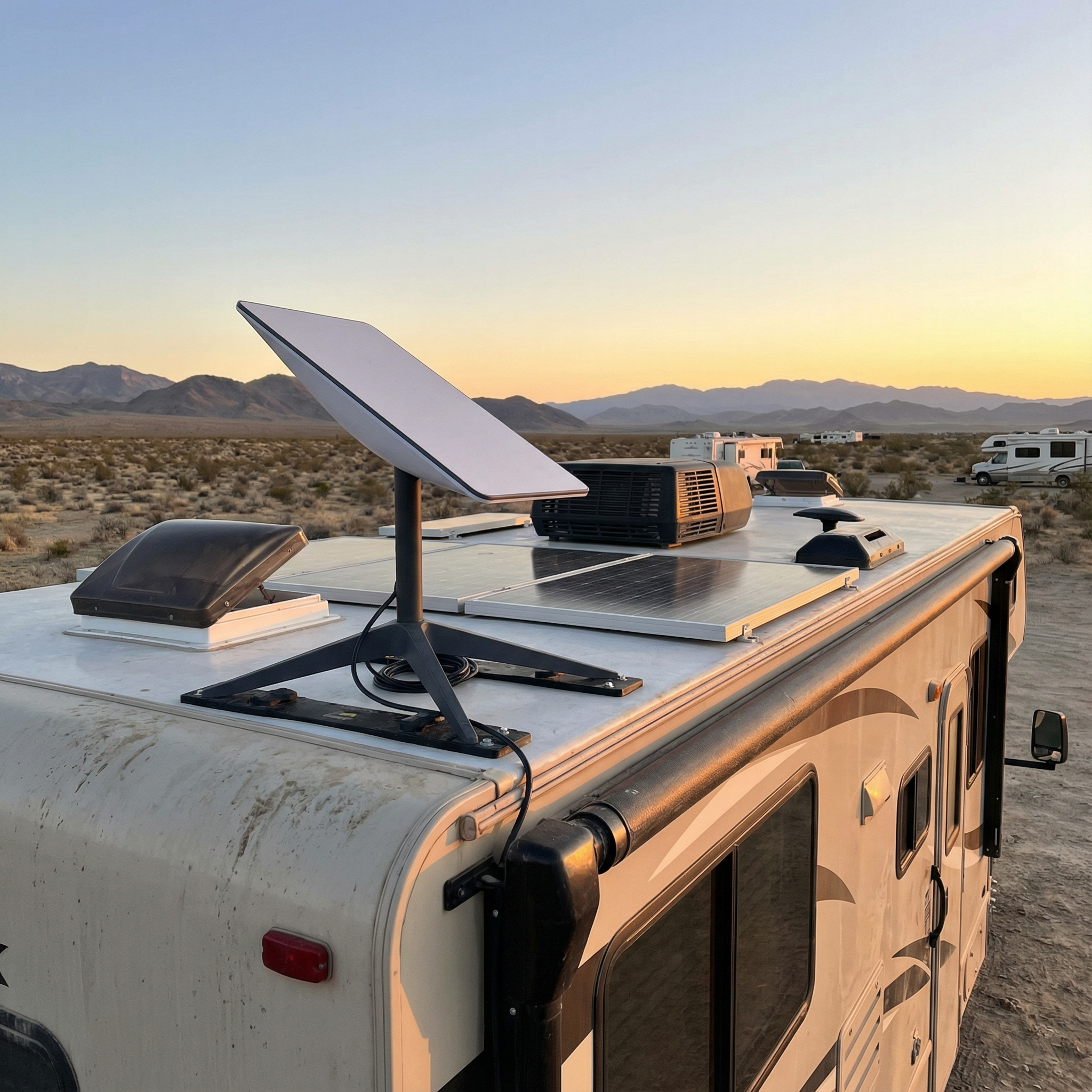
A roof-mounted or travel-mounted setup is a common approach for RVers who want repeatable, predictable deployment.
Starlink Mini at a Campground
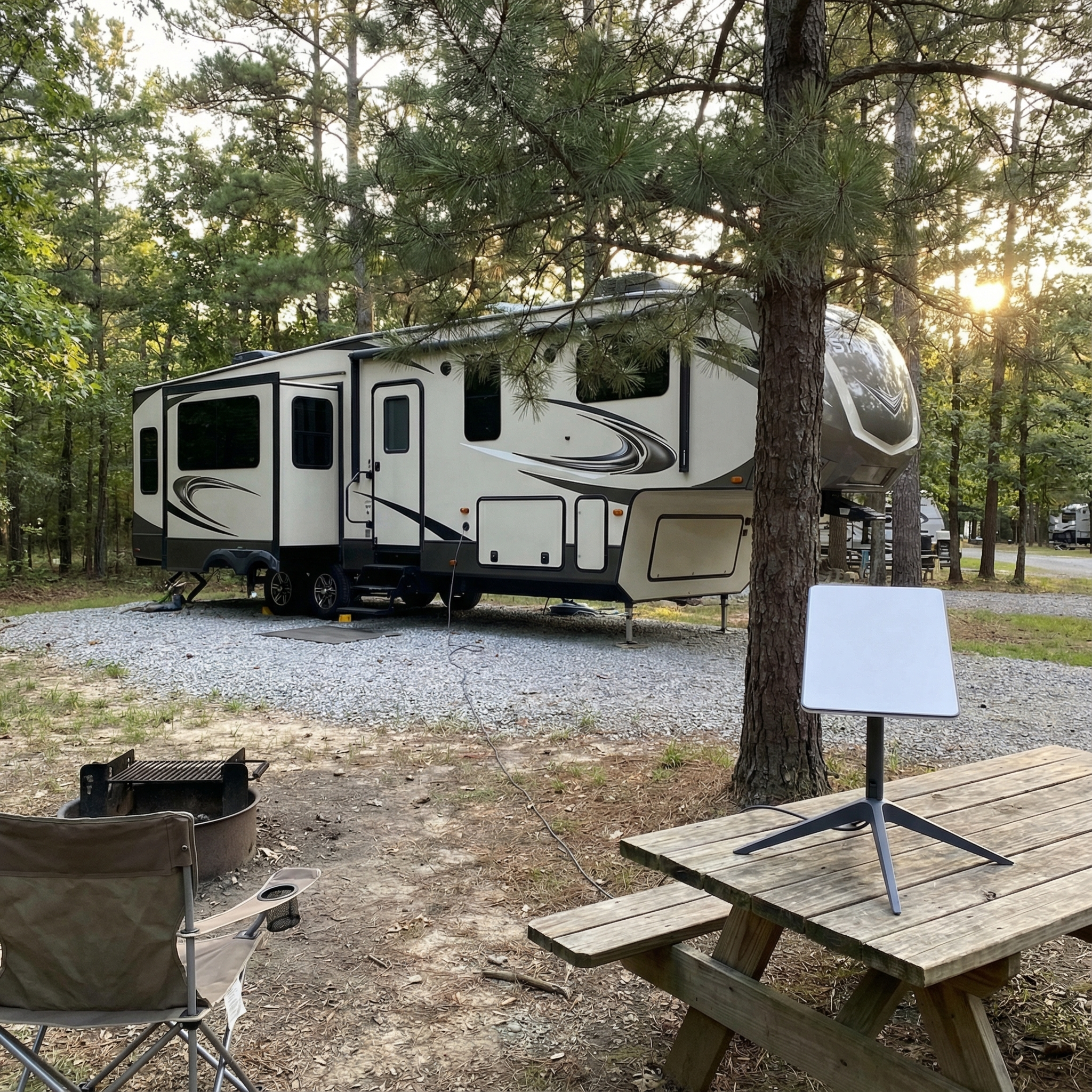
A compact setup is useful when you want to set up fast, adjust placement for a clearer sky view, and keep your gear footprint smaller.
Final Thoughts: Who Starlink Is Best For
- Full-time RVers + remote workers who need consistent internet beyond towns.
- Boondockers and off-grid travelers who regularly lose tower coverage.
- Travelers who want fewer compromises when planning routes and stays.
Explore Starlink for RV Travel
If you travel where towers stop existing, Starlink is one of the most practical connectivity upgrades to consider.
Check Starlink Plans