
Affiliate Disclosure: I earn commissions if you shop through the links below at no additional cost to you.
Last Updated on February 26, 2026 by Jeremy
There’s a certain moment every RVer hits sooner or later. You’re rolling into a new area, cell bars drop to “wishful thinking,” and you realize your whole “communication plan” is basically a phone that cannot do its job.
A CB radio will not replace modern navigation or messaging, but it does solve a very specific RV problem: simple, direct communication that does not depend on towers. The Cobra 19 Mini is one of the more practical options because it’s compact, easy to install, and it avoids the “I need an electronics degree to use this” vibe.
In this update, I’m keeping it real and RV-focused: what it does well, what it doesn’t, how to install it cleanly, and how to avoid the common mistakes that make people blame the radio when it’s actually the antenna setup.
TL;DR
- Best for: caravanning, road chatter, basic off-grid comms, and RVers who want simple controls.
- Big truth: your range is mostly determined by antenna choice + placement + SWR tuning, not the radio itself.
- Install difficulty: low to moderate. Mount it, power it, run coax, mount antenna, tune, test.
- My recommendation: if you want compact and capable, the 19 Mini makes sense. If you want maximum range, plan for a better antenna and tuning.
- Next step: if you want more Cobra options beyond this model, use the brand page: Cobra Electronics brand page.
What the Cobra 19 Mini Is (And What It Is Not)
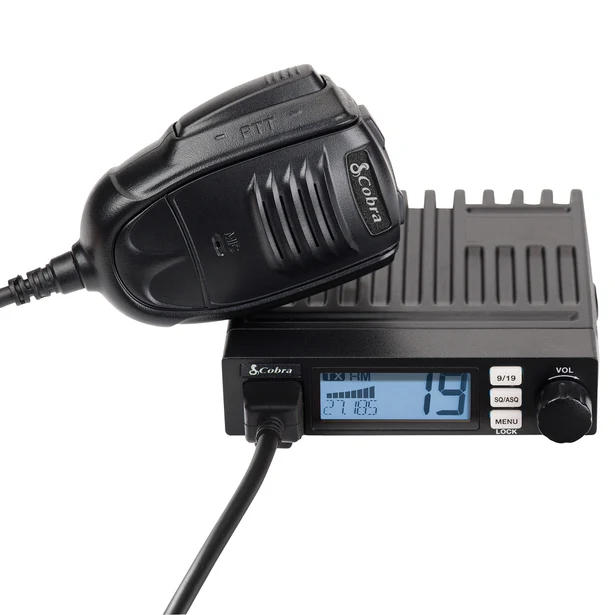
The Cobra 19 Mini is a compact CB radio designed for vehicle installs where space is tight. It operates on the CB (Citizens Band) radio service, which is a license-free radio service in the U.S. used for short-range communication. You get 40 channels, and in the RV world, the value is simple: you can talk to another vehicle directly, get a heads-up about road conditions, and coordinate without relying on cell service.
What it is not: a long-range “talk across the province” solution. Real CB range is terrain-dependent and often measured in miles, not miracles. If you need serious distance, your antenna system becomes the main project.
Why RVers Buy a Mini CB in the First Place
- Convoy and caravanning: direct vehicle-to-vehicle communication is still one of the easiest ways to coordinate.
- Road awareness: you can listen to chatter in certain areas and get early heads-up about slowdowns or hazards.
- Remote travel: if you camp where cell service is unreliable, CB becomes a simple backup layer.
- Ease of use: compared to some radios, this one stays beginner-friendly.
If you want to compare Cobra’s wider lineup (walkie talkies, other CB options, and road gear), jump to the Cobra Electronics brand page. This article stays focused on the 19 Mini and the install.
Key Specs That Actually Matter (Not the Brochure Stuff)
| What you’re deciding | What to look for | How the 19 Mini fits |
|---|---|---|
| Space in your dash | Compact chassis, clean mount options | Strong fit for RV dashes and tight cubbies |
| Ease of use | Simple controls, clear display | Beginner-friendly layout and controls |
| Range and clarity | Antenna quality, placement, SWR tuning | Radio is fine. Your antenna setup does the heavy lifting |
| Noise and interference | Power routing, grounding, coax routing | Clean wiring and tuning makes a bigger difference than most expect |
| Long-term reliability | Mount stability, cable strain relief, moisture control | Good if installed cleanly and protected from vibration/water |
The Antenna Reality Check (This Is Where Most Installs Fail)
People buy a CB, plug it in, slap on a basic antenna, then decide “CB range sucks.” Most of the time, the radio is not the problem. The antenna setup is.
A better antenna, mounted properly, with a clean coax run and a tuned SWR, usually transforms performance. If you only take one thing from this article, take this: the antenna system matters more than the radio model.

Quick antenna checklist
- Mount as high and as clear as you reasonably can.
- Avoid pinched coax and sharp bends.
- Keep coax away from high-current power runs where possible.
- Use an SWR meter and tune it. Do not skip this step.
Step-by-Step: Installing the Cobra 19 Mini in an RV
This is the clean, practical version of the install. Not the “spaghetti wire behind the dash and hope” version.
1) Pick a mounting location
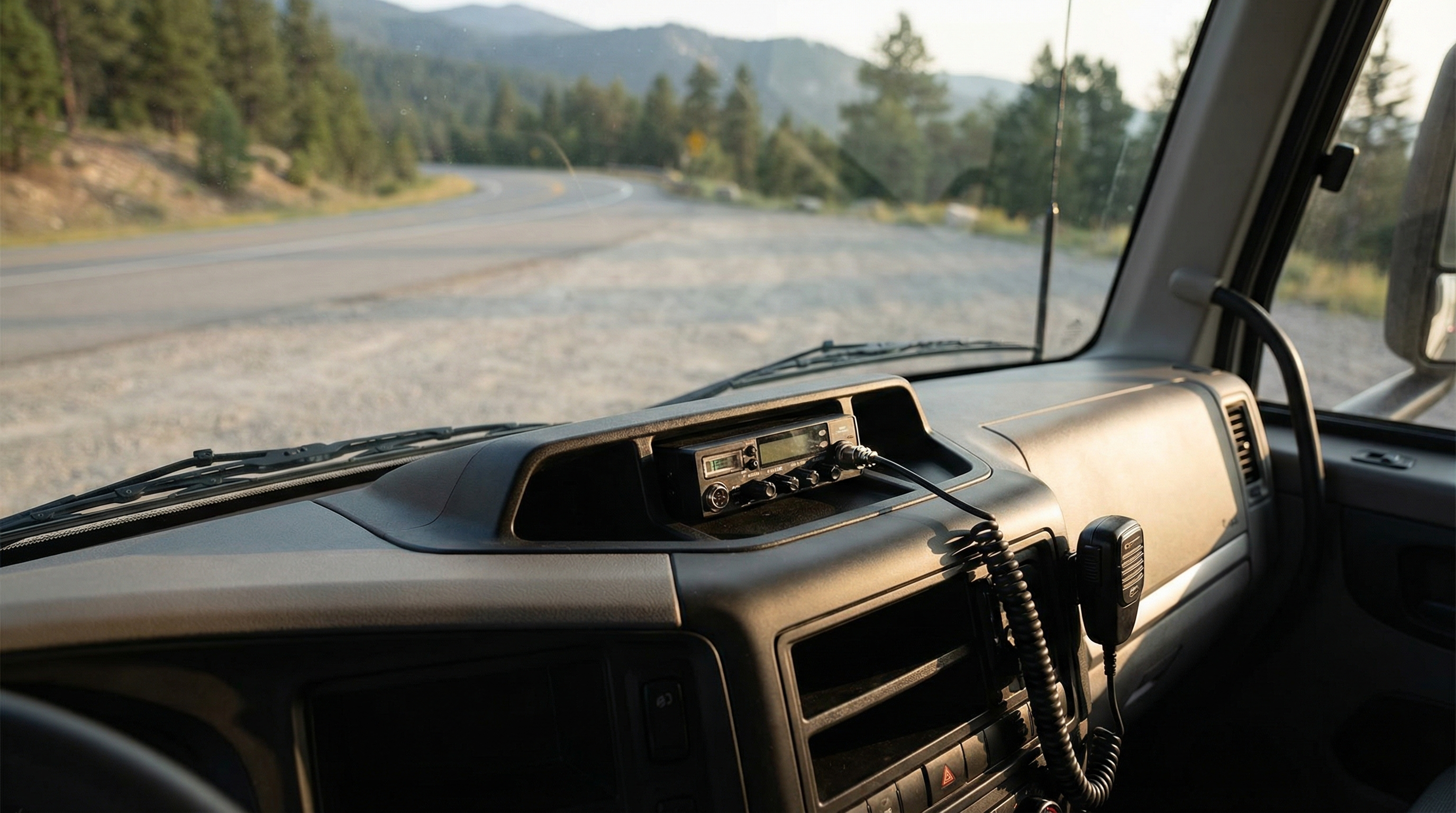
- Good spots: dash cubby, center console area, overhead cabinet edge (if accessible), side panel near driver seat.
- Avoid: direct heat zones, high-glare areas, and places where cords hang into foot space.
- Goal: you can reach the mic and controls without doing yoga in traffic.
2) Mount the radio securely
- Use the bracket if you can. Vibration will find weak mounts quickly.
- If screws are not ideal in thin RV paneling, use a proper backing plate or a strong mounting solution rated for vibration.
- Leave enough clearance for cable connections and airflow.
3) Power it the right way
- Best practice: a clean 12V source with fuse protection.
- Route power cleanly and avoid sharing noisy circuits where possible.
- Secure wiring so it cannot rub, pinch, or chafe over time.
4) Install and route the antenna coax
- Mount the antenna where it has the clearest “view” around the vehicle.
- Keep coax away from high-current runs if you can.
- Use grommets where cables pass through metal or tight edges.
5) Tune SWR and test
- Use an SWR meter and tune the antenna system.
- Do a test transmission with someone you trust to give honest feedback.
- Adjust squelch and RF gain to reduce noise without killing reception.
If your results are weak, do not assume the radio is defective. Re-check antenna placement, coax routing, and SWR tuning first. That is where most problems live.
Pros & Cons
Pros
- Compact footprint: easier to mount in RV dashes and tight spaces.
- Simple controls: beginner-friendly without sacrificing the basics.
- 40 channels: the standard CB lineup, with common channel usage for road chatter.
- Solid “RV tool” factor: especially useful for caravans and remote travel.
Cons
- Range is not magic: your antenna system determines performance more than the radio.
- External tuning step: SWR tuning is the difference between “works great” and “why did I buy this.”
- Noise happens: poor wiring routes and cheap antenna setups can create static and frustration.
CB Lingo You’ll Actually Use (Simple Version)
You do not need to memorize a dictionary. You just need enough to communicate clearly without confusing people.
Top terms RVers actually use
- 10-4: message received
- Breaker: asking to jump in
- What’s your 20? where are you located
- Copy: understood
- Stand by: wait a moment
- Clear: finished talking / channel clear
- Bear / Smokey: police
- Back door / Front door: behind you / ahead of you
- Alligator: tire debris on the road
- Rubber side down: safe travels
Etiquette that saves headaches: keep it short, avoid stepping on other transmissions, and do not treat channel 9 like a hangout channel.
Where to Go Next
If this model feels like the right fit, and you want to see Cobra’s other communication options (plus related road gear), use the brand page as the hub: Cobra Electronics: Communication & Radar Detection for RVers .
That page is where I keep the curated product picks and the buying path. This article is the learning layer.
FAQ
How far will a Cobra 19 Mini CB radio reach?
Real-world range depends heavily on your antenna system and terrain. Flat open areas can perform well, while forests, hills, and urban clutter reduce range. A well-mounted, tuned antenna usually matters more than the radio model.
Do I need a license to use a CB radio?
In the U.S., the CB Radio Service is license-free for most users. Rules and limits still apply, so it’s worth reviewing official guidance.
What is SWR and why does it matter?
SWR (Standing Wave Ratio) is a measurement that helps you tune the antenna system. A poor SWR can reduce performance and create frustration. Tuning SWR is one of the best “small effort, big reward” steps in a CB install.
What channel do RVers use?
Many RVers use a variety of channels depending on region and group preference. Channel 19 is widely known for road chatter. If you caravan with friends, pick a channel ahead of time so you are not hunting for each other.
Can I use a CB radio if I have solar and an inverter setup?
Yes. A CB radio draws relatively little power compared to major RV loads. The main consideration is clean power routing and avoiding noisy circuits that introduce interference.
External Sources
- FCC overview of the Citizens Band (CB) Radio Service: FCC CB Radio Service Guide
- FCC Personal Radio Services (general reference): FCC Personal Radio Services




.jpg/:/cr=t:5.56%25,l:0%25,w:100%25,h:88.89%25/rs=w:1240,h:620,cg:true)



Leave a Reply