
Affiliate Disclosure: I earn commissions if you shop through the links below at no additional cost to you.
Last Updated on February 9, 2026 by Jeremy
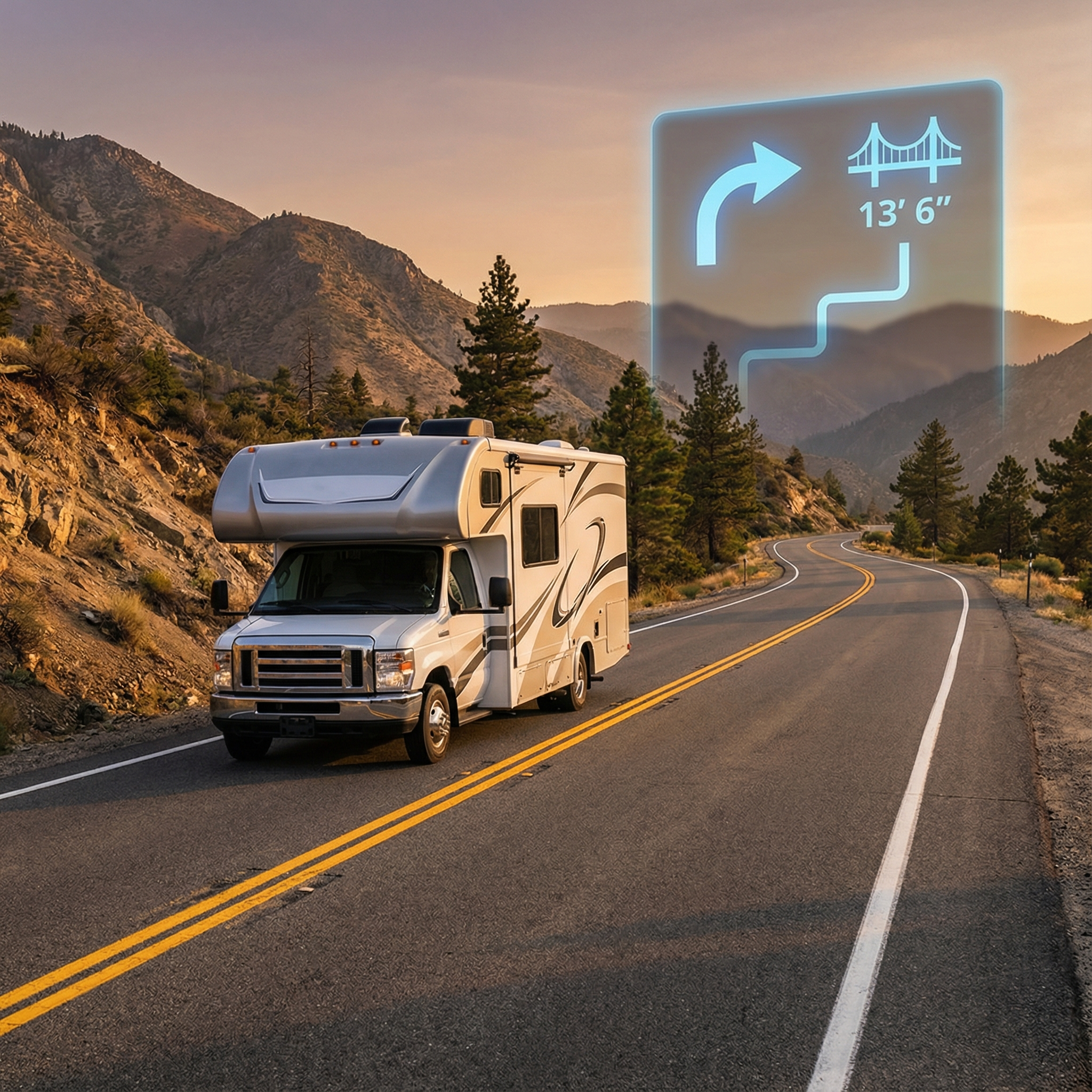
RV navigation is one of those things you don’t think much about until it goes wrong. A low bridge, a tight back road, or a “shortest route” that was clearly designed for cars can turn a relaxed drive into a stressful mess fast.
Over the years, I’ve used a mix of phone apps and dedicated GPS units. Both have their place. The real question isn’t “what’s the newest GPS,” but what actually keeps you out of trouble based on how you travel.
Do You Really Need a Dedicated RV GPS?
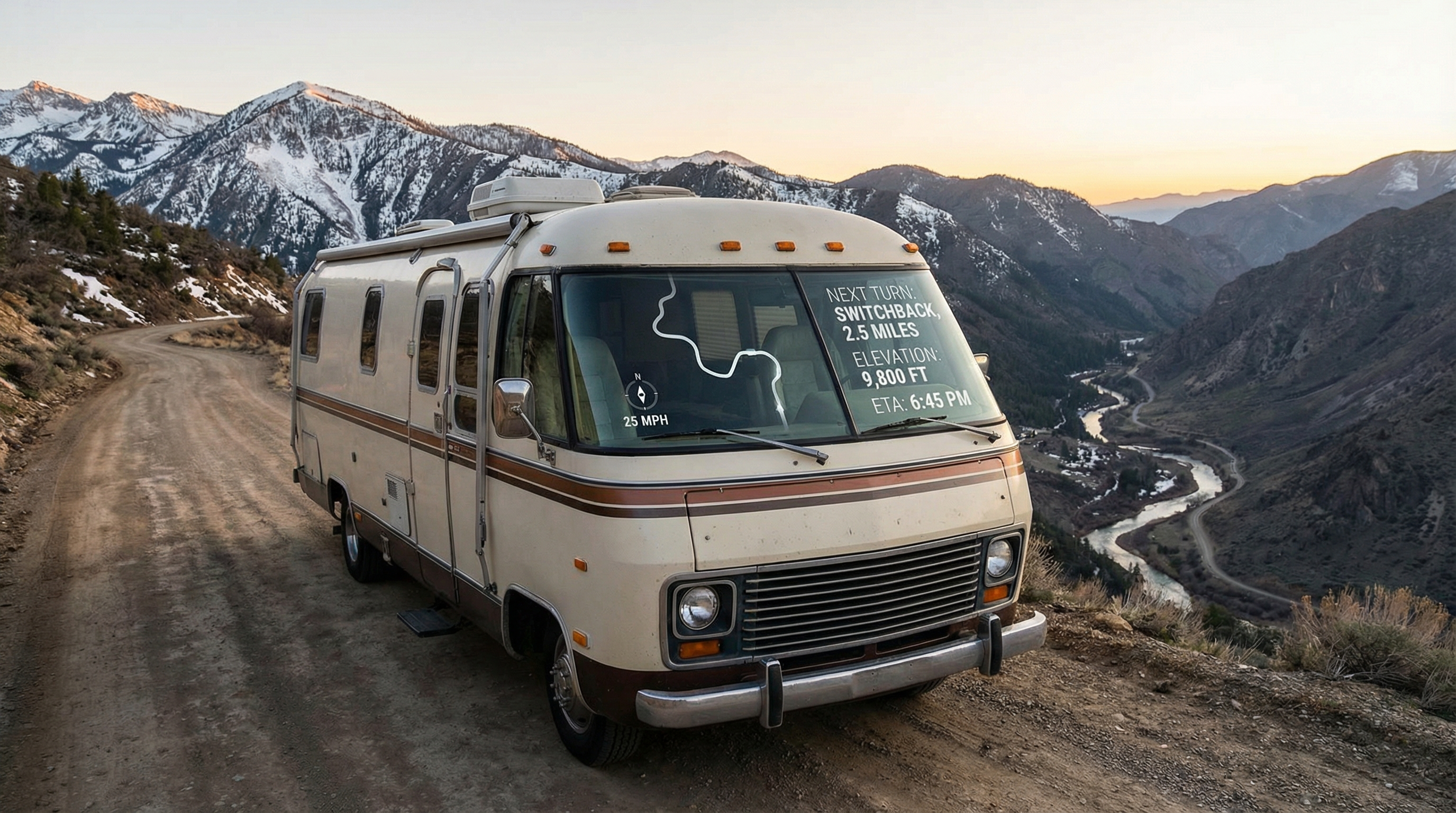
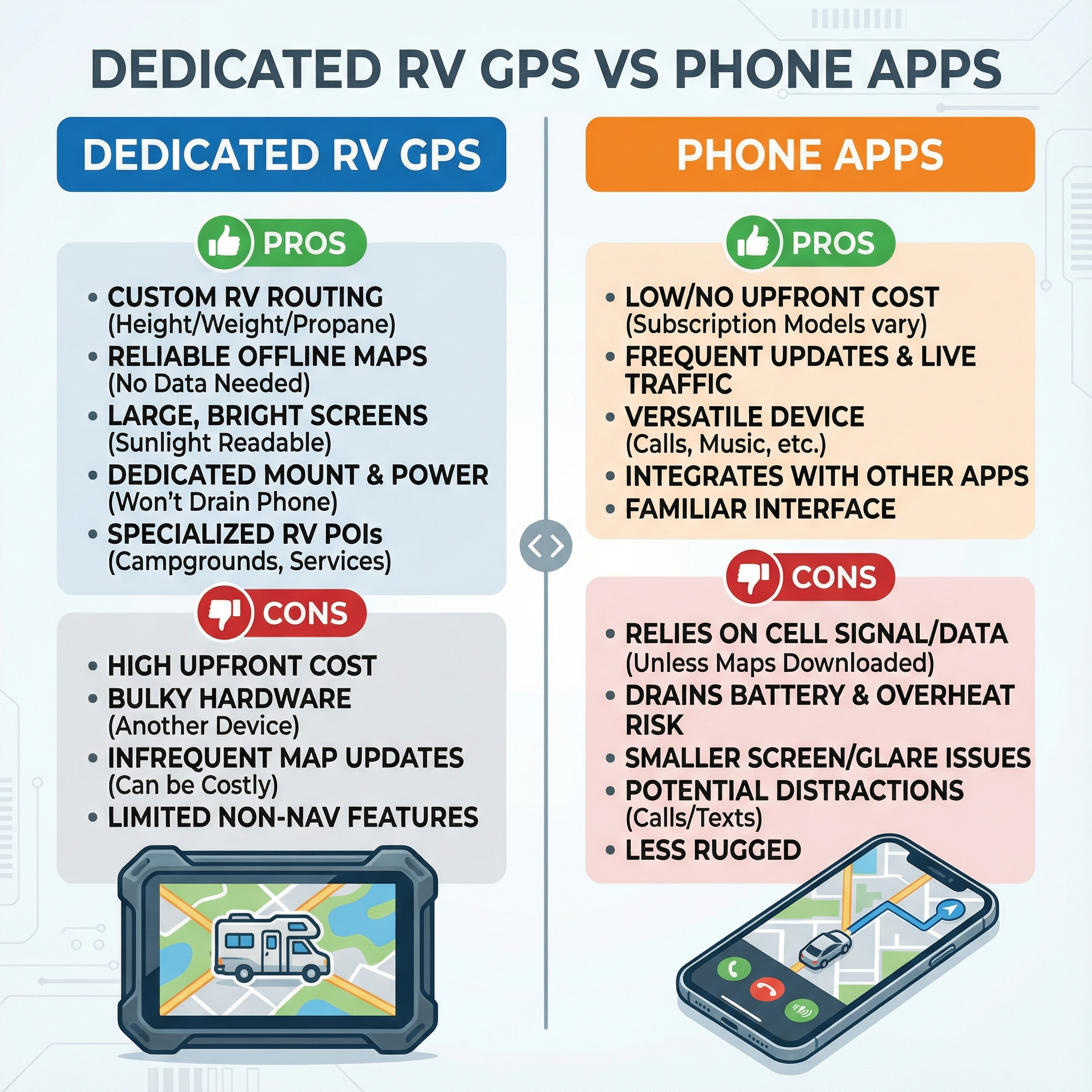
For short trips or familiar routes, phone navigation apps like Google Maps can work just fine. Many RVers use them daily without issues. The limitation shows up when your rig’s size actually matters.
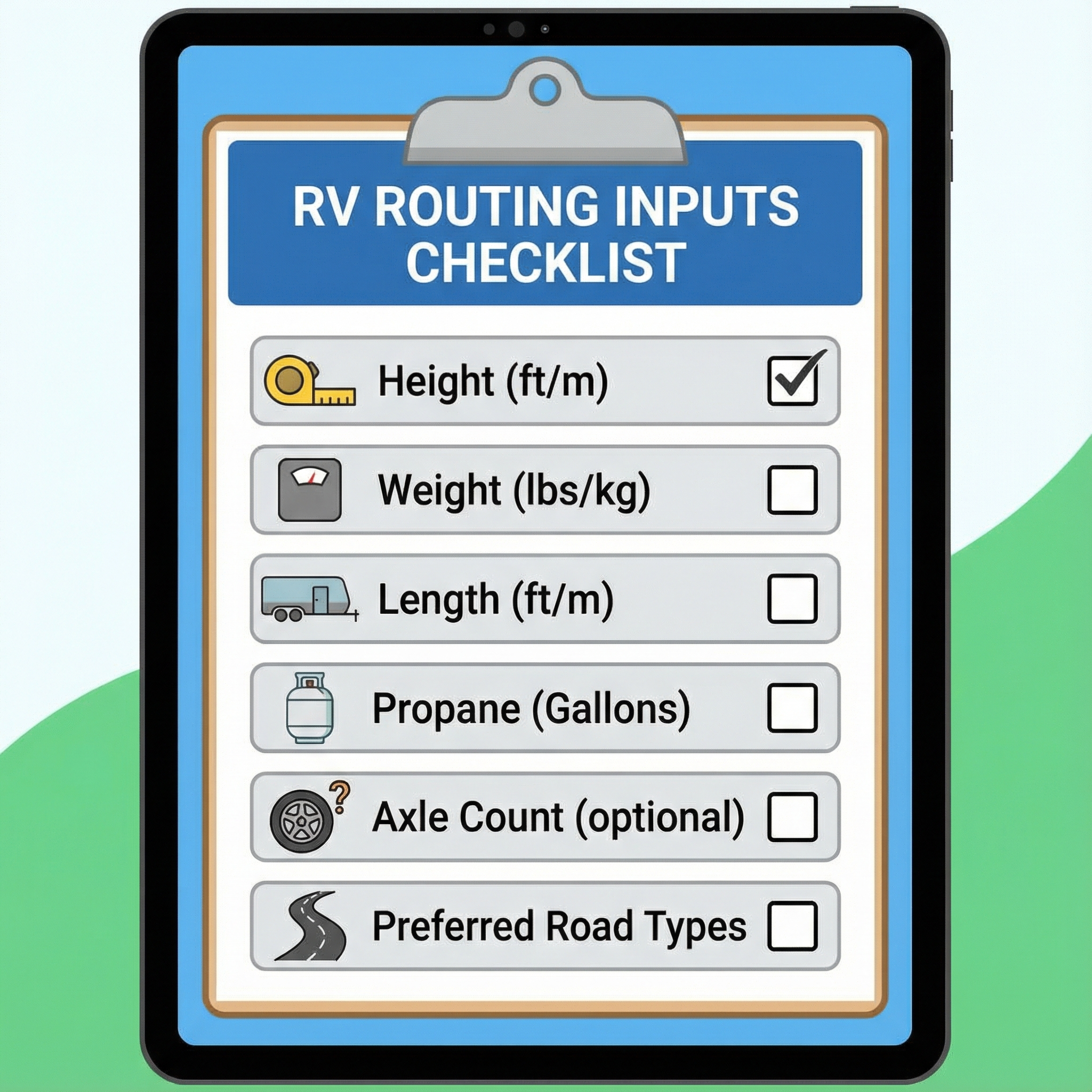
Most phone apps don’t account for height, weight, propane restrictions, or tight approach angles. A dedicated RV GPS exists for one reason: routing that respects your RV’s physical limits.
What Makes an RV GPS RV-Safe
Not all GPS devices marketed to RVers are equal. The features that actually matter tend to be boring, but important.
- Vehicle-specific routing using height, weight, and length
- Bridge and clearance data (with clear limitations stated)
- RV-focused points of interest like fuel stops, dump stations, and campgrounds
- Advance warnings for grades, curves, and restricted roads
Even with RV routing enabled, no GPS replaces local signage or common sense. Always verify clearances and restrictions, especially when traveling off major highways.
Best Dedicated RV GPS Options (By Use Case)
TomTom GO Camper Max
This unit is popular with full-time RVers who want simple, reliable routing without a steep learning curve. It handles RV dimensions well and keeps the interface clean.
- Large, easy-to-read touchscreen
- Camper-specific routing profiles
- Good balance of features without overload

Garmin RV 795
The RV 795 is a strong all-around option for RVers who want deeper integration with planning tools and campground data. It’s especially useful if you like seeing what’s ahead before you arrive.
- Bright 7-inch display
- Custom RV routing with warnings
- Campground and park directory integration

Garmin Drive 53 (Budget / Backup Option)
This is not a true RV GPS, but it earns a spot here as a budget-friendly backup. It works well for basic navigation when paired with an RV planning app.
- Compact and affordable
- Clear turn-by-turn directions
- Best used alongside RV-specific planning tools

GPS Devices vs RV Planning Apps
Many experienced RVers don’t rely on a single tool. A dedicated GPS handles turn-by-turn navigation, while planning apps handle the bigger picture.
Tools like RV LIFE Trip Wizard are excellent for route planning, campground selection, and identifying potential issues before you ever turn the key. Used together, they reduce surprises on the road.
Common RV Navigation Mistakes
- Blindly trusting car-based navigation with a large rig
- Ignoring posted clearance signs because the GPS “said it was fine”
- Not entering accurate RV dimensions
- Relying on one navigation tool only
Final Thoughts
The right RV GPS isn’t about brand loyalty or screen size. It’s about reducing risk and stress so you can focus on the drive and the destination. Whether you run a dedicated RV GPS, a planning app, or a combination of both, the goal is the same: arrive safely without surprises.
If you’re planning longer routes or unfamiliar terrain, taking navigation seriously is one of the easiest ways to protect both your RV and your sanity.




.jpg/:/cr=t:5.56%25,l:0%25,w:100%25,h:88.89%25/rs=w:1240,h:620,cg:true)



Leave a Reply