
Affiliate Disclosure: I earn commissions if you shop through the links below at no additional cost to you.
Last Updated on March 2, 2026 by Jeremy
Your RV is more than a vehicle. For a lot of us, it’s the thing that holds the whole lifestyle together. So when something goes sideways, breakdowns, storm damage, theft, one bad moment can turn into a long, expensive mess.
The tricky part is that “RV insurance” isn’t one product. Some providers are better for full-timers, some are better for part-time travelers, and some are only attractive on price until you realize what isn’t covered.
This guide breaks down the top RV insurance options, who they’re best for, what to watch for, and how to choose the right policy without guessing.
- Full-time RVers or rental-minded owners: start with Roamly.
- All-around coverage + RV ecosystem: Good Sam is usually the first comparison point.
- Budget-minded part-timers: GEICO often wins on “basic coverage” pricing, but read the fine print.
- Customizable policies: Progressive is strong if you want more knobs to turn.
- Seasonal storage: National General is known for storage-focused options.
What RV Insurance Covers (And Why It’s Not Just Auto Insurance)
A solid RV insurance policy can go beyond standard auto coverage, especially if you live in your rig, travel long distances, or carry gear that would hurt to replace.
- Liability: injury or damage you cause to others.
- Comprehensive + collision: theft, fire, weather, accidents, vandalism.
- Full-timer coverage: more like homeowner-style liability for people living in their RV.
- Emergency expenses: lodging and meals if your RV becomes unusable during a trip.
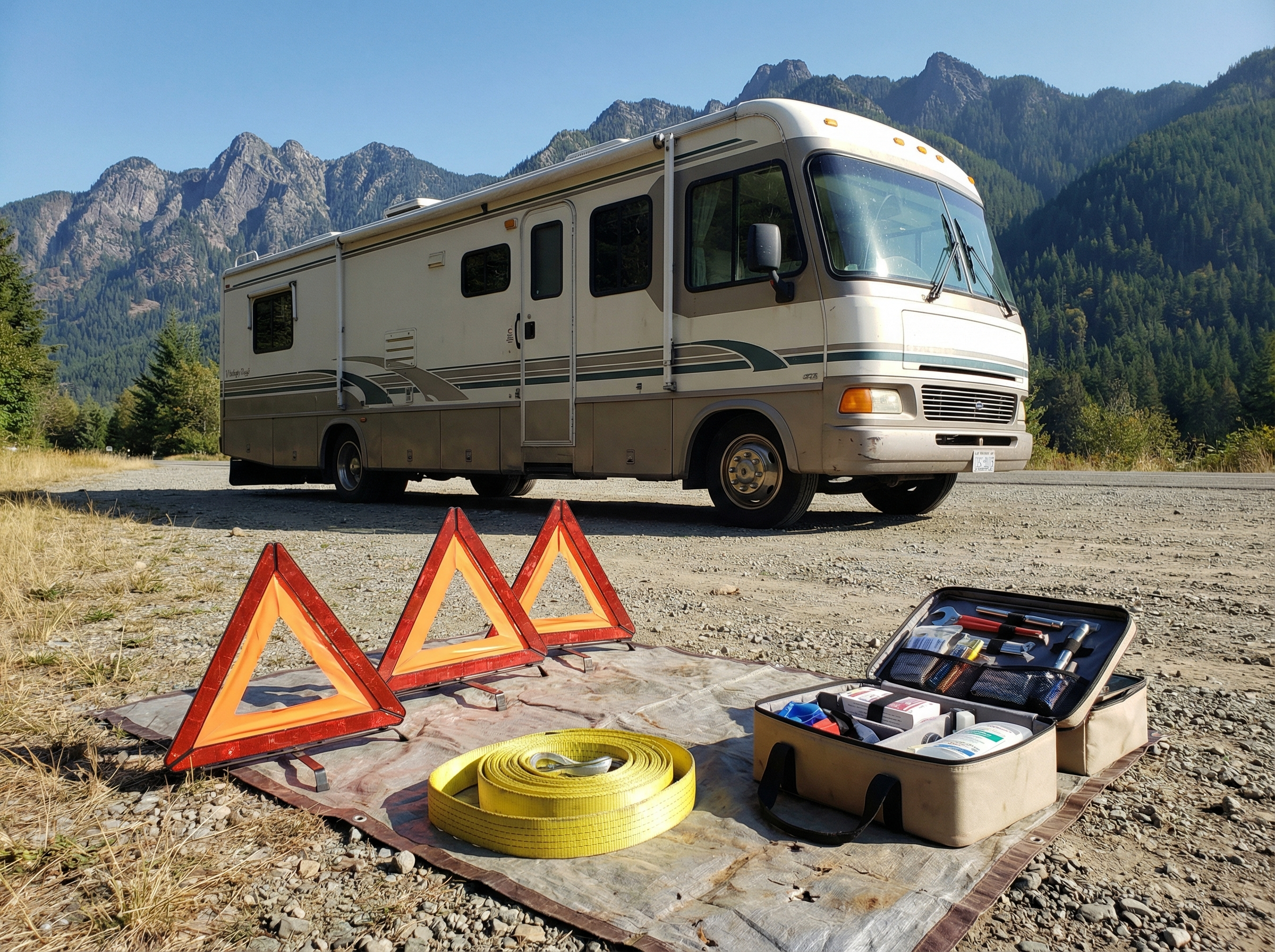
- Roadside assistance: towing, lockouts, battery, tire help (varies widely).
- Personal belongings: coverage for gear inside the rig (limits matter).
Quick tip: ask how claims are handled for “attached accessories” and upgrades (solar, awnings, racks, suspension, etc.). That’s where a lot of owners realize they’re underinsured.
The 5 Best RV Insurance Companies to Compare
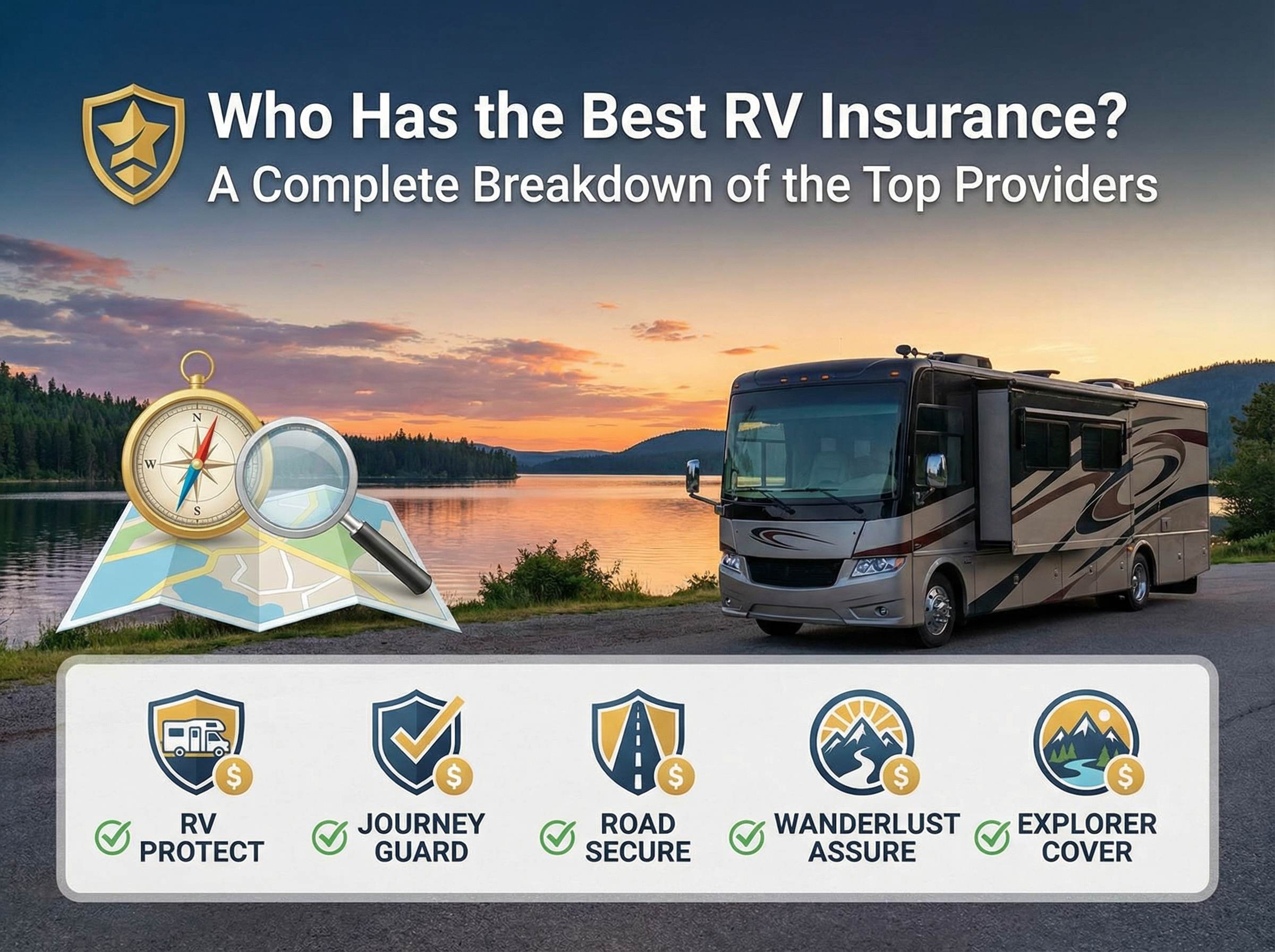
These five show up the most when RVers compare price, coverage flexibility, full-time support, and seasonal use. Your best provider depends on how you actually use your RV.
| Provider | Best For | What to Like | Watch Outs |
|---|---|---|---|
| Roamly | Full-timers, rental-aware owners, custom rigs | Built around RV lifestyle use cases; often discussed for rental and custom build needs | Availability and pricing varies by region and profile |
| Good Sam | Broad coverage comparisons + RV ecosystem | Strong “RVer-first” positioning; often paired with roadside and other RV services | Premium rises with add-ons; compare coverages carefully |
| GEICO | Budget-friendly basic policies (often part-time) | Common starting point for price checks | Not always ideal for full-time use; confirm what “full-time” means in-policy |
| Progressive | People who want customization | Many coverage options and policy configuration flexibility | Can price higher for some full-time profiles |
| National General | Seasonal storage and off-season savings | Known for storage-style options in many states | Coverage details vary; confirm what is suspended during storage |
Don’t compare quotes by price alone. Compare deductibles, personal property limits, emergency expense limits, and whether roadside towing matches your rig size and weight.
#1 Roamly: Best for Full-Time RVers and Rental-Friendly Flexibility
If you live in your rig full-time or you’re in a use-case that traditional insurers treat like a headache, Roamly is usually the first one to check.
- Best for: full-timers, van conversions, and owners who need flexible usage alignment.
- Why it stands out: it’s positioned around how RVs are actually used, not how insurers wish they were used.
- Watch out: eligibility and pricing can vary heavily by region and profile.

#2 Good Sam: Best Overall “RVer Ecosystem” Coverage Starting Point
Good Sam tends to be the “compare from here” brand because it lives in the RV world already. For a lot of RVers, it’s the most familiar name, which makes it an easy baseline quote.
- Best for: RVers who want broad options and a well-known RV-first provider to compare against.
- Why it stands out: RV focus, coverage variety, and a lot of adjacent services in the same ecosystem.
- Watch out: the “best” package often includes add-ons, so compare apples-to-apples.
#3 GEICO: Best for Budget-Friendly RV Insurance (Often for Part-Timers)
GEICO is commonly used as a budget reference point, especially for part-time RVers who want basic coverage and a straightforward quoting process.
- Best for: weekend and seasonal RVers comparing price first.
- Why it stands out: often competitive on baseline pricing.
- Watch out: confirm how full-time living is treated (and whether your use-case changes coverage terms).
Canada note: GEICO does not sell insurance to Canadian residents directly. If you’re Canadian, treat GEICO as a U.S.-resident option only.
External reference: GEICO on Canada availability
#4 Progressive: Best for Customizable Policies
If you’re the type who wants to tune coverage to match how you travel, Progressive is usually in the top tier for policy configurability.
- Best for: RVers who want lots of options and coverage add-ons tailored to their setup.
- Why it stands out: flexibility across RV types and use cases.
- Watch out: price can climb depending on full-time needs and added coverage.
External reference: Progressive RV Insurance
#5 National General: Best for Storage Discounts
If your RV sits for a chunk of the year, storage-style options can matter. National General is known for offering storage savings structures in many states.
- Best for: seasonal RVers who store their rig off-season.
- Why it stands out: storage-focused premium savings structures are a common feature discussion.
- Watch out: confirm exactly what is suspended during storage and what remains covered.
External reference: National General RV Insurance (Storage Savings Option)
When Do You Need RV Insurance?
- Financed or leased rigs: lenders typically require comprehensive + collision.
- Driving motorhomes: liability is required just like any vehicle.
- Living full-time: you need coverage that treats your RV as a residence, not just a recreational vehicle.
- High-risk travel: storms, remote roads, heavy tourist areas, and events raise the stakes quickly.
If you tow a trailer, remember: your tow vehicle policy may cover liability while towing, but that does not automatically mean your trailer is protected for theft, weather damage, or contents.
How to Choose the Right RV Insurance (Without Overthinking It)
1) Be honest about how you use the RV
Weekend use, seasonal travel, and full-time living are not the same risk profile. If you’re full-time, ask about full-timer liability and personal property limits.
2) Match your coverage to where you travel
Cross-border travel, remote boondocking, and storm-heavy regions change what “good coverage” looks like. Roadside assistance can be cheap or useless depending on your rig size.
3) Know your rig type and build reality
DIY conversions and custom builds often need special handling. Don’t assume upgrades are covered unless they’re documented.
4) Compare these four things first
- Deductibles: collision and comprehensive can be very different.
- Emergency expense limits: what happens if you can’t live in the RV for a week?
- Personal property limits: gear adds up fast.
- Roadside/towing details: weight, distance, and “nearest repair facility” rules matter.
Final Thoughts: What’s the Best RV Insurance for You?
The best RV insurance isn’t the cheapest quote. It’s the policy that actually matches how you travel, how you store the rig, and what would financially hurt if you lost it tomorrow.
- Best for full-timers and rental-aware flexibility: Roamly
- Best overall baseline comparison: Good Sam
- Best budget check (U.S. resident focus): GEICO
- Best customization: Progressive
- Best for seasonal storage: National General
If you’re unsure, get 2–3 quotes, then compare coverage line-by-line. Ten extra minutes there can save you a lot of pain later.
FAQ
Do I need RV insurance for a travel trailer?
You may be covered for liability while towing through your tow vehicle policy, but that doesn’t automatically protect the trailer itself against theft, weather damage, vandalism, or contents. Separate coverage is often the difference.
What is full-timer RV insurance?
It’s coverage designed for people who live in their RV, more like homeowner-style liability plus personal property support, depending on the policy.
Can I rent my RV out and still stay covered?
Sometimes, but not always. Many traditional policies don’t like peer-to-peer rentals. If rentals are part of your plan, you need a policy that explicitly supports that use-case.
Is roadside assistance automatically “good enough”?
Not necessarily. The details matter: towing distance, weight limits, whether they will tow to your preferred shop, and what counts as a covered event.
What’s the fastest way to pick the right provider?
Start with your use-case. Full-time living, rentals, and custom builds narrow your choices fast. Then compare deductibles, emergency expenses, personal property limits, and towing details.




.jpg/:/cr=t:5.56%25,l:0%25,w:100%25,h:88.89%25/rs=w:1240,h:620,cg:true)



Leave a Reply