
Affiliate Disclosure: I earn commissions if you shop through the links below at no additional cost to you.
Last Updated on February 14, 2026 by Jeremy
If you’ve been RV shopping for more than five minutes, you’ve already noticed the pattern: the “best” trailers are always the ones with the nicest photos and the biggest slide-outs.
That’s not how people end up happy with a trailer. That’s how people end up buying something they can’t comfortably tow, can’t store, and can’t fit into the campgrounds they actually use.
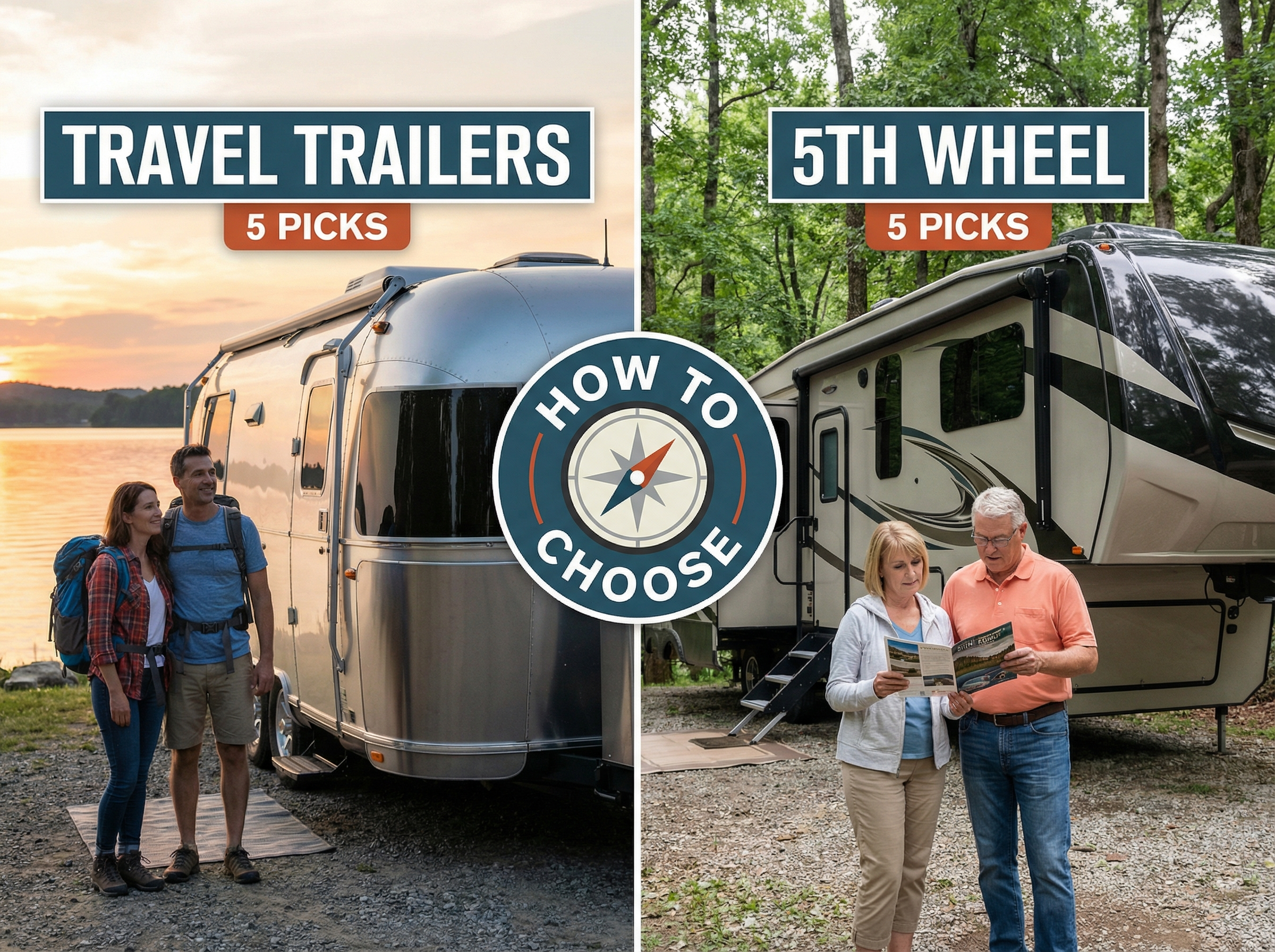
This guide is meant to do one thing: help you pick a fifth wheel or travel trailer based on real decision points (tow vehicle, weight, layout, use-case), then give you 5 solid options in each category that have stayed popular for a reason.
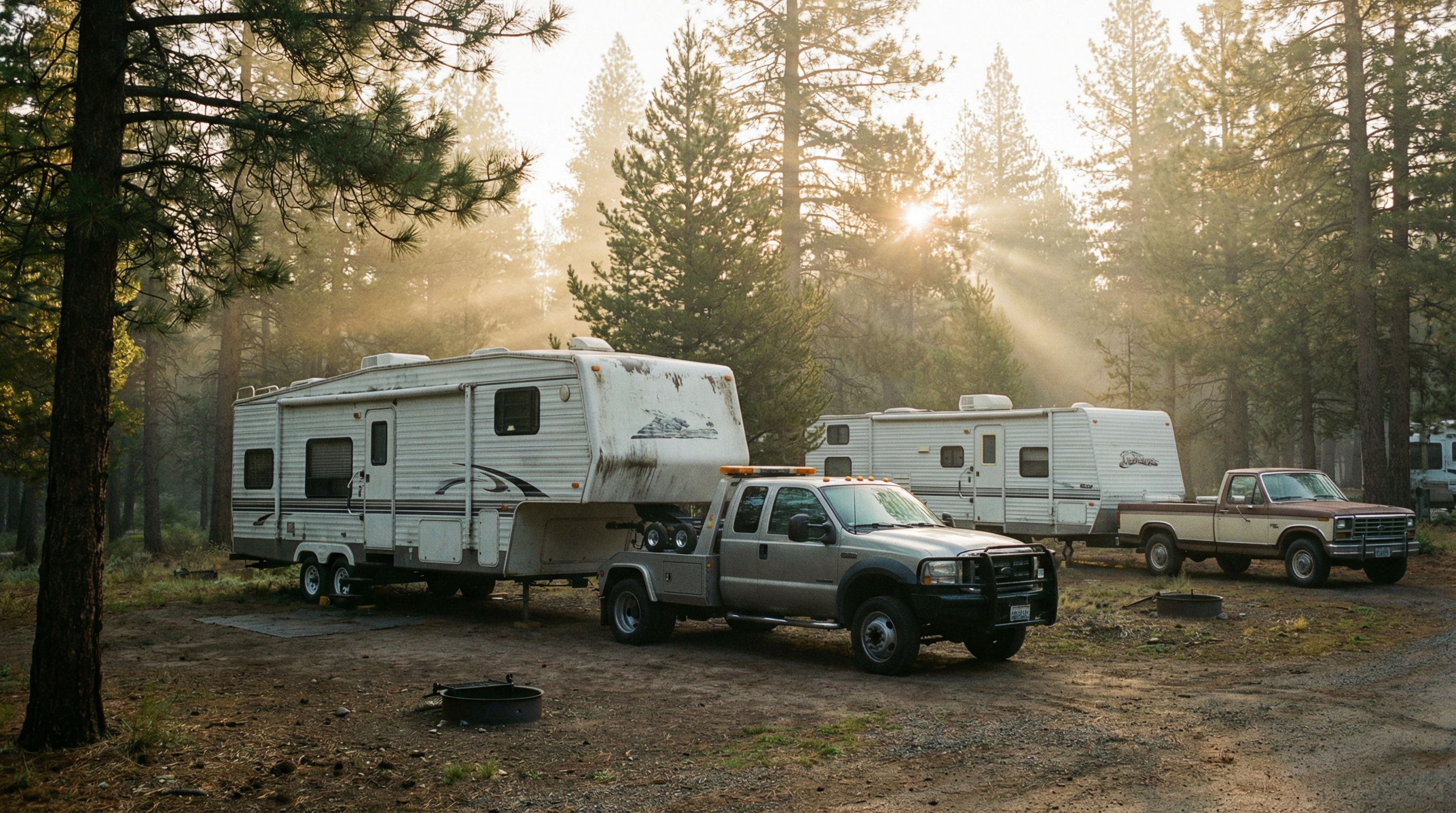
- Fifth wheels usually tow more stable and live “bigger,” but they can eat payload fast.
- Travel trailers are simpler to hitch, easier to store (often), and give more tow-vehicle flexibility.
- Ignore “dry weight” as a decision-maker. Shop by GVWR/CCC and what you’ll carry.
- Quick rule-of-thumb: travel trailer tongue weight is often around 10–15% of trailer weight; fifth wheel pin weight is commonly higher (often in the 15–25% range depending on build/layout).
- Run your numbers first. Then shop floorplans.
Fifth Wheel vs Travel Trailer: The Difference You Feel on the Road
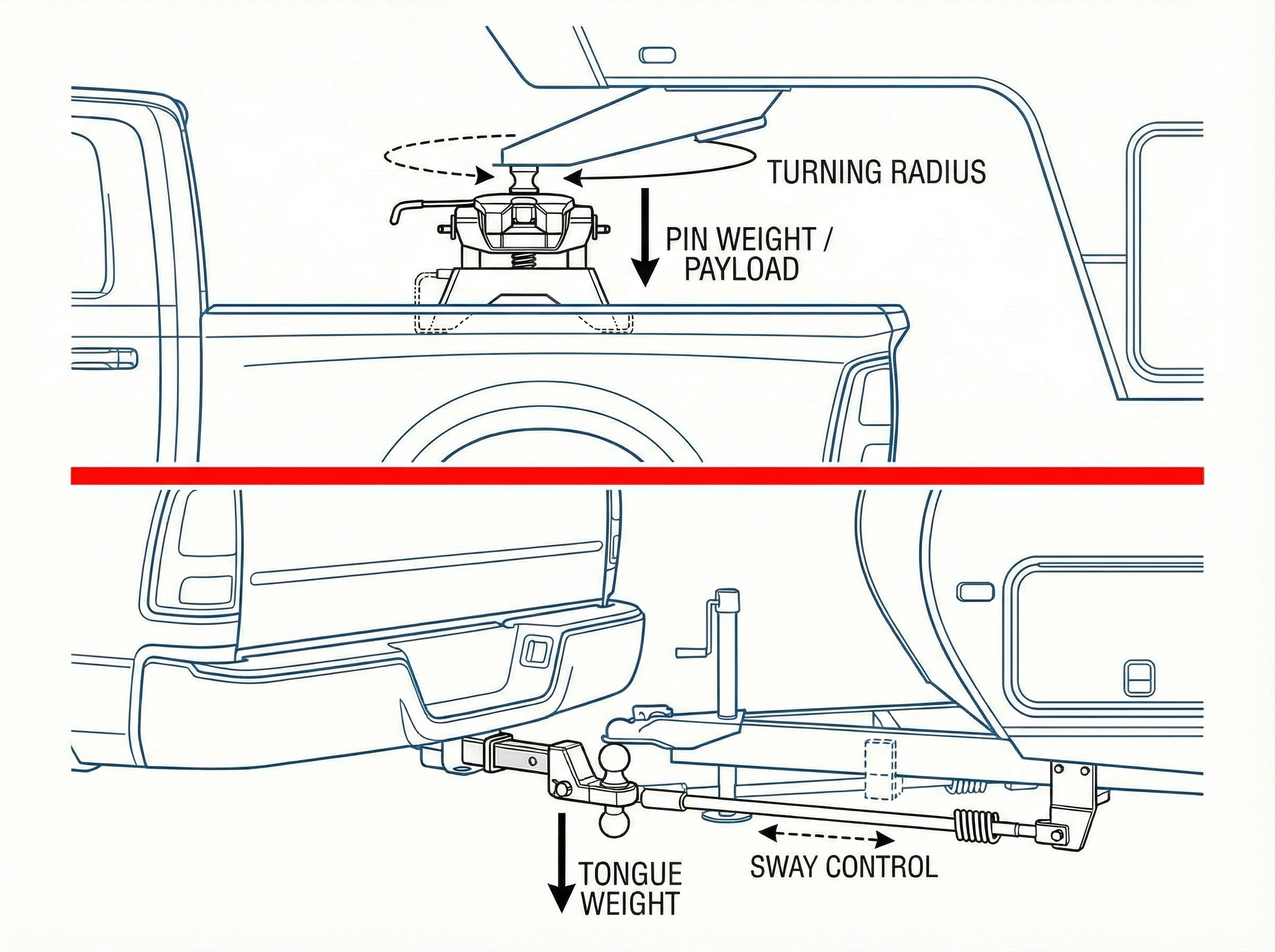
A fifth wheel connects over (or near) the truck’s rear axle using a bed-mounted hitch and kingpin. That placement is why many drivers describe fifth wheels as more stable, especially in wind and when passing semis.
A travel trailer connects behind the rear axle at the receiver hitch. Done right, they tow great, but they’re more sensitive to loading, tongue weight, and sway. That’s where weight distribution hitches and sway control earn their keep.
Internal reading that helps: • Chevy vs Ford vs Dodge 4×4
The 7 Filters That Keep You From Buying the Wrong Trailer
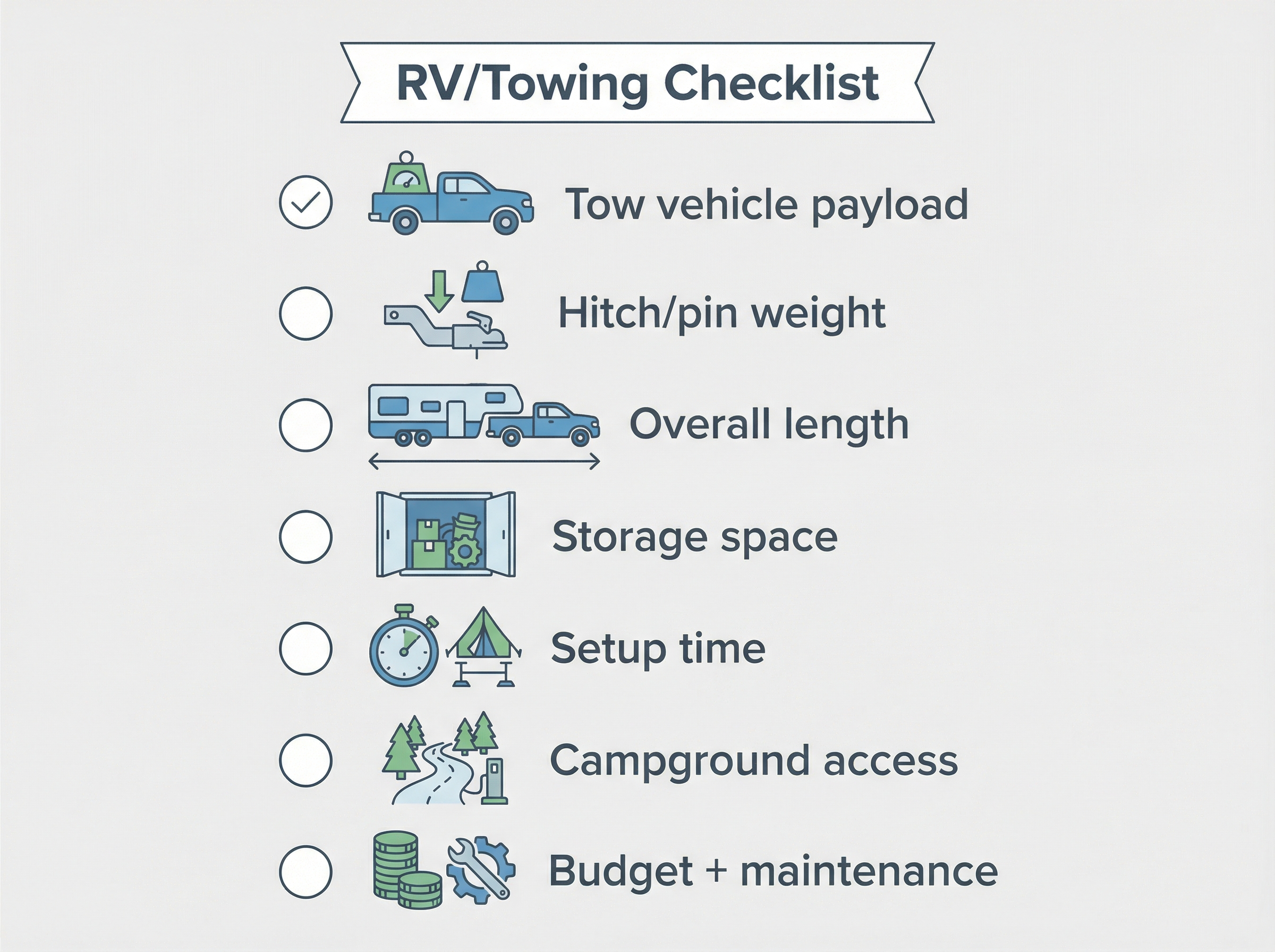
- Payload (truck sticker): Especially critical for fifth wheels. Pin weight + passengers + gear adds up fast.
- Hitch/pin weight: Travel trailers need proper tongue weight; fifth wheels need realistic pin weight planning.
- Length vs where you camp: Your dream rig isn’t helpful if it doesn’t fit the places you want to go.
- Storage reality: “Sleeps 8” doesn’t mean “comfortable for 8.” Look at pantry, wardrobes, pass-through storage.
- Tank sizes: Bigger tanks are great, but towing them full changes everything.
- Season you camp in: Real four-season builds matter if you’re shoulder-season or winter camping.
- Service access: If you can’t get it into a bay, repairs get annoying fast.
Weight Reality Beats Brochure Specs Every Time
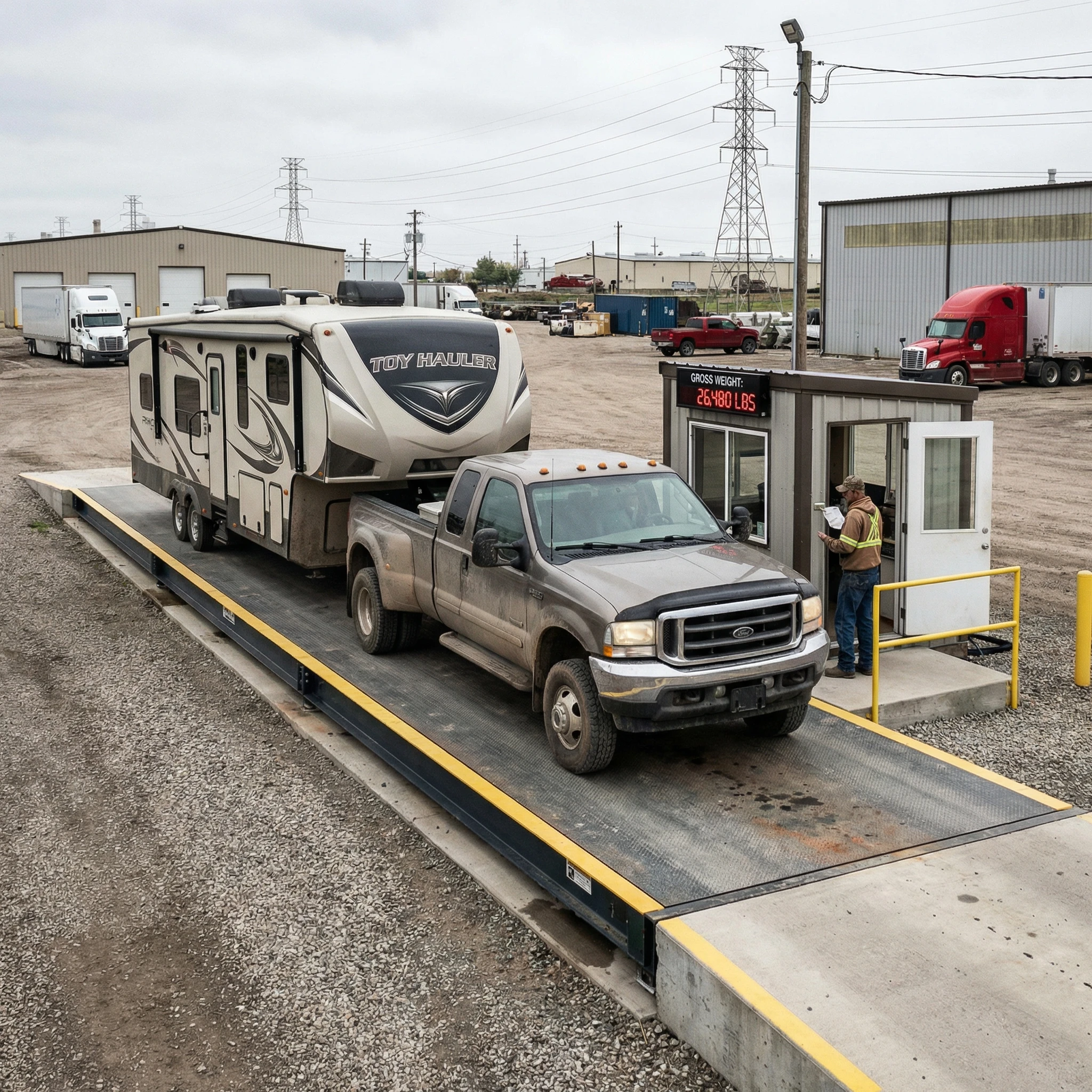
“Dry weight” is what the trailer weighs before you add propane, batteries, water, food, tools, clothes, chairs, hoses, leveling blocks, and that one tote bin that somehow follows every trip you’ve ever taken.
If you want one habit that instantly makes you a smarter RV owner: weigh your setup the way you actually travel.
- Step 1: Weigh truck alone (full fuel, passengers, normal gear).
- Step 2: Weigh truck + trailer together (loaded as-traveled).
- Step 3: Compare to truck ratings and trailer GVWR/axle ratings.
For real-world weighing, CAT scales are widely used by RVers. Their official locator is here: CAT Scale Locator. If you want to speed up the process, the “Weigh My Truck” app is here: Weigh My Truck.
Internal tools that help: RV Weight Balance Tool
5 Fifth Wheels That Keep Showing Up on Shortlists
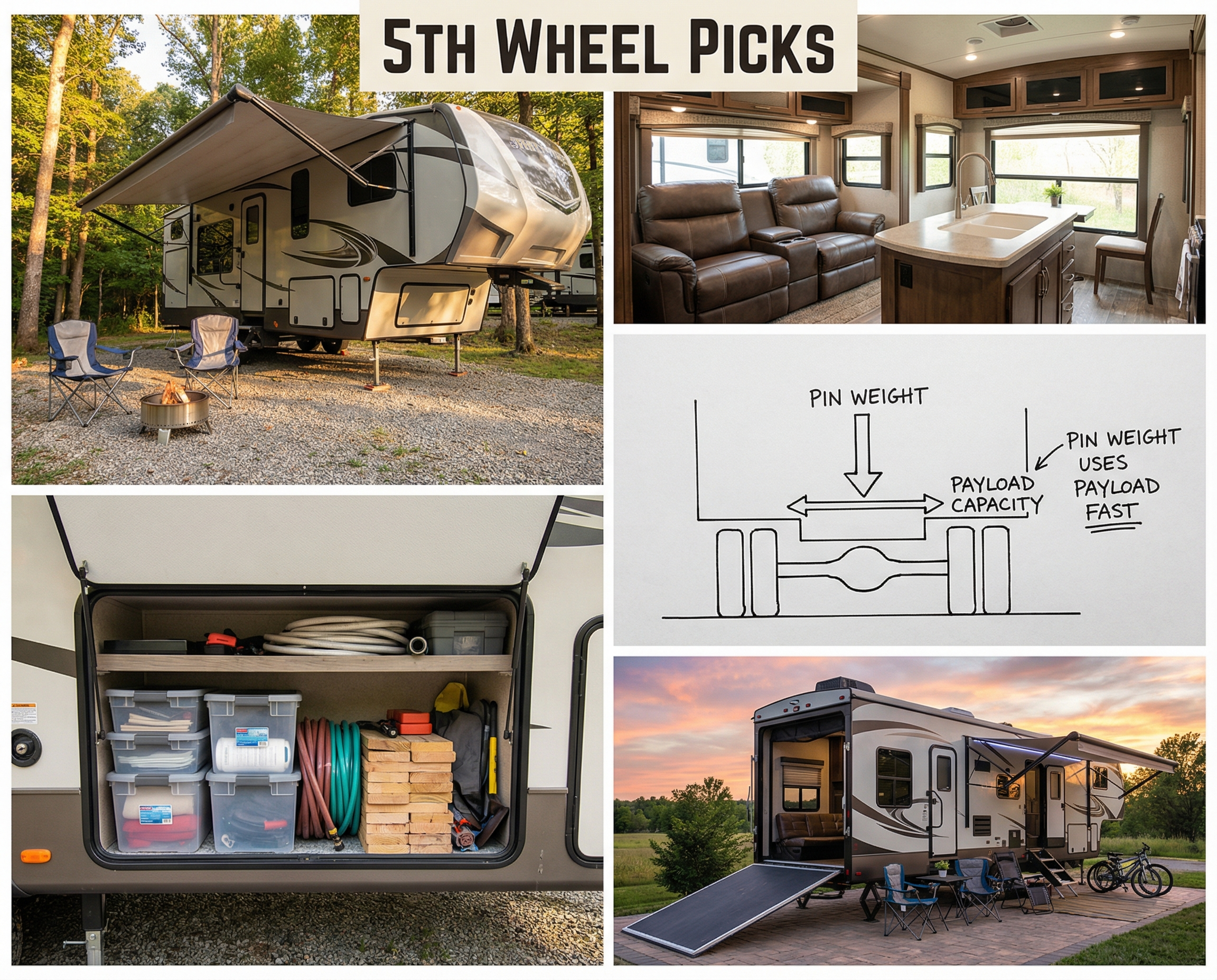
These aren’t “the only good ones.” They’re popular because they tend to hit a useful balance of layout, livability, and brand support. Always verify weights by floorplan and option package.
1) Grand Design Reflection
A consistent “sweet spot” for people who want a residential feel without instantly jumping into the largest, heaviest category.
- Why it’s on the list: livable layouts + storage + strong mainstream support.
- Watch-outs: pin weight grows quickly with options and gear.
- Good fit for: couples, small families, longer stays.
Specs & floorplans: Grand Design RV
2) Keystone Montana
A long-running luxury fifth wheel line that’s often chosen by buyers who want true “home” comfort on the road.
- Why it’s on the list: lots of floorplans and a big owner community.
- Watch-outs: size/weight and storage length requirements.
- Good fit for: extended travel and seasonal setups.
Weight rating explainer (useful for buyers): Keystone RV weight abbreviations
3) Forest River Cedar Creek
Cedar Creek is a common pick for buyers who want residential styling and stronger insulation packages for shoulder seasons.
- Why it’s on the list: “cabin on wheels” vibes, storage, long-stay comfort.
- Watch-outs: floorplan-to-floorplan weight differences can be huge.
- Good fit for: long stays, work-from-RV life.
Manufacturer: Forest River
4) Jayco North Point
A premium fifth wheel line that often appeals to buyers who want comfort, features, and a recognizable brand behind it.
- Why it’s on the list: interior livability and strong dealer network.
- Watch-outs: slide count and features can add weight quickly.
- Good fit for: families, extended camping, “real living room” layouts.
Manufacturer: Jayco
5) Heartland Road Warrior (Crossover / Toy-Hauler style)
Not everyone needs a toy hauler, but crossover fifth wheels with “flex space” solve problems families don’t plan for.
- Why it’s on the list: flexible garage/bonus space can become office, kid room, gear room.
- Watch-outs: weight when loaded (toys + fuel + water).
- Good fit for: active families and off-grid leaning trips.
5 Travel Trailers That Offer Unique Value (Not Just “Another Box”)
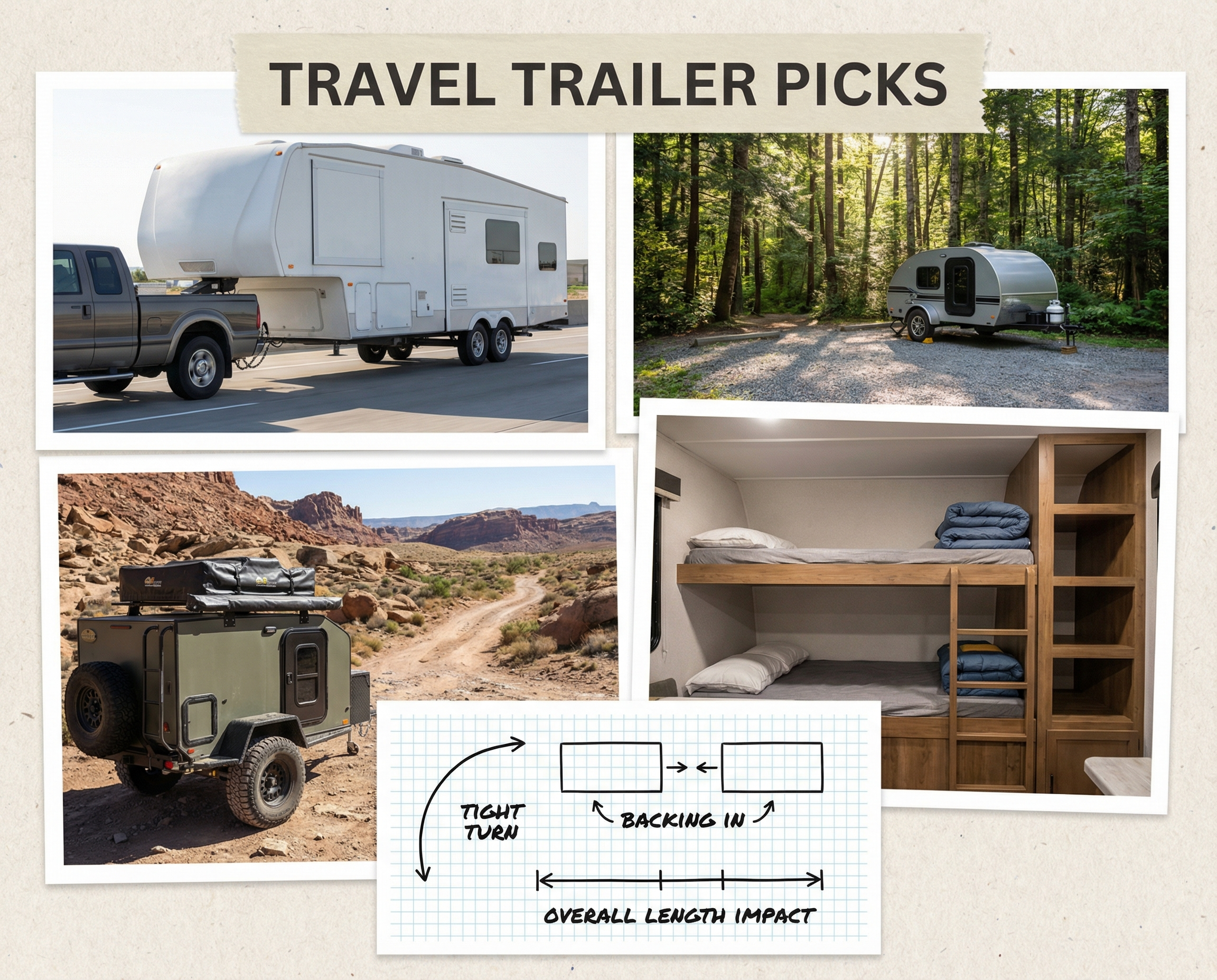
Travel trailers range from lightweight adventure rigs to full-size family bunkhouses. The “best” one is the one you can tow comfortably and use often.
1) Airstream Basecamp
Compact, distinctive, and built for people who want a quality small trailer that doesn’t feel disposable.
- Why it’s on the list: size + usability + brand reputation.
- Watch-outs: storage is efficient, not endless.
- Good fit for: couples, solo travelers, weekend adventures.
Manufacturer: Airstream
2) Turtleback Expedition (Off-road style)
Designed for remote camping and trail-friendly exploration. These types of rigs appeal to people who camp where “sites” don’t exist.
- Why it’s on the list: off-road capability and outdoor-first design.
- Watch-outs: smaller interior footprint; you live outside more than inside.
- Good fit for: boondockers, hunters, overland-style travel.
3) Escapod TOPO
A compact, adventure-focused trailer that suits the “less stuff, more places” crowd.
- Why it’s on the list: simple design, efficient layout, adventure use-case.
- Watch-outs: if you want a big bathroom or big kitchen, this isn’t that.
- Good fit for: minimalist travelers and remote camping.
4) Patriot X1-H (Compact off-grid style)
Compact, clever, and built around the concept of self-contained camping.
- Why it’s on the list: off-grid features in a small footprint.
- Watch-outs: compact living isn’t for everyone on long trips.
- Good fit for: weekenders and lightweight adventure towing.
5) Black Series HQ19 (Rugged, heavier-duty travel trailer)
“Beefy” is a fair description. It’s built for harsher roads and rougher travel, which is why it shows up in off-grid conversations.
- Why it’s on the list: rugged build direction and off-road posture.
- Watch-outs: heavier than it looks. Tow vehicle matching matters.
- Good fit for: serious off-grid travelers who still want comfort.
Run your towing numbers first, then shop with confidence
This is the part most people skip, then pay for later in stress and upgrades. Five minutes now beats guessing.
Use the RV Towing CalculatorFAQ
Is a fifth wheel always better for long trips?
Not always. Many fifth wheels tow very stable and feel “bigger” inside, but they often require a heavier-duty truck and more payload. If you’re moving frequently, smaller fifth wheels or well-set travel trailers can be the better fit.
What’s the biggest mistake buyers make?
Shopping by floorplan before verifying payload, hitch/pin weight, and real loaded weights. “Dry weight” rarely reflects how people travel.
How do I know if my tow rating is realistic?
Confirm your truck’s ratings (payload sticker and owner’s manual), then compare to the trailer’s GVWR and expected hitch/pin weight. Many tow ratings are established using standardized test requirements like SAE J2807.
Where can I weigh my RV setup?
Many RVers use CAT scales at truck stops. Use the CAT Scale locator to find one nearby, weigh the truck alone and then truck + trailer loaded.




.jpg/:/cr=t:5.56%25,l:0%25,w:100%25,h:88.89%25/rs=w:1240,h:620,cg:true)




Leave a Reply