

Last Updated on September 14, 2026 by Jeremy
Updated August 8, 2026
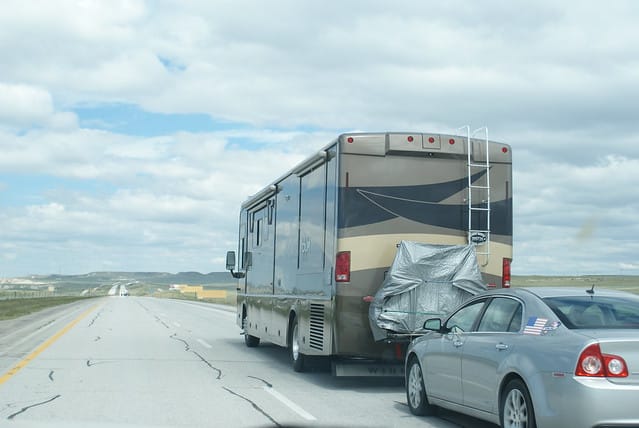
A Class A motorhome can look like a bus, weigh more than a loaded delivery truck and use air brakes—yet the words Class A on the RV do not automatically mean you need a Class A driver’s licence. Those are two different classification systems.
The honest answer is that your legal requirement depends on where your licence was issued, the RV’s registered or rated weight, its number of axles, its brake system and whether you are driving a motorhome or towing a trailer. “It is only for personal use” may remove a commercial-licence requirement, but it does not erase every non-commercial class or endorsement rule.
I have not driven a Class A motorhome, and I am not going to pretend otherwise. I hold a regular Canadian Class 5 licence. I have four seasons of experience towing our 32-foot bumper-pull trailer, some fifth-wheel experience and time behind the wheel of our Class C motorhome, Helen. Growing up around a farm also taught me how semis and air brakes work, but that experience does not legally authorize me to drive an air-brake-equipped RV on a public road. That distinction—between knowing how and being licensed to—is the heart of this guide.
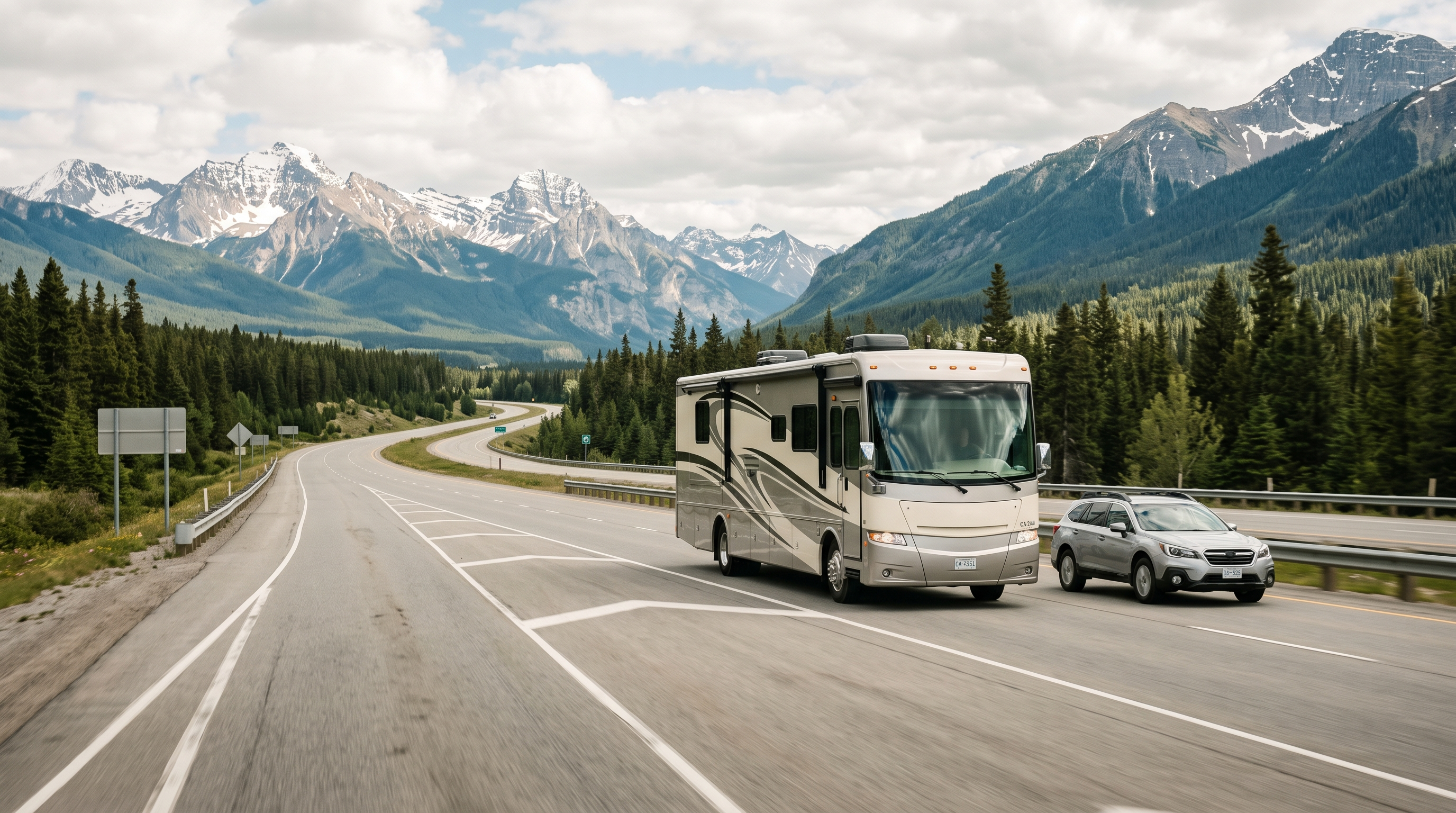
- Many personal-use motorhomes can be driven with an ordinary passenger licence—but not all.
- Air brakes commonly require a separate endorsement or certificate.
- Some jurisdictions trigger an upgrade at a stated weight, length or axle count.
- Fifth wheels and travel trailers follow towing rules, not motorhome rules.
- Verify against the licence-issuing authority where you live before buying, renting or driving.
Class A Motorhome Does Not Mean Class A Licence
Class A, B and C motorhome labels describe the RV’s construction. A Class A is generally built on a purpose-made chassis with a flat front; a Class C usually has the recognizable cab-over sleeping area; Class B generally describes a converted van.
Class A, B, C, D, G or 5 on a driver’s licence describes legal driving privileges, and those letters and numbers mean different things from one jurisdiction to another. A Texas non-commercial Class B is not the same credential as a British Columbia Class 4 or an Ontario Class D.
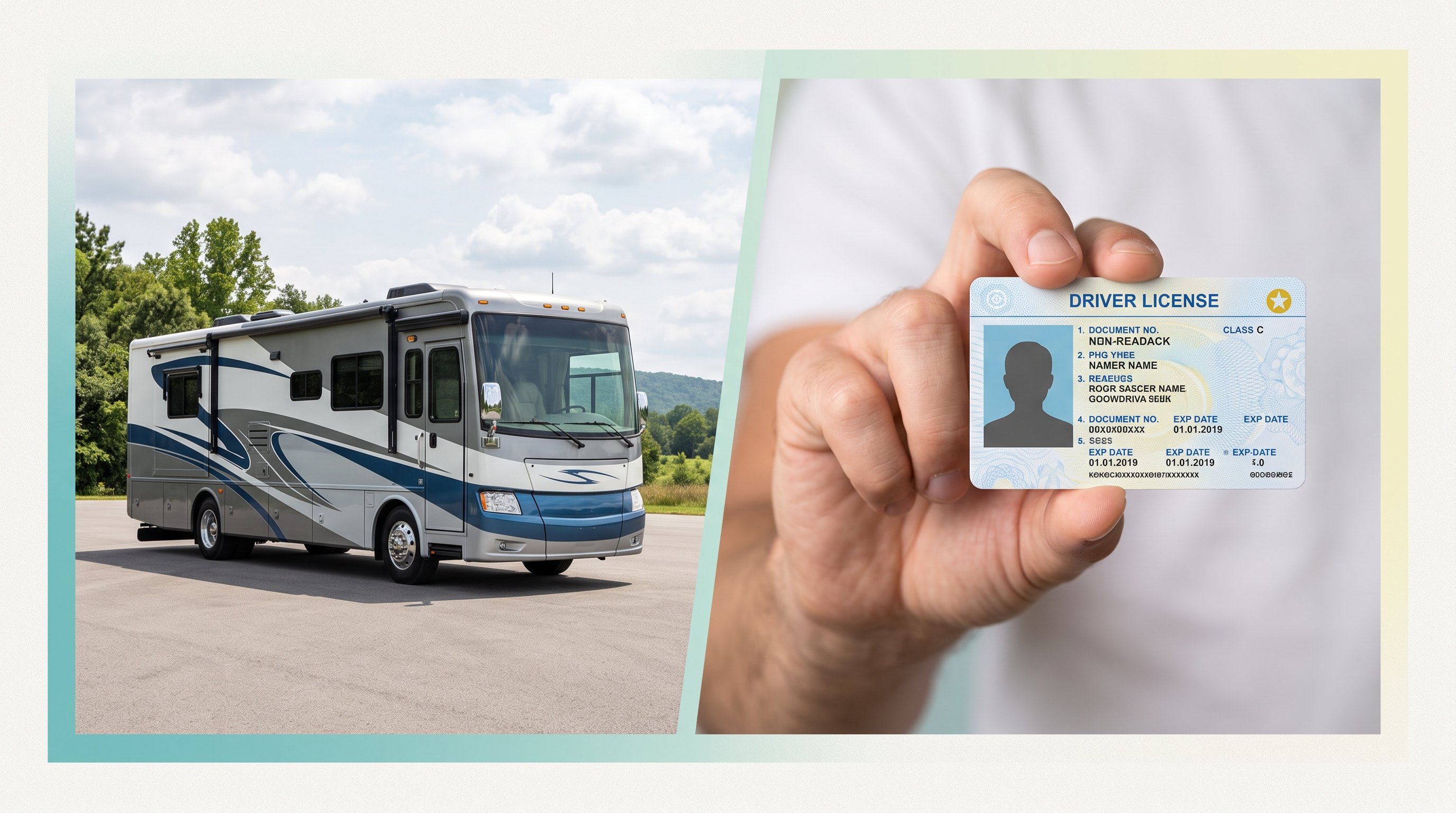
The Five Facts You Need Before Asking the Question
Do not call a registry office and ask only, “Can I drive a Class A?” Have these facts ready:
- Your licensing jurisdiction. The province, territory or state that issued your licence—not simply the place where the RV is parked.
- Vehicle type. Self-propelled motorhome, truck and fifth wheel, or tow vehicle and bumper-pull trailer.
- Weights. GVWR/registered gross weight of the motorhome, and GCWR plus trailer GVWR for a combination.
- Axles. Count the motorhome’s axles and, for Alberta in particular, the trailer axles too.
- Brake system. Hydraulic, air-over-hydraulic or full air brakes are not always treated the same.
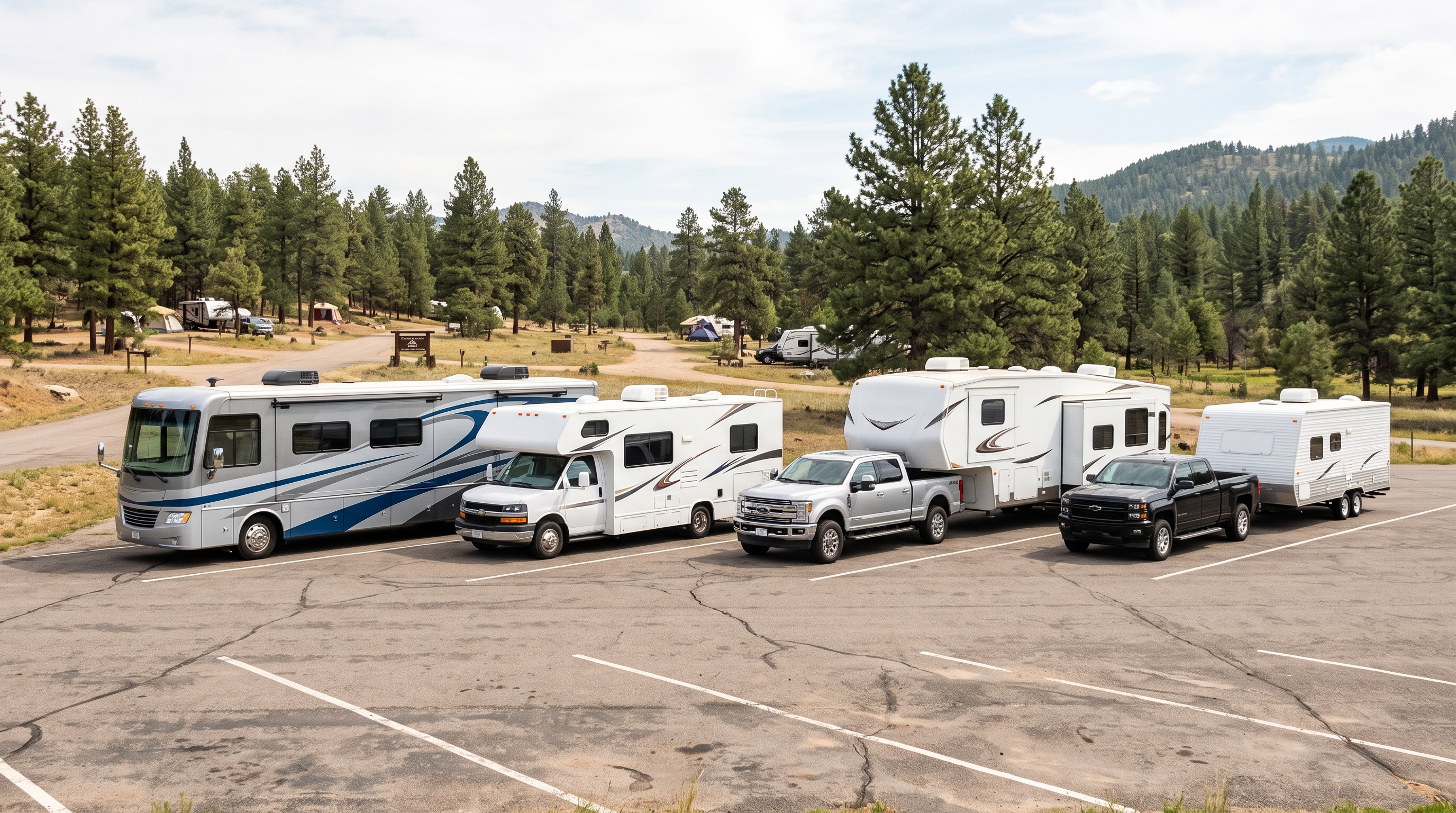
Where to find the weight
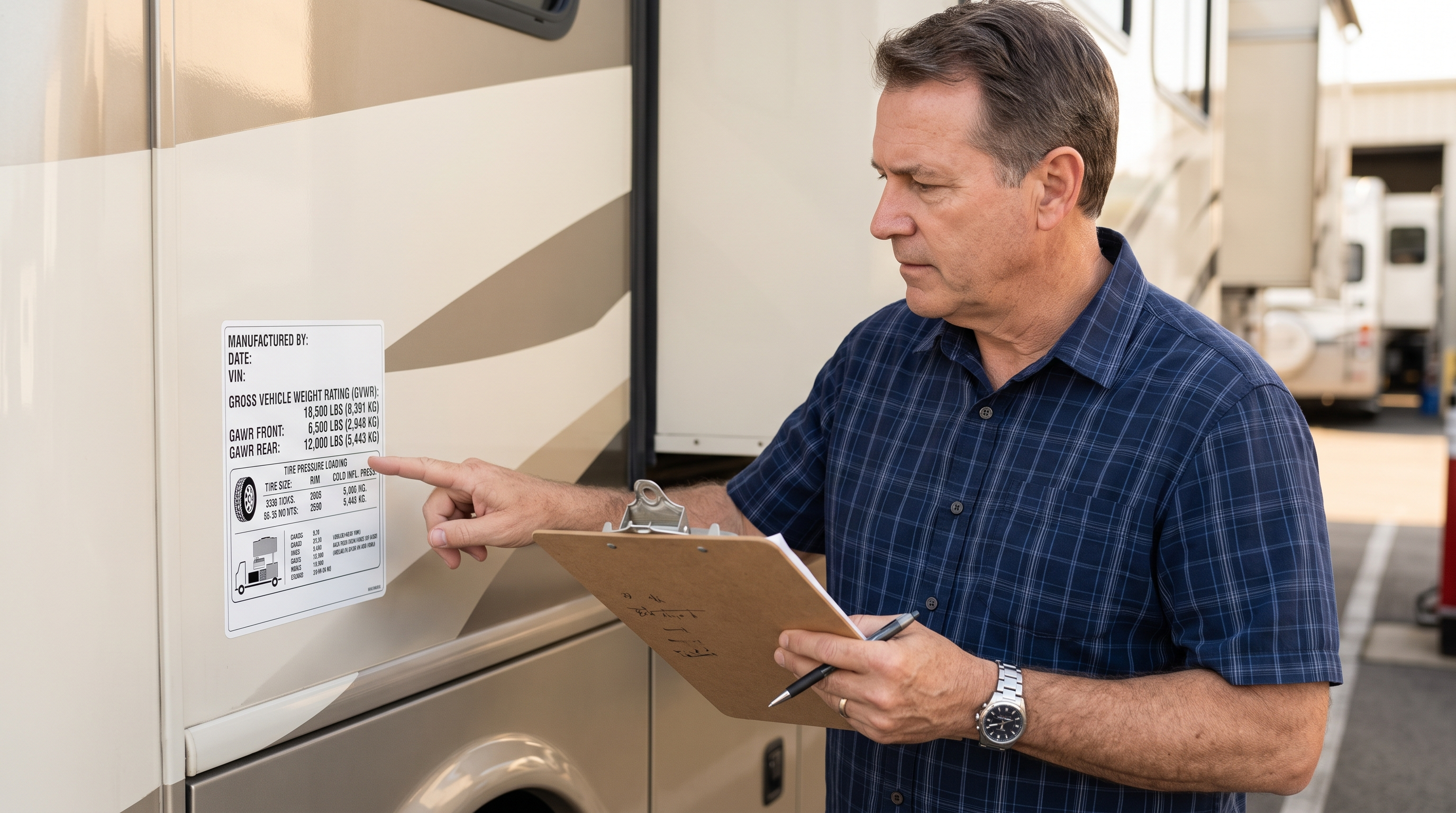
Use the manufacturer’s compliance label, registration and owner documentation—not the model name or a dealer’s estimate. GVWR is a rating, while actual scale weight tells you what the rig weighs today. A licensing rule may reference GVWR, registered gross weight, net weight or actual gross weight, so read the authority’s wording carefully.
Motorhome Rules and Trailer Rules Are Different
| Rig | Rules commonly look at | Common mistake |
|---|---|---|
| Class A or C motorhome | Motorhome status, GVWR/registered weight, axle count, air brakes, sometimes length | Assuming personal use always means an ordinary licence |
| Truck + fifth wheel | Trailer weight, combination weight, trailer type and brake system | Applying motorhome exemptions to a trailer combination |
| SUV/truck + travel trailer | Towed unit’s loaded/rated weight, combination limits and brakes | Using dry weight instead of the figure named in the law |
| Motorhome + towed car | Motorhome class plus towing and auxiliary-brake rules | Checking the motorhome but forgetting the toad |
British Columbia shows why this distinction matters. ICBC says a regular licence can tow a recreational trailer up to 4,600 kg GVW with a two-axle vehicle. A recreational house trailer over 4,600 kg can require a Code 07 house-trailer endorsement; air brakes create another branch, and a trailer over 4,600 kg with air brakes can require Class 1. None of that is answered by calling the trailer a “fifth wheel.”
Canada: Province-by-Province Starting Point
This table is a screening guide. “Class 5 may cover” is not permission to drive every rig in that jurisdiction; it tells you where to begin reading and what can change the answer.
| Jurisdiction | Practical 2026 starting point | Official source |
|---|---|---|
| British Columbia | Check the motorhome’s class and brakes separately. Air-brake RVs need the appropriate air-brake endorsement. Towable RVs cross an important threshold at 4,600 kg GVW. | ICBC air brakes ICBC trailer licensing |
| Alberta | Class 5 includes a motorhome without air brakes and certain RV/trailer combinations. Three-or-more-axle single vehicles fall under Class 3 wording; an air-brake vehicle requires Q. | Alberta licence classes Q endorsement |
| Saskatchewan | Class 5 expressly includes three-axle motorhomes. Air brakes require Endorsement A, apart from specified farm-plated exceptions. | SGI licence system SGI air brakes |
| Manitoba | Class 5 covers passenger vehicles, two-axle trucks and combinations where the towed vehicle’s registered GVW is no more than 4,540 kg. Confirm a large motorhome’s registration class and add the air-brake endorsement where required. | MPI licence types |
| Ontario | Since July 1, 2025: full G/E/F covers a motorhome up to 11,000 kg; an RV endorsement extends that to 14,000 kg; a D licence with RV restriction covers heavier recreational vehicles. Air brakes require Z. | Ontario RV licensing |
| Québec | Class 5 expressly authorizes a motorhome. An F endorsement applies when the vehicle meets Québec’s heavy-vehicle definition and has air brakes; confirm your specific RV with SAAQ. | SAAQ licence classes |
| New Brunswick | Start with Class 5, then verify axle/weight and air-brake requirements directly from Motor Vehicle Branch for the exact registration. | New Brunswick driver licences |
| Nova Scotia | Class 3 wording applies to a single vehicle over 14,000 kg; air brakes require the proper endorsement. Confirm how the registered motorhome is classified. | NS licence regulations |
| Prince Edward Island | Verify the motorhome’s weight, axle count and brake system with Highway Safety before operating a large or air-brake-equipped unit. | PEI driver licensing |
| Newfoundland & Labrador | Class 5 expressly permits self-propelled motorhomes with two or more axles. An air-brake endorsement is still required for air-brake-equipped vehicles. | NL licence classes |
| Yukon | Check the current handbook/Motor Vehicles office using the RV’s axle count, weight and brake type; do not infer the rule from another territory. | Yukon driver licensing |
| Northwest Territories | Confirm the vehicle class and any air-brake endorsement with Driver and Vehicle Services before driving. | NWT driver services |
| Nunavut | Confirm the precise licence class and endorsement with Motor Vehicles; published summaries are not a substitute for a ruling on your RV. | Nunavut driver licensing |
Air Brakes: The Question Class A Shoppers Miss
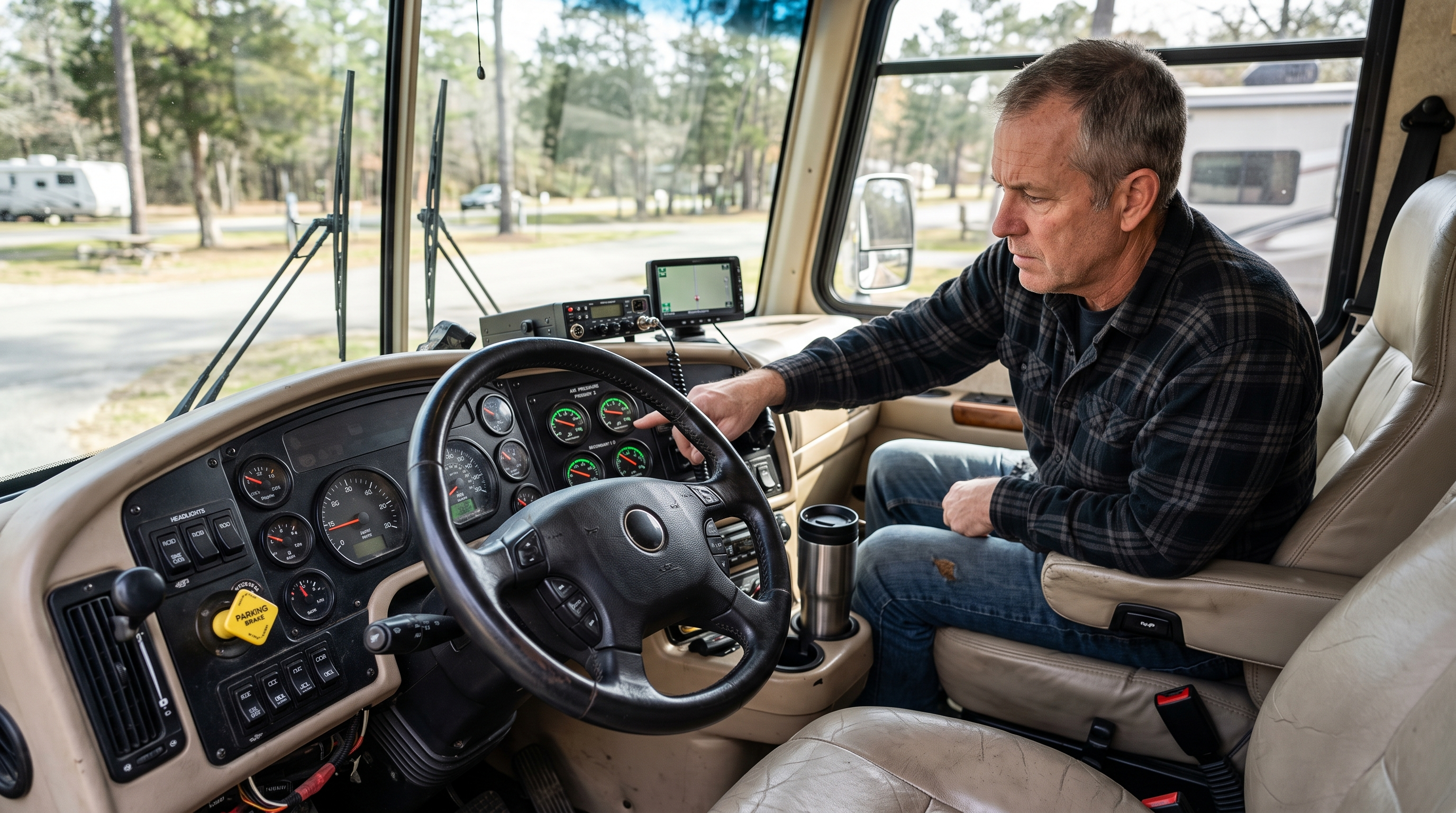
Many diesel-pusher Class A motorhomes use full air brakes. Across Canada, that commonly means a separate air-brake endorsement or certificate even when the underlying passenger licence is otherwise sufficient for the motorhome.
Air brakes are not simply “stronger hydraulic brakes.” The system stores compressed air, has pressure thresholds and warning devices, and requires a different inspection routine. Provinces use different endorsement letters: Q in Alberta, A in Saskatchewan, Z in Ontario and F in Québec, for example.
Air-over-hydraulic is not always treated as full air
Do not identify the legal brake type from a sales ad. Saskatchewan, for example, distinguishes air-over-hydraulic from full air brakes for its A endorsement. Obtain the chassis documentation and ask the licensing authority using the exact system description.
United States: No Single Nationwide RV-Licence Answer
Personal RV use is commonly exempt from federal commercial driver licensing, but driver licensing is state based. “CDL exempt” does not always mean “ordinary licence is enough.” A state may require a non-commercial Class A or B, or a recreational endorsement.
| Official example | Why it matters | Source |
|---|---|---|
| California | Basic Class C covers a housecar 40 feet or less. A housecar over 40 but not over 45 feet requires non-commercial Class B with endorsement. Trailer thresholds follow separate rules. | CA DMV RV handbook |
| Texas | Personal RVs can be CDL-exempt while still requiring non-commercial Class A or B when vehicle/combination ratings meet those classes. Class B begins with a single vehicle rated 26,001 lb or more. | Texas licence classes |
| New York | New York lists an R endorsement for recreational vehicles with GVWR over 26,000 lb. | NY DMV endorsements |
These are examples, not a 50-state permission chart. Before a purchase or interstate trip, use your home DMV’s current licence-class page and ask about a personal-use motorhome with the exact GVWR, length and brake system.
What Happens When You Travel Across a Border?
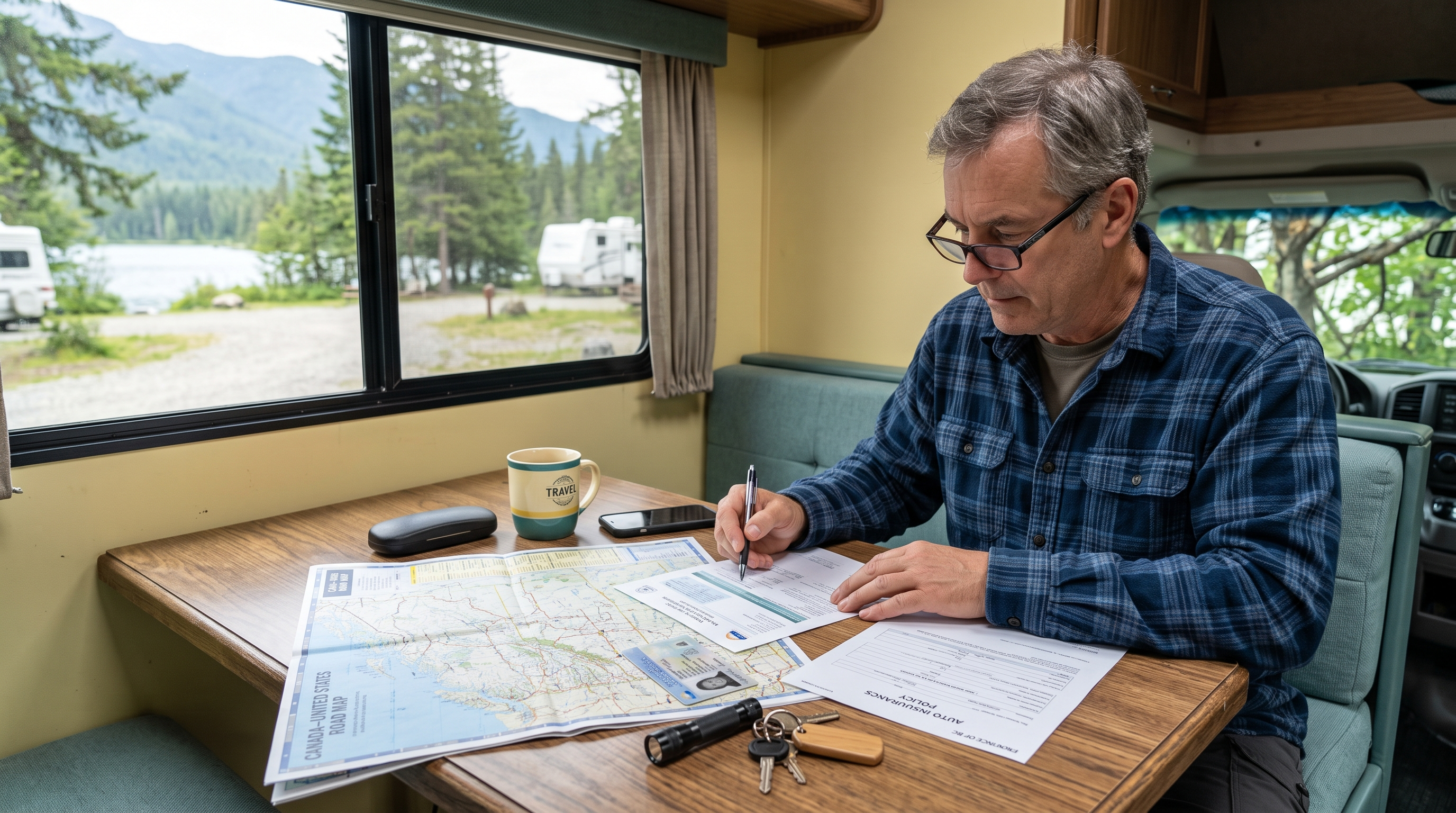
A visitor generally drives under the valid licence issued by their home jurisdiction, subject to recognition rules. That does not create privileges your home licence never granted. If your province requires an air-brake endorsement for your RV and you do not have it, crossing into another province does not cure the problem.
Also separate driver licensing from destination laws. The place you visit may regulate vehicle length, trailer brakes, safety chains, speed, lane use, weights and equipment even though it recognizes your licence. Your insurer can explain territorial coverage; the relevant road authority can explain operating rules.
For height-, weight- and RV-aware routing, see our RV LIFE Tripwizard overview. Navigation software helps avoid unsuitable roads; it does not validate your driver’s licence.
Insurance and Rental Companies Can Say No Anyway
Meeting the minimum legal licence rule is only one gate. A rental company may impose age, driving-record, experience or orientation requirements. An insurer may require disclosure of the exact RV, usage, province/state of registration, air-brake qualification and principal driver.
- Is my licence class and endorsement acceptable for this exact VIN?
- Is the RV covered in every province/state on my route?
- Are other household drivers listed and qualified?
- Does towing a car or trailer alter coverage?
- What licence must I show at pickup?
- Is an air-brake credential required?
- Are there length, destination or border restrictions?
- Is an orientation or road evaluation mandatory?
Licence-Compliant Does Not Mean Ready
A legal licence is the floor, not proof that a driver can safely manage a long rear overhang, wide turns, wind, downhill braking or a large blind area. I learned that scale matters by moving between a 32-foot bumper-pull, fifth wheels and Helen, our Class C. The controls can feel familiar while the consequences of a late turn or poor lane position are much bigger.
A sensible first-drive progression
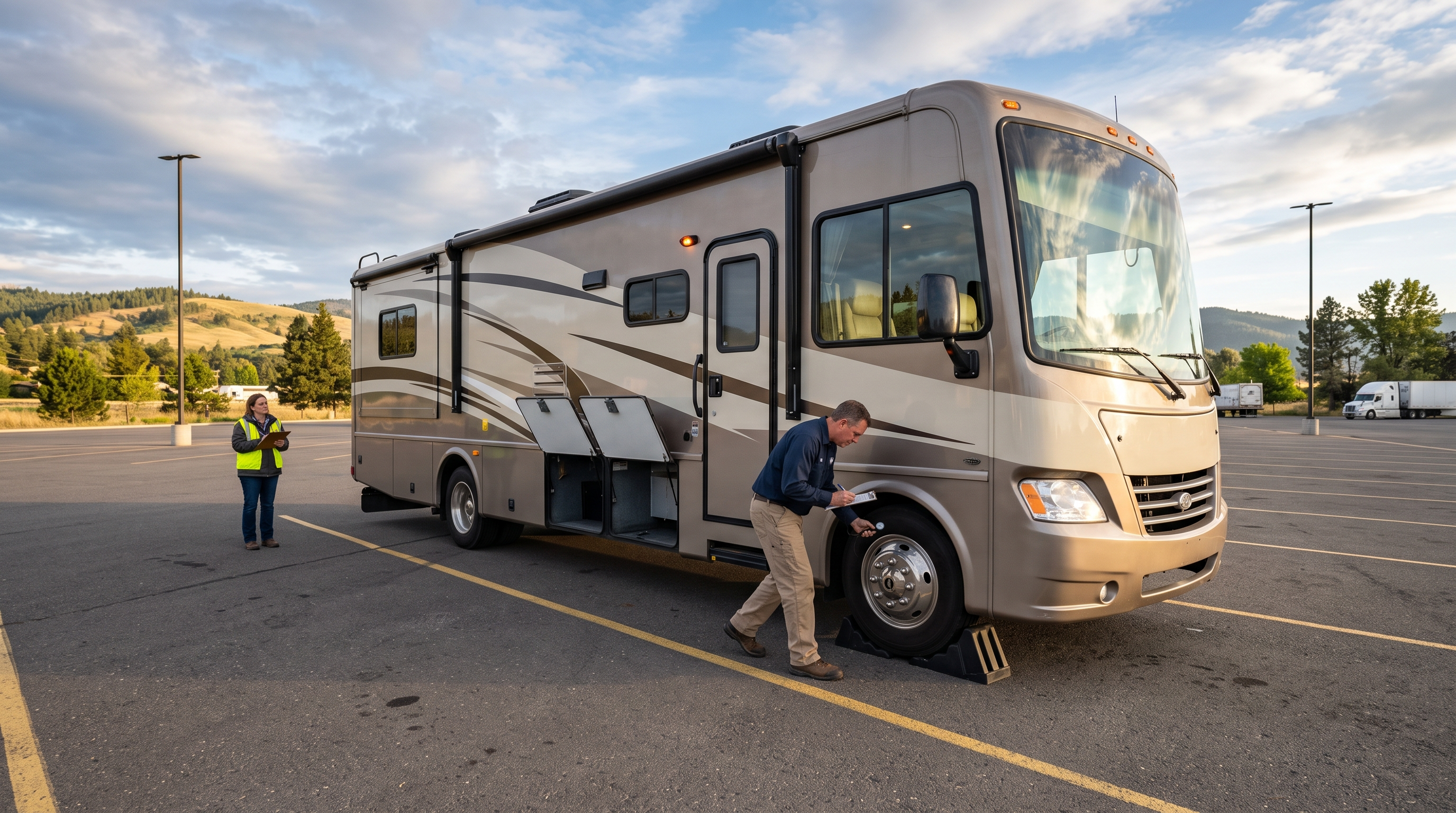
- Complete any required licence course, knowledge test and road test.
- Get instruction from a qualified trainer familiar with the chassis and brake system.
- Learn the owner and chassis manuals before improvising a pre-trip routine.
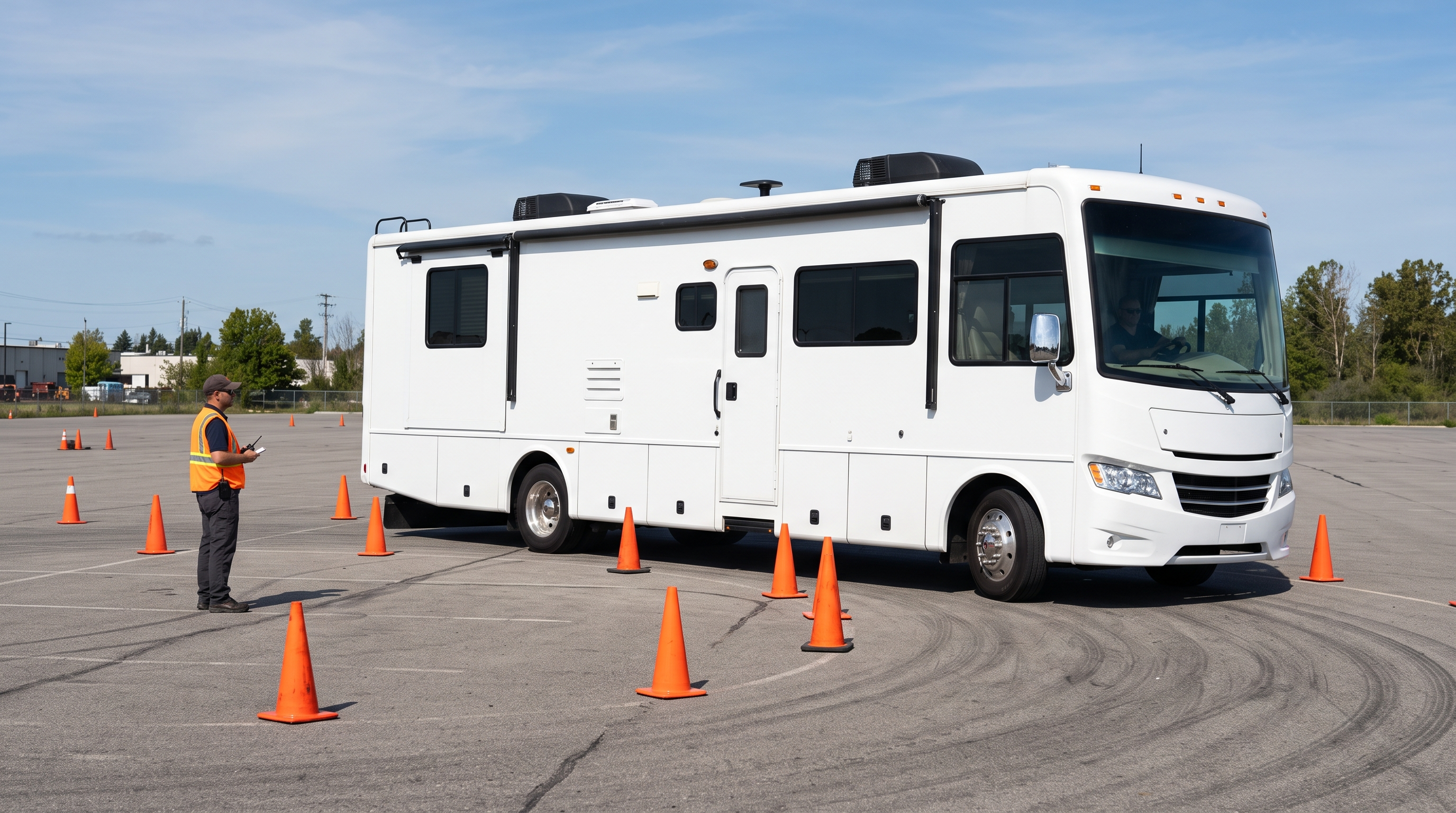
- Practise mirror setup, straight-line backing, turns and braking in a legal low-risk environment.
- Use a spotter with agreed hand signals and stop whenever the spotter disappears from view.
- Plan the first route around fuel access, clearance, grades and wide approaches.
The Exact Decision Tree to Use Before You Drive
- Identify the rig. Motorhome or towable combination?
- Photograph the labels. Record GVWR, GAWR, axle count, length and brake-system description.
- Open your home authority’s rules. Search the official government/insurer site—not a dealer forum.
- Test every trigger. Weight, axles, trailer threshold, air brakes and personal versus commercial use.
- Get a written answer where possible. Save the applicable page or email with the RV’s documents.
- Confirm insurance and rental terms. Legal eligibility does not bind a private contract.
- Train for the vehicle. Satisfy the legal requirement, then build the actual driving skill.
Frequently Asked Questions
Can I drive a Class A motorhome with a regular licence?
Often, but not universally. Your home jurisdiction may add a weight, axle, length or air-brake trigger. Check the exact RV specifications against the current official rule.
Do I need a commercial licence for a personal RV?
Personal use is frequently exempt from commercial licensing, but you may still need a higher non-commercial class or an endorsement. Texas is a clear example.
Do diesel-pusher motorhomes require an air-brake endorsement?
If the motorhome has full air brakes, Canadian jurisdictions commonly require the applicable air-brake endorsement or certificate. Confirm the actual brake system and your province’s rule.
Does a Class 5 licence cover every motorhome in Canada?
No. Québec and Newfoundland and Labrador explicitly include motorhomes under Class 5, while Ontario uses weight thresholds and Alberta’s rules introduce axle and air-brake considerations. Canada does not have one universal provincial licence rule.
Is a fifth wheel treated like a Class A motorhome?
No. A fifth wheel is a trailer combination. The relevant rule may look at the trailer’s weight, combined rating, tow vehicle, brakes and trailer type rather than motorhome rules.
Can I rely on the RV dealer to tell me which licence I need?
Use the dealer to collect specifications, but verify legal eligibility with the government authority that issued your licence and confirm coverage with your insurer.
Final Answer
You may not need a special licence to drive a Class A RV—but the RV badge alone cannot answer the question. Start with your home jurisdiction, then test the RV’s weight, axles and brake system. Treat a fifth wheel as a trailer question, not a motorhome question. And remember that a CDL exemption, personal-use exemption or ordinary passenger licence does not automatically erase an air-brake endorsement.
My own experience taught me something simple: being comfortable around big equipment and being legally qualified are separate things. Verify first, train properly and then enjoy the road without wondering what will happen at the next inspection, border or insurance claim.
Disclosure: Some internal pages may contain affiliate links. If you purchase through one, this site may earn a commission at no additional cost to you. Government links are provided for verification and are not affiliate links.


Leave a Reply