
Affiliate Disclosure: I earn commissions if you shop through the links below at no additional cost to you.
Last Updated on March 9, 2026 by Jeremy
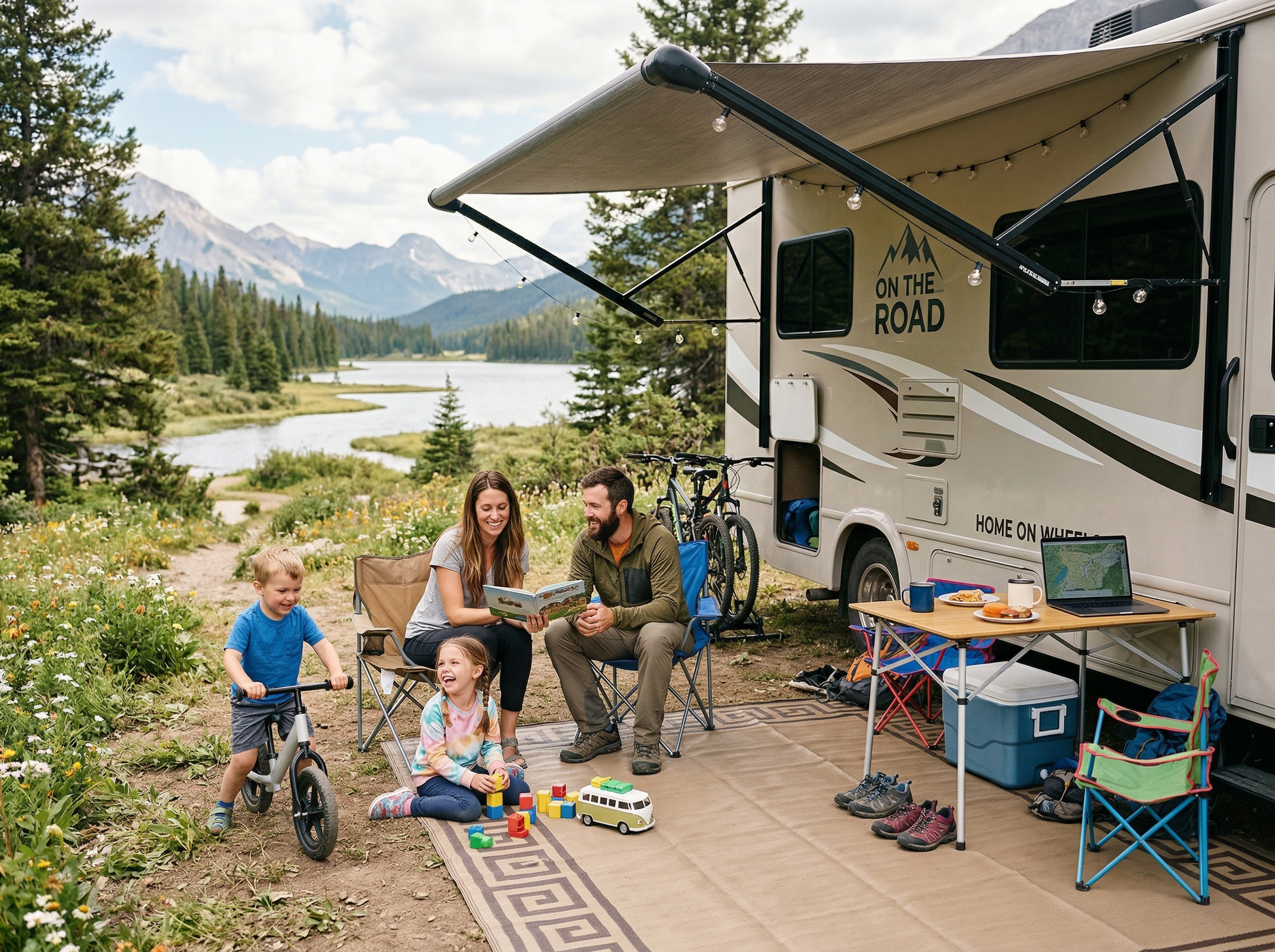
Full-time RV living with kids can be incredible, but let’s not oversell it like it’s some endless campfire commercial where everyone is smiling, reading books, and magically never asking for snacks every 14 minutes. It can be a rich, memorable lifestyle for a family, but it works best when you build structure into the freedom.
That’s really the balancing act. Parents are not just chasing views and national parks. They’re trying to manage education, routines, friendships, safety, health, storage, emotions, weather, travel days, and the fact that everyone is living in a rolling shoebox together.
The good news is that it can absolutely work. The trick is not trying to copy some perfect-looking RV family online. It’s building a version of road life that actually fits your kids, your pace, and your tolerance for chaos on any given Tuesday.
TL;DR
- RV life with kids works best when freedom is backed by routine, not when every day is completely unplanned.
- Education, friendships, and travel days all take more intentional effort on the road than they do in a stationary life.
- Safety and wellness come down to preparation, habits, and keeping the RV family-ready instead of last-minute-ready.
- The most successful RV families build a rhythm that fits their children, rather than forcing kids to adapt to a nonstop travel pace.
What changes most when you live in an RV with kids
Living in an RV with children changes the obvious things like space, storage, and privacy, but it also changes the invisible stuff. Routines feel more fragile. Travel days take more energy. Little moods can feel bigger when everyone shares the same few hundred square feet. At the same time, family time becomes more meaningful because you are actually doing life together instead of constantly scattering in different directions.
That is why full-time RV living with kids usually goes best when parents stop thinking only about destinations and start thinking more about family systems. Where will school happen? How often will you move? What does a normal morning look like? When do kids get downtime? Those boring questions are the ones that save the day.
The road can be a fantastic teacher, but kids still need predictability. Adventure works better when it has some guardrails.
Education on the road without making everyone miserable
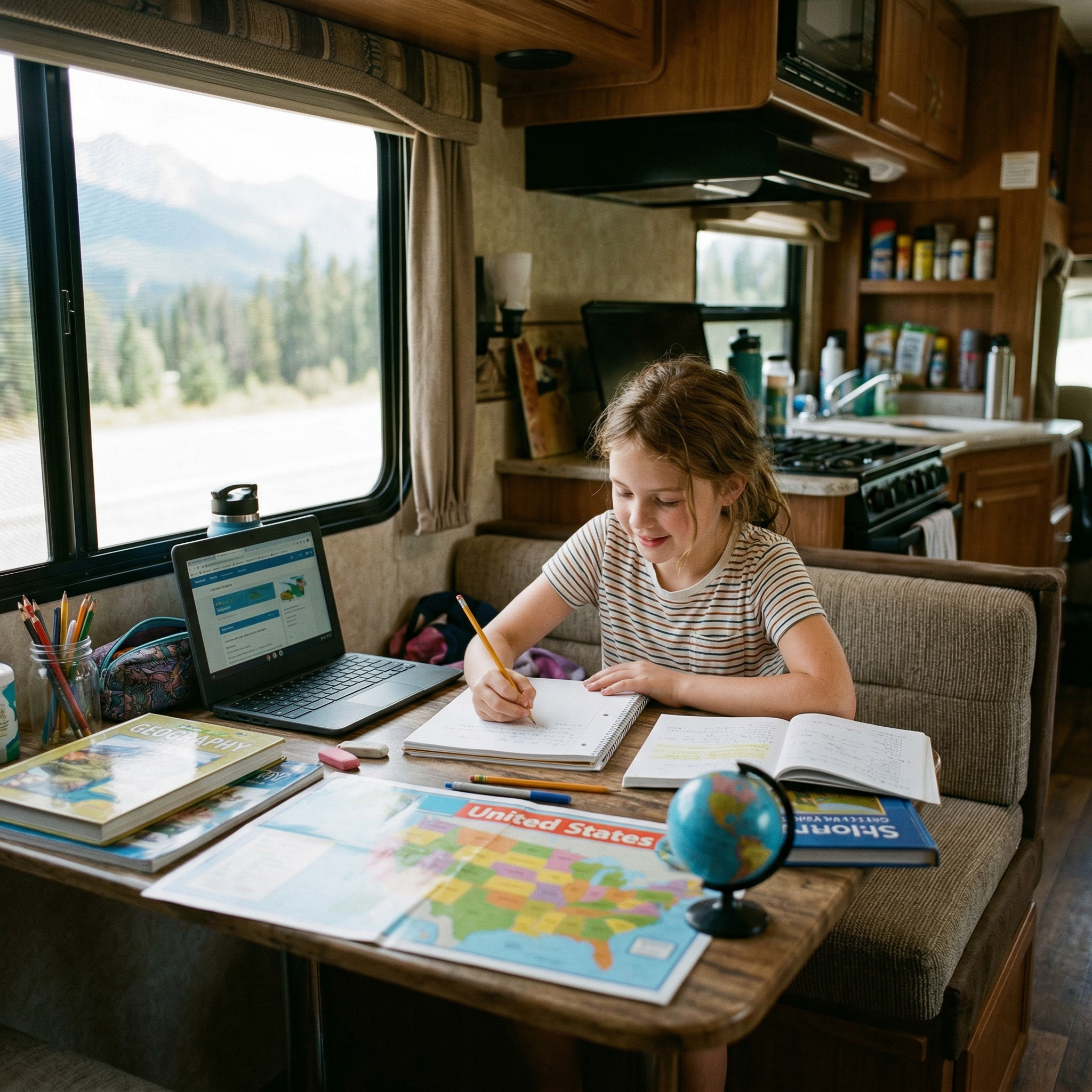
Education is one of the first things parents worry about, and fair enough. The good news is roadschooling can be incredibly effective when you combine structured learning with real-world experiences. The less good news is that it still takes consistency. You cannot just point at a canyon and call it math.
Use structure, then layer travel into it
Online programs, workbooks, reading blocks, and project-based learning can all work well in an RV. The strongest setup is usually a basic routine that gives your kids a predictable learning window, then uses your travel stops to deepen what they are already studying.
- Use a consistent school block several days a week
- Keep supplies simple and easy to put away quickly
- Match stops to learning where possible, such as museums, historic sites, and nature programs
- Give kids ownership through journals, maps, or destination-based projects
National parks, local museums, libraries, cultural centers, and Junior Ranger programs can all add real depth to what your kids are learning. Just don’t rely on “we’ll learn as we go” without a base plan, because that can drift into chaos faster than people like to admit.
A small mobile learning setup beats a Pinterest-perfect one every time. In an RV, “easy to reset” matters more than “looks amazing for eight minutes.”
Friendships and social life on the road
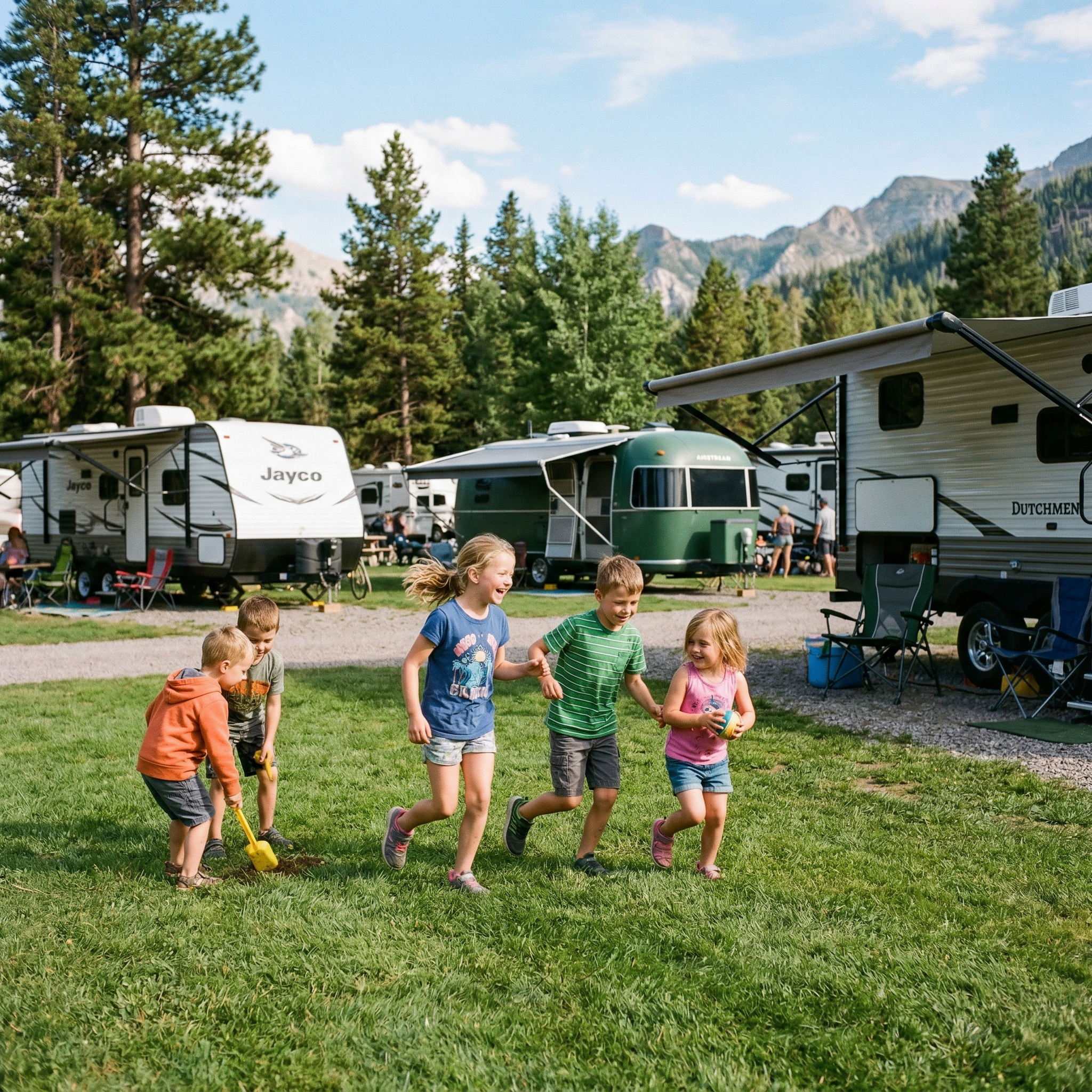
One of the biggest concerns parents have is socialization, and honestly, that concern is valid. Kids can absolutely make friends on the road, but it usually takes more intention than it does in a neighborhood or school setting.
How families make it work
- Stay longer in places where your kids click with the environment or community
- Use family RV groups and meetups to find other traveling families
- Spend time in local libraries, sports programs, art classes, or community events
- Keep long-distance friendships alive through calls, messages, and old-school letters
Some seasons of RV life will feel social and easy. Others may feel a bit isolated, especially if you are moving too fast or staying in places that are less family-oriented. That does not mean the lifestyle is failing. It usually means the pace or pattern needs a small adjustment.
If your kids are struggling socially, slowing down is often more effective than trying to cram in more attractions.
Keeping family life fun without burning everyone out
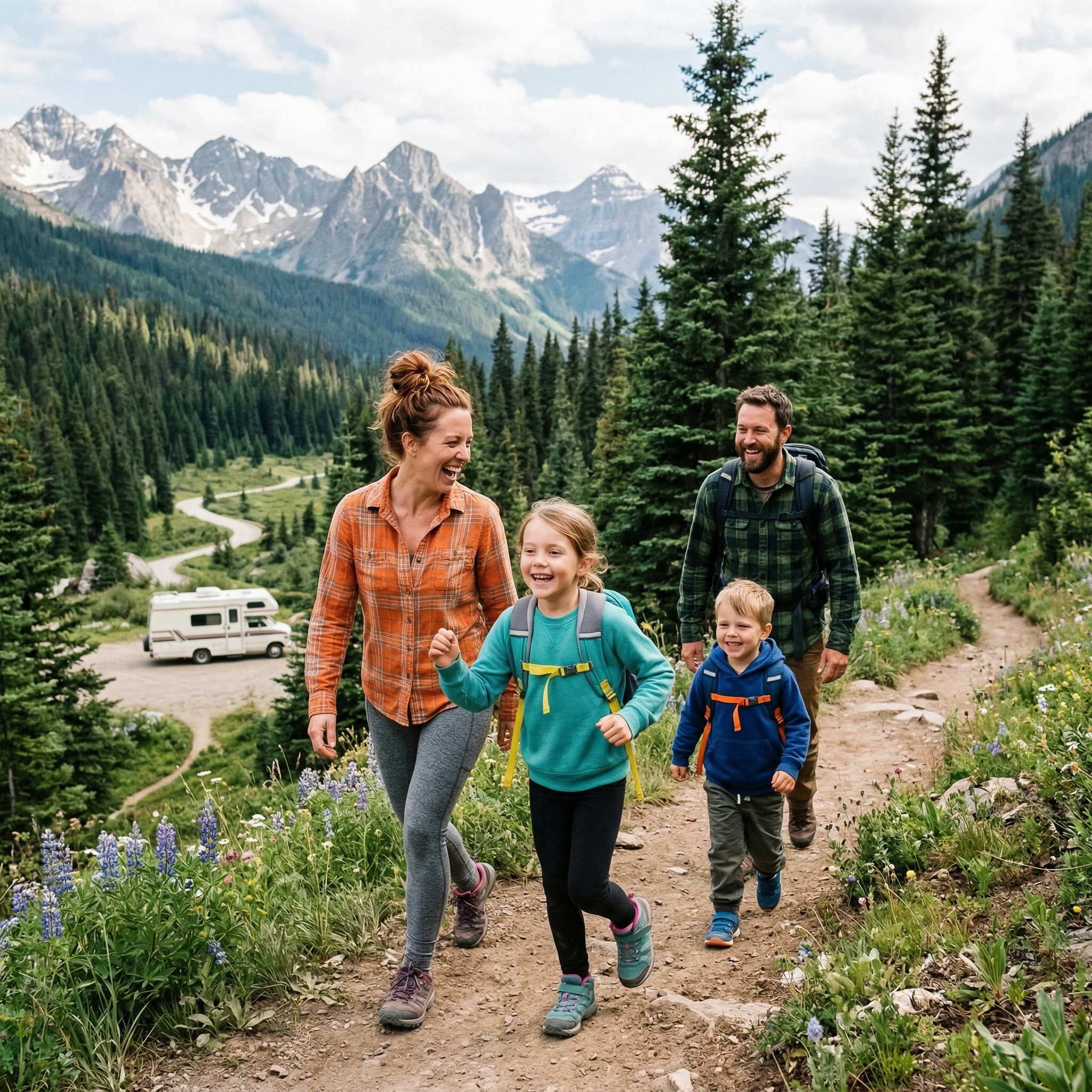
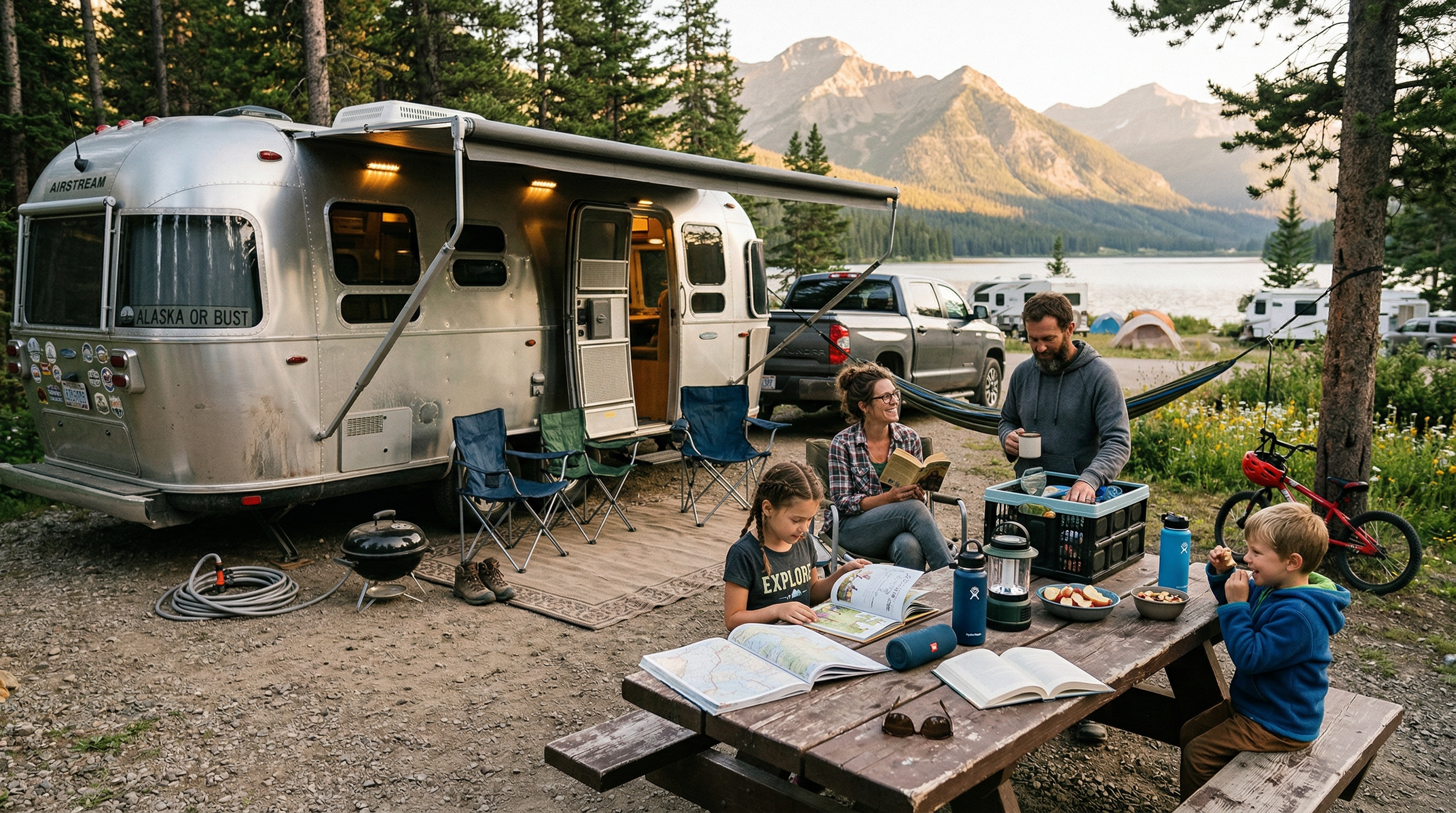
The beauty of RV life is that family adventures are built into the lifestyle, but kids do not need every day to be a headline-worthy event. In fact, they usually do better when the exciting stuff is mixed with ordinary rhythms like reading, outdoor play, chores, meals, and quiet time.
Simple ways to keep the road engaging
- Rotate easy outdoor goals like scavenger hunts, wildlife spotting, or geocaching
- Keep a small art bin for journaling, sketching, and nature crafts
- Let each child choose an activity or mini-adventure sometimes
- Use local food, history, or culture as part of the experience
Kids do not remember every campground. They remember the weird roadside stop, the creek behind the site, the night you cooked something badly over the fire and all laughed anyway. That is the stuff that sticks.
A packed itinerary can look productive and still feel exhausting. Leave room for boredom, because that is often where the best family moments show up.
Safety, health, and family preparedness
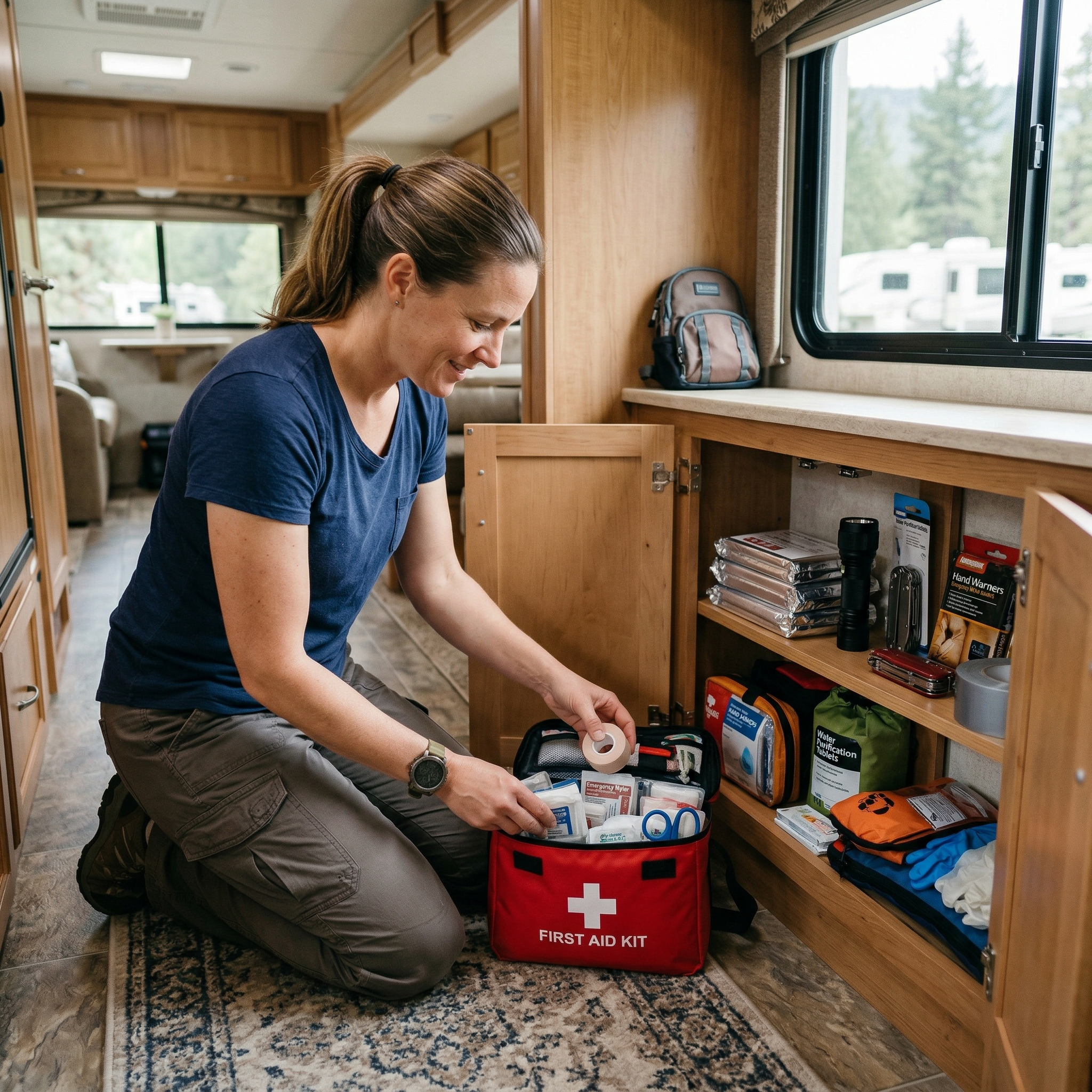
Safety in an RV with kids is less about fear and more about habits. You want the RV set up in a way that makes the smart choice the easy choice. That means emergency gear is accessible, exit plans are understood, food storage is sensible, and the kids know what to do if something goes sideways.
Family safety basics worth locking in early
- Teach kids how to exit the RV safely in an emergency
- Check smoke, propane, and carbon monoxide alarms regularly
- Keep a stocked first aid kit and season-specific meds on board
- Have a grab-and-go bag for weather or roadside emergencies
- Use a reliable water setup and keep food handling extra clean in a small kitchen
Healthcare is another part parents should think through before something happens, not after. Know where urgent care options are, keep important medical info easy to access, and make sure your documents and emergency contacts are organized.
Prepared does not mean paranoid. It just means you have already done the thinking when everyone is calm.
Travel days with kids: how to make them less painful
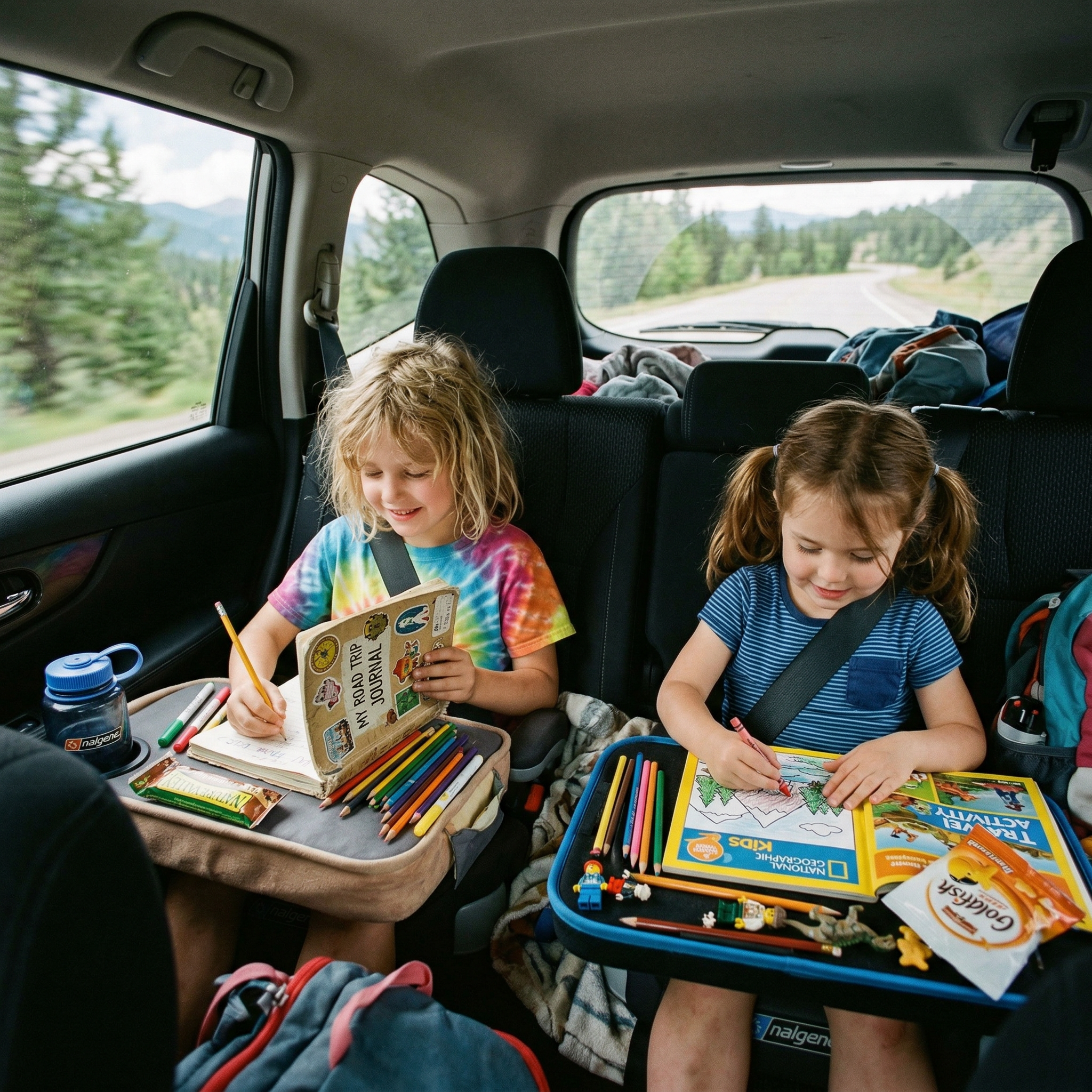
Travel days are where even strong RV families can get a little crispy around the edges. The key is not to pretend they are magical. The key is to make them manageable. Kids usually handle travel better when they know what the day looks like and when the adults are not trying to drive too far, too fast, and too late.
What helps most
- Keep snacks, water, and easy cleanup supplies within reach
- Use audiobooks, road games, journals, and simple activity kits
- Build in stops that actually let kids move, not just stand beside a fuel pump
- Try to arrive before everyone is overtired and done with each other
Some families love long hauls. Others do far better with shorter drives and slower travel. There is no gold medal for making your kids sit in the truck until everyone is grumpy and sticky.
A solid travel day plan is often the difference between “good family memory” and “why did we think this was a fun idea?”
Quick decision guide for families considering full-time RV life
- If your kids need routine: Build a slower travel schedule with repeatable morning and school rhythms.
- If your family gets overstimulated easily: Choose fewer moves, longer stays, and more open space between activities.
- If socialization is your biggest concern: Prioritize family-friendly campgrounds, local activities, and meetup opportunities over constant movement.
- If you work remotely while parenting: Be realistic about space, quiet, and internet reliability before committing to a fast-paced route.
- If your kids thrive outdoors: RV life can be a fantastic fit when the travel schedule leaves room for actual exploration.
- If everyone is already stressed at home: Do a test run first. RV life can simplify some things, but it also magnifies family dynamics.
If you want a practical planning tool for mapping routes, campgrounds, and family-friendly travel days, start here: RV Life Tripwizard.
Sources and further reading
FAQ
Is full-time RV living with kids actually realistic?
Yes, but it works best when families create routines around travel, education, meals, and downtime. It is realistic for many families, though it is rarely effortless.
How do kids make friends while RVing full-time?
Kids often make friends through campgrounds, RV family groups, local classes, libraries, sports, and meetups. Social connection on the road usually takes more planning than it does in a traditional neighborhood setting.
Can you homeschool or roadschool successfully in an RV?
Yes. Many families combine structured learning with travel-based experiences like museums, parks, and local history. The most effective setup usually blends flexibility with a predictable school rhythm.
What is the hardest part of RV life with kids?
For many families, the hardest parts are limited space, travel-day fatigue, inconsistent routines, and managing everyone’s needs in close quarters. Those challenges can be reduced with slower travel and better systems.
How do you keep kids safe in an RV?
Start with working smoke and carbon monoxide detectors, a solid first aid kit, emergency plans, safe food and water practices, and clear rules for moving around campgrounds and the RV itself.




.jpg/:/cr=t:5.56%25,l:0%25,w:100%25,h:88.89%25/rs=w:1240,h:620,cg:true)



Leave a Reply