

Last Updated on September 14, 2026 by Jeremy
Most RVers don’t buy the wrong generator because they’re careless. They buy the wrong one because nobody explained how to think about it properly.
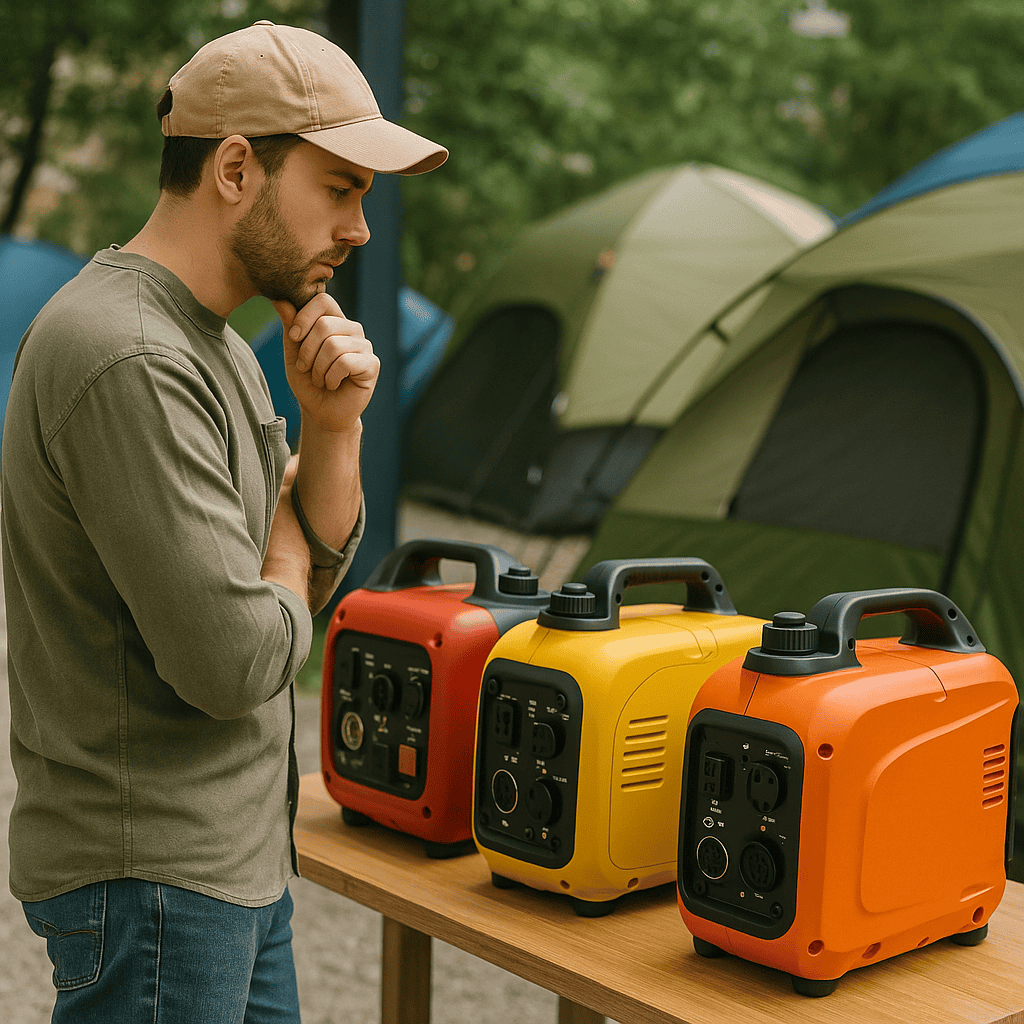
If you’ve ever stood in a store aisle or scrolled online thinking “2000 watts… 3500 watts… inverter… dual fuel… what do I actually need?” you’re not alone.
Choosing a portable generator for your RV setup isn’t about brand hype. It’s about matching your hardest day of power demand to a machine that can handle it without stress.
Affiliate Disclosure: I may earn a commission if you shop through certain links, at no additional cost to you. This guide is written to help you choose correctly first.
This article focuses on how to choose. If you already know what size you need, you can jump to the model comparisons in my Best RV Generator Guide .
Step 1: Understand What Your RV Actually Needs
The biggest mistake RVers make is guessing. Generators are bought emotionally and regretted mathematically.
Running Watts vs Starting Watts
Many appliances need extra power when they start. Your air conditioner is the classic example.
- A typical 13,500 BTU rooftop A/C may run around 1,500 watts.
- But it can spike above 2,800–3,000 watts at startup.
That startup spike is what trips small generators. Not the steady running load.
30 Amp vs 50 Amp RV Service
A 30A RV theoretically allows up to 3,600 watts. A 50A RV technically allows far more. But that doesn’t mean you need a generator that matches shore power capacity.
What matters is what you plan to run at the same time. Air conditioner? Microwave? Coffee maker? Water heater? Stack too many at once and even a big generator feels small.
Step 2: Decide If You’re Running Air Conditioning
This is the fork in the road.
If you do not plan to run A/C off-grid, a quality 2000–2500W inverter generator often handles essentials just fine.
If you do plan to run A/C, most RVers should look in the 3500–4000W inverter range, especially without a soft-start installed.
What Is a Soft-Start?
A soft-start device reduces the startup spike of your air conditioner. It can allow a smaller generator to start and run your A/C smoothly.
If A/C comfort matters, a soft-start can save you from overspending on generator size.
Step 3: Choose Fuel Type Wisely
Gasoline
Widely available. Often slightly higher output. But fuel goes stale if stored long-term.
Propane
Burns cleaner. Stores indefinitely. Slightly lower output compared to gas.
Dual Fuel
Adds flexibility. Ideal for longer trips or uncertain fuel access.
Year-round RVers often prefer dual fuel for flexibility across climates.
Step 4: Inverter vs Conventional Generators
Inverter Generators
- Quieter
- More fuel efficient
- Safe for electronics (low THD)
- Better for campground use
Conventional Generators
- Often louder
- Heavier
- Good for job sites or emergency backup
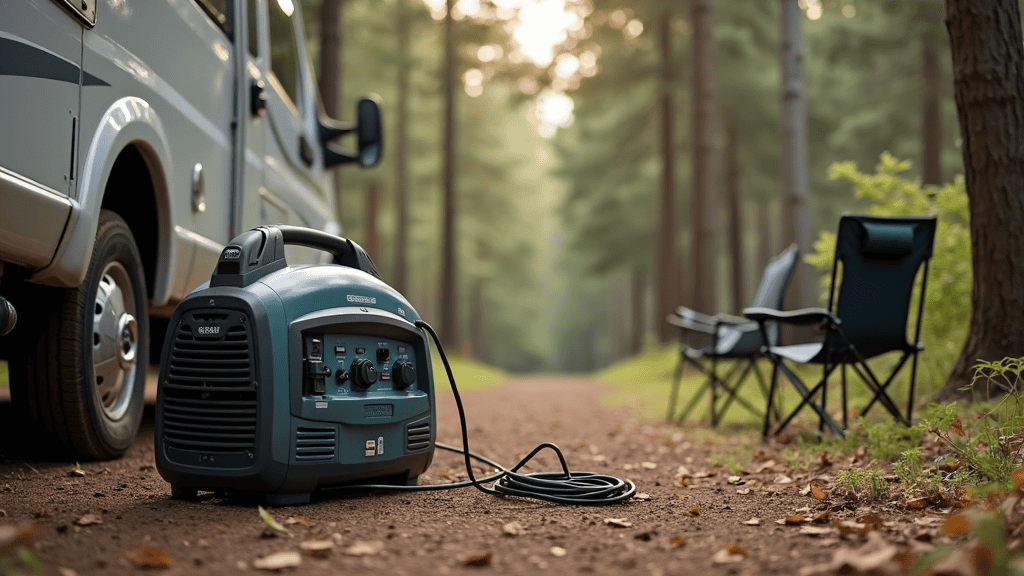
For most RVers, inverter generators are the smarter choice.
Step 5: Think About Noise and Campground Rules
50–60 dB feels reasonable in a campground. 70+ dB gets attention.
If you camp near others, noise rating matters more than raw wattage.
Step 6: Consider Weight and Portability
Small inverters: 40–60 lbs. Larger units: 80–120+ lbs.
If you travel solo, weight becomes a daily quality-of-life factor.
Step 7: Elevation and Real-World Conditions
Generators lose power at higher elevations. Rough rule: around 3% per 1,000 feet above sea level.
If you camp in the mountains, build extra headroom into your wattage choice.
Checklist: How to Choose a Portable Generator
- List your appliances and their running + starting watts.
- Decide if you need A/C off-grid.
- Choose fuel type based on your travel habits.
- Pick inverter if noise matters.
- Confirm weight is manageable.
- Check elevation impact.
- Read real-world reviews for long-term durability.
Final Thoughts
The right portable generator isn’t the biggest. It isn’t the most expensive. It isn’t the one with the flashiest features.
It’s the one that matches your hardest travel scenario without overwhelming your setup.
Once you understand your numbers, choosing becomes much easier.


Leave a Reply