

Last Updated on September 14, 2026 by Jeremy
If you are trying to figure out how to prepare your RV for spring camping, the real answer is not “do a few quick checks and call it good.” Spring is where storage-season neglect shows up all at once. A battery that barely limps along. Tires that quietly lost pressure. A water system that sat too long. Roof seals that looked acceptable in the fall and now deserve a harder stare.
That is why I do not treat spring prep like a cheerful little seasonal ritual. It is more like reopening a small rolling house that has been sitting through weather, temperature swings, moisture, and a few months of nobody paying close attention. If you handle the important systems now, your first trip has a much better chance of being about campfires and coffee instead of leaks, warning beeps, and muttered campground swearing.
This guide is built for the practical side of RV life. Not just the obvious stuff, but the checks that tend to get rushed, skipped, or half-done. The goal is simple: make sure the rig is safe, the water is clean, the major systems actually work, and you have a repeatable way to track what was handled before the season gets busy.
TL;DR: What to Check Before Your First Spring RV Trip
- Inspect the roof, exterior seals, windows, vents, and storage compartments before anything else.
- Check tire pressure cold, inspect sidewalls and tread, and do not ignore tire age or the condition of the spare.
- Flush and sanitize the fresh water system, then replace old filters before trusting the water setup again.
- Test batteries, shore power, propane appliances, slide-outs, and safety detectors while you are still at home.
- Look for rodents, moisture, mold, and any weird storage-season surprises hiding in cabinets or utility bays.
- Use a maintenance tracker so spring prep turns into a system instead of a half-remembered guessing game.
Start With the Exterior Before You Trust Anything Else
I always begin outside because winter has a sneaky habit of damaging the parts you do not notice until water gets in. Walk the full rig slowly and look at roof seams, ladder mounts, skylights, vents, corner trim, slide edges, windows, compartment doors, and anywhere sealant already looked a little tired last season. This is not the moment for the classic RV owner phrase, “Eh, that is probably still okay.” That phrase has financed plenty of repair bills.
Look for lifting caulking, cracking around penetrations, brittle rubber seals, loose trim, and any soft or discolored spots that suggest moisture got where it should not. Storage compartments deserve attention too, especially the seals and lower edges where dirt and moisture like to hang around. If your awning stayed rolled up for months, unroll it and inspect it for mildew, tears, or trapped debris before it introduces itself to the whole campground later.
A spring exterior check does two things. First, it gives you a chance to catch little issues before they become leak damage. Second, it puts your eyes on the whole rig again. After a long storage stretch, that matters more than people think. You are reacquainting yourself with what is normal, what changed, and what looks just sketchy enough to deserve follow-up.
Real-world note: If you find cracked sealant around the roof or vents, do not keep talking yourself into “one more trip.” Small leaks do not stay small for long in an RV.
Tires Are Boring Until They Wreck Your Day
Tires are one of the biggest “looks fine from ten feet away” traps in RVing. After a winter in storage, pressure drops, sidewalls dry out, and age starts mattering just as much as tread. Before your first spring trip, check inflation when the tires are cold and use the proper pressure recommendation for your rig, not a random number that feels right.
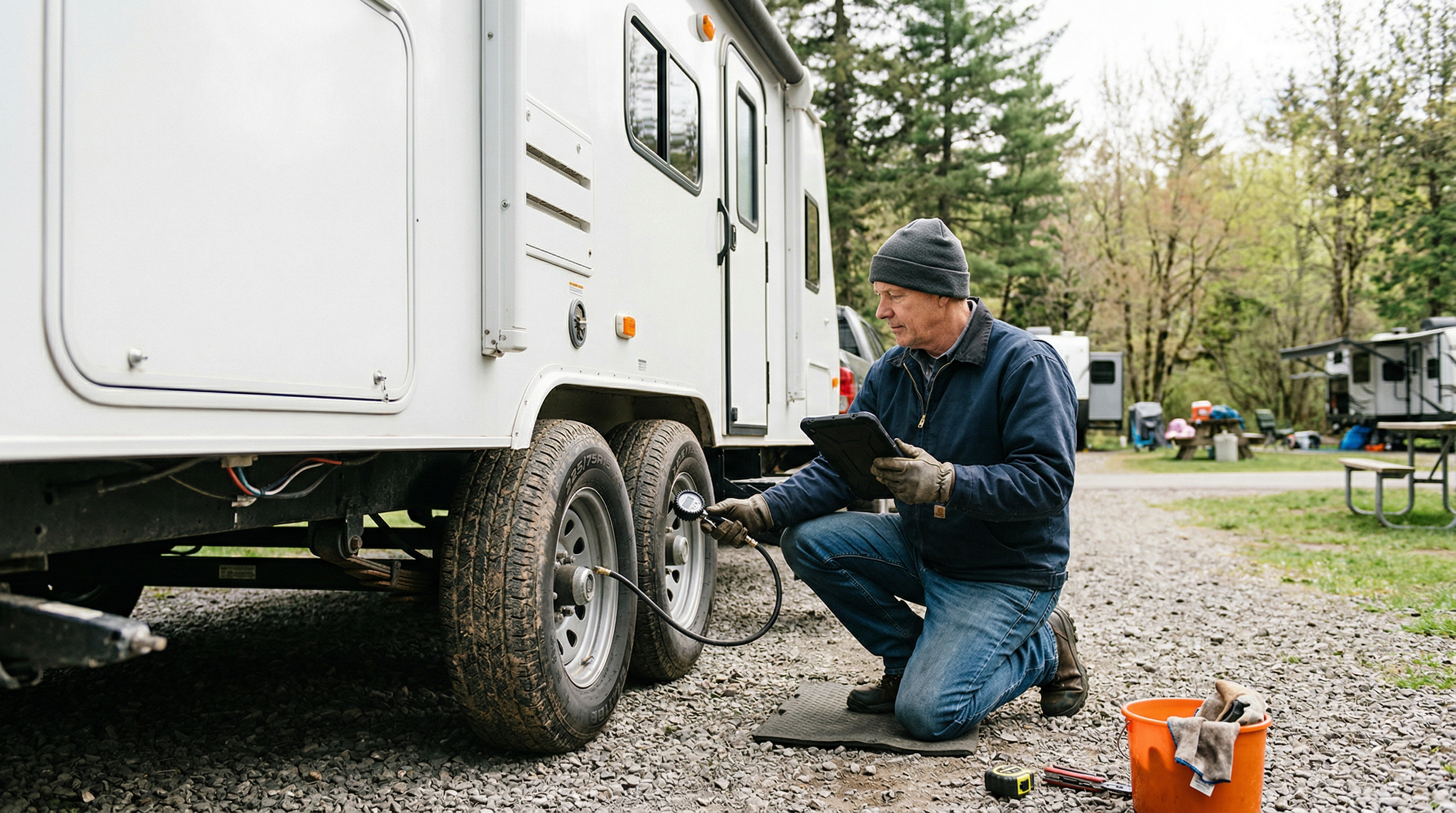
While you are down there, inspect for sidewall cracking, bulges, weathering, uneven wear, embedded debris, and anything that looks like a future shoulder-of-the-highway story. Trailer tires especially do not need much neglect before they decide they have had enough. If your tires are getting into the older end of the age range, take that seriously even if the tread still looks decent. RV tires often age out before they truly wear out.
Also, check the spare. The spare tire has a tremendous talent for being forgotten until the exact moment it is needed. Verify its pressure, inspect its condition, and make sure you still have the right tools to use it. That includes a jack situation that actually works for your rig, not a vague memory of one being “in there somewhere.”
Edge case: If your RV sat on one spot for a long time, keep an eye out for flat spotting or odd vibration on the first local test drive. Sometimes the rig tells you something is off before you even hit highway speed.
Do Not Half-Do the Water System
This is one of the biggest spring blind spots. People hook up the hose, turn on a faucet, see water come out, and declare victory. Meanwhile, the system sat through storage, old filters are still hanging on for dear life, a bit of winterizing residue may still be lurking around, and the first glass of water tastes like the inside of a forgotten garden hose.
Start by flushing and sanitizing the fresh water system properly. Run water through all faucets, flush out any winterizing leftovers, and inspect fittings, low-point drains, and visible connections for leaks or odd drips. Pay attention to how the pump behaves as well. If it cycles too often or sounds different than usual, that is worth looking into before you leave the driveway.
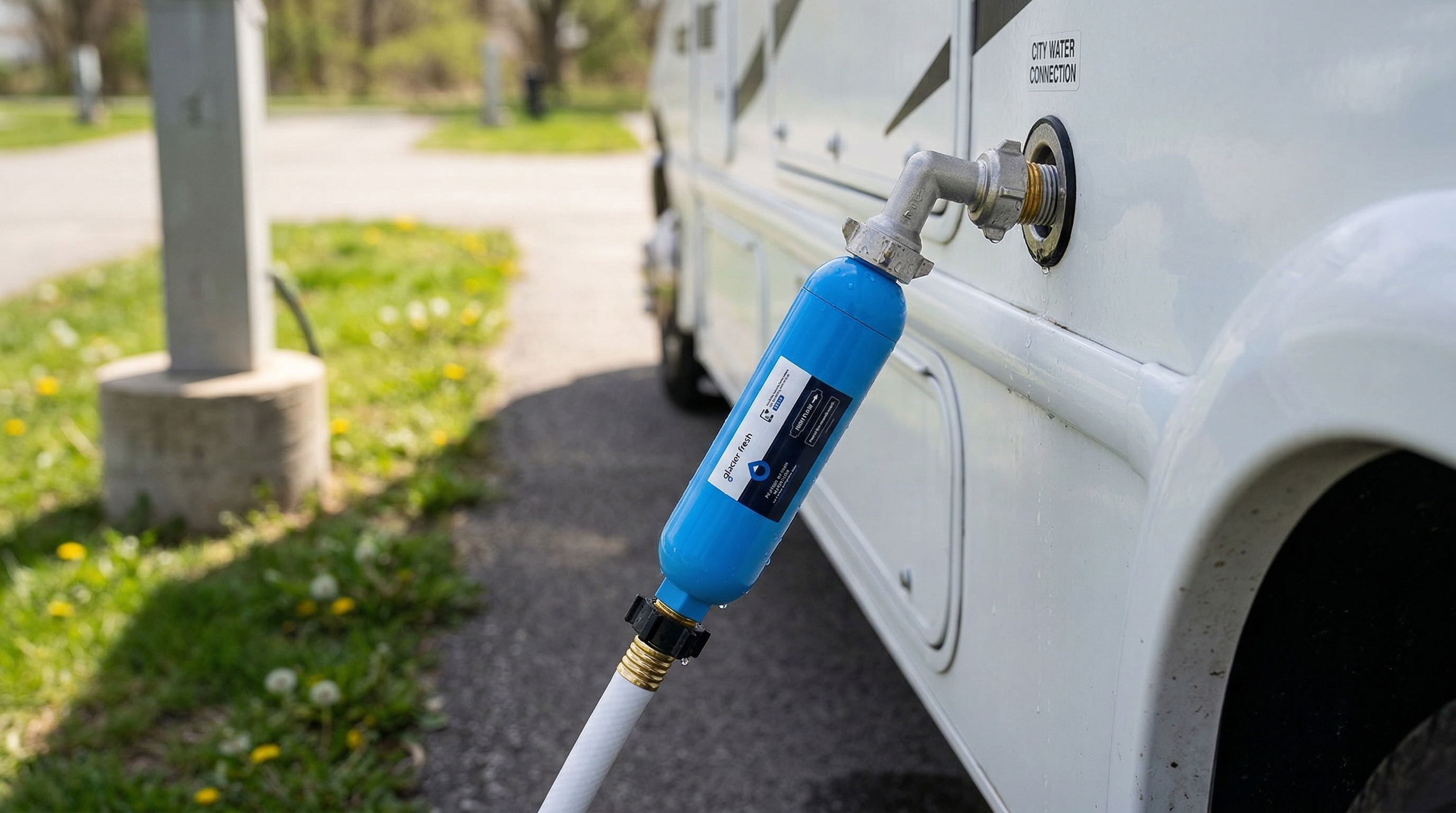
If you use an inline filter or cartridge filter, spring is exactly when it should be replaced if it sat through the off-season. This is also the most natural place to upgrade the setup if your water quality has been inconsistent or if you are tired of rolling the dice every time you connect at a new site. For that reason, it makes sense to look at Glacier Fresh water filtration options for RVers. It is a clean fit here because spring prep is when a lot of people realize their water system needs more than optimism.
If you have already dealt with weak or inconsistent flow, pair that with this guide on troubleshooting low water pressure in your RV. The combo makes more sense than guessing whether the problem is your hose, regulator, pump, filter, or campground pressure.
My spring water-system reset looks like this:
- Flush out old water and any leftover winterizing material completely
- Sanitize the fresh tank and lines
- Check hose fittings, low-point drains, and visible plumbing connections
- Watch pump behavior and faucet pressure at every tap
- Replace old inline or cartridge filters before trip one
Test Power, Batteries, and Appliances Like You Actually Plan to Use Them
A battery can look alive enough to fool you right up until you put a real load on it. So before your first trip, check the condition of both house and chassis batteries if your rig has them. Look for corrosion at the terminals, swelling, loose connections, and weak charge. If you have lead-acid batteries, inspect fluid levels where appropriate and top them up properly. A cheap multimeter is not glamorous, but it beats discovering power issues on night one.
Then move on to the systems that need to behave when camping starts for real. Test the fridge on the correct modes, run the furnace, fire up the air conditioner, verify the water heater, test outlets, confirm shore power is stable, and make sure your converter or charger is actually doing what it is supposed to do. If your rig has an inverter, this is the time to test that too, not after you have already loaded the cooler and committed to the trip.
Spring service appointments disappear fast once everyone else starts remembering they own an RV. If something sounds odd, trips a breaker, cools poorly, or simply acts stubborn, getting ahead of it now will save you a lot of hassle later. Nothing says “great start to the season” like realizing the fridge only cools when it is in a good mood.
Real-world note: Run appliances long enough to expose problems. A two-minute test is better than nothing, but it is not the same as proving the system actually works.
Slide-Outs, Propane, and Mechanical Checks Should Not Be an Afterthought
If your RV has slide-outs, run them fully in and out more than once. Listen for grinding, squealing, hesitation, uneven movement, or any of the little mechanical protests that people love to ignore until the slide decides to perform a dramatic scene at the campsite. Clean the seals, inspect toppers if you have them, and deal with debris before it gets worked into places it should not be.
Propane deserves the same respect. Check tanks for rust or obvious damage, inspect regulators and pigtails for cracking, and test appliances carefully. If you suspect a leak, use soapy water on fittings rather than doing anything foolish. Spring is also a good time to book a professional propane-system check if it has been a while. Propane is fantastic right up until it decides to remind you it is not a toy.
On the towing side, trailers should get a quick review of the coupler, breakaway cable, safety chains, wiring harness, trailer plug, jack, and any visible suspension concerns. A few extra minutes here can prevent a very stupid kind of problem later.
Open Every Cabinet. Storage Season Leaves Presents.
Rodents, moisture, mold, and odd smells all like to introduce themselves in spring. Open every drawer, cabinet, pass-through, under-bed compartment, utility bay, and hidden storage area you can find. Look for droppings, chewed material, nests, damaged insulation, moisture staining, or anything that smells like a wet basement had a baby with a hardware store.
Mice especially have a talent for finding wiring and soft material to chew, which means a pest problem can quietly become an electrical or structural problem. If you have had this happen before, keep this guide on keeping mice out of your RV in your back pocket. It is one of those headaches that starts small and gets expensive in a hurry if ignored.
Ventilation matters here too. Crack open the rig, air it out, and do not just mask odors with sprays and pretend that counts as a solution. A musty smell is often trying to tell you something. Sometimes it is minor. Sometimes it is not. Either way, spring is the time to find out.
Safety Gear Gets Exactly One Job. Make Sure It Can Do It.
Smoke alarms, carbon monoxide alarms, LP gas detectors, fire extinguishers, flashlights, first aid kits, spare fuses, and roadside basics all deserve a spring review. Test every detector, replace batteries where needed, and check replacement or manufacture dates. If an extinguisher is expired or questionable, replace it now rather than admiring it for sentimental reasons.
This is also the time to restock the boring but useful stuff. Bandages, medications, gloves, emergency contact info, and simple roadside tools are much nicer to have before you need them. If you travel with kids or pets, their emergency basics should be part of this review too. People tend to remember snacks and forget practical backup gear. The RV does not care about your snack priorities.
Use a Maintenance Tracker So Spring Prep Does Not Vanish From Your Brain
One of the easiest ways to make this whole process more useful is to write down what you checked, replaced, tightened, cleaned, tested, or still need to deal with. Otherwise, a few weeks from now you will be standing there wondering whether you actually changed that filter, tested that battery, or simply thought about doing it while holding a coffee and looking busy.
That is why this article should not just end with “good luck out there.” It should point you to the next step. In this case, that next step is using the RV Maintenance Tracker. It fits perfectly here because the tracker turns spring prep from a one-off task into a repeatable system you can use all season.
Decision guide: If the RV is new to you, recently came out of long storage, or you already know you tend to “mentally track” maintenance, use the tracker. That is exactly the kind of rig-owner profile it helps most.
Quick Spring Checklist You Can Actually Follow
- Inspect the roof, seals, trim, vents, skylights, windows, and storage doors
- Check all tires and the spare for pressure, cracking, tread, and age concerns
- Flush, sanitize, and inspect the fresh water system
- Replace old filters and review your hose, regulator, and pressure setup
- Test batteries, shore power, outlets, fridge, furnace, AC, and water heater
- Run slide-outs and inspect propane components and appliance function
- Check for rodents, mold, moisture, odors, and hidden storage damage
- Test alarms, inspect extinguishers, and restock emergency gear
- Log everything you handled in your maintenance tracker before trip one
My Take on Spring RV Prep
If I had to boil this whole article down, I would say spring prep is less about doing everything perfectly and more about refusing to ignore the stuff that actually matters. Most annoying RV problems do not come out of nowhere. They start with a small issue that got dismissed, rushed, or saved for “later.” Then later shows up in a campground.
If there are two areas I would put at the top of the spring-prep list, they are the water system and your maintenance habits. Clean water, fresh filters, and a reliable record of what got done are not flashy upgrades, but they solve an impressive number of very real RV headaches. That is why the smart next move from this article is pretty clear: use the maintenance tracker, and if your water setup needs attention, look at Glacier Fresh while you are at it.
Handle the boring checks now and the fun part of RV season gets a whole lot easier later. Not perfect, because RV life still enjoys a curveball now and then, but a lot easier.
External References
Frequently Asked Questions
How do I prepare my RV for spring camping after months in storage?
Start with the exterior, tires, water system, batteries, and major appliances before you think about comfort items. Long storage periods are where seals dry out, tire pressure drops, batteries weaken, water sits too long, and small problems hide until the first real trip.
Do I really need to sanitize my RV water system every spring?
If the RV sat through winter or was winterized, yes, it is a smart move. Even when nothing seems obviously wrong, stale water, leftover residue, and old filters can affect water quality, taste, and overall confidence in the system.
What should I check first before towing or driving my RV in spring?
Tires, lights, battery condition, exterior seals, hitch or towing components, and the basic road-ready safety items should come first. Those checks have the biggest impact on whether the RV is actually ready to move safely.
What is the easiest way to stay on top of spring RV maintenance?
Use a repeatable checklist and log what you actually handled. A maintenance tracker is useful because it keeps spring prep from becoming a fuzzy memory that you have to reconstruct later.
Should I replace my RV water filter at the start of the season?
If the filter sat through storage, spring is usually the right time to replace it. Filters are one of the easiest places for people to cut corners, and they are also one of the easiest ways to improve water quality and confidence in the whole system.


Leave a Reply