
Affiliate Disclosure: I earn commissions if you shop through the links below at no additional cost to you.
Last Updated on February 27, 2026 by Jeremy
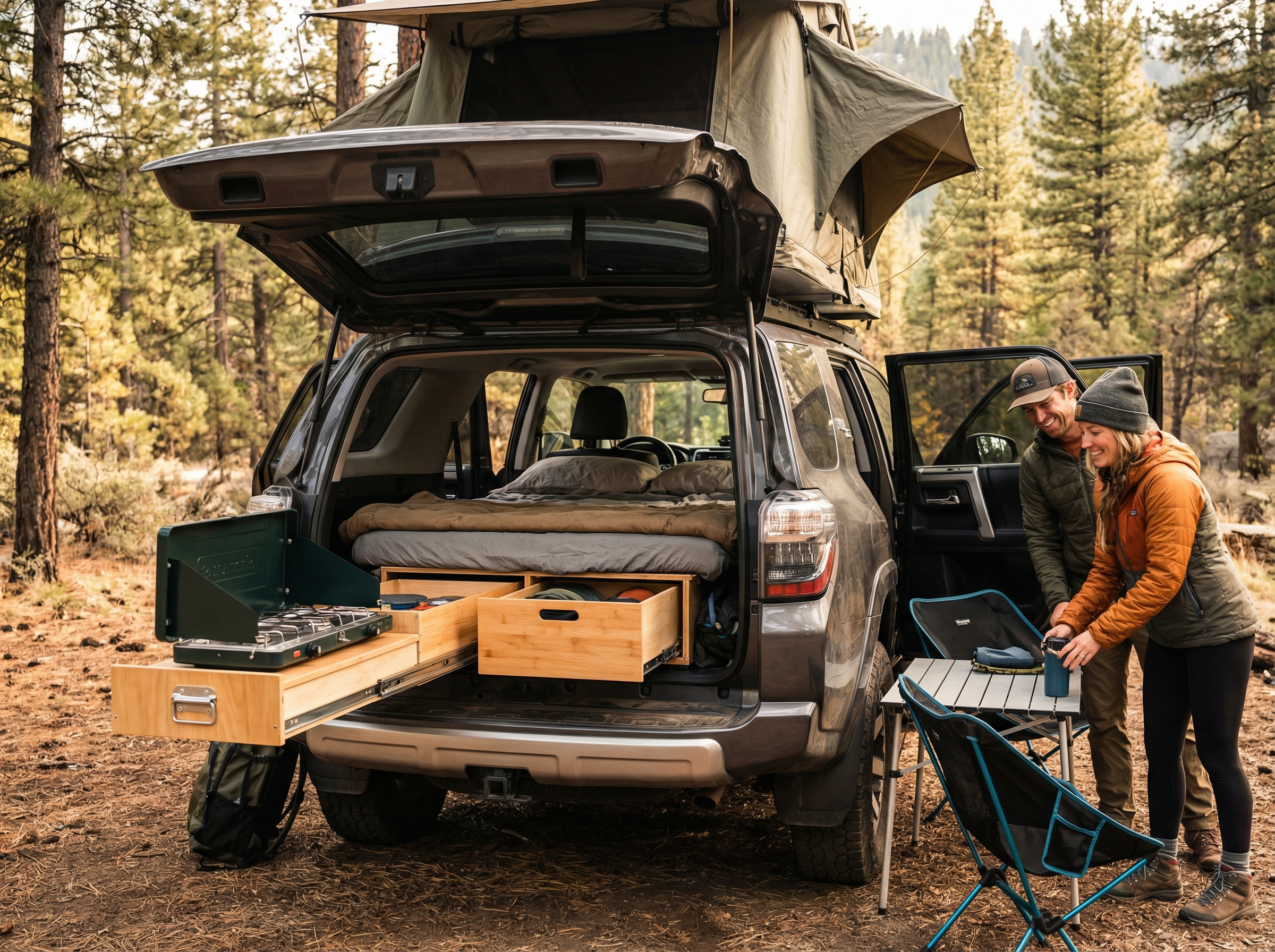
If you’re trying to figure out how to set up an SUV for camping, the internet will happily throw 400 opinions at you in 40 seconds. Most of them skip the boring stuff that actually decides whether your trip feels smooth or turns into a sweaty, damp, battery-dead mess. This is the foundation guide. Once you understand these systems, YouTube becomes useful instead of chaotic.
TL;DR: The SUV Camping Setup That Saves Most Trips
- Start with layout: sleep zone, storage zone, daily-grab zone. If the layout is wrong, everything is wrong.
- Sleep system beats gadgets: flat base, proper pad, realistic insulation for your temps.
- Ventilation is non-negotiable: condensation will ruin comfort faster than bad weather.
- Power plan: know your needs (phone, lights, fan, fridge) before buying anything.
- Food strategy: decide cooler vs 12V fridge based on how long you’ll be parked.
- Cooking plan: keep it simple and safe. Avoid “inside-the-car chef” fantasies.
- Hygiene plan: have two options (quick clean + real shower backup).
- Safety basics: ventilation, communications, and common-sense habits.
Educational info only. Always follow local laws, park rules, and common-sense safety. If you want the beginner “rookie mistakes” version of this topic, start here: Car Camping Tips for Beginners.
Step 1: Build the Layout First (Before You Buy Anything)
The biggest SUV camping mistake is buying gear without deciding how the vehicle will function at night. Your setup needs to support the simple reality: you will be tired, it might be raining, and you’ll want to find things fast.
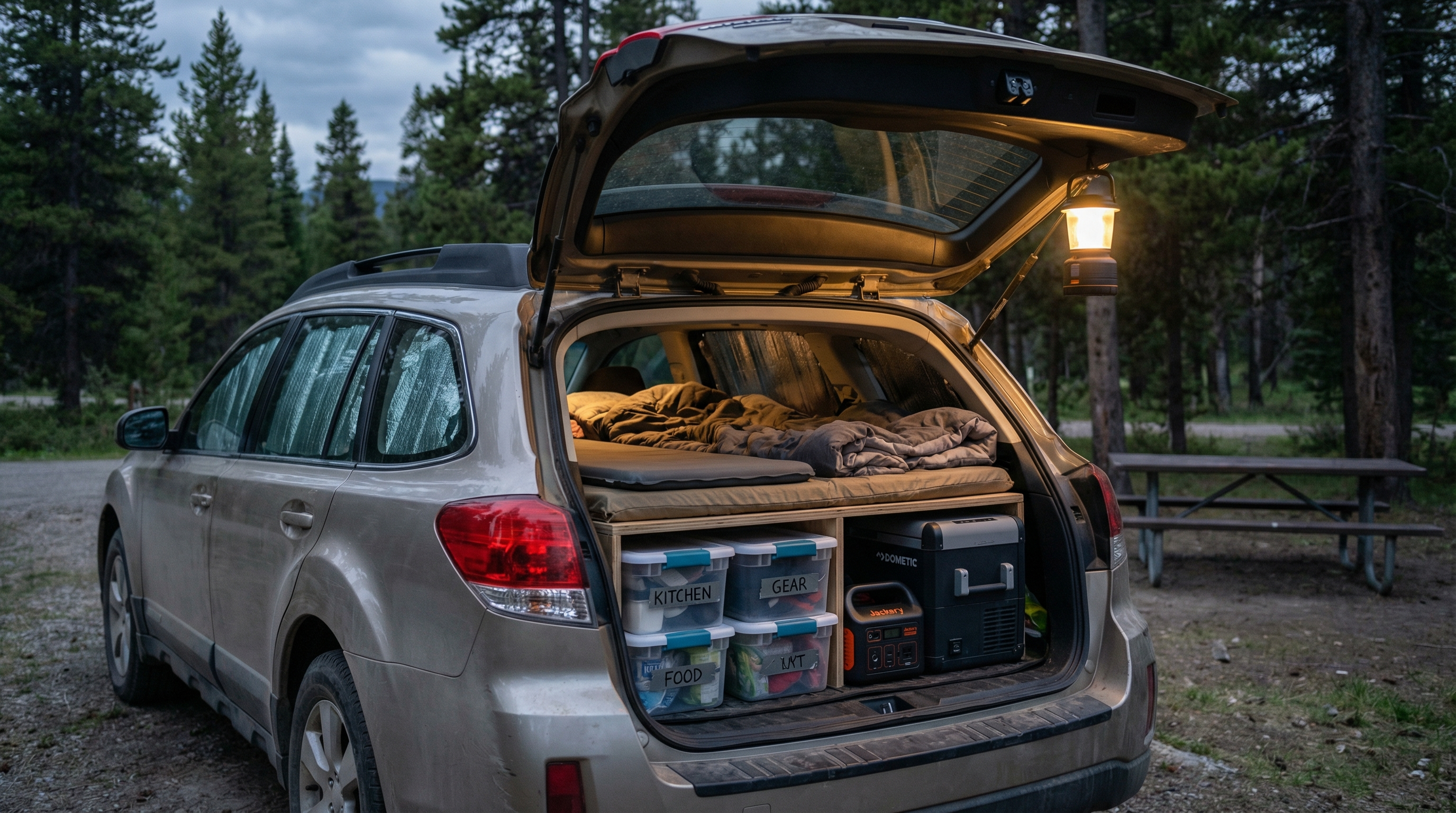
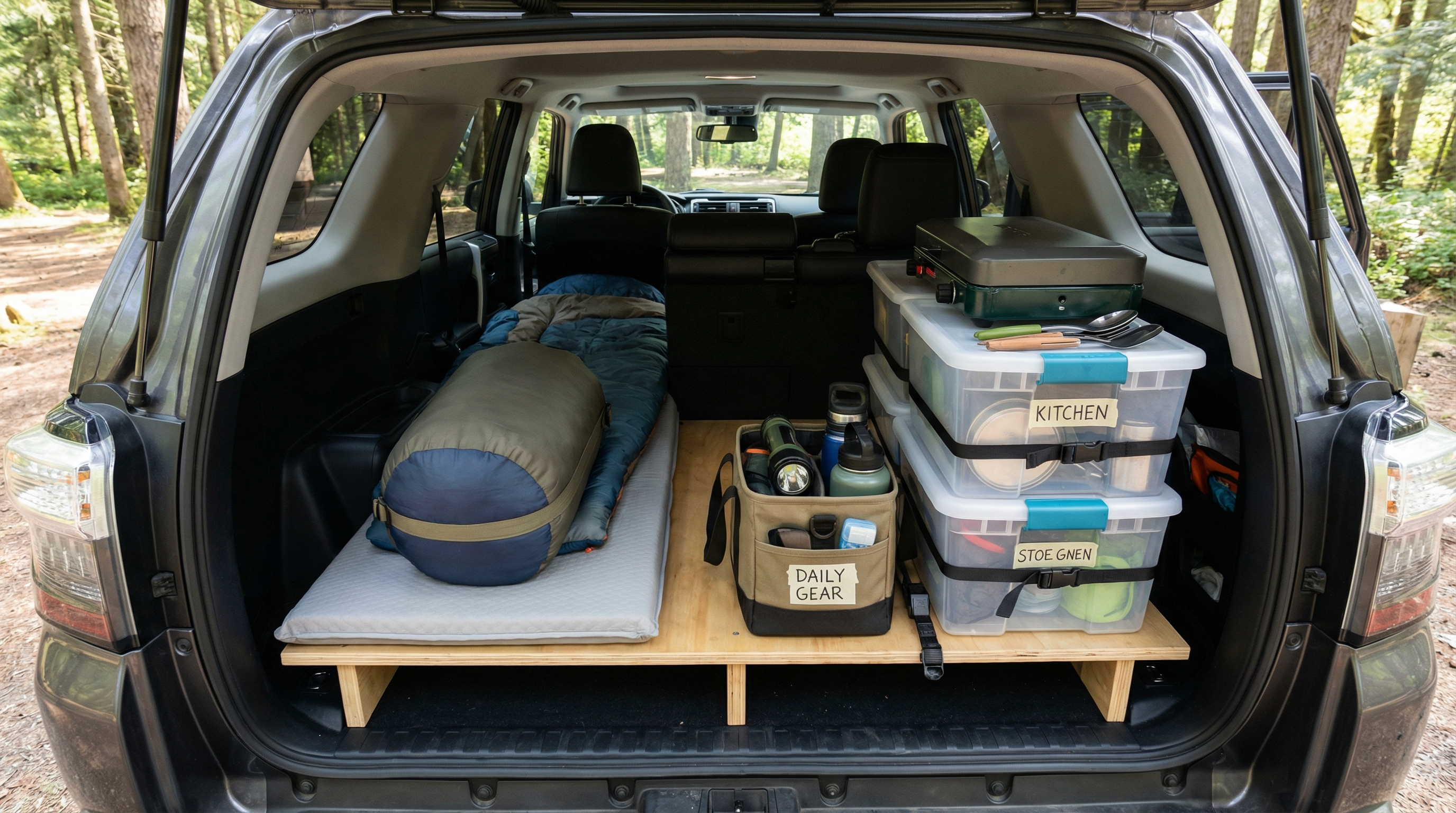
The 3-Zone SUV System
- Sleep zone: platform or flattened seats, bedding, window covers.
- Storage zone: bins and drawers that do not block your sleep area.
- Daily-grab zone: headlamp, keys, power bank, first aid, toiletries.
If something forces you to unload half the car to sleep, you will hate your setup by night two.
Step 2: The Sleep System (This Is Where Trips Are Won)
People love to talk power stations. Meanwhile they’re sleeping on a lumpy surface with a hoodie as a pillow, wondering why they feel wrecked. Get the boring sleep components right and suddenly SUV camping feels easy.
What “Good Sleep” Actually Means in an SUV
- Flat base: a platform or a leveled surface. No dips, no ridges.
- Insulated pad: thickness is not the same as insulation.
- Under-body warmth: cold comes from below first.
- Privacy + temp control: simple window covers reduce stress and heat loss.
A Small Detail That Feels Huge
Keep one “night bag” reachable from your sleep position: headlamp, water, phone, keys, and a backup layer. When you can solve problems without climbing over bins, the whole experience feels calmer.
Step 3: Condensation and Ventilation (The Wet Blanket Nobody Warns You About)
Two humans breathing inside a sealed vehicle creates moisture. When that moisture hits cold glass, it turns into wet windows, damp bedding, and that clammy feeling that makes people quit early.
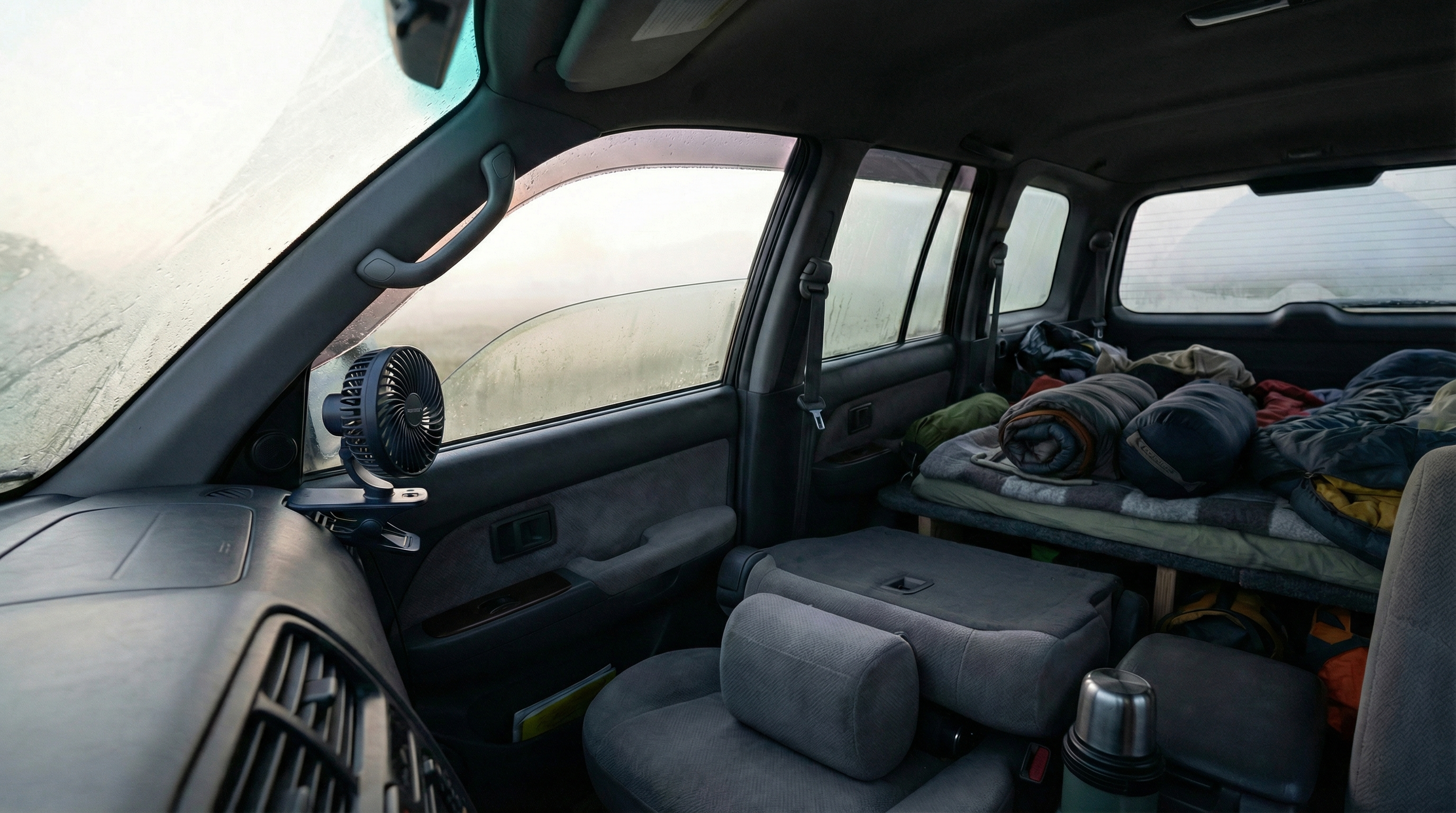
The Fix (Simple, Not Fancy)
- Crack windows safely (rain guards help when weather is annoying).
- Move air with a small fan aimed toward a cracked window for exchange.
- Dry your bedding when possible, even 15 minutes in sun makes a difference.
Step 4: Power Planning (Buy After You Measure Your Needs)
The most common beginner pattern is either “buy everything” or “ignore power until the phone dies.” Instead, map your use. Then buy only what supports it.
The Four Power Tiers
- Tier 1: phone, headlamp, small USB fan.
- Tier 2: lights + fan + device charging consistently.
- Tier 3: add a 12V fridge, longer stays, cloudy days.
- Tier 4: multi-day basecamp, higher loads, solar strategy.
Want the math, limits, and planning tools in one place? Use the hub here: Solar Power (Hub + Calculator).
Both are solid options. Choose based on your actual loads, not hype.
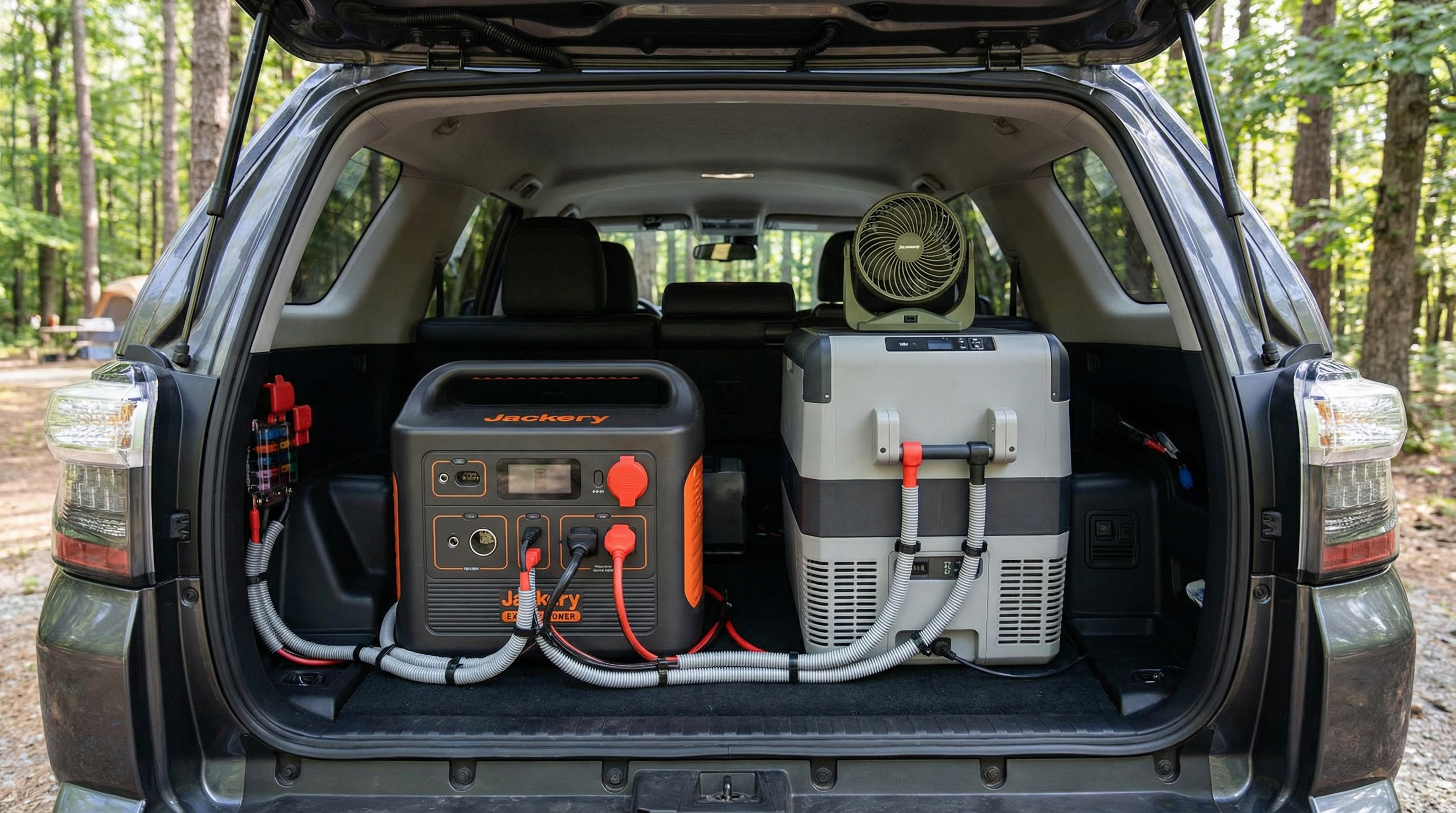
Step 5: Cooler vs 12V Fridge (Pick the Right Tool)
A cooler can be perfect for short trips or frequent resupply. A 12V fridge is a comfort upgrade for longer stays, hot weather, and people who hate dealing with melting ice and soggy food.
When a Cooler Wins
- Weekend trips and frequent stops.
- Simple meals and minimal food storage.
- You do not want power planning yet.
When a 12V Fridge Wins
- Multi-day stays, heat, and long drives.
- Food safety matters more than “good enough.”
- You want predictable mornings without ice runs.
The Real Planning Question
How many hours will you be parked without driving or plugging in? That answer decides whether your power station and solar plan need to be small, medium, or serious. If you want to avoid guessing, do the math using your Solar Power hub.
Step 6: Cooking Without Turning Your SUV into a Mess
Most SUV campers overcomplicate cooking. The goal is repeatable meals with minimal cleanup, not a mobile food channel. Decide where you cook, how you store food, and how you clean up before you buy anything.
Beginner-Proof Cooking Pattern
- Outside-first cooking: tailgate, picnic table, or a simple stand.
- One bin kitchen: stove, utensils, spices, lighter, soap.
- One water plan: washing hands and cleaning is part of cooking, not “later.”
Where People Go Wrong
- Cooking gear spread across five bags.
- No wind plan, no rain plan.
- Grease and food smells inside the vehicle.
Simple setups are the ones you actually keep using.
Step 7: Hygiene, Water, and “Morale Insurance”
Beginners plan trips around views, then get humbled by reality: some campgrounds do not have showers, and seasonal shutoffs are a thing. This is where trips start feeling gritty in a bad way.
Have Two Options
- Quick clean: pump sprayer rinse, wipes, small towel, and a privacy solution.
- Real shower backup: rec center, truck stop, or day pass option depending on location.
If you have the backup plan, you stop stressing about it.
Step 8: Conversion Kits vs DIY (Roadloft Style Systems Included)
If you’re a seasoned DIY person, kits can still make sense. Not because you can’t build it, but because they save time, reduce design mistakes, and usually have better fit and finish than a rushed “I’ll do it this weekend” build.
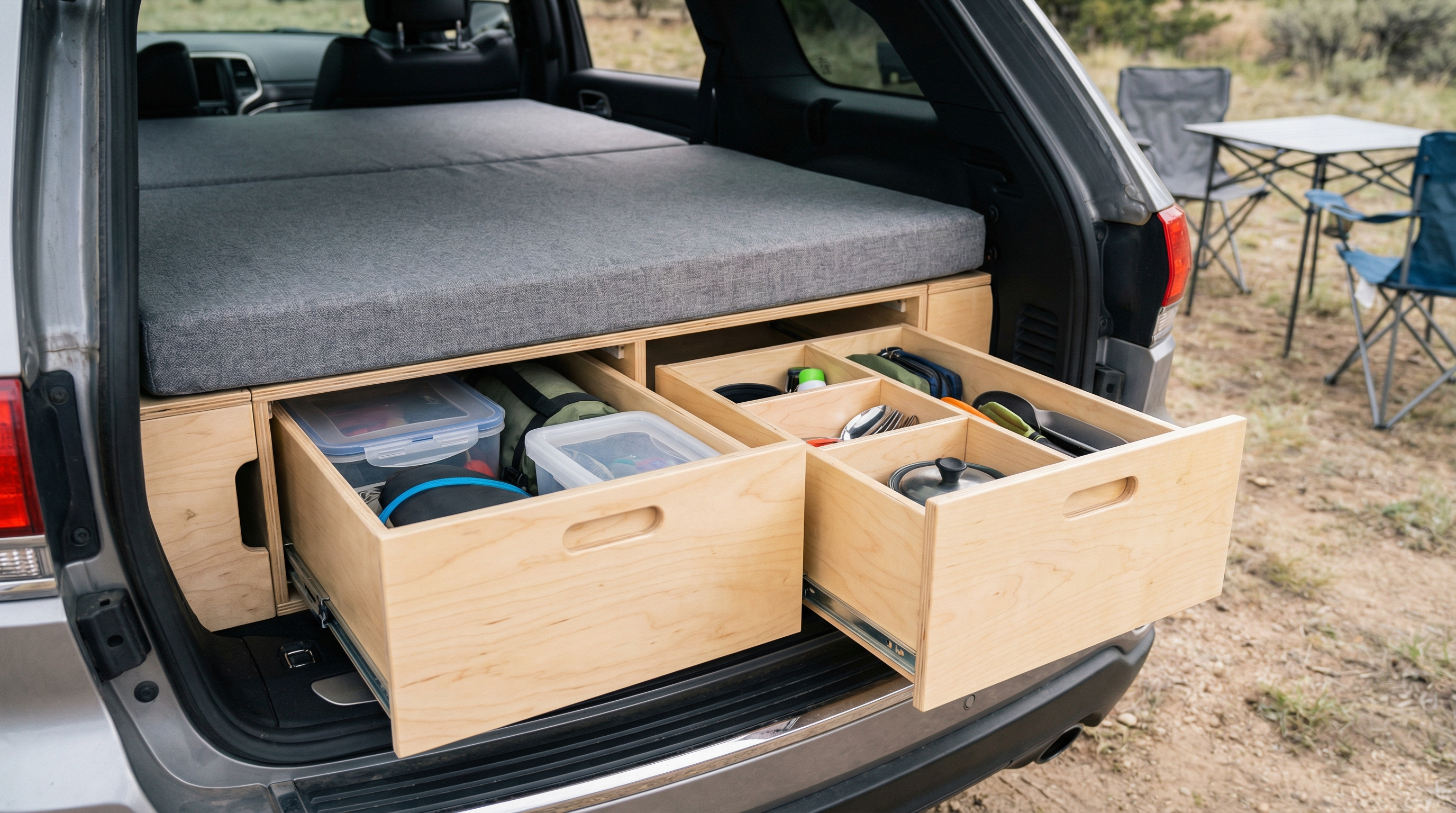
How to Choose (No Brand Loyalty Required)
- Time vs money: kits cost more, but save weekends and mistakes.
- Platform height: too tall kills headroom and comfort fast.
- Access: can you reach the spare tire, tools, and storage quickly?
- Daily use: can you switch back to “normal SUV” without a full teardown?
Step 9: Safety and Communications (Simple, Not Paranoid)
Safety is mostly about avoiding predictable problems. You don’t need to turn camping into a tactical mission. You do need the basics handled so you can relax.
The Basics That Matter
- Ventilation: especially if you’re using anything that produces fumes.
- Lighting: hands-free headlamp plus a small area light.
- First aid: small kit you can reach without unpacking.
- Communication: reliable gear matters in remote areas.
Parking and the “Knock” Problem
A safe-feeling spot is not always a legal spot. Have 2–3 backups, know local rules, and keep your setup discreet. If you want the beginner-friendly breakdown of this, it’s covered in detail here: Car Camping Tips for Beginners.
A calm night starts with a smart plan, not luck.
The “Before You Touch YouTube” Setup Checklist
- Layout decided (3-zone system) and test-packed once.
- Sleep surface is flat and comfortable for your temps.
- Ventilation plan is real (not “we’ll crack a window maybe”).
- Power tier selected based on your actual devices and trip length.
- Food plan chosen (cooler vs fridge) and tied into power plan.
- Cooking is simple, outside-first, with one-bin kitchen.
- Hygiene has two options (quick clean + real shower backup).
- Safety basics are reachable and not buried under bins.
If you want vetted brands for power, fridges, off-grid essentials, and safety gear, browse the directory and build around the problems you actually expect to have. The best setups look boring because they work.
FAQ: How to Set Up an SUV for Camping
What do I need to set up my SUV for camping?
Start with a functional layout (sleep zone, storage zone, daily-grab zone), then build a real sleep system, add ventilation for condensation, and choose a power plan based on your actual needs. After that, decide cooler vs 12V fridge, keep cooking simple, and have a basic hygiene plan.
Is a power station necessary for SUV camping?
Not always. If you’re only charging phones and using a headlamp, you can keep it minimal. If you want fans, lights, or a 12V fridge, a power station becomes the “comfort backbone” of your setup. Use the Solar Power hub to size it properly.
How do I stop condensation when sleeping in an SUV?
Ventilation plus airflow. Crack windows safely (rain guards help), and use a small fan aimed toward a cracked window to exchange air. Dry bedding when possible, even short sun breaks help.
Should I get a cooler or a 12V fridge for SUV camping?
Coolers are great for weekends and frequent resupply. A 12V fridge is better for multi-day stays, hot weather, and predictable food storage. If you choose a fridge, build your power plan around it.
Are SUV conversion kits like Roadloft worth it?
They can be. Kits make sense when you want a clean, repeatable setup without spending weekends designing and rebuilding. Compare platform height, storage access, changeover speed back to normal SUV use, and whether it fits your actual camping frequency.




.jpg/:/cr=t:5.56%25,l:0%25,w:100%25,h:88.89%25/rs=w:1240,h:620,cg:true)



Leave a Reply