

Last Updated on September 14, 2026 by Jeremy
RV life looks freeing from the outside, and to be fair, a lot of it is. But the road still costs money. Fuel is not free, campsites are not free, and your trailer does not magically stop needing repairs just because the sunset is nice.
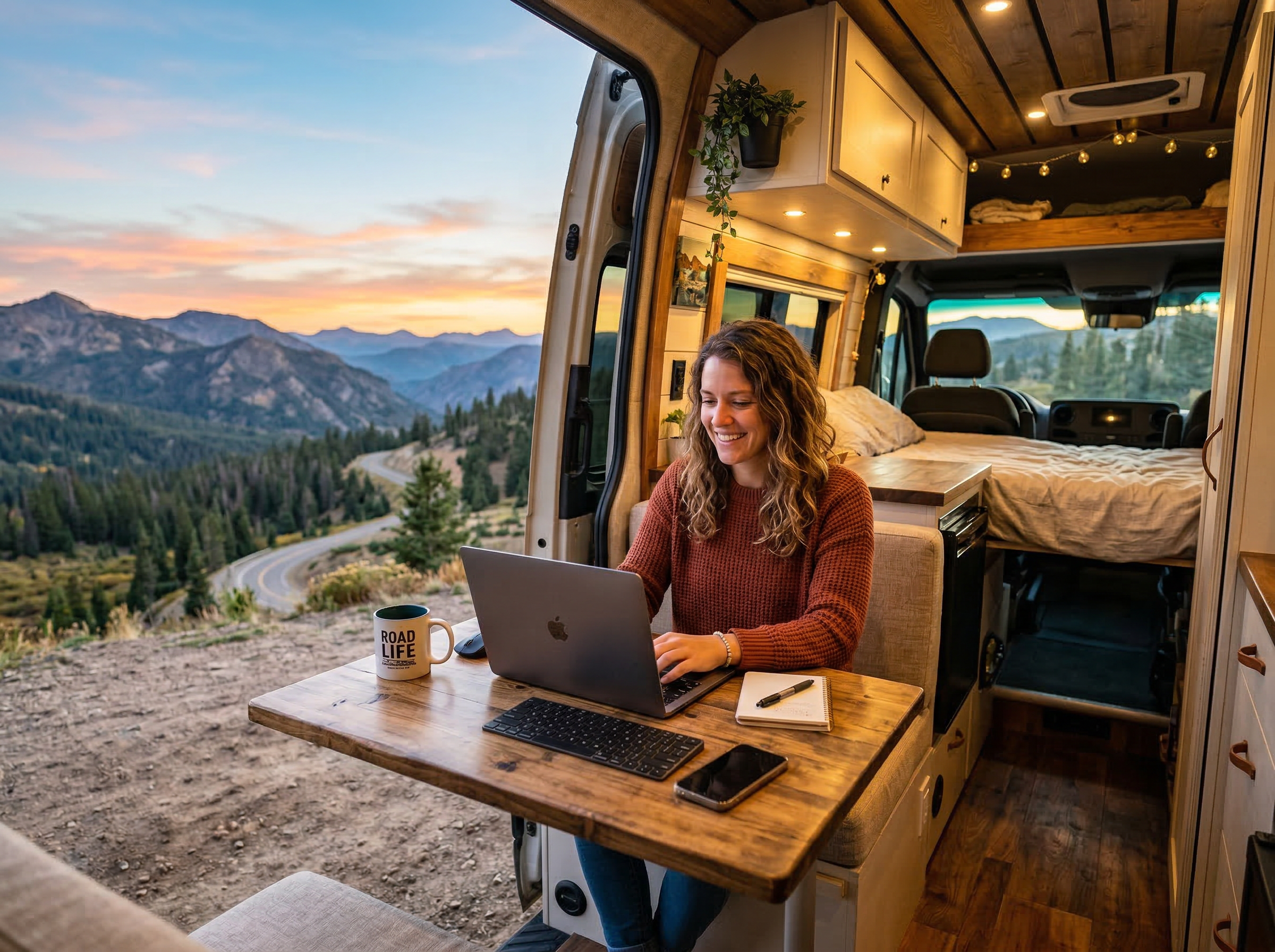
That is why a lot of RVers start asking the same question at some point: what kind of work actually fits this lifestyle? Not dream-job fluff. Not “become an influencer by Tuesday.” Real work that can travel with you, support your budget, and not make you hate your own schedule.
This guide breaks down ten realistic RV jobs, who they fit best, and the catch each one comes with. Some work well if you stay in one place for a while. Others are better if you move often. The trick is picking income that matches the way you actually travel.
TL;DR
- The best RV jobs usually fall into three groups: remote work, seasonal campground work, and mobile service businesses.
- If you move often, remote jobs and online income are usually the best fit.
- If you stay put for a few weeks or months, campground work and local service work can make more sense.
- The “best” RV job is the one that supports your travel style without creating more stress than it solves.
The three types of RV jobs that actually make sense
Most jobs for RVers fit into one of three buckets. Once you understand that, it gets easier to stop chasing random ideas and start choosing work that actually fits how you live.
1) Remote jobs
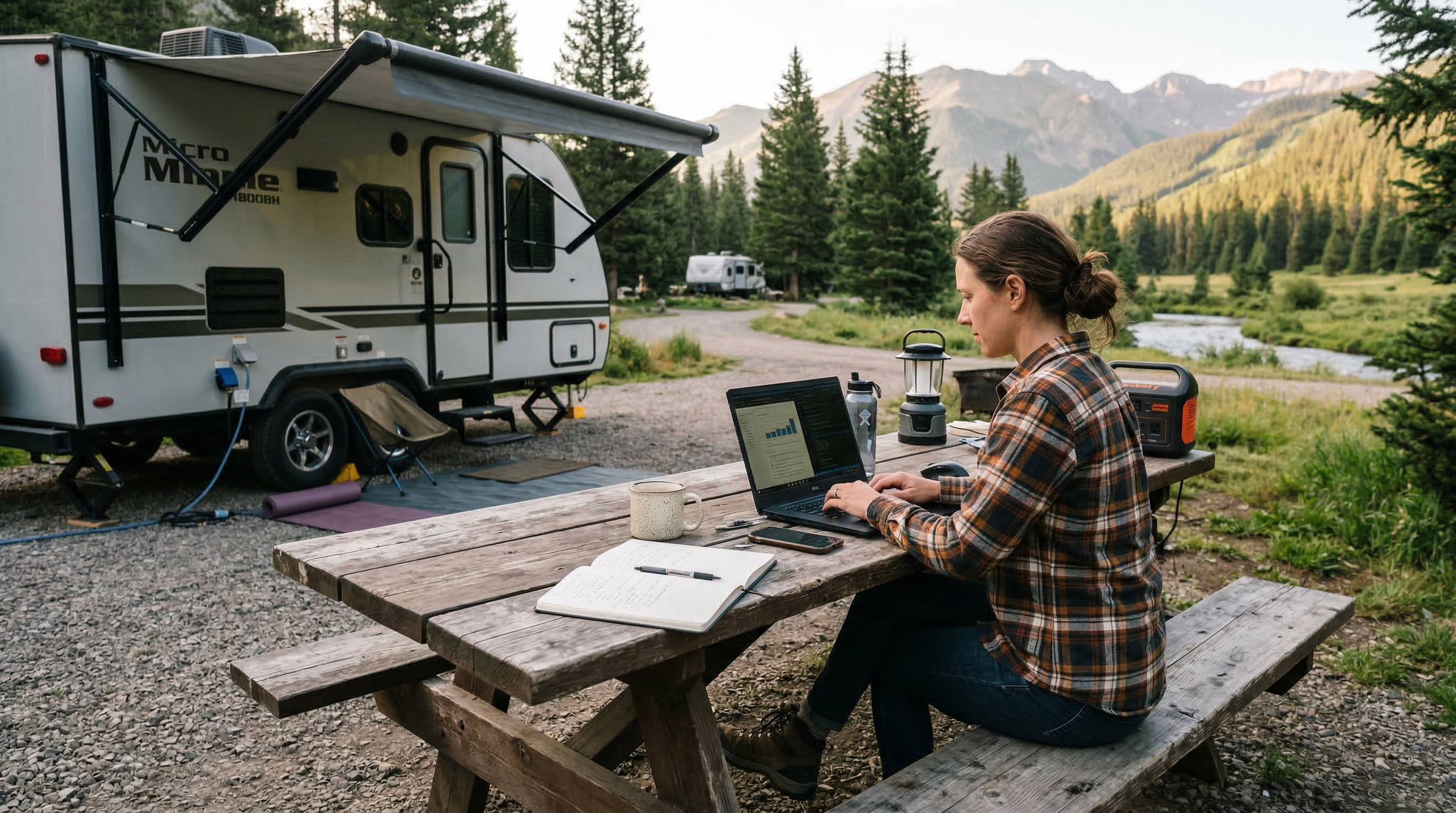
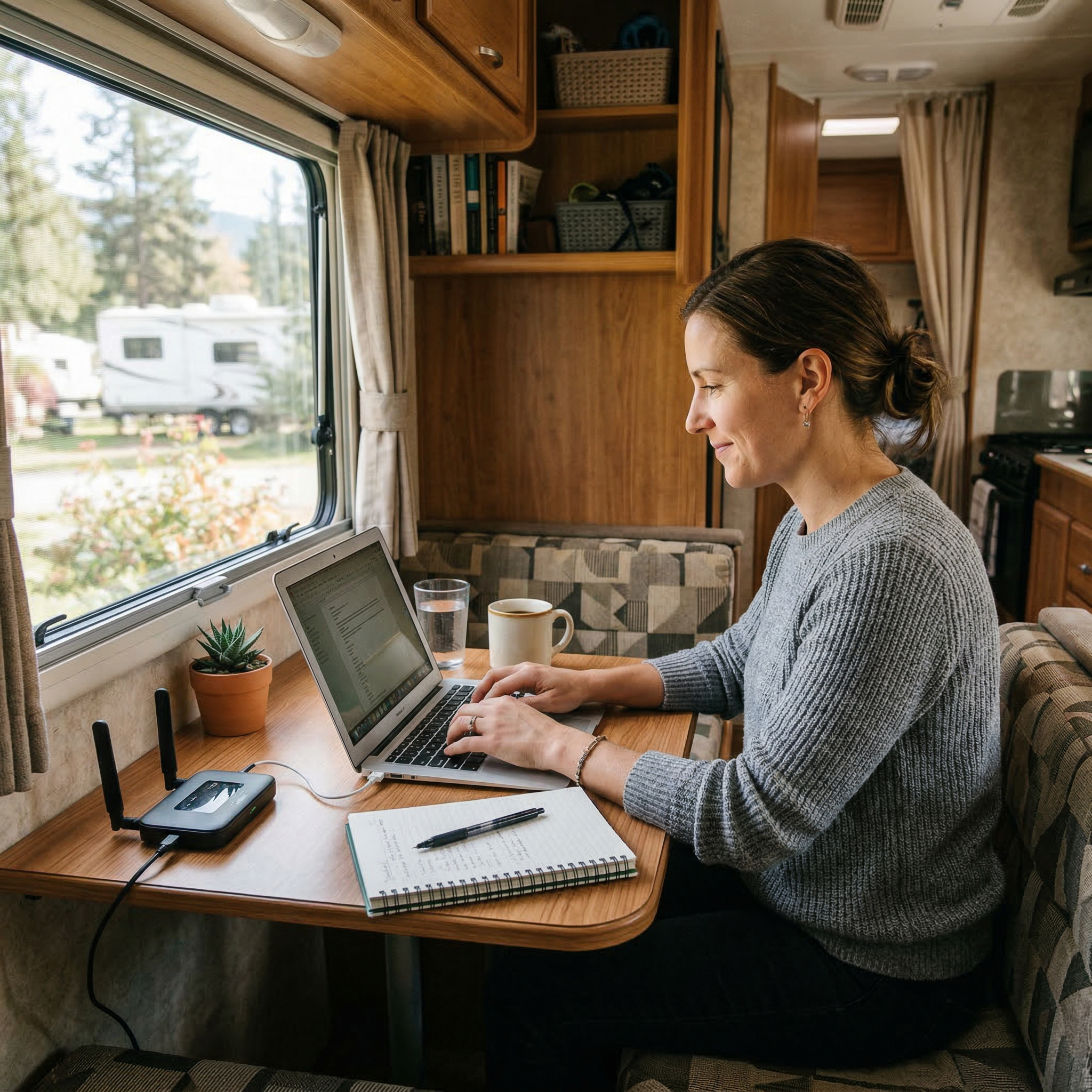
These are jobs you can do from almost anywhere with decent internet. Think customer service, remote sales, admin support, freelance work, or content creation. This is usually the strongest path if you move frequently.
2) Location-based campground or tourism jobs
These jobs depend on being physically present. Campground hosting, maintenance, tour guiding, and outdoor instruction all fit here. They work well if you stay in one place long enough for the job to be worth it.
3) Mobile service businesses
These are skills-for-pay jobs you bring with you, like RV detailing, pet care, or mechanical services. They can work very well if you’re practical, self-directed, and not afraid to build word of mouth the old-school way.
The mistake a lot of RVers make is choosing a job first and then trying to force their travel style around it. It usually works better the other way around.
1. Campground maintenance worker
This is one of the more straightforward RV jobs out there. Campgrounds need help with mowing, repairs, cleanup, guest support, and keeping sites functional during busy seasons.
Best for: RVers who do not mind physical work and prefer being based in one place for a while.
Why it fits RV life: Some roles come with discounted or included campsites, which can take a nice bite out of your living costs.
The catch: It can be physical, seasonal, and not always glamorous. There are only so many ways to say “yes, the dump station is over there” before your coffee wears off.
2. Tour guide
If you enjoy people, local stories, and being outdoors, guiding can be a fun fit. Tourist towns, parks, and experience-based businesses often need guides during peak season.
Best for: Outgoing RVers who enjoy talking, teaching, and staying in one region for a season.
Why it fits RV life: It lets you earn while exploring places you probably wanted to spend time in anyway.
The catch: It often depends on seasonality, people skills, and sometimes certifications or deep local knowledge.
3. Mobile mechanic
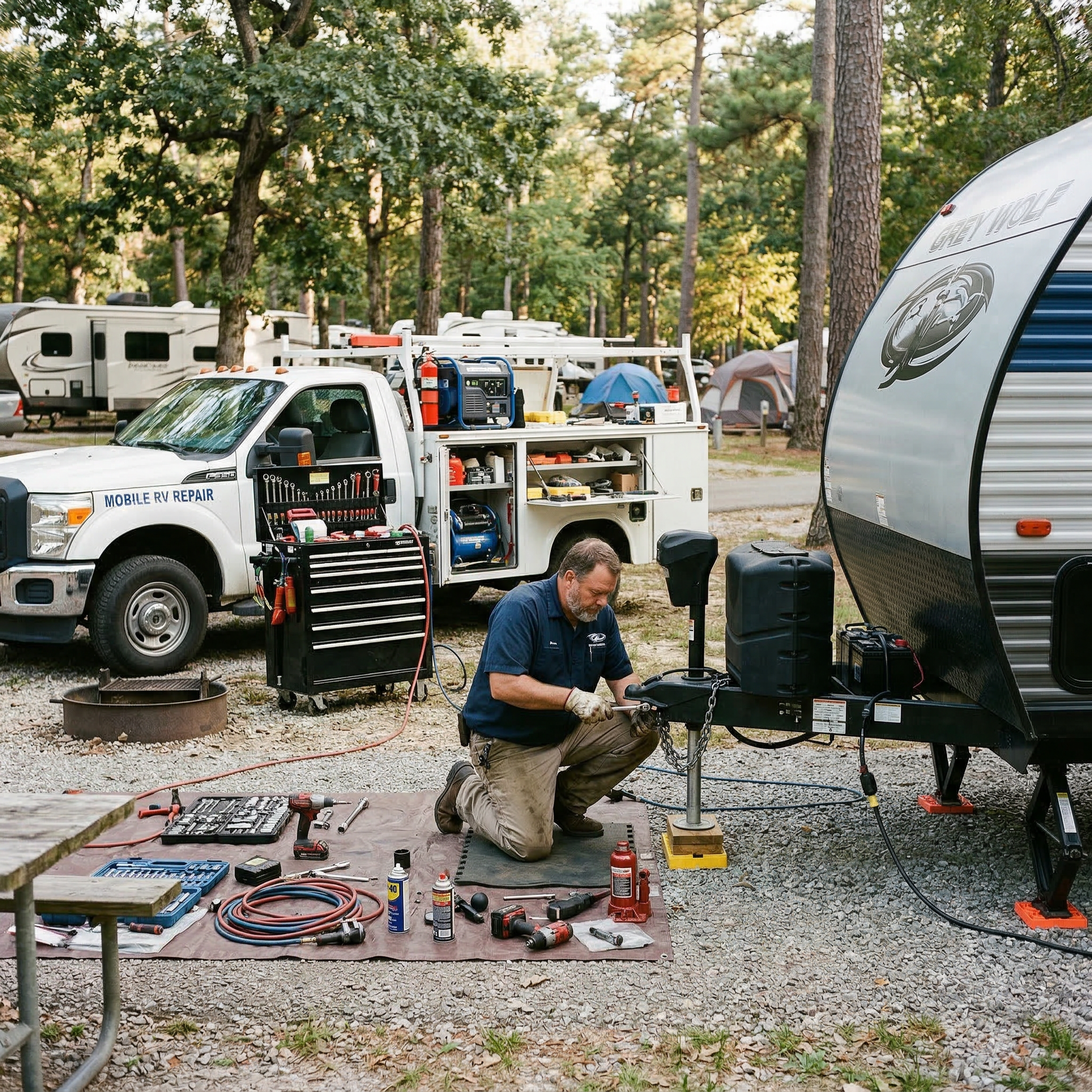
If you know your way around RV systems, trailers, or tow vehicles, this can be a very practical business. RVers are always dealing with repairs, breakdowns, and things that should have lasted longer than they did.
Best for: Skilled mechanics or handy RVers with real repair ability.
Why it fits RV life: You’re serving a community that already exists around you.
The catch: You need tools, confidence, and enough skill not to create a larger mess than the original problem.
4. Outdoor adventure instructor

Kayaking, hiking, climbing, paddling, nature programs, youth camps, and guided experiences all create seasonal work opportunities for outdoor-minded RVers.
Best for: People who already have outdoor skills, leadership ability, and comfort teaching others.
Why it fits RV life: The work happens in places RVers already love being.
The catch: It can be physically demanding, seasonal, and tied to local tourism cycles.
5. Remote customer service representative
This is one of the more realistic entry points for RVers who want stable remote income without starting a business from scratch. Many companies hire remote reps for phone, chat, or email support.
Best for: RVers who want a paycheck, predictable work, and less guesswork.
Why it fits RV life: It can travel with you as long as your internet setup is solid.
The catch: You need reliable connectivity, a quiet enough environment, and the ability to show up on schedule even when everyone else is outside enjoying the lake.
6. Campground host
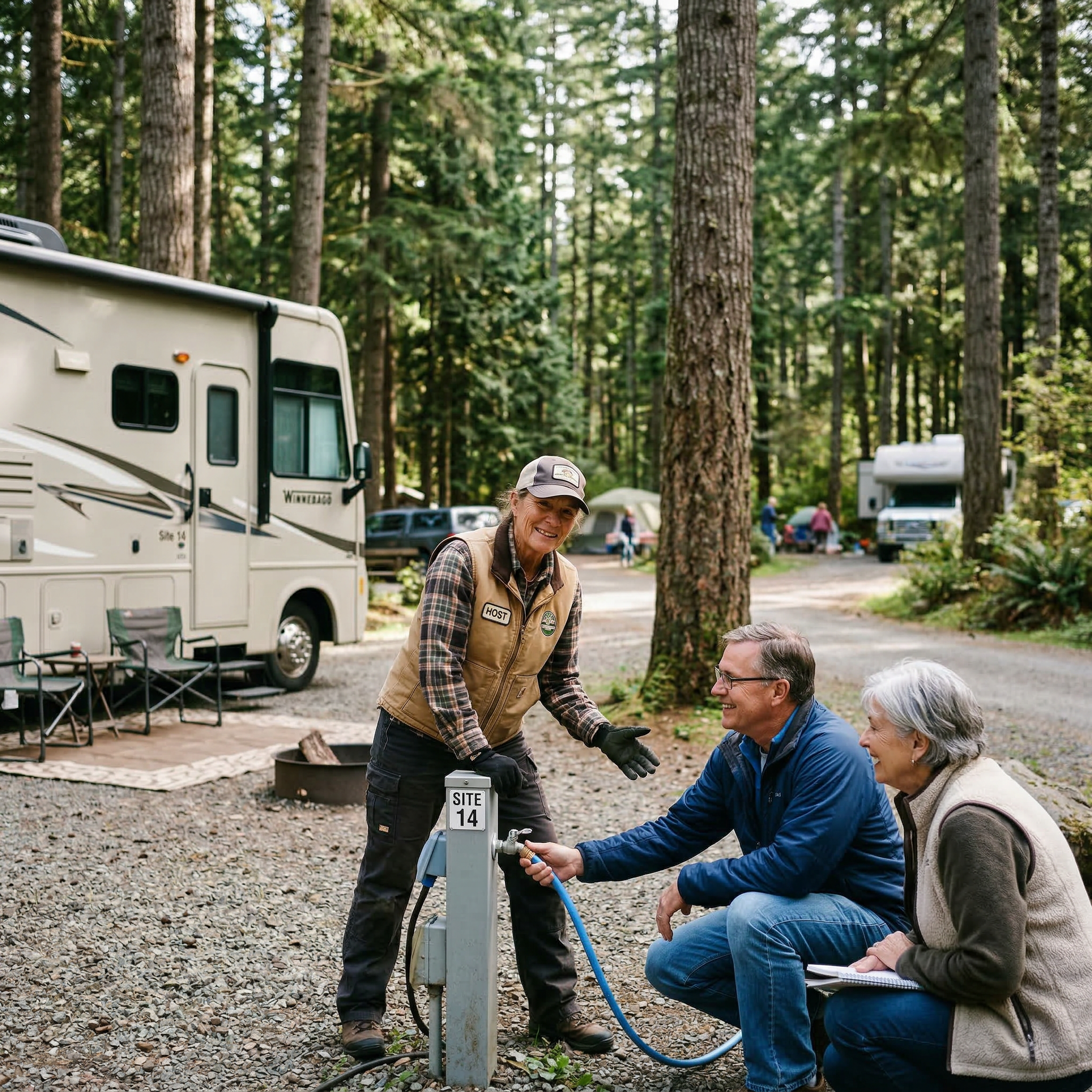
Campground hosting is one of the most talked-about RV jobs for a reason. Hosts help campers, monitor sites, answer questions, and act as a visible point of contact around the park.
Best for: Friendly, practical RVers who do well with people and do not mind being visible.
Why it fits RV life: Many roles include a campsite, utilities, or a small stipend.
The catch: Privacy can disappear fast during peak season, and you do end up seeing the full spectrum of human campground behavior, which is not always Oscar-worthy.
7. Remote sales representative
If you are comfortable with sales, lead follow-up, and relationship-building, remote sales can be a strong option. Some roles are employee-based, while others are more commission-driven.
Best for: People who do well with communication, persuasion, and self-direction.
Why it fits RV life: Like customer service, it can move with you as long as your workspace and internet are reliable.
The catch: Commission-heavy roles can feel great one month and irritating the next if your pipeline dries up.
8. Travel blogger or vlogger
Yes, this one belongs on the list, but it needs a little less fantasy and a little more honesty. Travel blogging, YouTube, and affiliate content can absolutely become income streams, but they usually take time, consistency, and actual strategy.
Best for: RVers willing to write, film, learn SEO, and keep showing up long before the income looks exciting.
Why it fits RV life: You are already living the subject matter.
The catch: It is a real business, not a hobby with better sunsets. If you want to explore that angle more seriously, this guide on Wealthy Affiliate for RVers is the more natural next step.
9. Mobile pet care provider
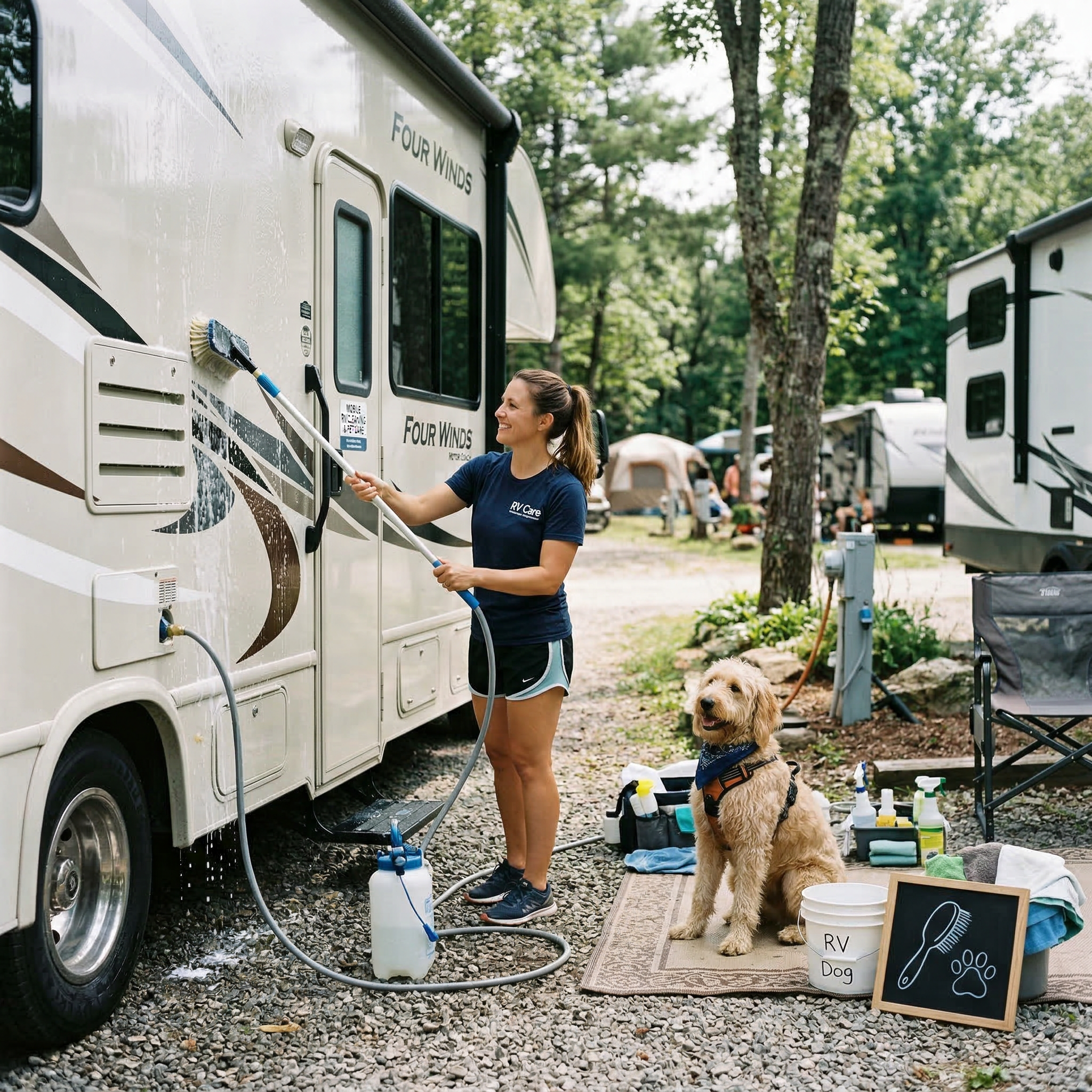
A lot of RVers travel with pets, which creates opportunities for dog walking, pet sitting, check-ins, and light grooming services in the right places.
Best for: Animal-friendly RVers who are dependable and comfortable working with different pet personalities.
Why it fits RV life: You can build trust within campgrounds and RV communities pretty quickly if you do good work.
The catch: You are responsible for someone else’s animal, and that is not something to treat casually.
10. Mobile RV detailer
RV owners spend good money protecting their rigs, and many would rather pay for a quality wash, wax, or interior cleanup than spend half a day doing it themselves.
Best for: RVers who do not mind hands-on work and want a service-based income path.
Why it fits RV life: It is easy to explain, easy to market locally, and useful in almost any campground-heavy area.
The catch: It is physical work, weather matters, and you need enough gear and hustle to deliver a result people will pay for again.
Income reality check: what RVers tend to underestimate
Here is the part most “make money on the road” articles skip. RV work is rarely just about finding a job. It is about finding work that matches your travel pace, your internet setup, your stress tolerance, and how much unpredictability you can handle before you start questioning your life choices in a campground laundry room.
- Fast-moving travel and stable work do not always mix well. The more often you move, the more valuable location-independent work becomes.
- Seasonal jobs can lower costs, but they also lock you into place. That is great for some people and frustrating for others.
- Mobile service work sounds flexible, but it still takes marketing. People need to know you exist before they hire you.
- Online income usually takes longer than people hope. It can absolutely work, but it is usually built, not instantly found.
- Reliable internet is not optional for remote work. It is the backbone of the plan, not a detail to figure out later.
The strongest RV income setup is usually not one perfect job. It is a mix of work that gives you stability, flexibility, and room to adapt when the road throws something annoying at your budget.
Quick decision guide
- If you move often: prioritize remote customer service, remote sales, or online business building.
- If you stay a month or more: campground work, hosting, and local tourism jobs become more practical.
- If you have a trade or service skill: mobile mechanic or RV detailing can be strong fits.
- If you want the simplest start: look for steady remote work before trying to build multiple income streams.
- If you want long-term scalability: content, affiliate marketing, and digital business models are worth considering, but only if you treat them like real work.
If you want a practical place to look for legitimate remote and flexible work that can fit RV travel, start here: FlexJobs.
Sources and further reading
FAQ
Can you really make money while living in an RV?
Yes. Many RVers combine remote work, seasonal jobs, and service-based side income to support life on the road. The best option depends on how often you move and what skills you already have.
What is the easiest RV job to start with?
For many people, remote customer service or campground work is the easiest place to begin because the work is more straightforward and does not require building a business from scratch.
Are campground host jobs paid?
Some are volunteer-based and include a free site or utilities, while others offer a stipend or hourly pay. It varies by park, campground, and role expectations.
Is blogging or YouTube a realistic RV income source?
It can be, but it usually takes time. Content-based income is more realistic when treated like a real business with consistent publishing, SEO, audience building, and monetization strategy.
What matters most when choosing an RV job?
The biggest factor is fit. A good RV job should match your travel pace, internet reliability, income needs, and how much schedule flexibility you want.


Leave a Reply