

Affiliate Disclosure: I earn commissions if you shop through the links below at no additional cost to you.
Last Updated on January 28, 2026 by Jeremy
If you’ve ever stared at your propane tanks like they’re going to answer back, you’re not alone. The honest truth is this: propane lasts a long time, right up until it doesn’t.
This guide gives you real ranges, what actually changes the math, and the fast way to estimate your own setup without guessing.
TL;DR
- Mild weather: a 20 lb tank often lasts 7–14 days.
- Cold weather: a 20 lb tank can drop to 2–4 days if the furnace runs daily.
- Freezing temps: plan for 1–3 days on a single 20 lb tank if you’re heating hard.
- The furnace is the main burner. Everything else is usually “background noise” compared to heat.
- If you want a real estimate for your setup, use the calculator: Dump + Propane Calculator.
So… How Long Will an RV Propane Tank Last?
It depends on your weather and your furnace habits. In mild camping, propane can feel like it lasts forever. The second it turns cold, the math changes fast.
If you want the no-guess version, plug your setup into this page: Dump + Propane Calculator. It’s built for real RV setups, not one-size-fits-all averages.
What Uses Propane in an RV?
Most RVs use propane for the stuff you notice right away. Heat. Hot water. Cooking. Sometimes the fridge.
Here’s the usual list:
- Furnace (usually the biggest propane hog)
- Water heater
- Fridge (when running in propane mode)
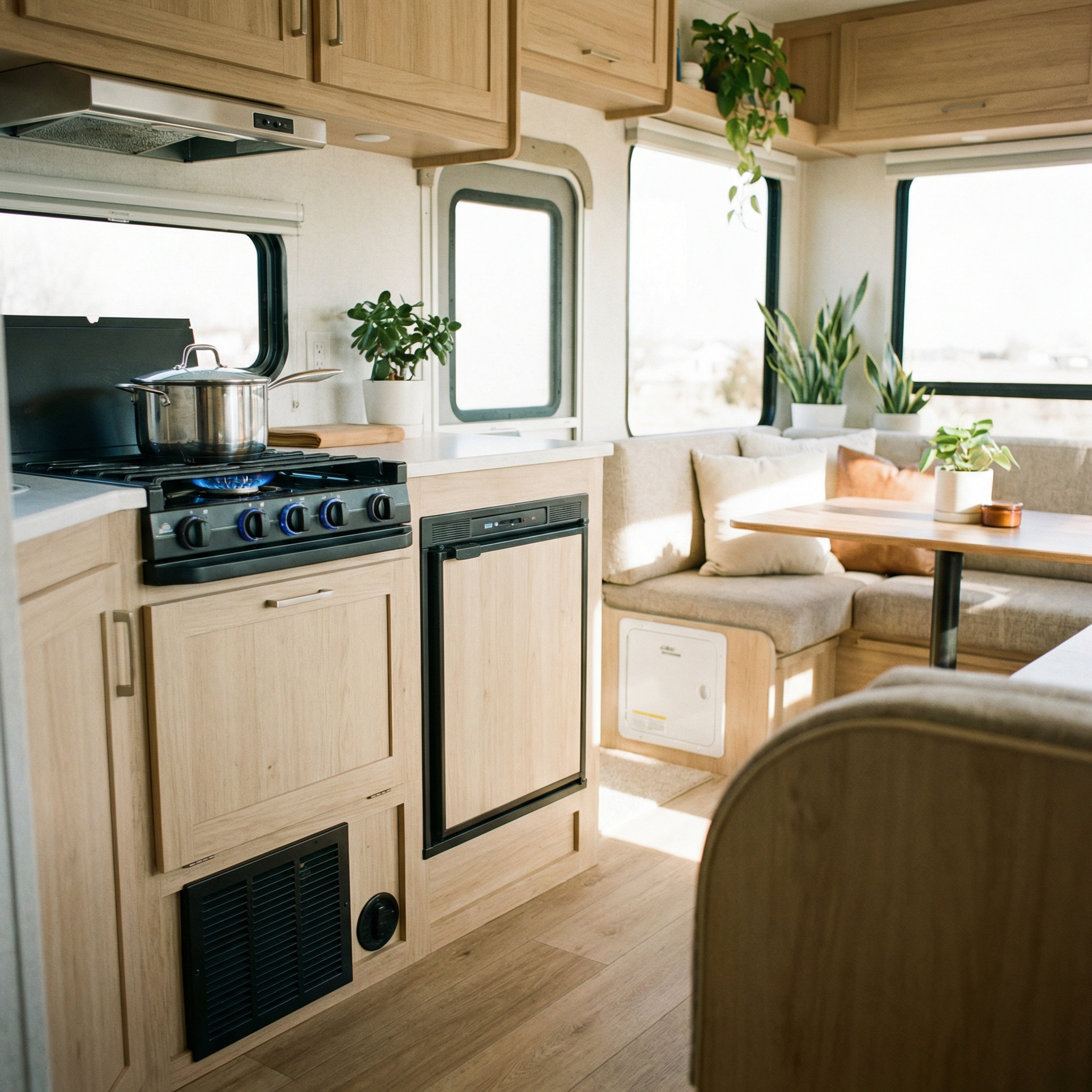
- Stove and oven
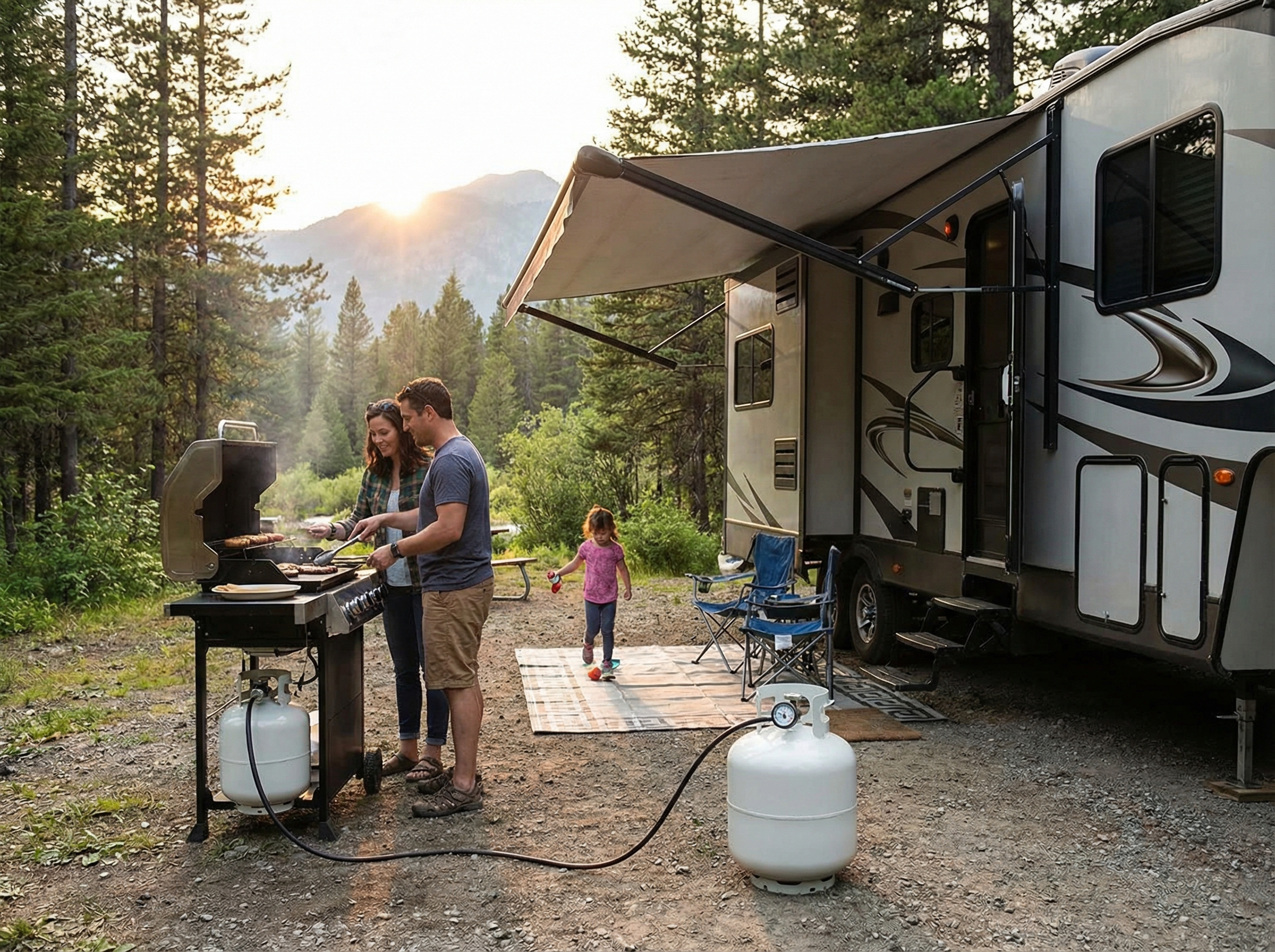
- Outdoor grill quick-connect (if you use it)
- Tank or water line heaters on some cold-weather rigs
If you’re trying to estimate tank life, start with one question: How often does the furnace run? That’s the swing factor.
Common RV Propane Tank Sizes
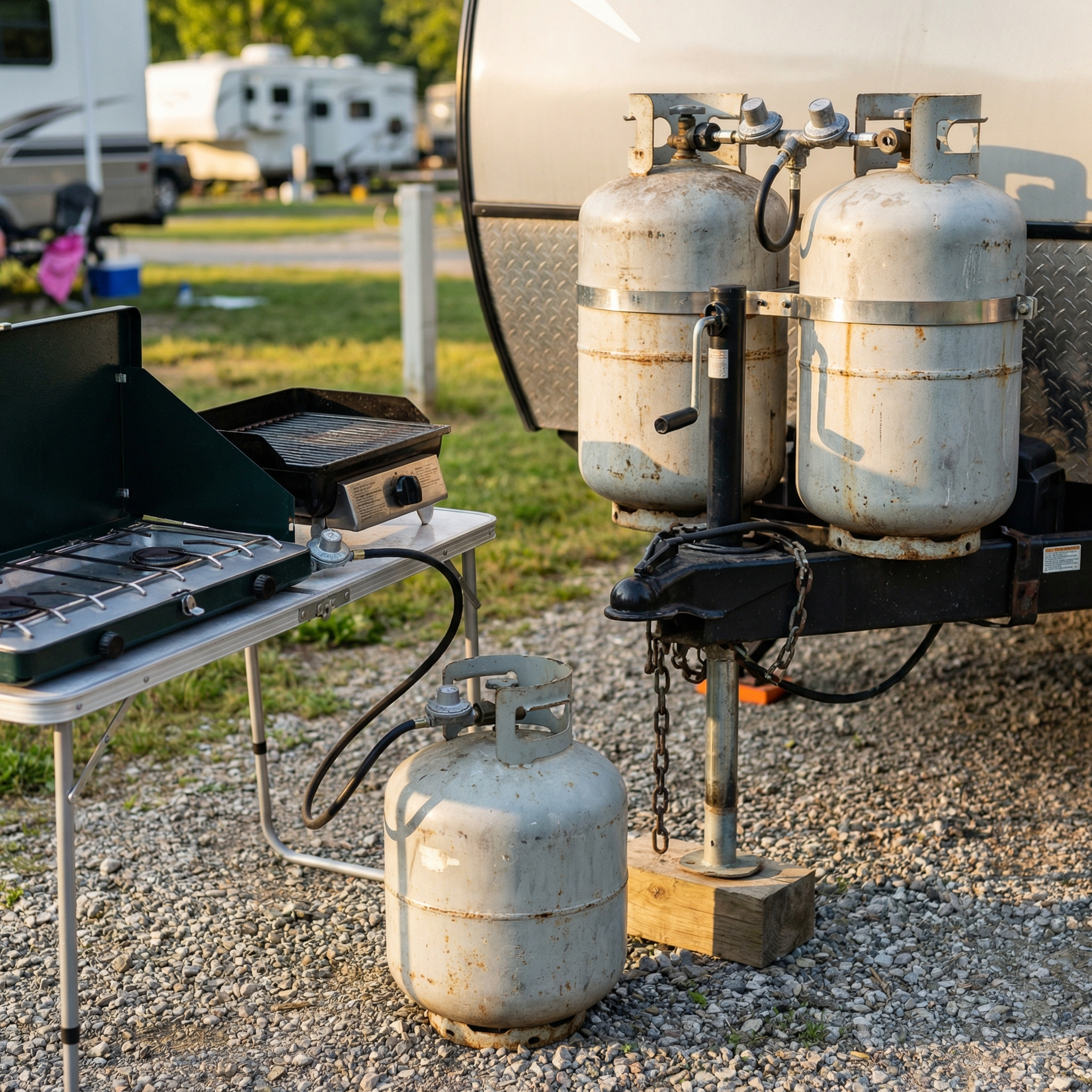
Most travel trailers and fifth wheels run cylinder tanks on the tongue. Motorhomes usually have a built-in ASME tank.
Trailers and Fifth Wheels
- 1 × 20 lb cylinder (about 4.7 gallons usable)
- 2 × 20 lb cylinders (about 9.4 gallons usable)
- 2 × 30 lb cylinders (about 14 gallons usable)
- Some rigs run 40 lb cylinders, but they’re less common
Motorhomes
Built-in tanks vary a lot. Many land somewhere around 15–30 gallons usable. The only “right answer” is what your sticker says.
Quick note that saves people headaches: propane tanks are not filled to 100%. That’s normal. It’s a safety rule, not a rip-off.
Realistic Ranges (What Most RVers Actually See)
This is the part people scroll for. Here are real planning ranges that match how RVs get used.
| Camping Conditions | Single 20 lb Tank | Dual 30 lb Setup |
|---|---|---|
| Mild weather Low furnace use |
About 7–14 days | About 2–4 weeks |
| Cold weather Furnace daily |
About 2–4 days | About 7–14 days |
| Freezing temps Heavy heating |
About 1–3 days | About 4–10 days |
If you read those ranges and thought, “That’s not enough information.” You’re right. Your rig, your insulation, and your habits matter.
That’s why the calculator exists: Dump + Propane Calculator. It takes your usage patterns and turns it into something you can plan with.
What Actually Changes the Math
Tank size matters. But these are the real “silent killers” of propane time.
1) Furnace runtime
The furnace is the main burner. If it cycles all night, your tank will feel like it’s leaking. It usually isn’t. It’s just doing its job.
2) Outside temperature
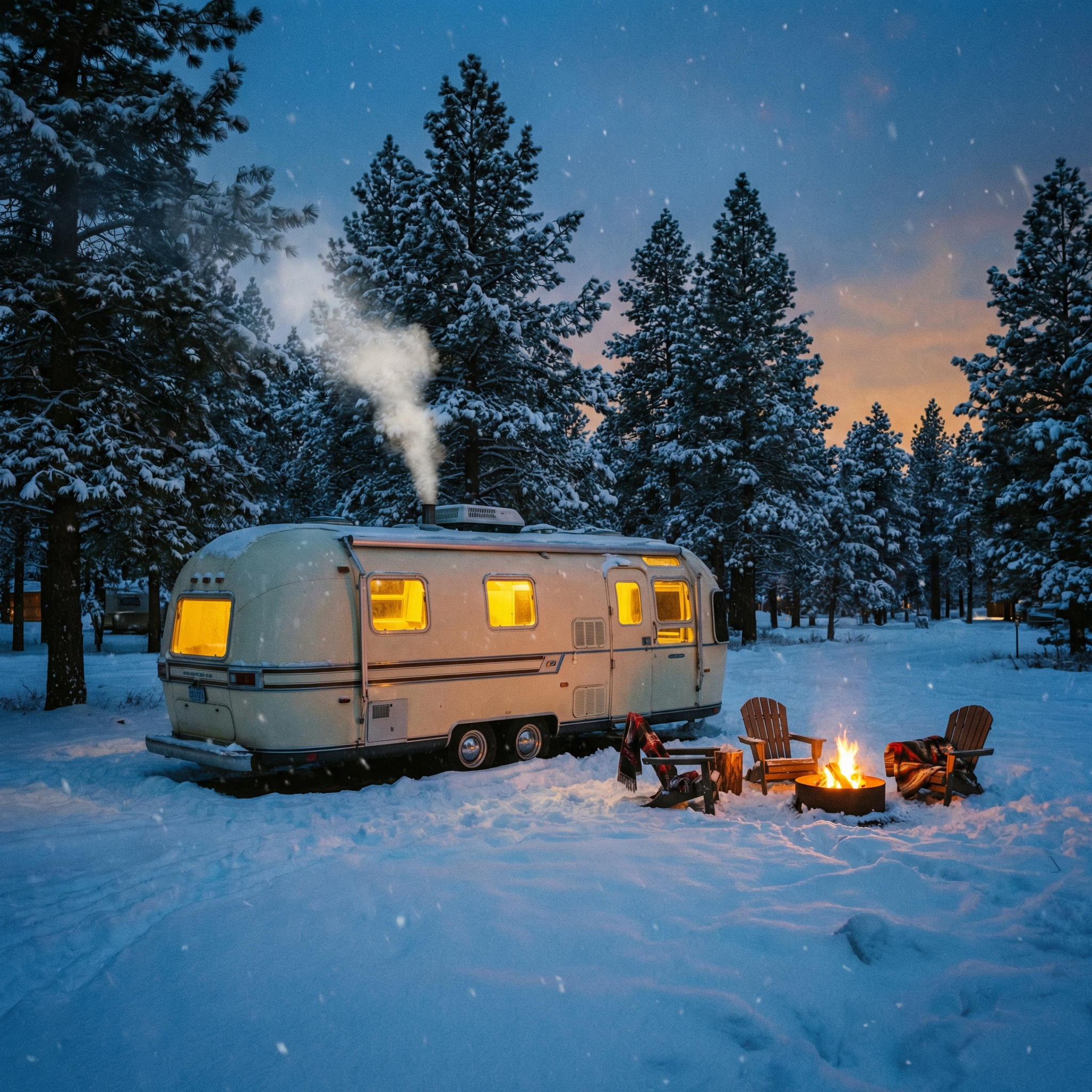
Mild nights are easy. Cold nights are expensive. Freezing nights can turn a “weekend tank” into a two-day tank.
3) Insulation and drafts
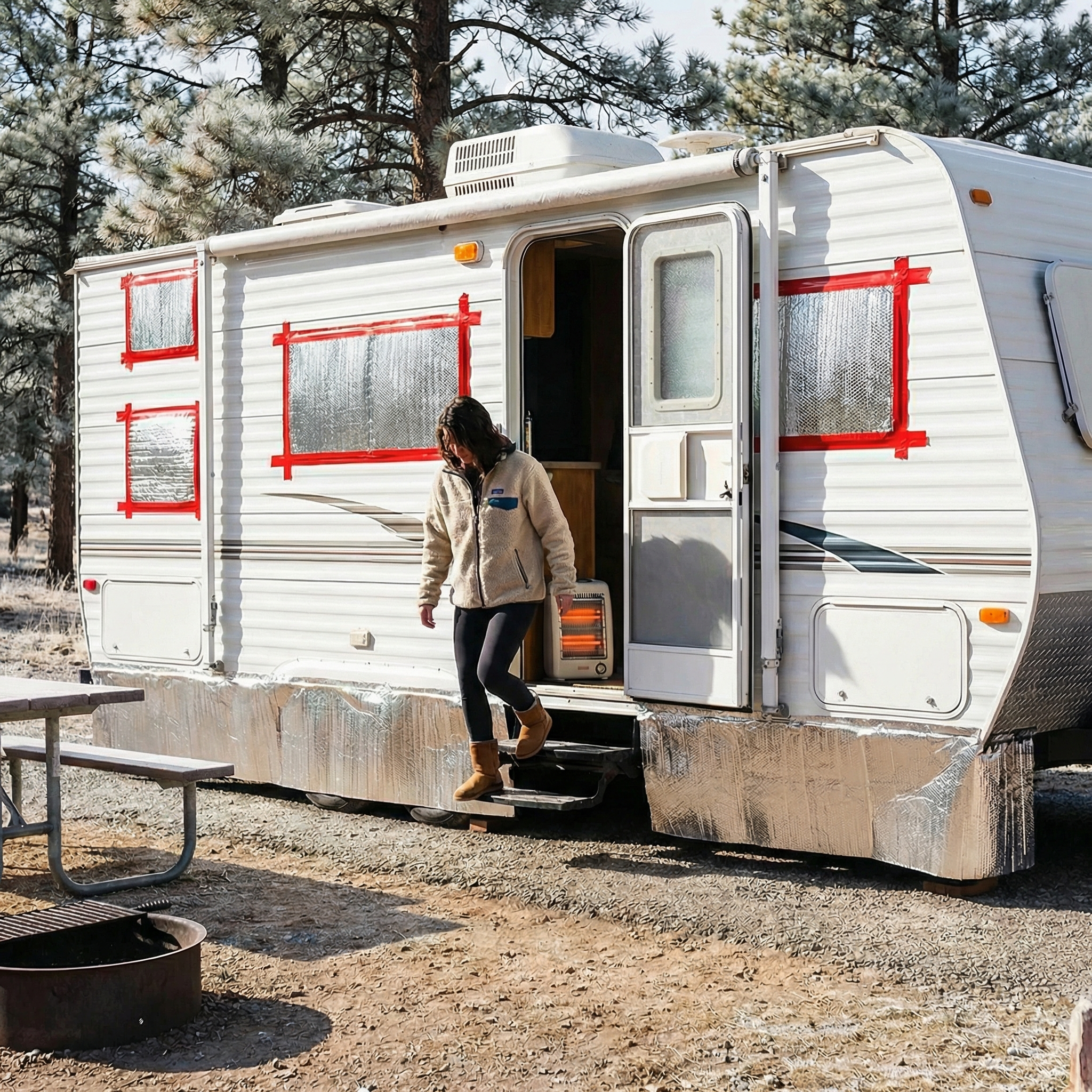
If your RV feels like a screened porch in a windstorm, your furnace will run like crazy. Seals, window covers, and basic draft control can make a noticeable difference.
4) Hot water habits
Long showers and lots of dishes will burn propane. RV hot water heaters are great. They’re not magic.
How To Make Propane Last Longer (Without Feeling Miserable)
You don’t have to live like a pioneer to stretch propane. A few small changes do most of the heavy lifting.
Use electric when you already paid for it
If you’re on shore power, use it. Run the fridge on electric. Use electric water heater mode if your rig has it. A small space heater can take pressure off the furnace too.
Lower the thermostat a bit
Drop it a few degrees overnight. Grab an extra blanket. Your propane tanks will thank you in the morning.
Stop the drafts
Window inserts and thermal curtains help more than people think. Same with sealing obvious gaps. If you can feel the cold air moving, your furnace can too.
Cook smarter
The stove isn’t usually the big culprit. But if you’re running the oven a lot, it adds up. Outdoor cooking can help when the weather cooperates.
Propane Safety (Quick, Serious, and Worth Reading)
Propane is safe when it’s respected. Most problems come from ignoring the obvious stuff.
If you smell propane: shut off the tank. Ventilate the RV. Don’t run appliances. Don’t “see if it goes away.”
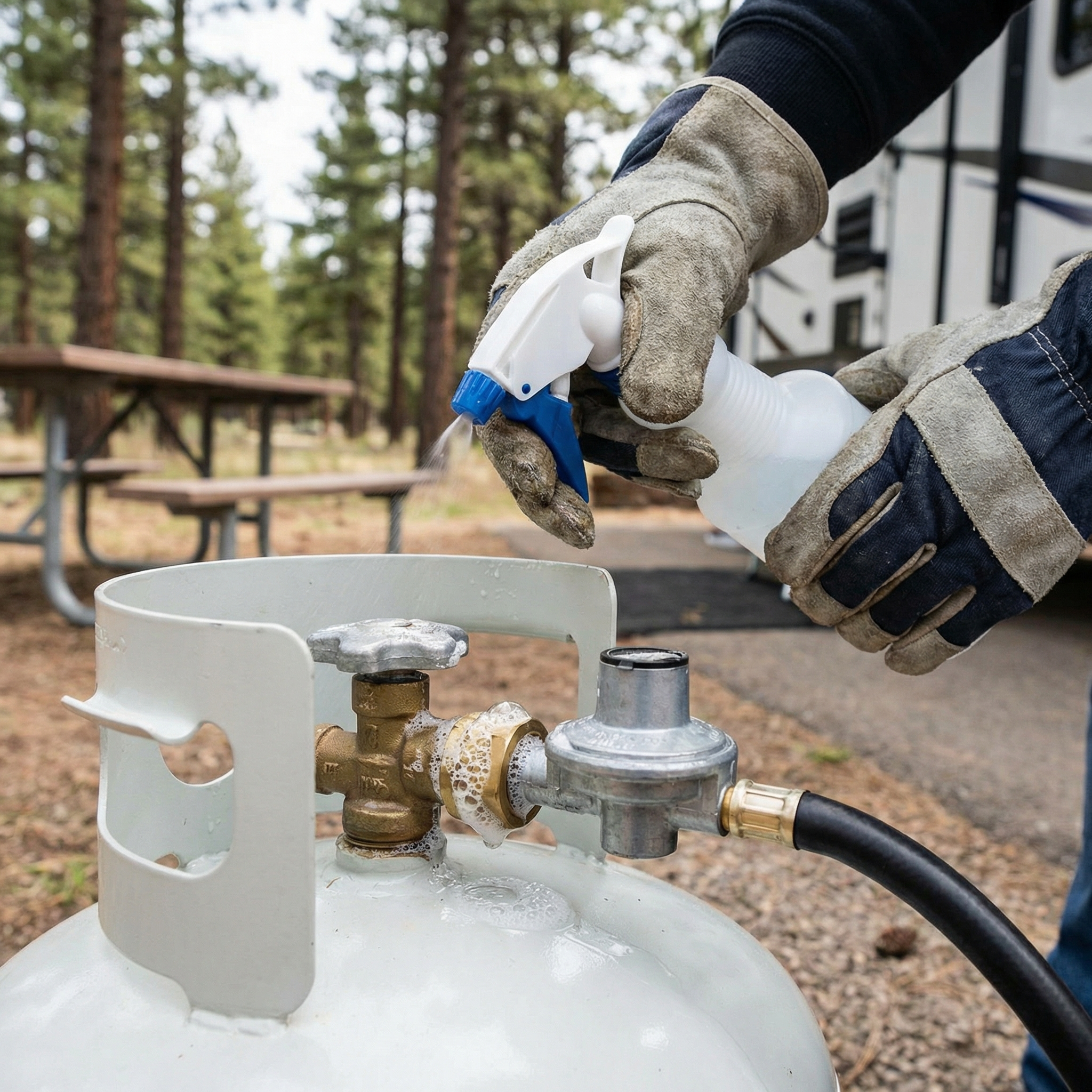
Fix leaks properly. Replace cracked hoses. Keep regulators in good shape. It’s boring maintenance, but it’s the kind that keeps trips from turning into a mess.
A small tip that saves people: take a minute to learn where your shutoff is. Not when there’s a problem. Before there’s a problem.
Want a Real Estimate for Your Setup?
Generic averages are fine for conversation. They’re not great when you’re choosing between “sleep warm” and “drive to refill before breakfast.”
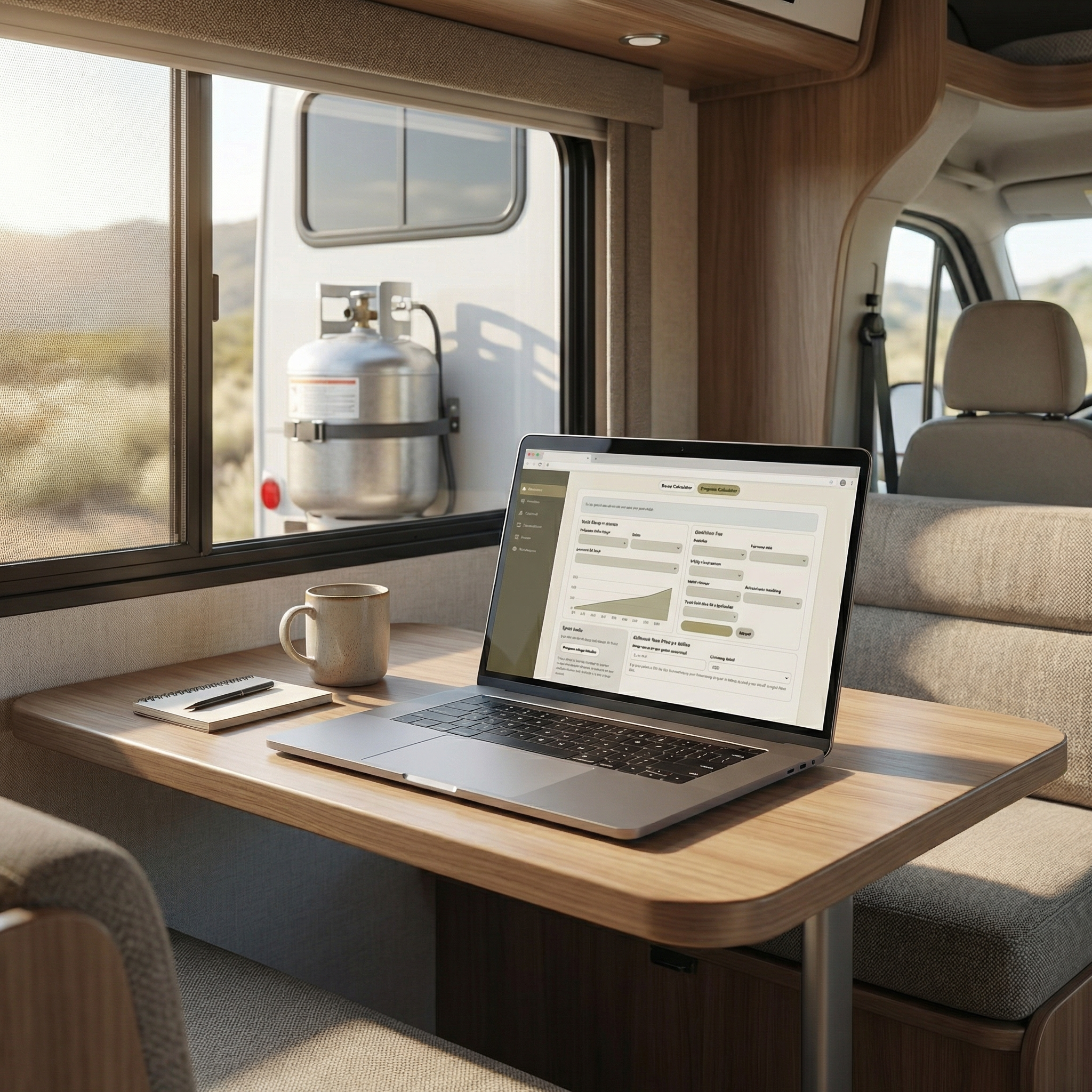
Use the calculator here. Pick your tank setup, weather, and furnace use. You’ll get a planning estimate that actually matches RV life.
FAQs
How long does a 20 lb propane tank last in an RV?
In mild weather with low furnace use, many RVers see about 7–14 days. In cold weather, it can drop to 2–4 days. If you’re running heat hard in freezing temps, 1–3 days is not unusual.
What uses the most propane in an RV?
The furnace is usually the biggest propane consumer by a wide margin. Water heating can be the next big one depending on shower and dish habits. The stove and fridge are typically smaller compared to heat.
Does an RV fridge burn a lot of propane?
Not usually. A fridge on propane tends to be a steady, smaller draw. It becomes more noticeable when your tank is already being hammered by furnace use.
Why can’t propane tanks be filled completely?
Propane expands. Tanks are filled with a safety margin so pressure doesn’t spike when temperatures change. It’s normal and it’s the correct way to fill them.
What should I do if I smell propane in my RV?
Shut off the tank. Ventilate the RV. Do not run appliances. Then troubleshoot and repair properly before using propane again.
Is there a quick way to estimate propane time without guessing?
Yes. Use the Propane tab on this page: Dump + Propane Calculator. It gives you a planning estimate based on your tank setup, weather, and appliance use.




.jpg/:/cr=t:5.56%25,l:0%25,w:100%25,h:88.89%25/rs=w:1240,h:620,cg:true)



Leave a Reply