

Last Updated on September 14, 2026 by Jeremy
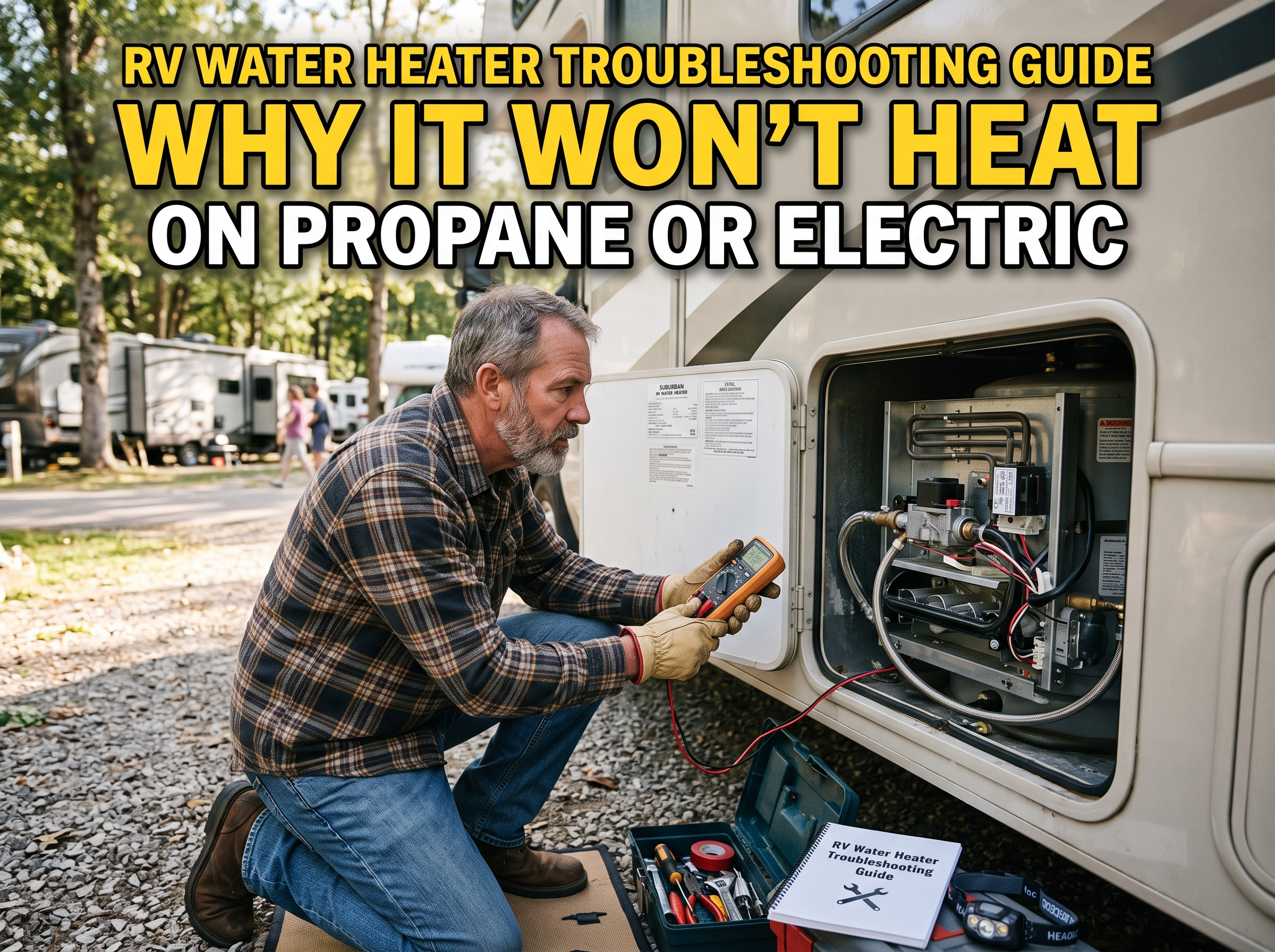
When an RV water heater stops producing hot water, the fastest repair usually begins with a slower first step: identify exactly what failed. A gas-and-electric tank that heats on propane but not electricity has a different problem from one that fails on both modes. A tankless heater with good ignition but weak flow requires a different test again.
This RV water heater troubleshooting guide starts with safe observations an owner can make without dismantling propane fittings or working on live 120-volt wiring. It will help you separate a water-supply problem from a fuel, power, ignition or control problem—and recognize when the repair belongs to a qualified RV technician.
Start by Identifying Your Water Heater
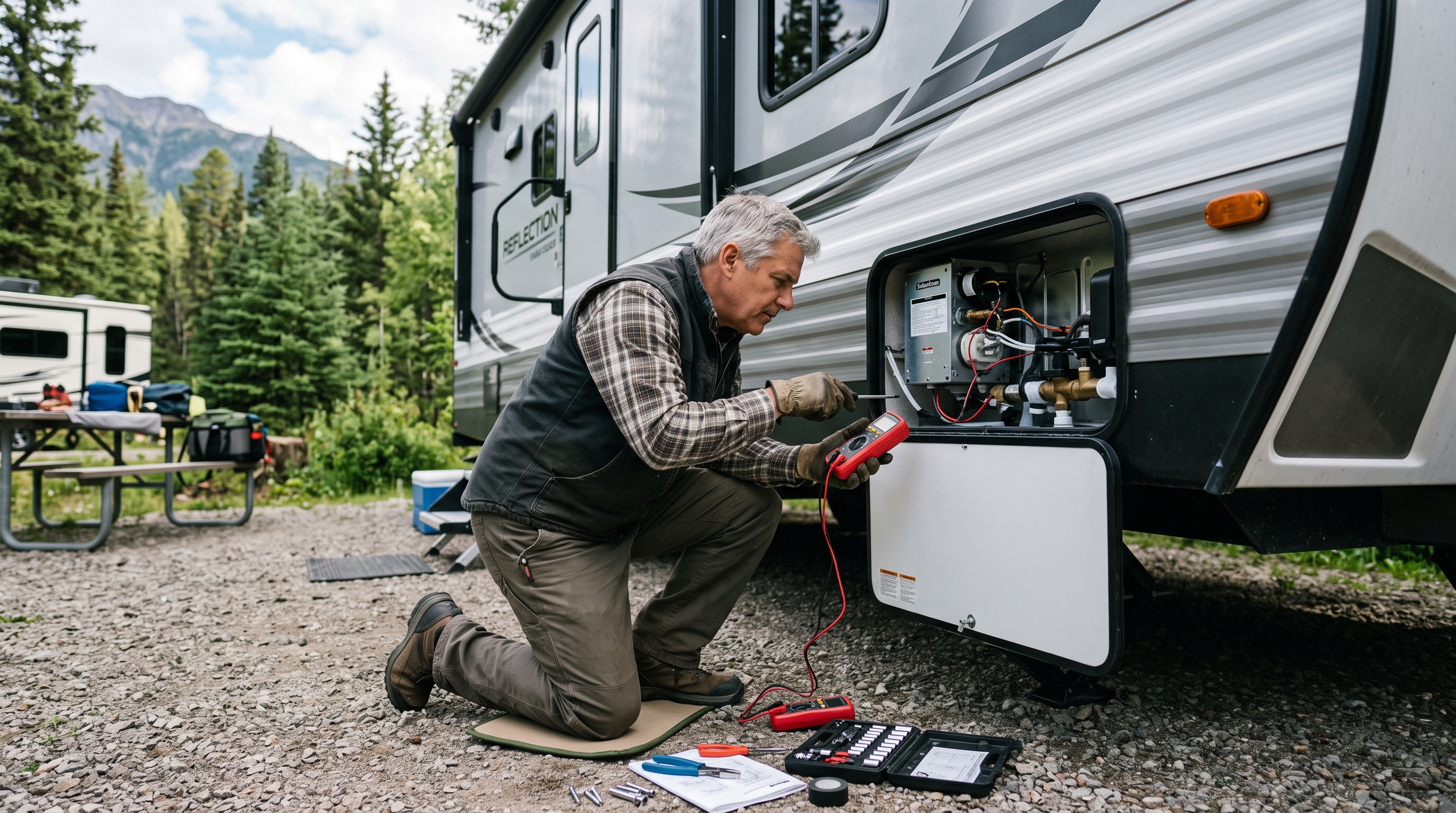
Find the manufacturer, model and serial number before ordering anything. RVs may use a traditional tank, a gas-only tank, a gas/electric combination unit or an on-demand heater. Control logic, reset locations, anode requirements and winterizing procedures vary.
- Suburban steel tanks commonly use a replaceable anode rod.
- Dometic/Atwood aluminum tanks generally do not use an anode rod; Dometic specifically warns against installing an aftermarket one in these tanks.
- Tankless heaters depend on minimum water flow and may show model-specific fault codes.
Photograph the data plate and consult the current manual. A part that fits physically is not necessarily approved electrically, thermally or for combustion.
Safety Checks Before Any Reset
- Turn off the water heater and allow the water to cool before opening a drain or pressure-relief point.
- Never energize an electric element unless the tank is completely full.
- Do not loosen propane fittings to “test” for gas.
- Disconnect shore power and verify power is absent before accessing covered 120-volt components.
- Keep your face and hands away from the burner opening during ignition.
Use the Symptom to Choose the Right Branch
| Symptom | Most useful first checks | Common direction |
|---|---|---|
| No hot water on gas or electric | Tank full, bypass valves, 12V fuse, control panel, lockout | Shared water, control or 12V problem |
| Propane works; electric does not | Shore power, pedestal, breaker, inside/outside switches, reset | 120V supply, thermostat, relay or element |
| Electric works; propane does not | LP level, valves, stove-flame test, ignition attempts, exhaust condition | Gas supply, igniter, flame sensing or control |
| Burner runs but water stays lukewarm | Bypass position, outdoor shower valves, mixing valve, demand rate | Cold-water crossover or flow issue |
| Water is too hot or relief valve discharges | Shut down; inspect only when cool | Thermostat, pressure, air gap or valve issue—service may be required |
If the Water Heater Fails on Both Modes
1. Confirm the tank is full
With the heater off and cool, connect water, open a hot faucet and wait for a steady stream without air bursts. Heating an empty tank can destroy an electric element very quickly.
2. Check the winterizing bypass
A bypassed tank may contain little or no water even though water flows at a faucet. Compare the valves with the plumbing diagram for your RV. Do not assume every three-valve system points the same way.
3. Confirm the 12-volt control supply
Many combination heaters need 12-volt DC for the board and gas valve even when the heat source is 120-volt electricity. Check the labelled fuse and battery voltage. If a replacement fuse opens again, stop—Dometic warns that a short should be corrected before replacing the circuit-board fuse and that an oversized fuse must not be installed.
4. Look for a lockout or fault code
Some controls lock out after failed ignition attempts. Follow the manual’s reset procedure once. A repeat lockout is information, not permission to keep cycling the switch.
If Propane Works but Electric Does Not
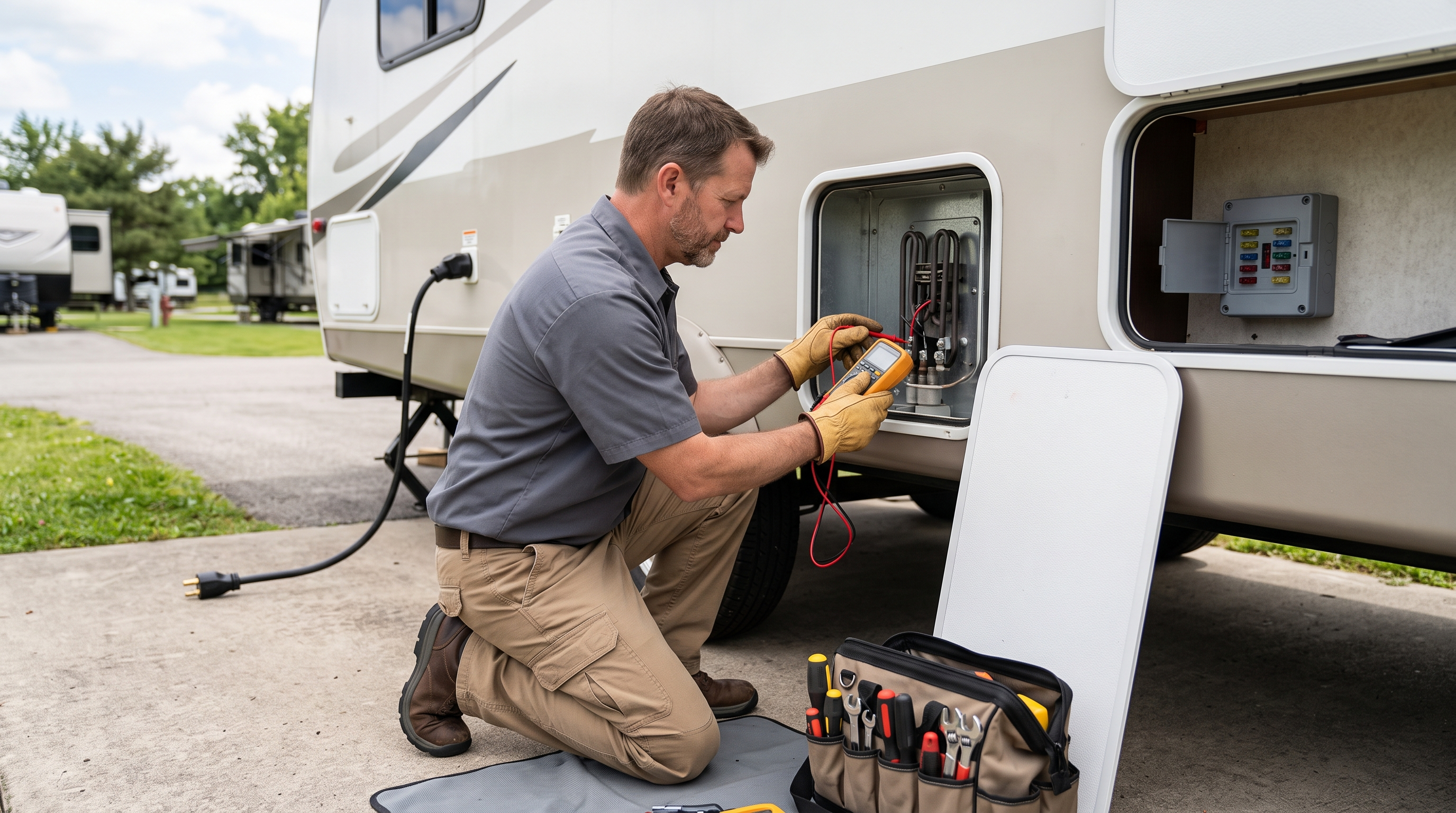
- Confirm the RV is actually receiving shore power and that other 120-volt appliances work.
- Check the water-heater breaker. Reset it once by moving it fully OFF and then ON.
- Look for both an interior switch and a second switch at the exterior heater compartment, if your model uses one.
- With the tank full and power safely isolated, follow the manual for any accessible high-limit reset.
- If power reaches the appliance but it still does not heat, the element, thermostat, relay or wiring may require meter testing by someone qualified to work on 120 volts.
A burned-out element often follows dry firing, but replacing it without confirming the cause can repeat the failure.
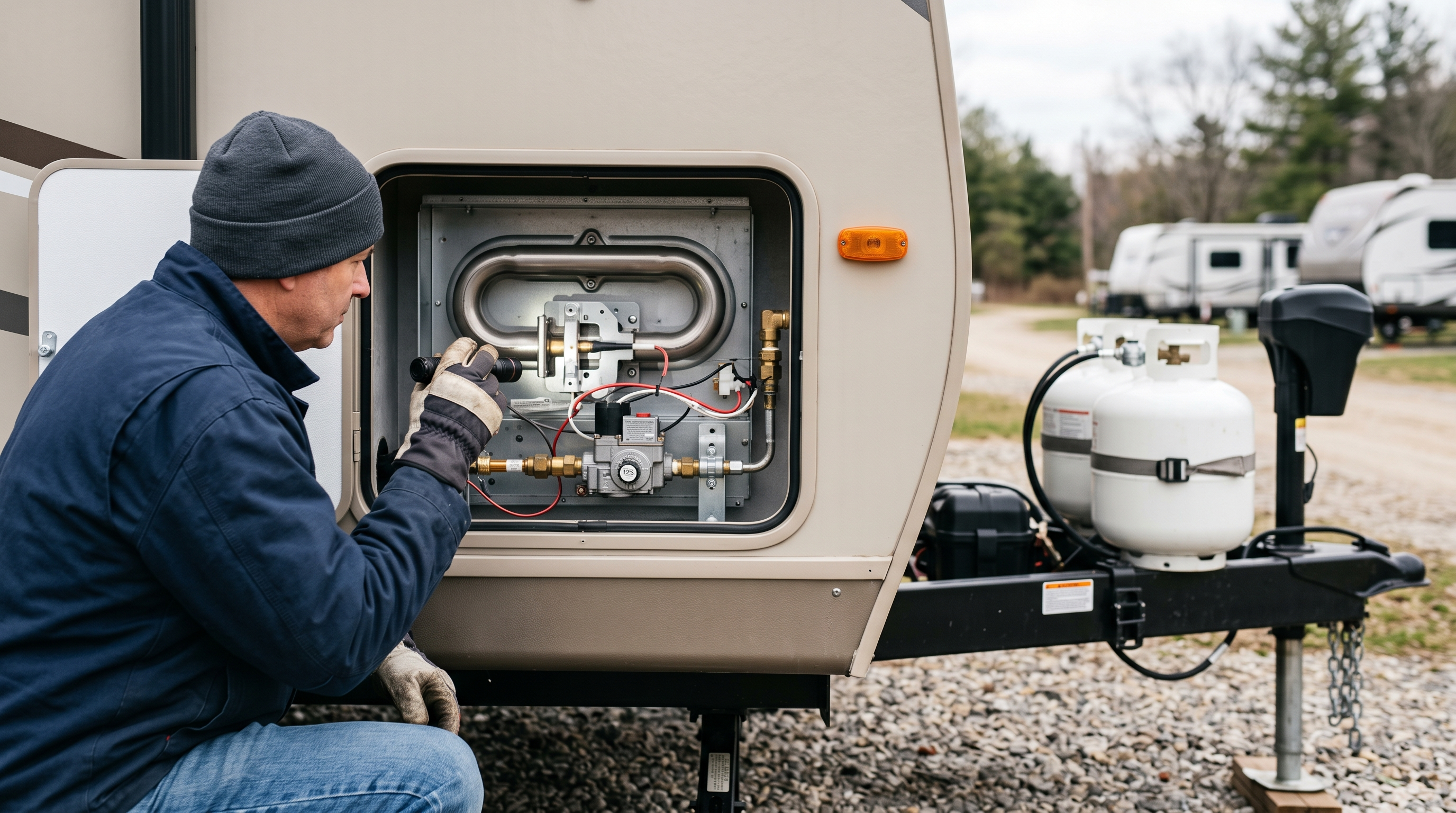
If Electric Works but Propane Does Not
- Confirm there is propane in the cylinders and that the service valves are open.
- Light a stove burner according to its instructions. A steady flame can help purge air and confirm supply, but does not prove the water-heater regulator pressure is correct.
- Turn the water heater on and listen. A direct-spark model may click, ignite and then either remain lit or shut down.
- From a safe position, note whether there is no spark, spark without flame, or flame that dies quickly. Give that exact sequence to the technician.
- Inspect the exterior vent for obvious insect nests, debris or soot without inserting tools into the burner assembly.
If the Tank Is Hot but the Faucet Is Not
This often points away from the burner and element. Check the winterizing bypass, then make sure the outdoor shower’s hot and cold knobs are closed—not merely the button on the shower head. Leaving both valves open can allow cold water to cross into the hot system. A failed mixing valve can create a similar symptom on models that use one.
Also compare demand with capacity. A six-gallon tank will not behave like a residential heater during back-to-back showers. Mineral scale, a restricted aerator or very cold incoming water can reduce performance.
Maintenance That Prevents Repeat Problems
- Flush sediment according to the manufacturer’s instructions.
- Inspect the correct anode only on tanks designed to use one.
- Keep the burner and exhaust area clean and unobstructed.
- Exercise bypass valves and verify their positions after winterizing.
- Record the model, parts used and symptoms in your maintenance log.
- Never substitute a pressure-relief valve, thermostat or heating element outside the approved specification.
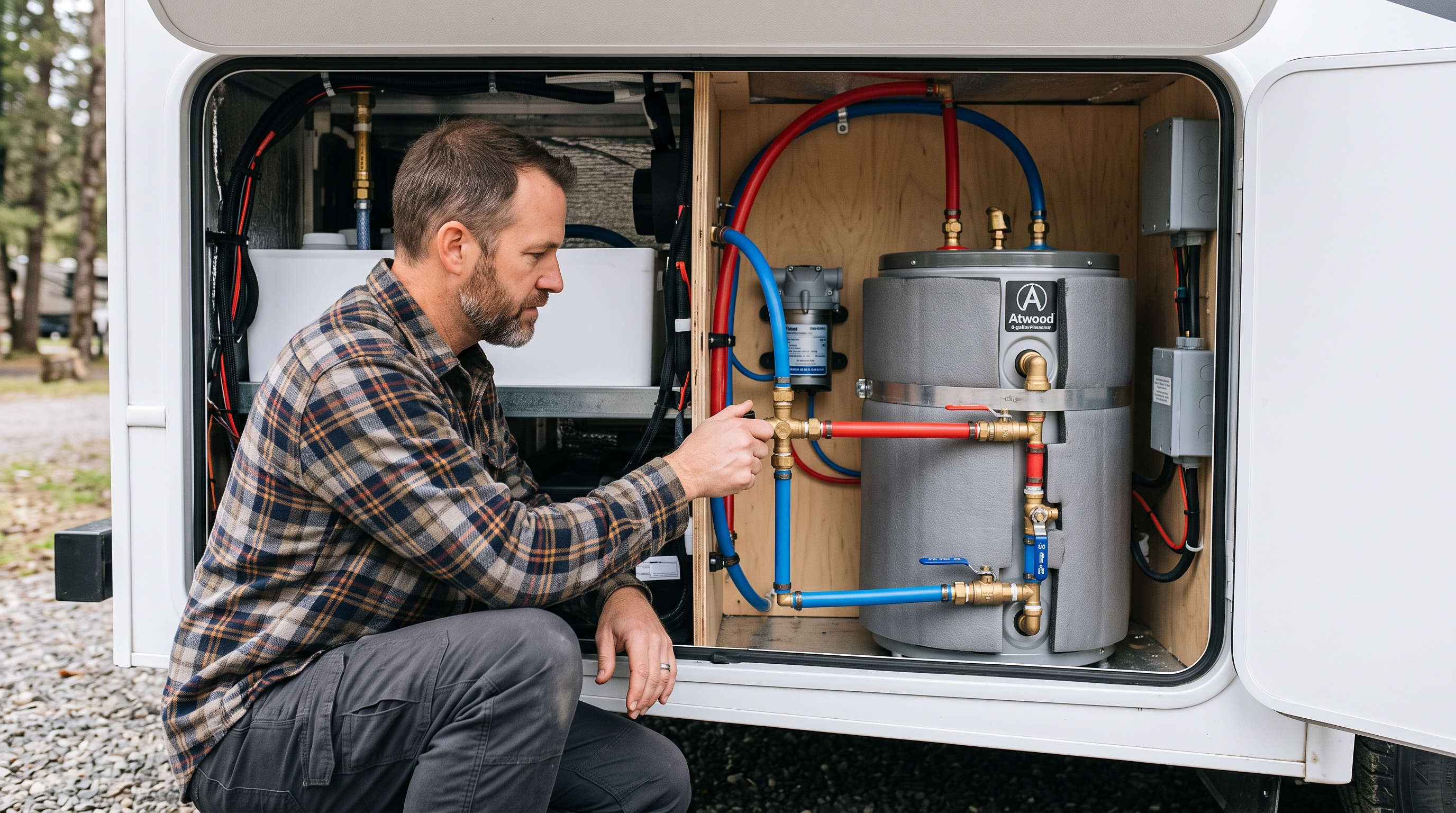
Use the Troubleshooter Before Buying Parts
Start with the RV System Troubleshooter when the symptom involves several systems or you are unsure which branch fits. For model and replacement research, see the existing Suburban RV water-heater guide. If propane consumption is part of the problem, the RV propane calculator provides a practical estimate.
When to Call an RV Technician
Professional service is the right next step for repeat fuse or breaker trips, propane odour, soot, delayed ignition, live-voltage testing, gas-pressure testing, damaged combustion parts, tank leakage, scorched wiring or a relief valve that continues discharging after the system cools. Give the technician the model number and the exact mode-by-mode symptom; that description can save substantial diagnostic time.
Sources
- Dometic: Water-heater maintenance and electronic-ignition guidance
- Dometic documents database
- Dometic: Aftermarket anode-rod warning
Frequently Asked Questions
Why is my RV hot water heater not heating?
The main categories are an empty or bypassed tank, missing 12-volt control power, unavailable propane or 120-volt power, ignition lockout, a tripped high-limit control, failed element or thermostat, or cold-water crossover.
Why does it work on propane but not electric?
That usually directs attention to shore power, the breaker, electric switches, a high-limit control, relay, thermostat, wiring or heating element.
Why does it work on electric but not propane?
Check LP supply and 12-volt control power, then observe whether the unit sparks, lights and stays lit. Ignition, flame-sensing or combustion repairs should be handled according to the manual by a qualified technician.
Can I reset an RV water heater?
Some models have a manual high-limit reset or a documented lockout reset. Follow the exact manual and reset once. If it trips or locks out again, find the cause.
Can I run the electric element with an empty tank?
No. Dry firing can destroy the element rapidly. Confirm a steady flow from a hot faucet before energizing it.
Do all RV water heaters need an anode rod?
No. Suburban steel tanks commonly do, while Dometic/Atwood aluminum tanks generally do not. Use the requirement for the exact model.


Leave a Reply