
Affiliate Disclosure: I earn commissions if you shop through the links below at no additional cost to you.
Last Updated on December 18, 2025 by Jeremy
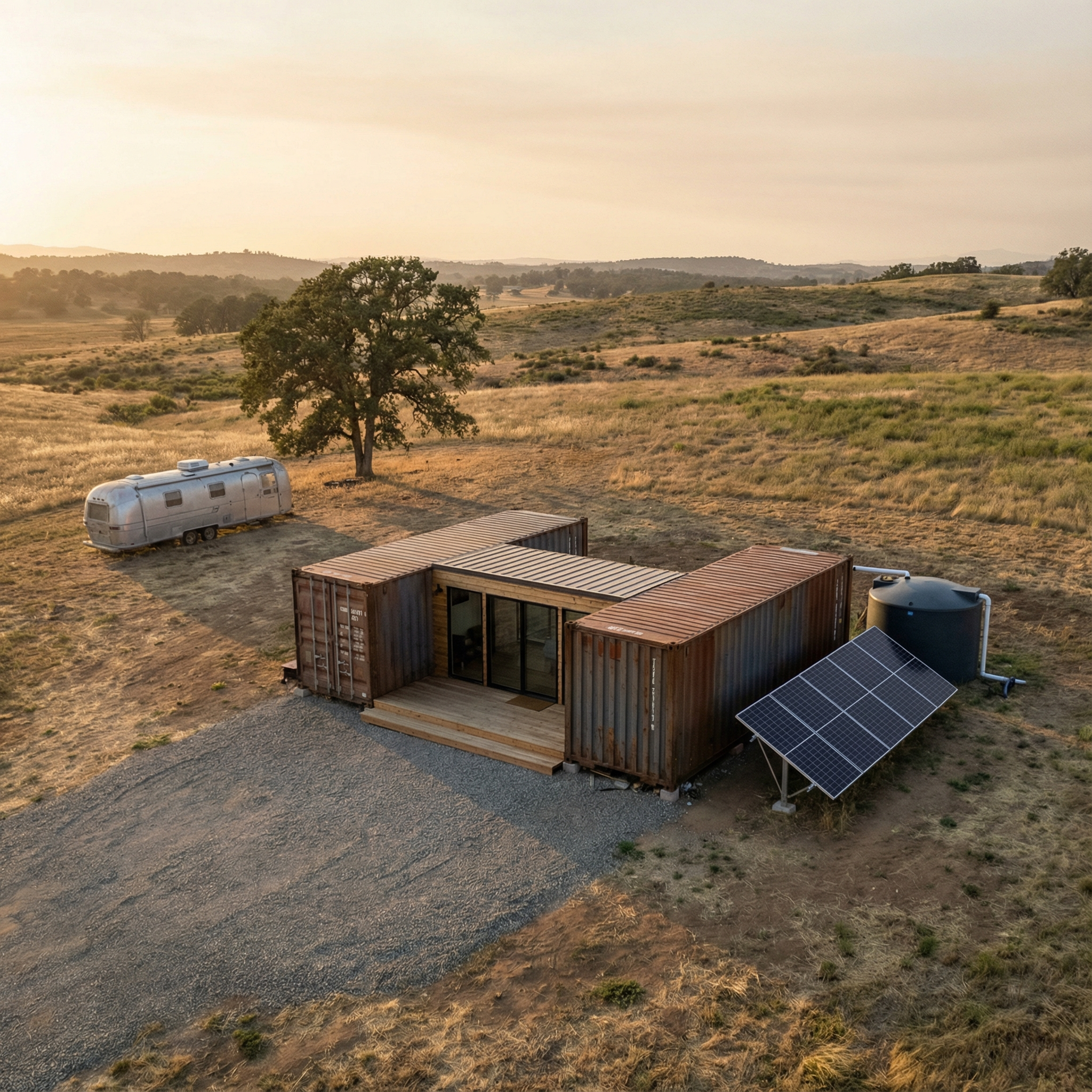
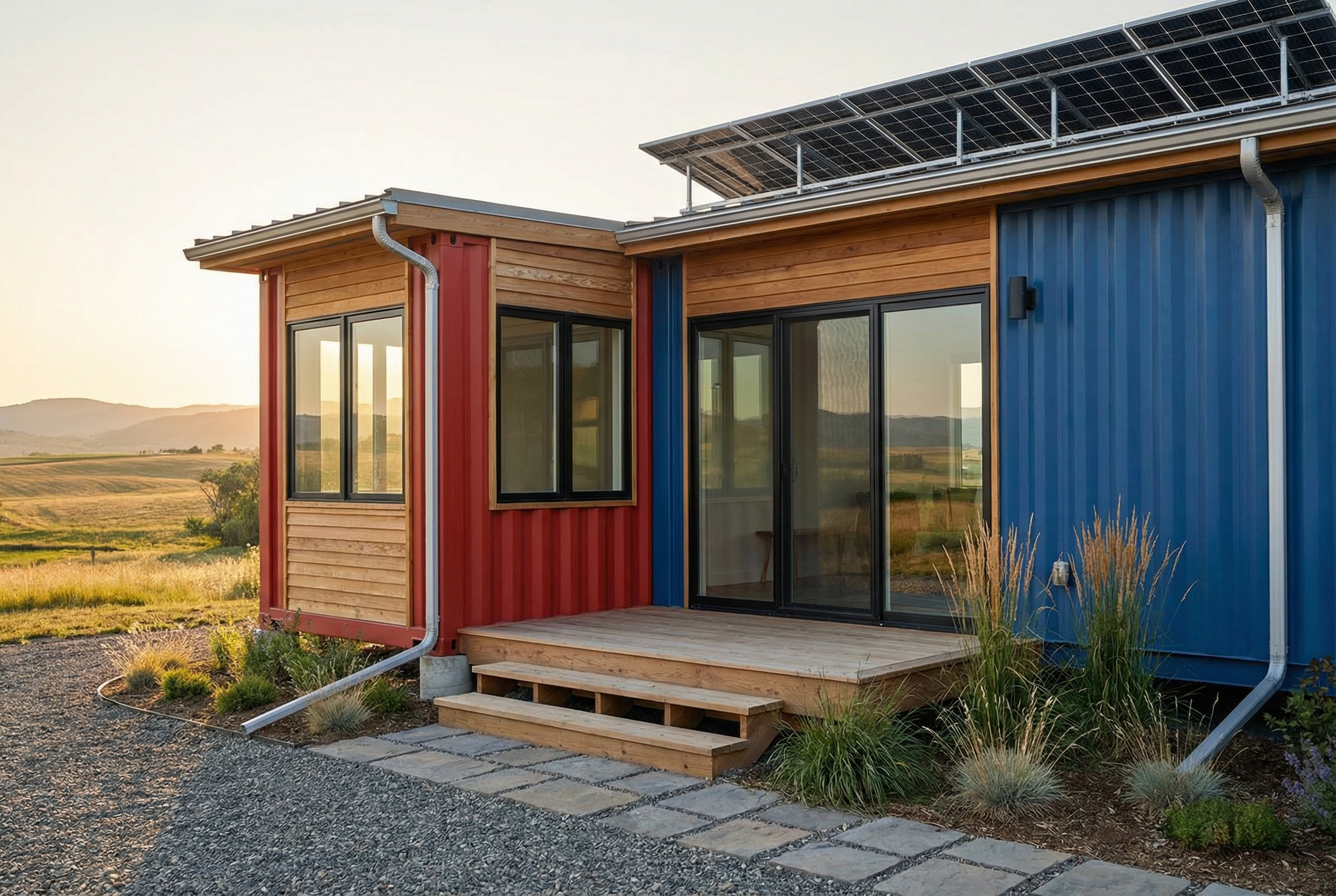
Shipping container homes keep showing up for a reason. They’re durable, modular, and they can make sense for people who want a build that’s more “step-by-step” than “one massive mortgage event.” For RVers and off-grid folks, container builds can also become something practical: a base camp, a workshop, a utility room, or a small full-time home that grows as your budget and skills grow.
In this guide, I’m going to walk you through realistic shipping container home ideas you can actually plan around: layout decisions, insulation (and condensation), green/off-grid features, interior finishing for small spaces, and cost considerations. I’ll also point you to a few resources that can help you go from “idea” to “built.”
Determining Home Size and Layout (Container Reality Check)
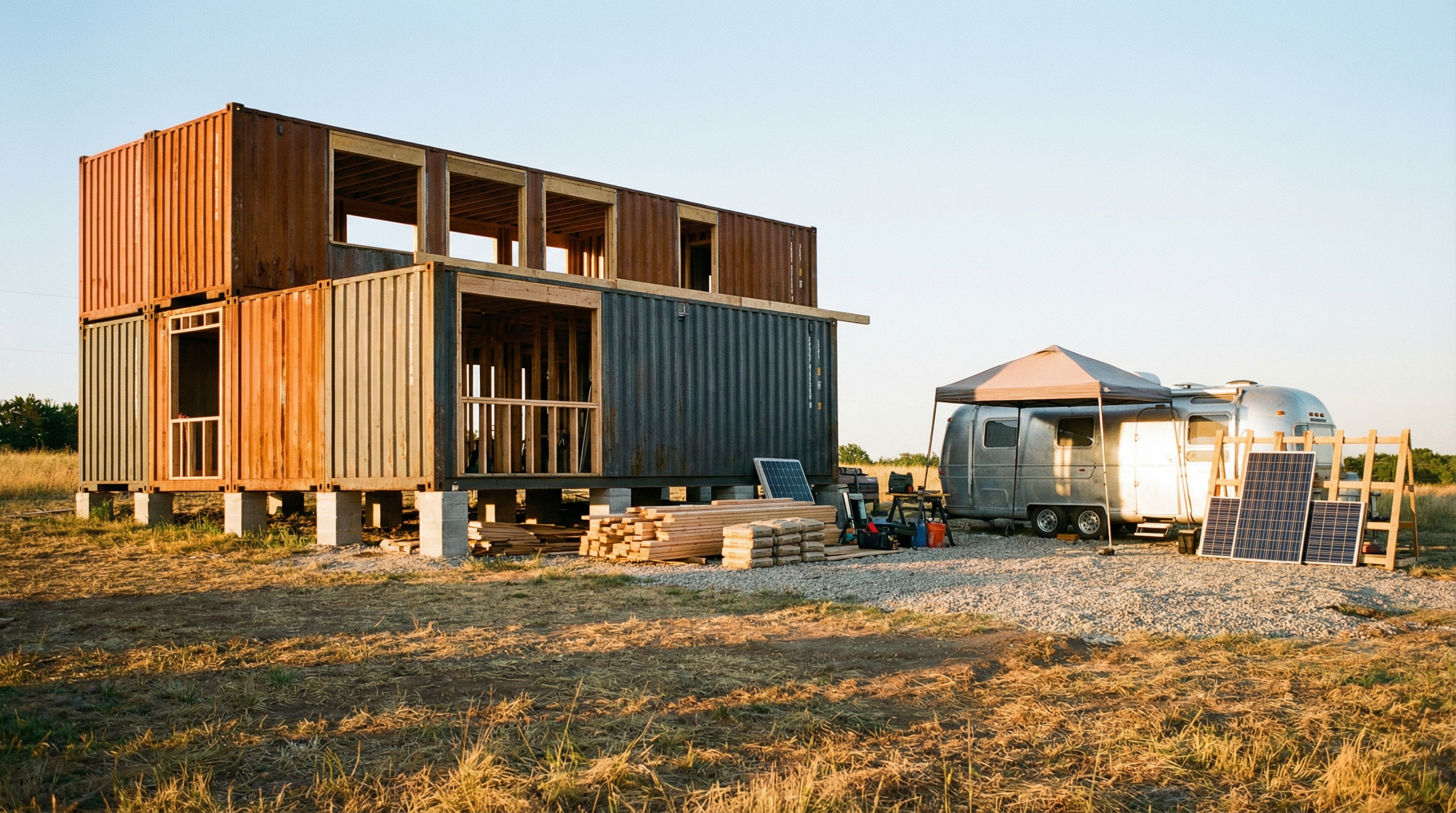
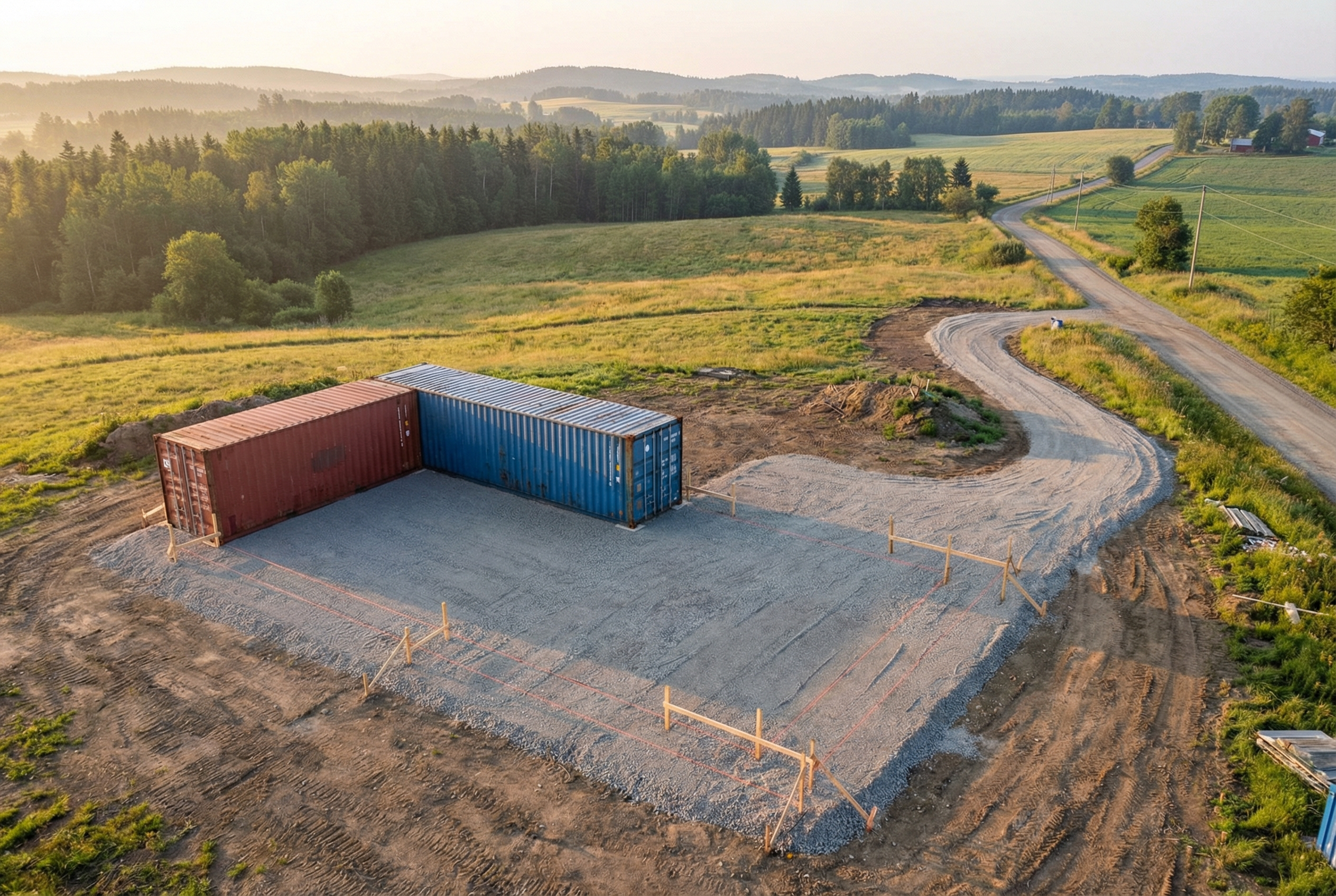
If you’ve got land (or you’re actively looking), the first real decision is how many containers you need and how you want to position them. It’s easy to get caught up in fancy multi-level designs online, but the smartest container builds usually start with access, utilities, and climate.
Here’s the practical sizing that keeps expectations grounded:
- 20-foot container: roughly 160 sq ft (good for utility rooms, workshops, small studios)
- 40-foot container: roughly 320 sq ft (common for small full-time layouts when combined with smart storage)
- Typical DIY builds: 1–4 containers (about 320–1,280 sq ft depending on configuration)
If your land footprint is tight, you can build “up,” but stacking adds complexity fast (engineering, stairs, insulation detailing, and often higher permitting scrutiny). If your goal is off-grid living, many people go wider first because it simplifies roofing, drainage, solar placement, and maintenance.
RV angle that’s worth saying out loud: a lot of RV owners don’t start with a full container home. They start with a container-based hub (bathroom, laundry, mechanical room, storage, workshop), then decide whether to expand into full-time living once the land and utility systems are proven.
Selecting the Right Insulation (and Avoiding Condensation)
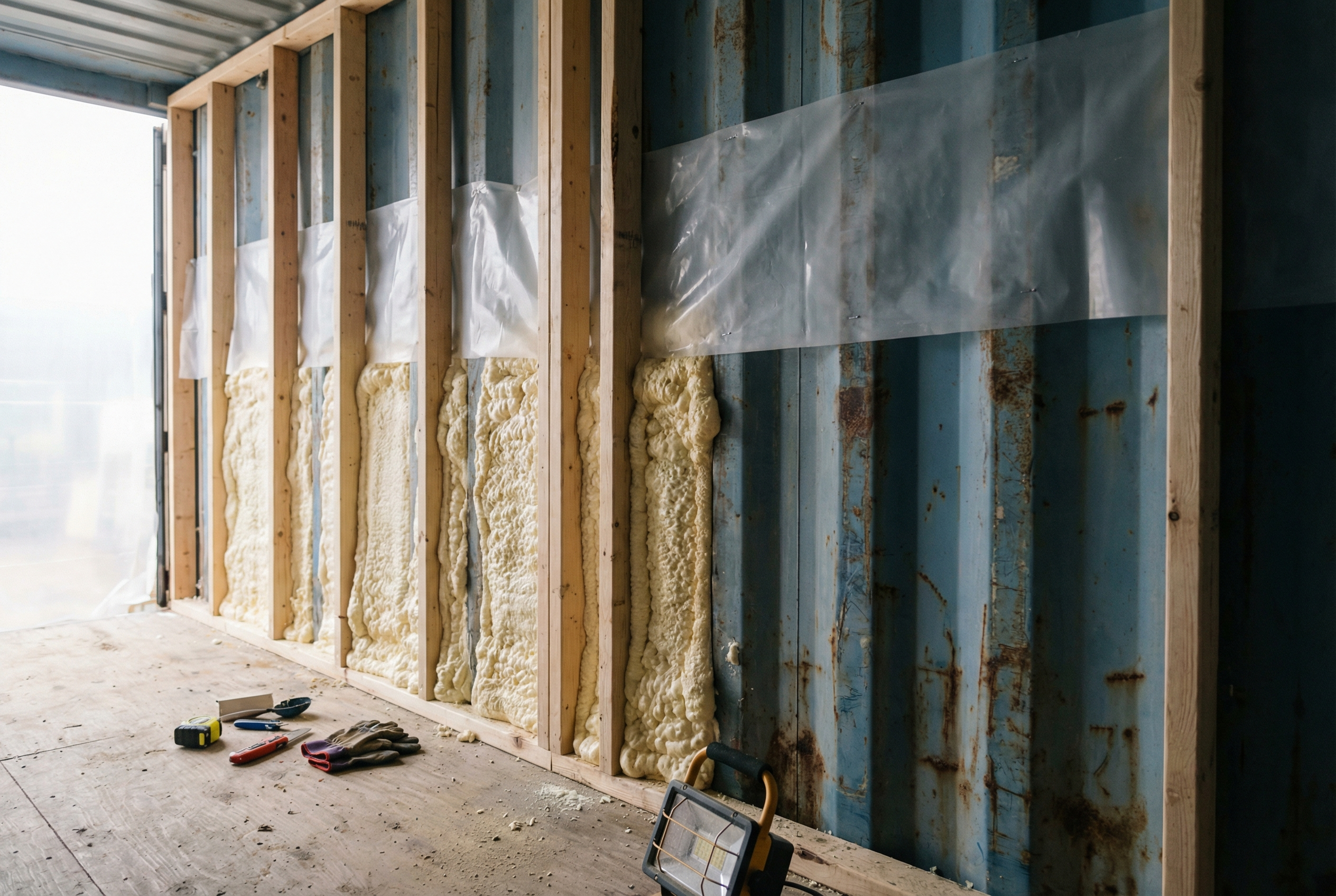
Insulation is where container builds either become comfortable… or become a steel box that sweats. Containers are metal. Metal loves condensation. So you’re not just choosing “warmth,” you’re choosing a moisture strategy.
Common insulation options people use in container builds:
- Closed-cell spray foam: great air sealing and condensation control, higher cost
- Rigid foam board: good performance if installed carefully with thermal breaks
- Fiberglass batts: budget-friendly, but can perform poorly if moisture control isn’t handled
- Natural/recycled insulation: possible, but needs proper vapor strategy in a metal shell
Two rules that save a lot of pain later:
- Plan for ventilation. A tight container without controlled airflow can turn into a moisture trap.
- Use thermal breaks. If steel touches interior finishes directly, you can get cold spots and condensation even with decent insulation.
If you’re building in cold-country conditions, the insulation choice matters even more. If you’re in hot/humid climates, condensation and airflow planning can matter more than chasing the highest R-value on paper. The goal is simple: stable indoor temps and no hidden moisture problems inside your walls.
Incorporating Green Features (Off-Grid Done Right)
Shipping container homes already reuse a durable structure, but most people building them are also looking for lower operating costs and more independence. This is where green features make real sense, especially if you’re already familiar with RV-style systems.
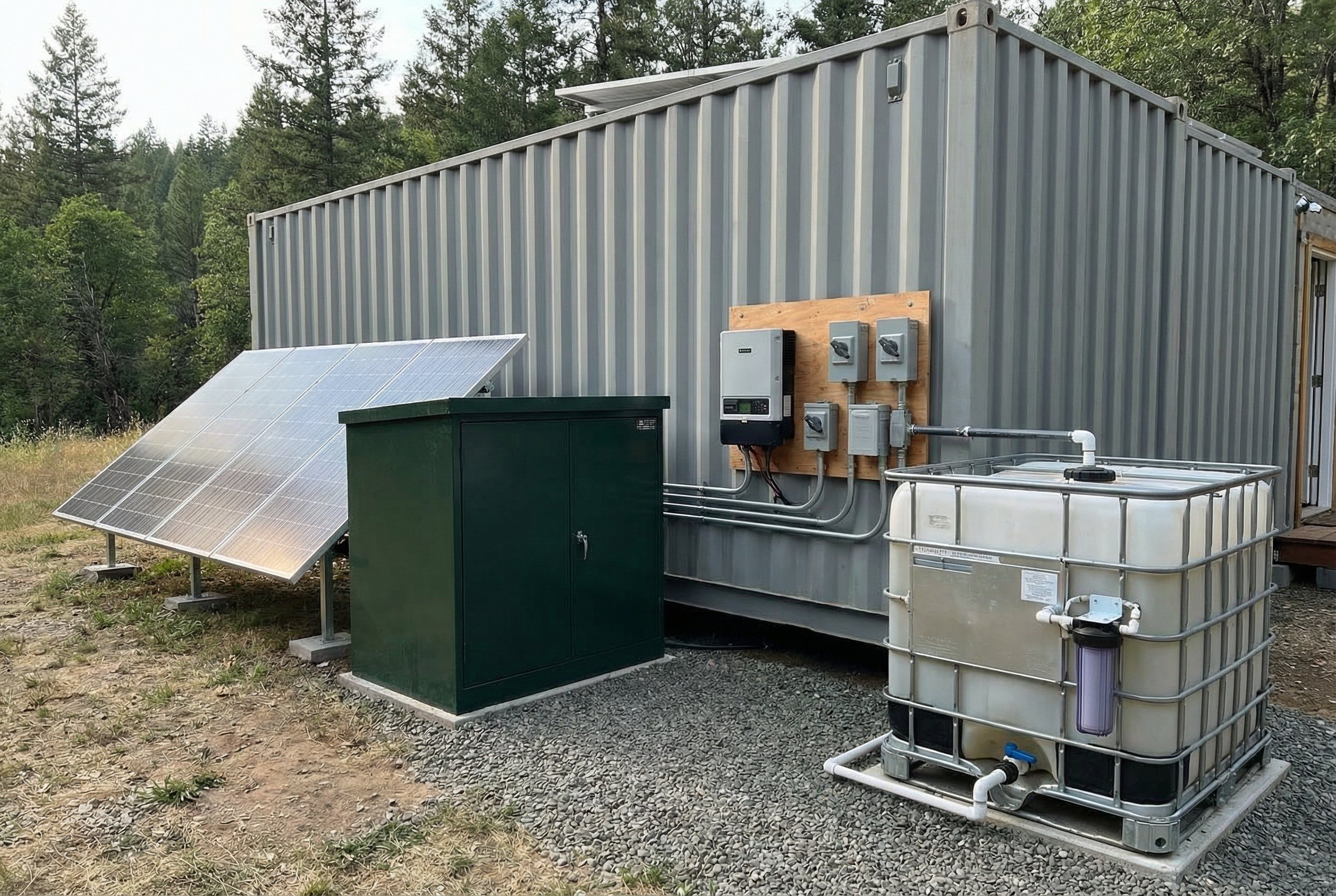
- Solar + battery storage: design this around your real loads (heating, cooking, water pumping)
- Rainwater collection: great in the right areas, but filtration and local rules matter
- Composting toilet options: can simplify plumbing, but plan ventilation and maintenance
- Efficient heating/cooling: mini-splits, wood stoves (where legal), or radiant options depending on climate
If you want to bridge RV experience into a container build, these internal guides will help:
- Top 7 Must-Have RV Mods for Off-Grid Living (2025)
- Water Solutions for Off-Grid Living
- Living Off the Grid in Canada
Interior Decorating and Finishing (Small-Space Rules)
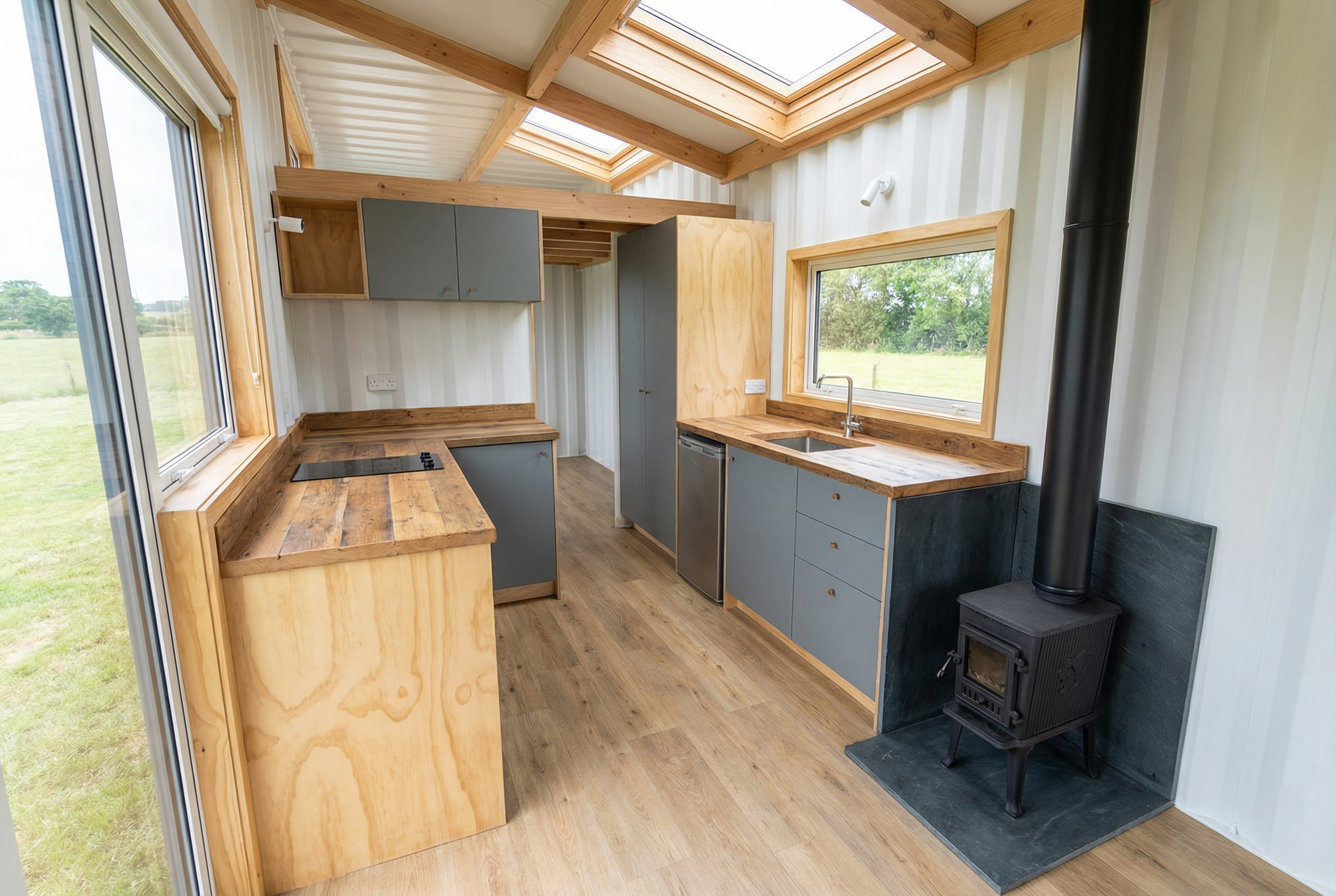
Once the structure is sorted, the interior is where container homes either feel like a smart build… or like a hallway with a sink. Containers are narrow. That means your interior decisions need to respect walking space, door swings, appliance depth, and storage planning.
Practical interior decisions that matter most:
- Cabinets and counters: shallow-depth options keep the space from feeling cramped
- Flooring: prioritize durability and moisture resistance (vinyl plank is common for a reason)
- Windows and skylights: natural light makes narrow spaces feel bigger
- Doors: sliding or pocket doors can be a game-changer in tight layouts
- Heating: choose a system that matches your insulation and your climate, not just aesthetics
If you’ve lived in an RV, you already understand the “small-space tax.” The win is that a container can be built with fewer compromises when storage and mechanical systems are planned from day one.
Budget and Cost Considerations (What People Forget)
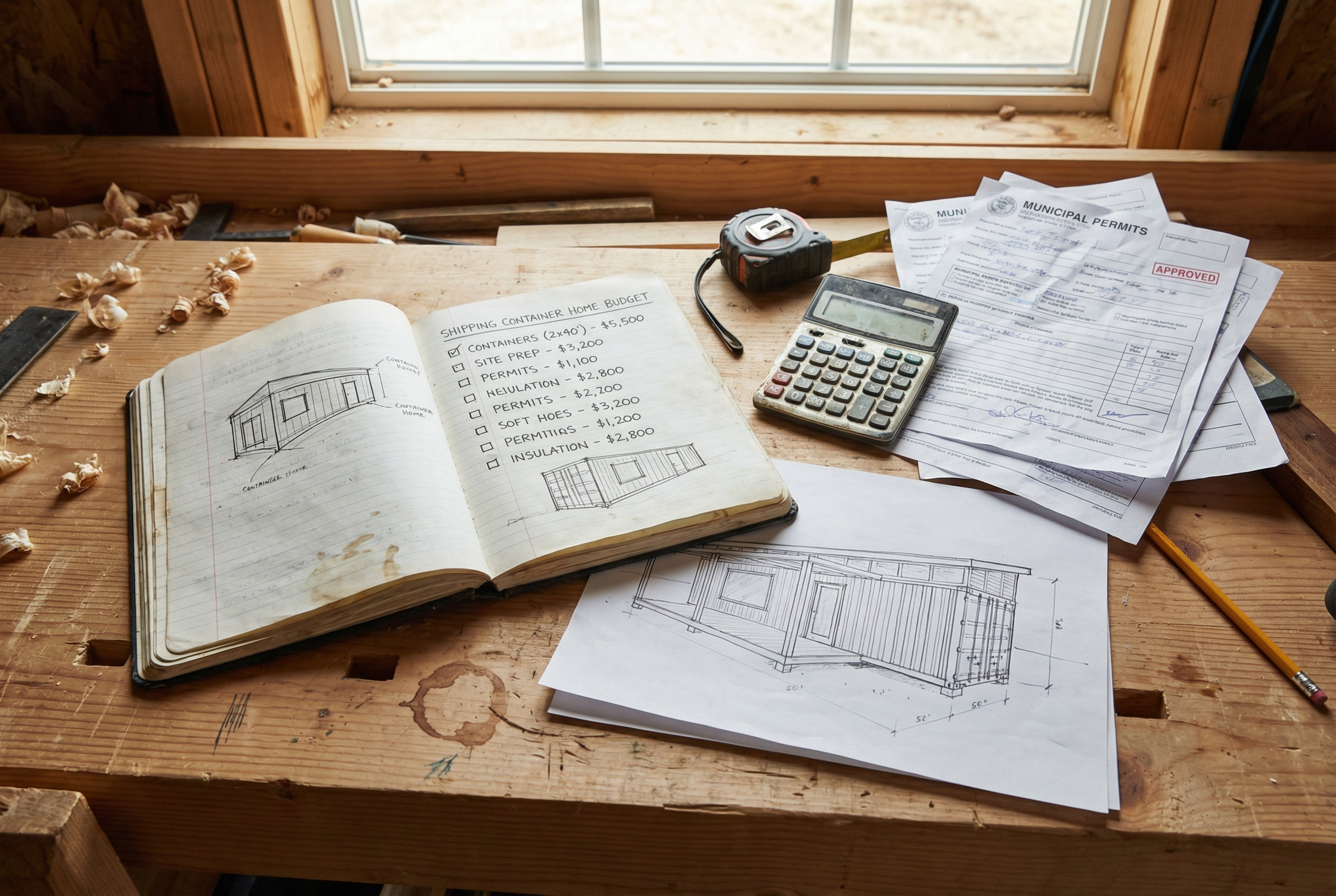
Container homes can be cheaper than traditional construction, but they’re not automatically “cheap.” The container itself is only one line item, and it’s not always the biggest one.
Budget categories people forget to plan for:
- Delivery and placement: crane/tilt-bed access, driveway/turnaround space, ground prep
- Cutting and reinforcement: doors/windows remove structural strength and may require engineering
- Insulation + moisture control: skipping this is how “savings” becomes a rebuild
- Utilities: septic, water storage, filtration, solar, batteries, propane, permitting
- Permits and fees: varies wildly by region, and can’t be ignored if you want resale and insurance options
If you want a realistic plan, build your budget in phases. First: land access + placement + weather-tight shell. Second: insulation + mechanical systems. Third: interior finishes. That staged approach lines up well with how most RVers and off-grid folks actually build in the real world.
Get Your Ideas and Materials from These Resources
These resources can help you move from concept to a real plan. I’m keeping this list practical: sourcing containers, learning fundamentals, and getting build guidance. (Note: I removed a previous interior resource that’s no longer available to me, so everything listed below is current and relevant.)
1) Shipped.com (Container sourcing)
Start here if you need to source an actual container and compare options. For many builds, getting the right container condition up front matters more than people expect. Dents and surface rust aren’t always deal-breakers, but floor condition and structural integrity should be non-negotiable.
2) Discover Containers (Fundamentals, planning, and inspiration)
A useful resource hub for learning: pros and cons, planning and budgeting, design/build concepts, and case-study style examples. If you’re still deciding whether you’re building a full-time home or a hybrid “RV + container hub,” this kind of overview helps you avoid expensive wrong turns.
3) Shipping Container Home Made Easy (Step-by-step learning)
If you prefer structured guidance, this style of resource is useful: a build broken into steps, common pitfalls, and practical “do this before that” sequencing. It’s especially helpful for DIY builders who want a plan that aligns with how projects actually unfold.
4) Bob’s Containers (Build options and models)
Another option if you’re comparing pre-designed models, custom builds, or commercial-style configurations. Even if you’re DIY, browsing what’s possible can help you clarify your layout and decide whether you’re building a home, a shop, or a “utility-first” structure.
A smarter “interior sourcing” approach (RV + off-grid crossover)
For interior finishes and systems, many container builders pull from the same world as RV and cabin builds: compact appliances, space-saving fixtures, efficient water systems, and low-power electrical setups. If you’re building off-grid, prioritize the mechanical plan first (power + water + waste), then shop the interior to match the constraints.
Final Build Thoughts and Next Steps
A shipping container home can absolutely be a rewarding build. The key is not treating it like a shortcut. It’s a different kind of build with different constraints: steel structure, condensation planning, access logistics, and utilities that often need to be engineered like a small off-grid system.
If you want the cleanest path forward, here’s the order that tends to work best:
- Confirm land access + local rules (delivery, permits, setbacks, septic requirements)
- Choose a realistic layout (start with 1–2 containers if you’re building in phases)
- Plan insulation + ventilation early (this prevents expensive “hidden problems” later)
- Build your off-grid systems intentionally (power, water, waste, heating/cooling)
- Finish the interior for real life (storage, door swings, appliance depth, durability)
If you’re coming at this from the RV world, container builds can be an awesome “next step” that doesn’t force you to stop traveling while you build. A container hub on land can support seasonal living, storage, or even a long-term hybrid setup.
Question for you: are you planning a container home as a full-time residence, a base camp while you travel, or a utility/shop building that supports RV living? Leave a comment and tell me what your end goal looks like.
FAQ
Are shipping container homes actually affordable?
They can be, but “container” doesn’t automatically mean “cheap.” The container is only one cost. Delivery, cutting/reinforcement, insulation, moisture control, utilities, and permits can add up fast. The most affordable builds are usually phased: weather-tight shell first, systems next, finishes last.
What’s the biggest mistake people make with container homes?
Underestimating condensation and ventilation. A steel structure will sweat if you don’t plan insulation, thermal breaks, and airflow properly. That can lead to moldy walls and ruined finishes that you don’t see until it’s a bigger problem.
Can container homes work for off-grid living?
Yes, especially when you design the power, water, and waste systems first. Many builds work best when the container home is treated like a small off-grid system, similar to an RV setup but scaled for full-time living.
Is a container build a good next step for RV owners?
It can be. Many RV owners start with a container “hub” (storage, workshop, bathroom, mechanical room) on land and expand over time. That approach lets you keep traveling while still building something permanent in phases.
Want to go beyond “container ideas” and actually build an off-grid life that lasts?
If you’ve ever pictured owning land, living off-grid, and building a self-sustaining lifestyle, you’re not alone. The hard part isn’t the dream. It’s the real-world steps: funding, choosing land wisely, setting up systems, and building income so you’re not stuck in a constant scramble.
That’s why I recommend Live The Off-Grid Dream (LTOD). It’s a full course that walks you through the entire process, from buying land (even with limited money or messy credit) to designing your systems and creating sustainable income streams through ideas like campsites, rentals, retreats, and low-effort marketing.
My wife and I are members and we’re actively using the strategies while we search for land in Costa Rica. If you’re serious about building an off-grid base that doesn’t turn into an expensive lesson, this is one of the most complete roadmaps I’ve found.
- Own land without traditional financing (smart funding and acquisition strategies)
- Avoid costly off-grid mistakes (zoning, insurance, bad land buys, and planning pitfalls)
- Design and build properly (water, sanitation, solar, wind, eco-building methods)
- Monetize your land (campsites, Airbnbs, retreats, workshops, and passive-income approaches)
- Community + coaching (VIP group support and live calls)
Not ready for the full course yet? The LTOD page also includes a lower-cost entry option (the strategy handbook) if you want to start smaller.




.jpg/:/cr=t:5.56%25,l:0%25,w:100%25,h:88.89%25/rs=w:1240,h:620,cg:true)



Leave a Reply