
Affiliate Disclosure: I earn commissions if you shop through the links below at no additional cost to you.
Last Updated on February 14, 2026 by Jeremy
If you’ve ever looked at toy haulers and thought, “Why do these cost more than a house?” you’re not wrong for feeling that way.
But there’s a reason people still buy them. A toy hauler isn’t just an RV with a ramp. It’s a garage, a hangout space, sometimes an office, and sometimes the only way a family actually gets out and uses their toys instead of “planning to someday.”
The problem is most “Top 10” lists turn into brochure copy. You don’t need that. You need a framework that prevents you from buying a gorgeous rig your truck can’t safely handle.
- Start with your truck’s payload and towing ratings (not the dealer’s confidence level).
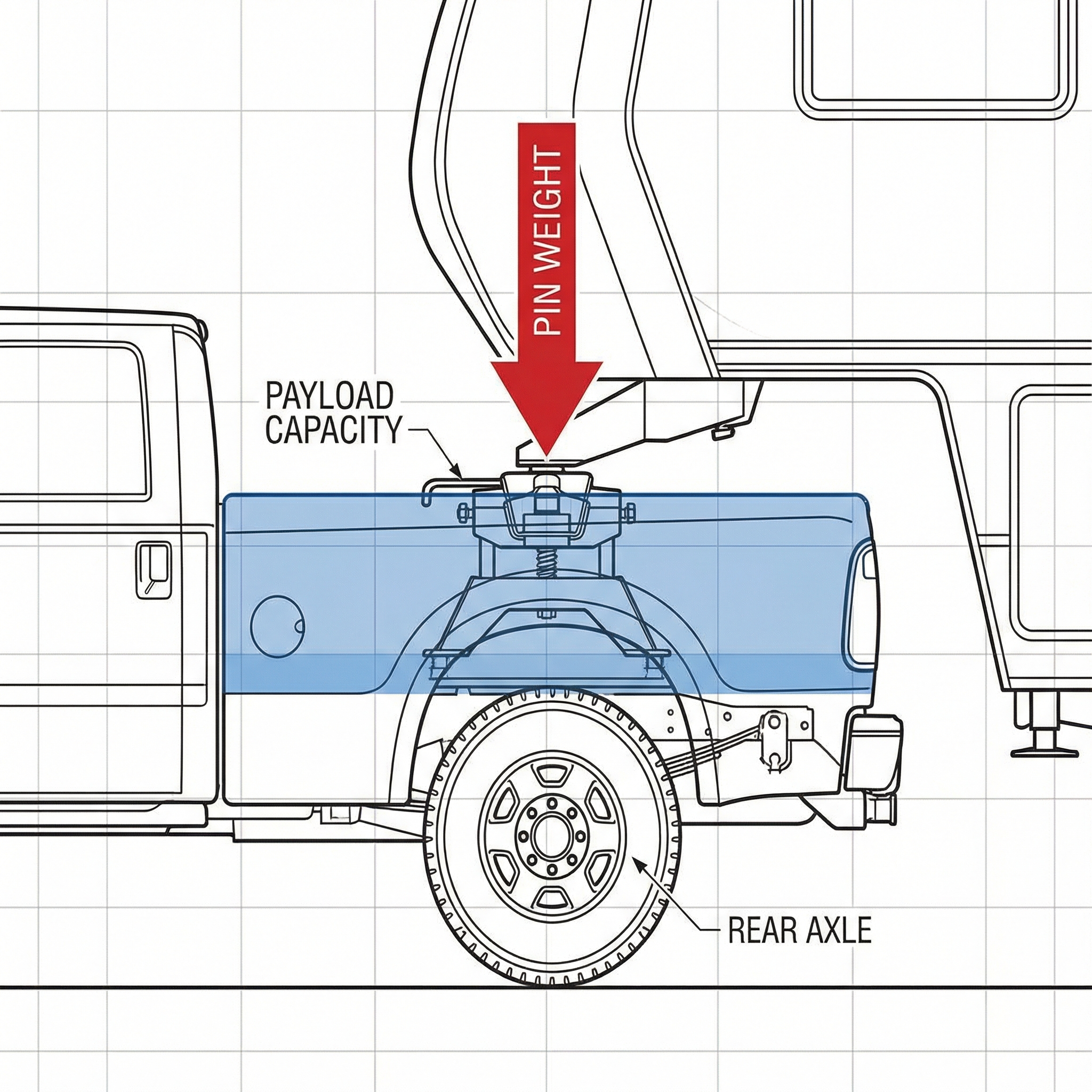
- Pin weight (fifth wheel) and tongue weight (bumper pull) can make or break your setup.
- Choose your garage length based on the heaviest/longest “toy,” not the one you might buy later.
- Filter by use-case: weekend dunes vs full-time living vs “mobile office + one dirt bike.”
- Use the towing calculator first. Then shop.
What a Toy Hauler Really Is
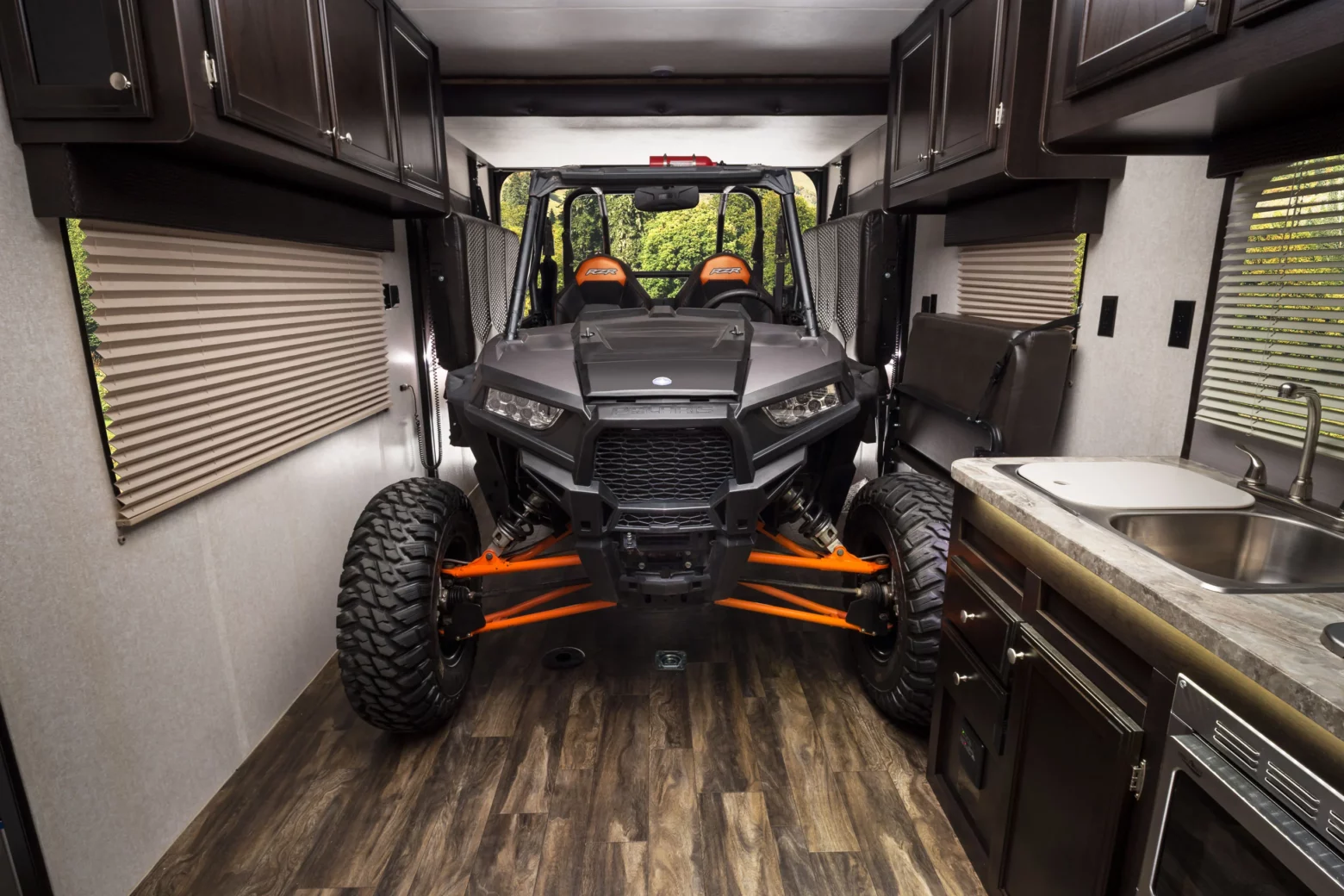
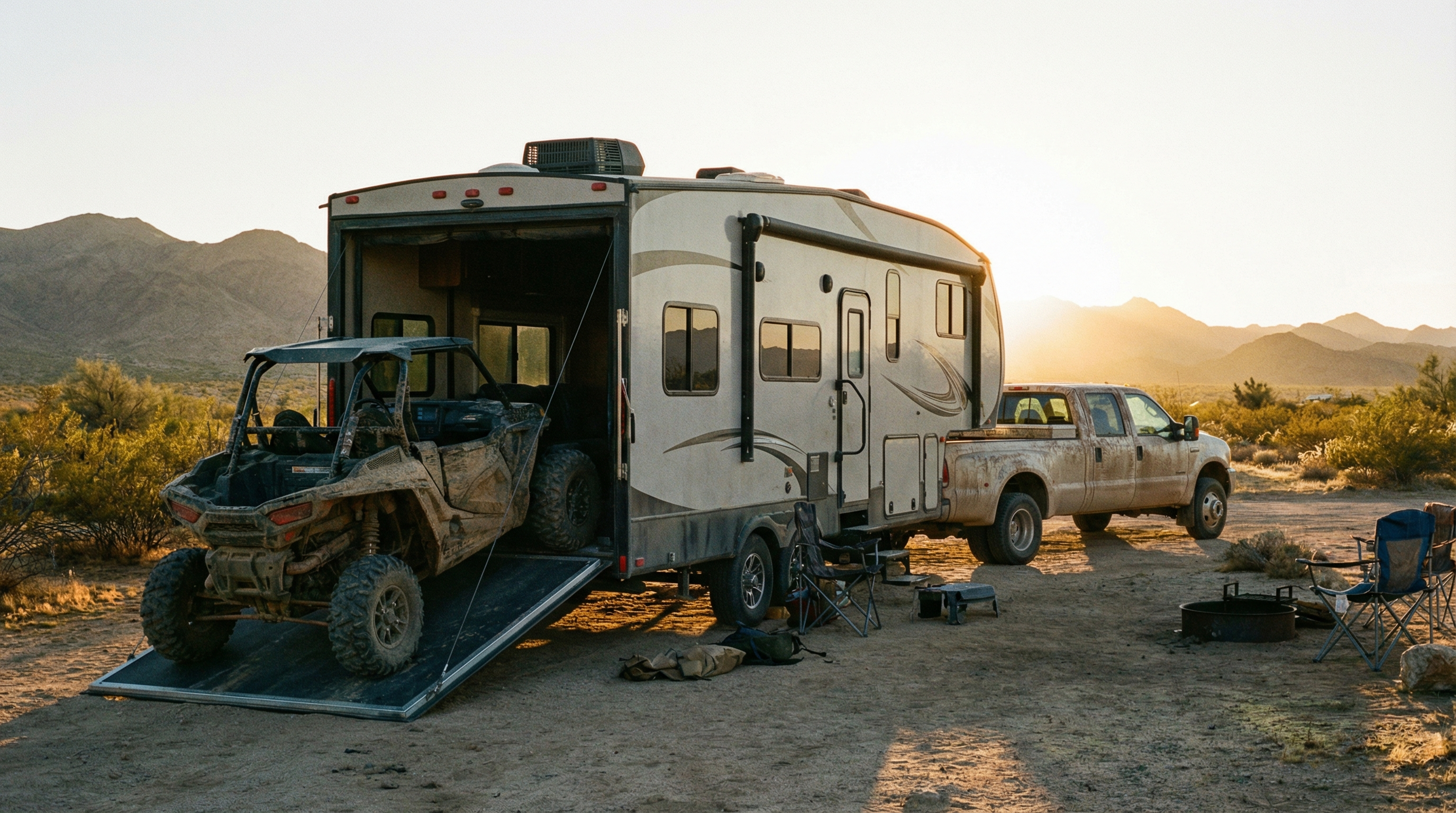
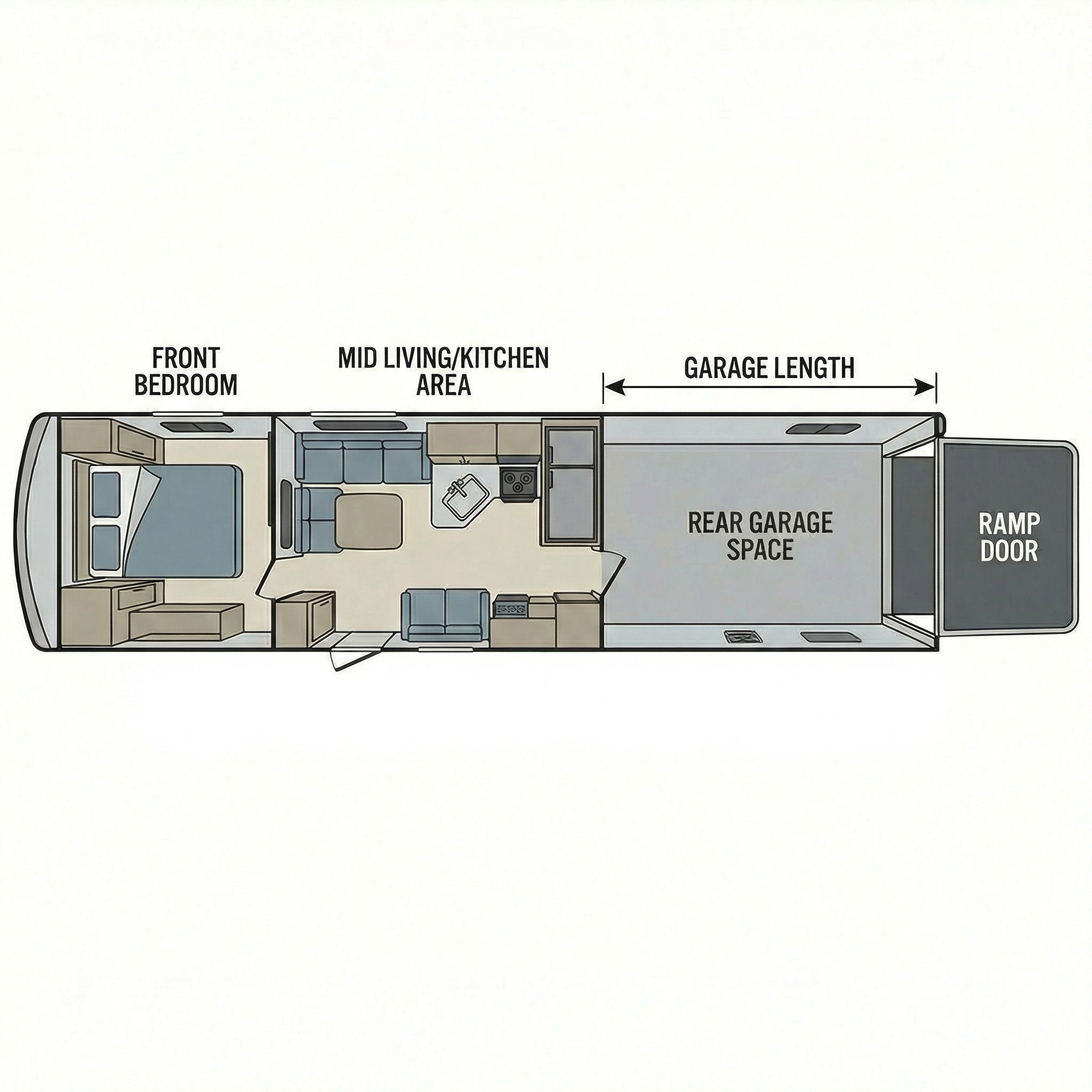
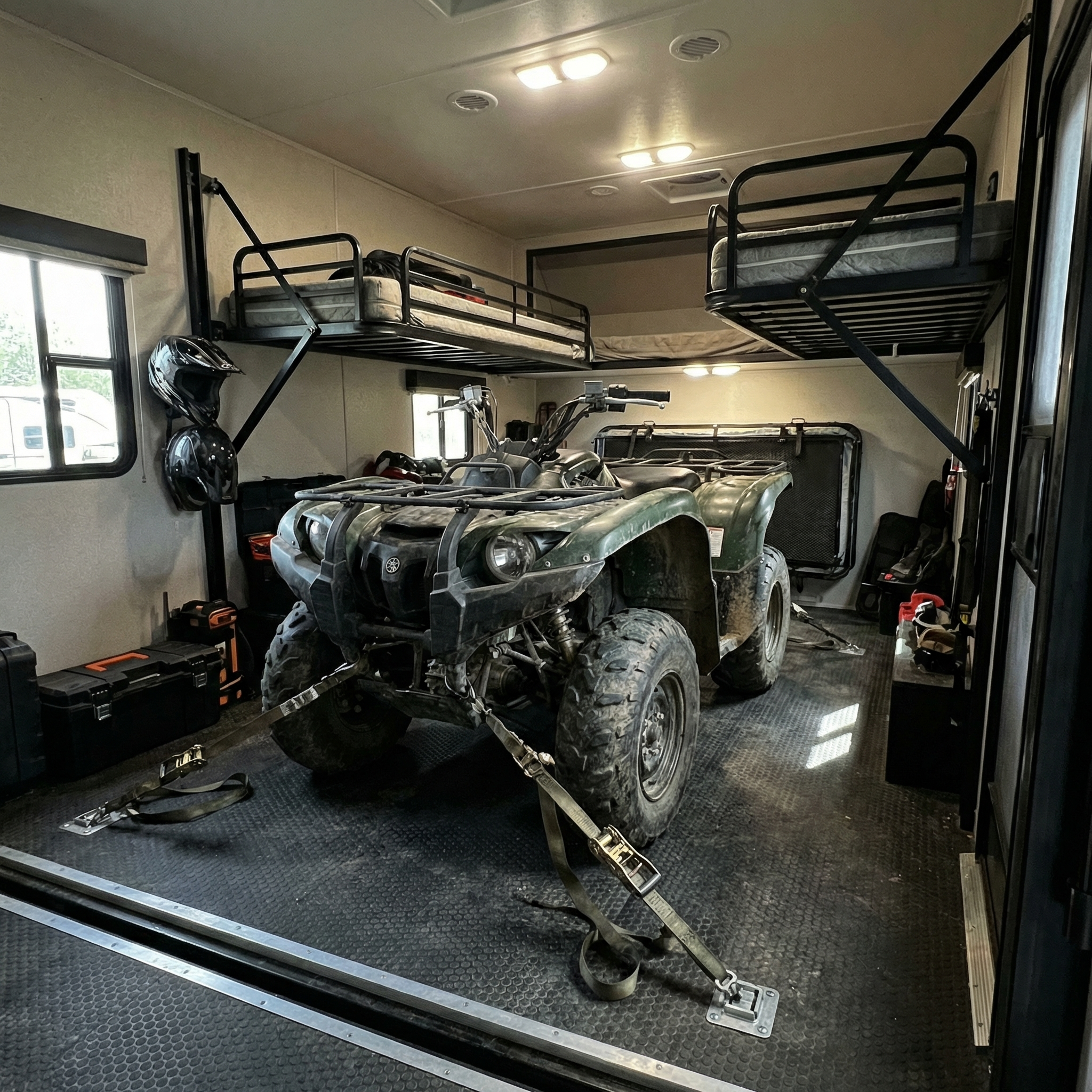
A toy hauler is a travel trailer or fifth wheel built with a dedicated cargo/garage space (usually at the rear) designed for things like ATVs, motorcycles, side-by-sides, golf carts, and gear.
The smart part is the garage rarely stays “just a garage.” It becomes:
Before You Shop: The 6 Checks That Save You Thousands
- Payload first: especially for fifth wheels (pin weight eats payload fast).
- Garage length: measure your toys with tie-down room, not “bumper to bumper on paper.”
- Fuel & water: big tanks are great… until you’re towing them full.
- Where you camp: boondocking needs power + storage; RV parks need length sanity.
- Family reality: sleeping capacity is one thing; usable space is another.
- Storage & service: can you store it? can a local shop actually work on it?
Helpful internal tools & reading: RV Towing Calculator • RV Weight Balance Tool • Best 5th Wheel Travel Trailers • Best Bumper Pull Travel Trailers • Chevy vs Ford vs Dodge 4×4
Loading Isn’t Just “Put the Toys In”
Toy haulers get sketchy when weight is guessed instead of measured. Tie-down points, axle ratings, and where the weight sits matters.
The “oh yeah, that too” layer most people miss:
- Bring a small scale plan: weigh the rig loaded the way you actually travel.
- Keep the heaviest items low and centered.
- Don’t forget liquids: fuel, fresh water, and even extra batteries add up fast.
Top 10 Toy Haulers Still Worth Your Time for 2026
These are active, current model lines with real floorplans in circulation. I’m keeping this list brand-neutral and focusing on why each line tends to work well for RVers.
Grand Design Momentum (Fifth Wheel)
One of the most recognized fifth wheel toy hauler lines for a reason: big living comfort + serious garage focus.
- Best for: full-featured fifth wheel buyers who want “home + garage.”
- Watch: size/weight climbs quickly. Run payload math early.
Grand Design Momentum G-Class (Fifth Wheel / Travel Trailer options)
A popular “still a toy hauler, less of a battleship” direction depending on floorplan and format.
- Best for: buyers who want the toy hauler lifestyle without max-length everything.
- Watch: garage length vs your toys (don’t assume).
Keystone Raptor (Fifth Wheel)
Long-running toy hauler line with multiple floorplans and the “big rig” vibe a lot of people are shopping for.
- Best for: families who want loft/bunk style layouts and big garage options.
- Watch: pin weight. It’s usually not subtle.
Heartland Cyclone (Fifth Wheel)
Another heavy-hitter line with multiple current floorplans and the kind of space that makes you forget you’re towing it.
- Best for: larger crews, longer trips, “we live in this thing.”
- Watch: storage, service access, and overall length for where you camp.
Jayco Seismic (Fifth Wheel)
Well-known option in the fifth wheel toy hauler space, with current floorplans and a strong mainstream presence.
- Best for: buyers who want a recognized brand and multiple floorplan directions.
- Watch: your truck ratings versus “looks manageable.”
Dutchmen Voltage (Fifth Wheel)
Voltage remains a staple in the toy hauler world and is commonly compared head-to-head with the big names above.
- Best for: shoppers who want “toy hauler luxury” features and big garage layouts.
- Watch: tank sizes and how often you tow full.
Forest River Vengeance Rogue Armored (Fifth Wheel / Travel Trailer options)
A current toy hauler lineup with multiple formats, often appealing to buyers who want features at a competitive price point.
- Best for: value-focused buyers who still want a real garage.
- Watch: compare floorplan storage vs “it looks huge in photos.”
Winnebago Spyder (Travel Trailer and Fifth Wheel lines)
Winnebago’s Spyder line is built around open layouts and usable garage space, especially for folks who want a simpler “go play” floorplan.
- Best for: buyers who want a cleaner, more open toy hauler feel.
- Watch: keep expectations aligned: “open” often means fewer walls, not more storage.
Forest River Cherokee Grey Wolf 18RR (Lightweight travel trailer toy hauler)
A smaller toy hauler direction that’s often on the radar for people who don’t want a 45-foot towing lifestyle.
- Best for: motorcycles, lighter toys, weekend trips, smaller tow vehicles (within ratings).
- Watch: weight adds up fast once you load gear, water, and toys.
Jayco Seismic (Travel Trailer Toy Hauler)
If you want the toy hauler concept without stepping into the heaviest fifth wheel category, travel trailer toy haulers can be the middle ground.
- Best for: buyers who prefer bumper-pull simplicity with a garage space.
- Watch: tongue weight and overall length can still surprise you.
Budget vs Luxury: What Actually Changes
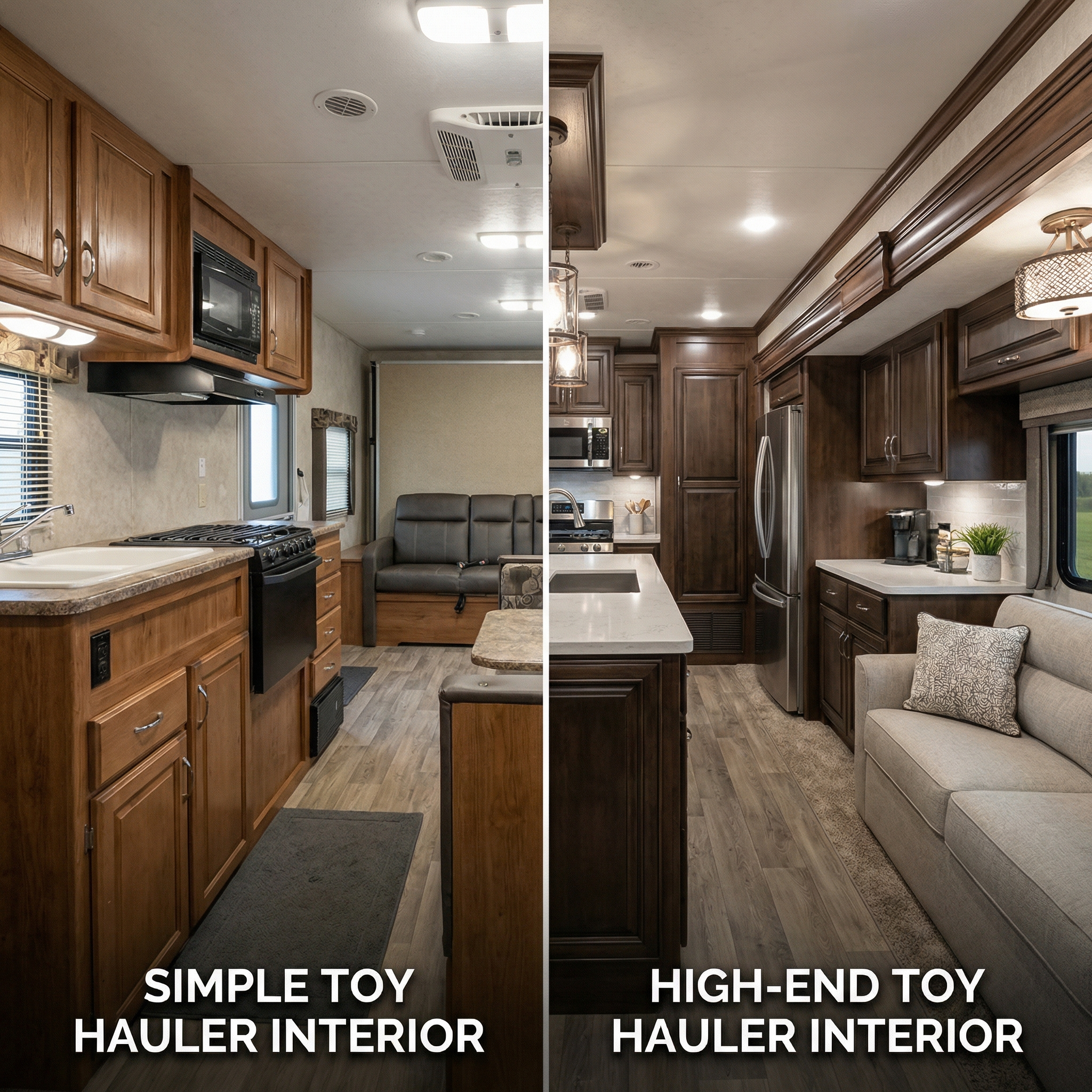
People assume “expensive = better for everyone.” Not always.
- Luxury rigs often add heavier materials, bigger tanks, bigger garages, and more systems (great… until you tow them constantly).
- Value rigs can be perfectly solid for weekend use if the floorplan fits and your towing setup is dialed in.
- Best money spent is usually on the tow setup, tires, brakes, and weight control — not on one more TV.
The Sneaky Win: The Garage Becomes Whatever You Need
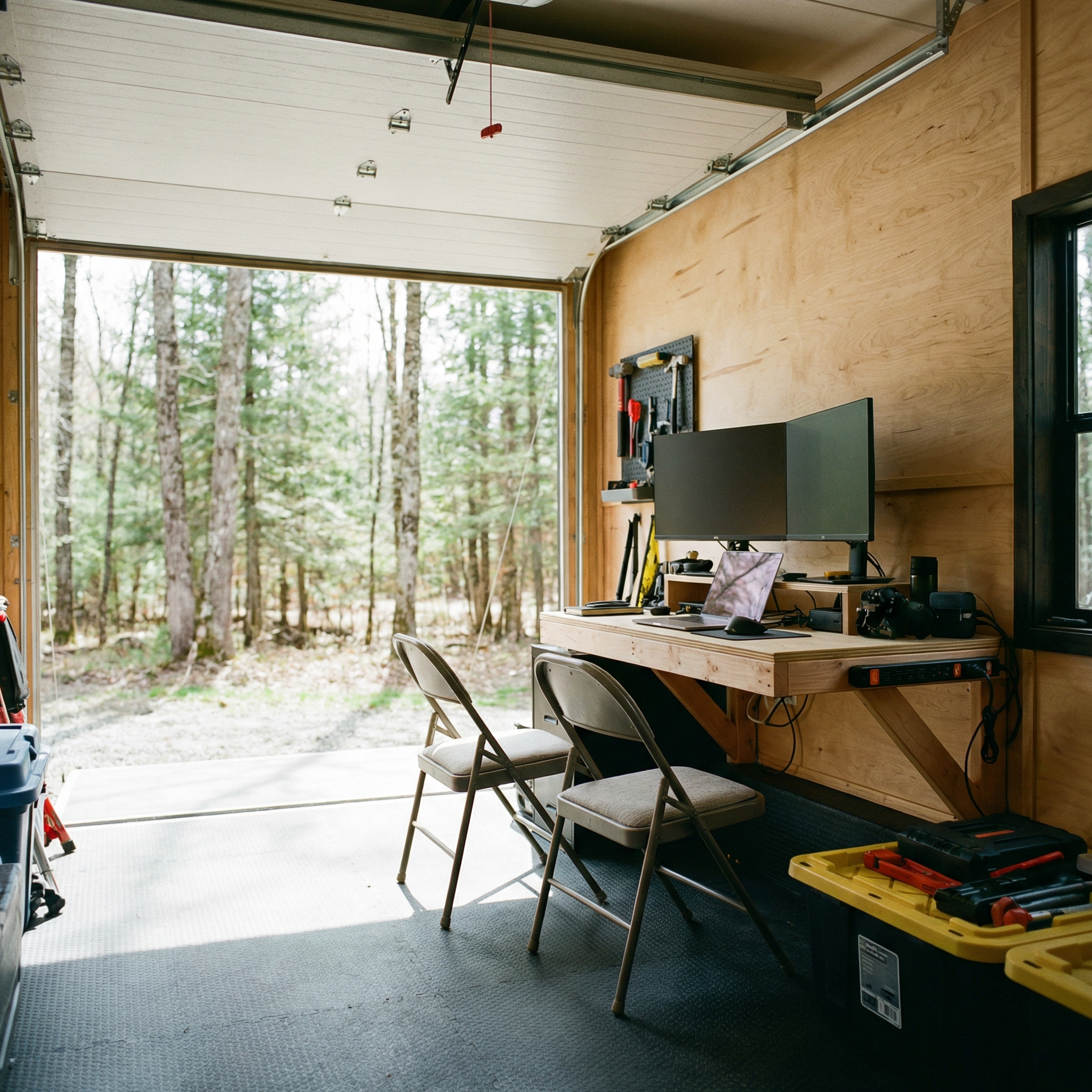
Plenty of RVers don’t even haul “toys” full-time. They haul flexibility.
- Office during the week
- Guest room on weekends
- Gear room when it’s raining
- Patio when the ramp deck is down
That flexibility is why toy haulers stay popular even when people aren’t riding every weekend.
If You Want One “Most Important” Factor: Weight Reality
Robert asked this in the comments years ago, and it’s still the best question: what matters most when buying a toy hauler?
My answer: your actual loaded weights compared to your truck’s ratings. Not the brochure weight. Not the “dry weight.” Not the sales pitch.
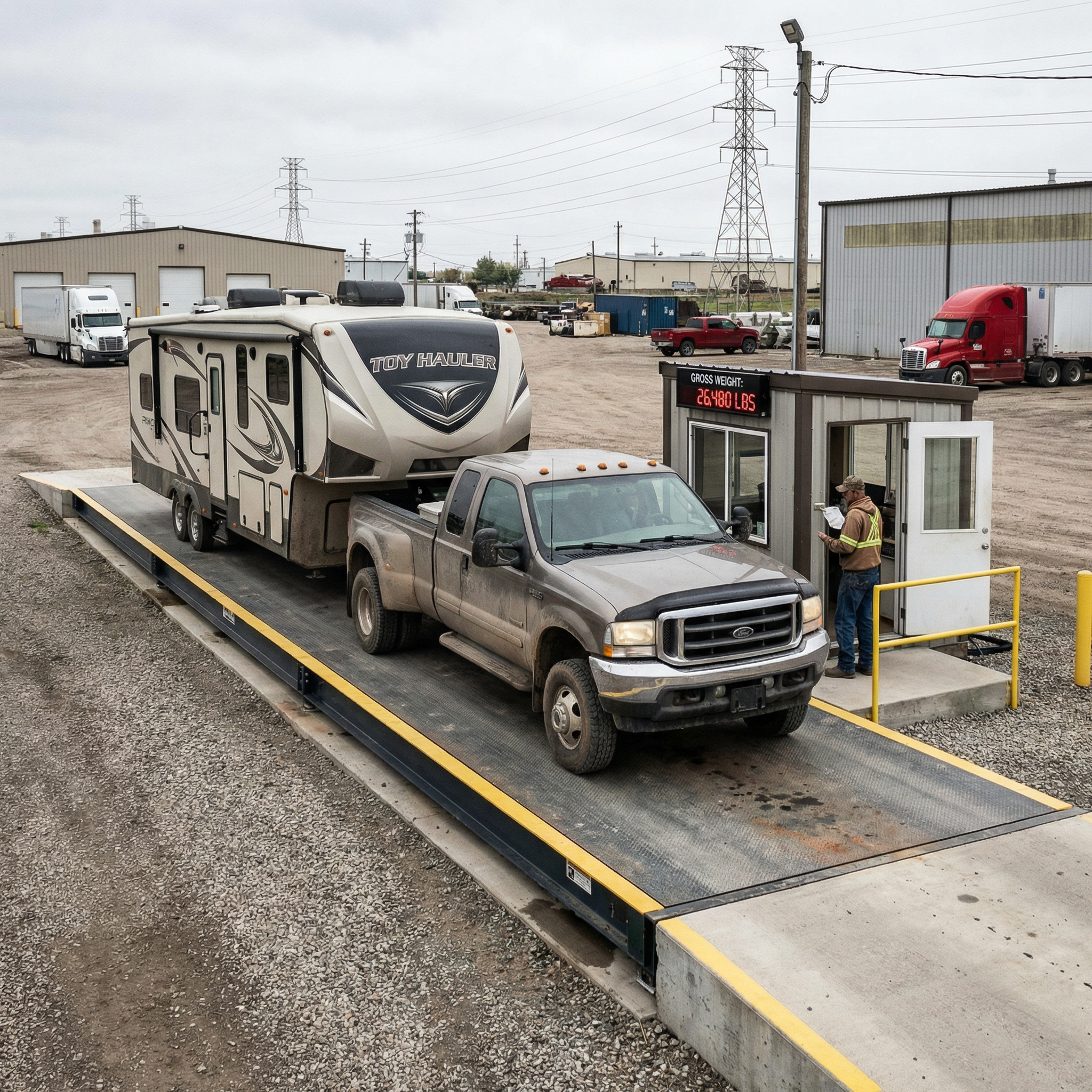
Before you fall in love with a floorplan, run your towing numbers
This takes five minutes and saves you from buying a toy hauler your truck can’t safely handle once it’s actually loaded.
Use the RV Towing CalculatorFAQ
What’s the difference between a toy hauler travel trailer and a toy hauler fifth wheel?
Fifth wheels usually offer more living space and higher cargo capacity, but they typically demand more truck payload because of pin weight. Travel trailer toy haulers can be simpler to tow for some setups, but tongue weight and overall length can still be significant.
What matters most when buying a toy hauler?
Your real-world towing and payload limits when the RV is loaded the way you actually travel. Garage toys, fuel, water, batteries, and gear add up fast.
Is “dry weight” useful?
It’s a starting point, not a decision point. The only weight that matters for safety is your loaded weight on a scale compared to your tow vehicle ratings.
Can a 3/4-ton truck tow a toy hauler?
Sometimes, depending on the specific truck ratings and the specific toy hauler’s loaded weight and hitch/pin weight. Use the towing calculator and verify with scale weights before committing.




.jpg/:/cr=t:5.56%25,l:0%25,w:100%25,h:88.89%25/rs=w:1240,h:620,cg:true)




Leave a Reply