

Affiliate Disclosure: I earn commissions if you shop through the links below at no additional cost to you.
Last Updated on January 15, 2026 by Jeremy
Everything RVs and More • Beginner Trailer Setup
If you have ever pulled into a campsite, stepped inside your trailer, and immediately felt like the floor was playing tricks on your balance, welcome to real RV life. Leveling and stabilizing looks simple on YouTube. In reality, beginners usually learn the hard way. The good news is this whole process becomes easy once you understand the correct order.
This guide is written for normal people, on normal campsites, with normal time and patience levels. We will cover leveling, stabilizing, and the one thing most “how to level a travel trailer” posts ignore: weight balance. That last piece is what separates a comfortable campsite from a white-knuckle tow on the highway.
What Beginners Usually Get Wrong (And Why It Feels So Frustrating)
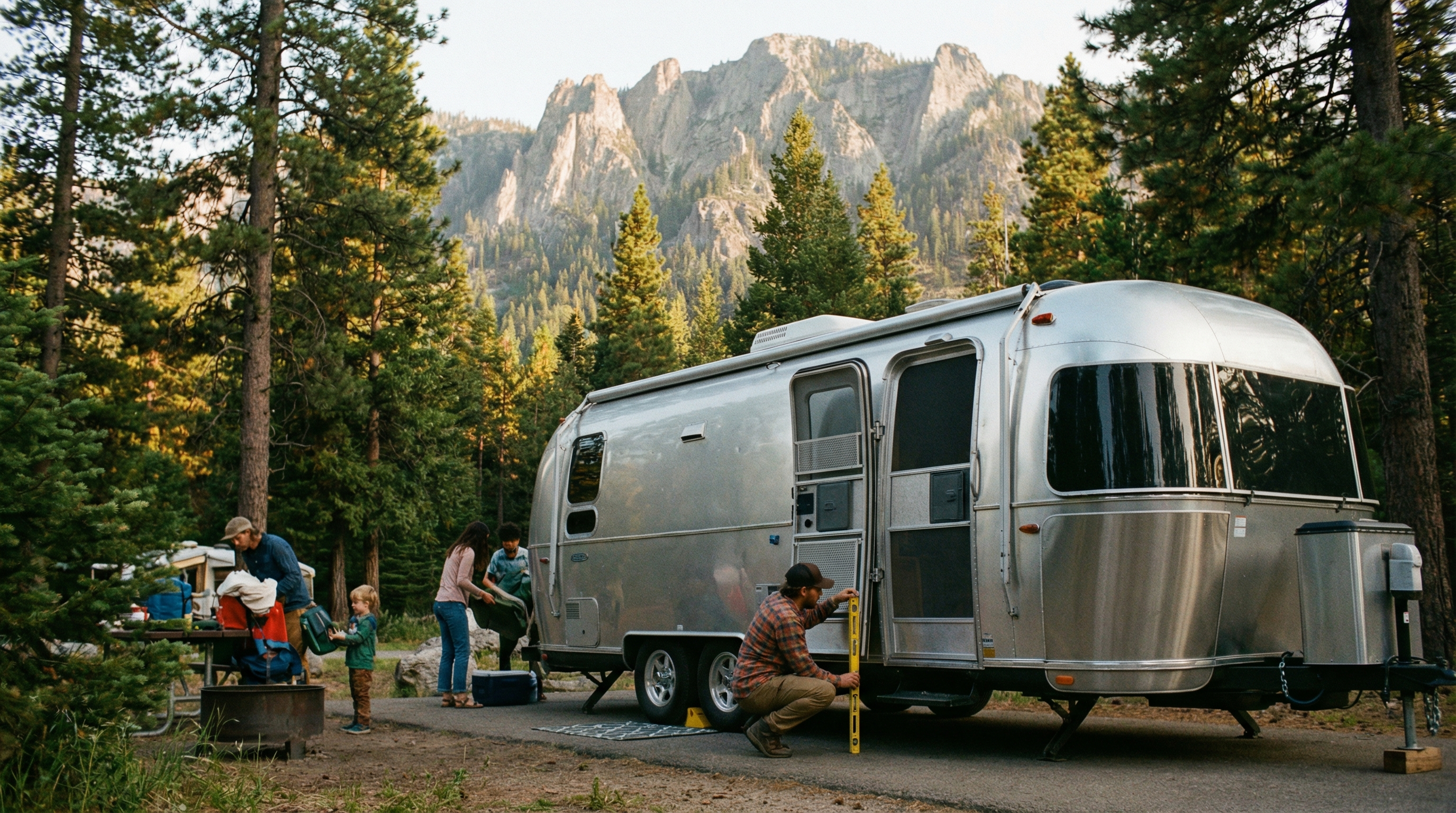
Most people struggle because they do the right steps in the wrong order. The classic pattern looks like this: you park, unhook, then realize the trailer is leaning, then you try to “fix it” with stabilizers, then everything binds and feels sketchy.
- Unhitching too early: side-to-side leveling is easiest while the tow vehicle is still attached.
- Using stabilizers as jacks: stabilizers are not meant to lift or level. They are meant to stop rocking.
- Skipping wheel chocks: a trailer that shifts while you are setting up is not just annoying, it can be dangerous.
- Thinking “level” means “safe”: you can be level and still have poor weight balance and towing stability.
Travel Trailer Setup for Beginners (The Correct Order)
If you want the simplest, repeatable method, follow this sequence every time. It works on gravel pads, uneven dirt, and the “who designed this campsite?” slopes.
- Park in your final position (think hookups, shade, door clearance, and slide-out space).
- Level side-to-side while still hitched.
- Chock wheels.
- Unhitch.
- Level front-to-back using the tongue jack.
- Extend slide-outs (if applicable), then re-check level.
- Lower stabilizers to remove bounce.
- Do a quick weight sanity check before you leave camp again.
How to Level a Travel Trailer (Beginner Method)
Step 1: Park where you actually want to camp
This sounds obvious, but many people “level first” and then realize the sewer hose does not reach, the power pedestal is on the wrong side, or the door swings into a tree. Get the position right first.
Step 2: Level side-to-side first (while still hitched)
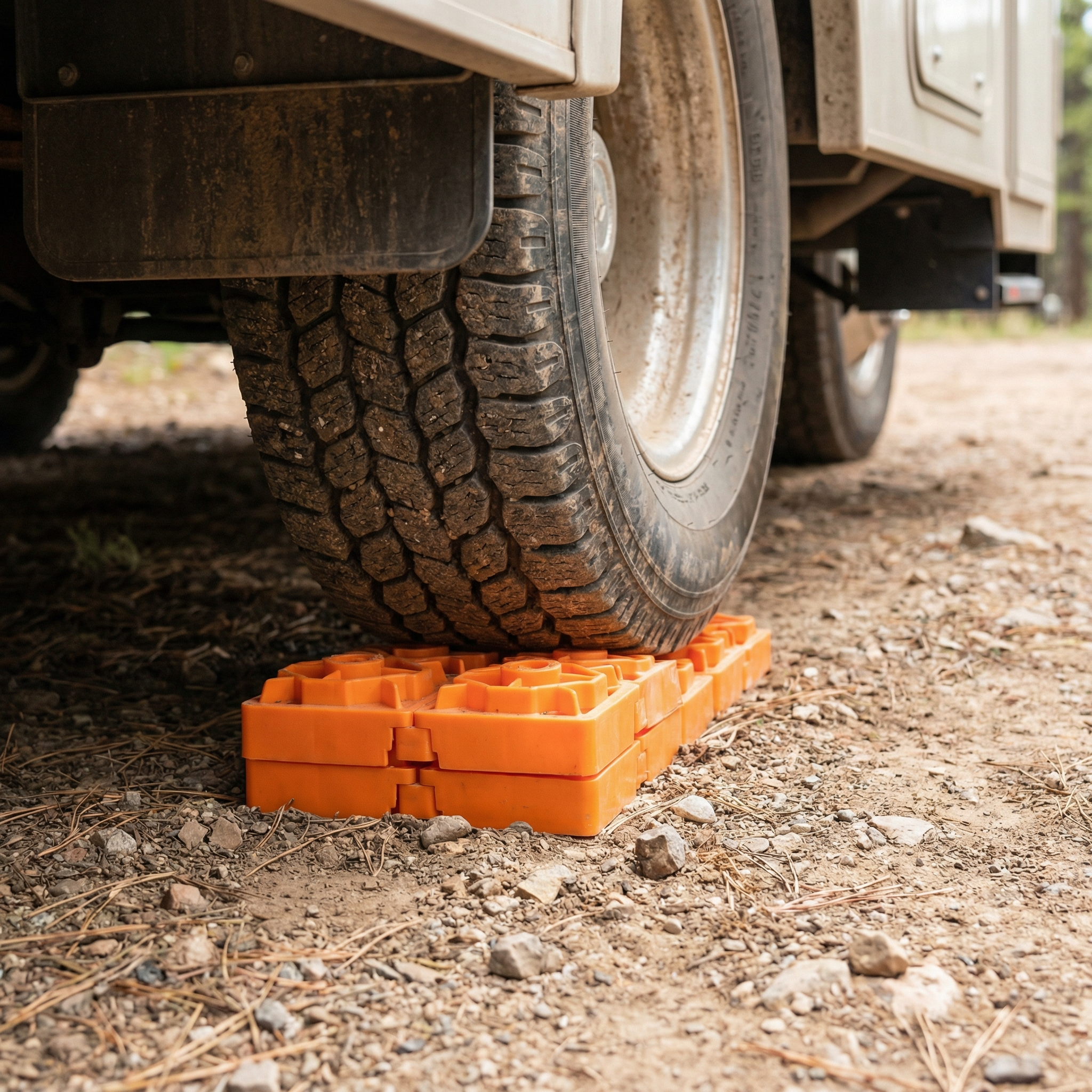
Side-to-side is where beginners waste the most time. Do it while your tow vehicle is still attached. Check your level, then place leveling blocks under the low-side tires and slowly pull forward until you are level. Once it is level, stop and do not “just go a tiny bit more.” That tiny bit is how you become un-level again.
Step 3: Chock your wheels (before you unhitch)
Chocks stop the trailer from shifting when the hitch tension changes. If you have a tandem axle trailer, this is also where X-chocks shine because they reduce fore-and-aft movement.
Step 4: Unhitch and level front-to-back
Once side-to-side is set and your wheels are chocked, unhitch your trailer. Now use the tongue jack to level front-to-back. This is the easy part for most people.
Trailer Leveling and Stabilization Guide (So You Stop Mixing Them Up)
Here is the clean distinction:
- Leveling: makes the trailer flat so doors, cabinets, drains, and fridges behave.
- Stabilizing: removes the bounce when someone walks, so the trailer feels solid.
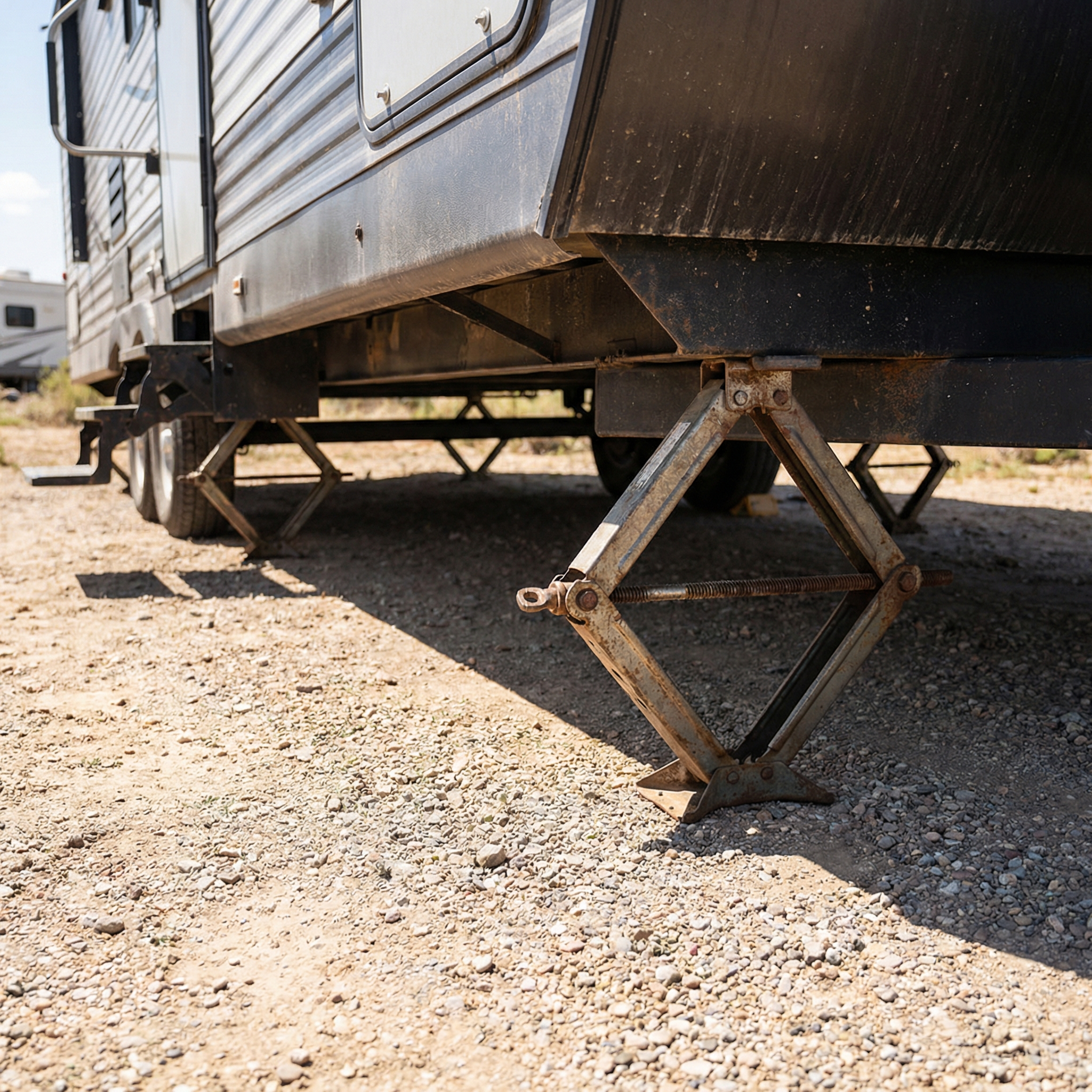
Stabilizers should be lowered only after leveling is complete. They should touch the ground and apply light pressure. If you are lifting the frame, you are doing it wrong and you will eventually regret it.
What stabilizers can do (and what they cannot)
- They can: reduce rocking, stop bounce, make the trailer feel “planted.”
- They cannot: fix a crooked trailer or safely lift one corner.
The Missing Piece: Weight Balance and Towing Stability
Most leveling guides stop at “bubble centered, you are done.” That is only half the story. You can be level and still have an unstable tow if your weight is off. This matters most if you are a beginner who is still figuring out cargo placement, water tank choices, and how much gear is too much gear.
Here is what poor weight balance can cause:
- Sway that comes out of nowhere
- Uneven tire wear
- Extra stress on axle and suspension components
- A tow experience that feels sketchy even at normal speeds
It helps you sanity-check stability, axle load risk, and tongue weight balance. This is especially useful when you change how you pack, add new gear, or fill tanks differently.
Common Beginner Mistakes That Make Setup Harder
These are the ones I see most often. Fix any one of these and your campsite setup instantly improves.
- Rushing the first five minutes: most problems start before you even drop the jack.
- Ignoring soft ground: blocks and pads prevent sinking and re-leveling later.
- Not re-checking after slide-outs: slide-outs change weight distribution and can shift your level slightly.
- Trying to “force” level with stabilizers: this is the fast path to bent hardware.
- Not thinking about loading changes: adding bikes, firewood, or water weight changes the whole feel.
Helpful Gear That Makes Leveling Easier (Without Going Overboard)
You do not need a garage full of gadgets. A few basics make a big difference, especially for beginners:
- Leveling blocks: faster side-to-side leveling on uneven sites.
- Wheel chocks: non-negotiable for safe setup.
- X-chocks (tandem axles): reduces front-to-back motion once parked.
- Jack pads: keeps jacks from sinking into mud or soft gravel.
Want to compare brands and alternatives for RV and camping gear? Use the Affiliate Brand Directory.
Cold Weather Setup Considerations
Winter setup is a different beast. Frozen ground can hide uneven spots, and snow can compress under jacks. The fix is usually simple: use pads, take your time, and check level again after everything settles.
If cold-weather camping is on your radar, this guide helps: Best Cold Weather Camping Gear for RVers .
Beginner Setup Checklist (Print This In Your Head)
- Park in your final position
- Level side-to-side while hitched
- Chock wheels
- Unhitch
- Level front-to-back with tongue jack
- Extend slide-outs and re-check level
- Lower stabilizers with light pressure
- Use the weight balance tool before your next tow
Want a safer, smoother tow and a calmer campsite?
Start here:
RV Weight Balance Tool
It checks stability, axle load risk, and tongue weight balance so you can catch problems before they turn into sway, stress, or surprise tire wear.
If you are still new to RV life and want the bigger picture, this is a solid next read: Beginner’s Guide to Renting a Motorhome .
Affiliate disclosure: Some links may earn us a small commission at no extra cost to you. We only recommend gear and tools we believe are genuinely useful for RV owners. External reference: For general trailer loading and towing safety basics, see the NHTSA towing safety guidance .




.jpg/:/cr=t:5.56%25,l:0%25,w:100%25,h:88.89%25/rs=w:1240,h:620,cg:true)




Leave a Reply