

Affiliate Disclosure: I earn commissions if you shop through the links below at no additional cost to you.
Last Updated on September 14, 2026 by Jeremy
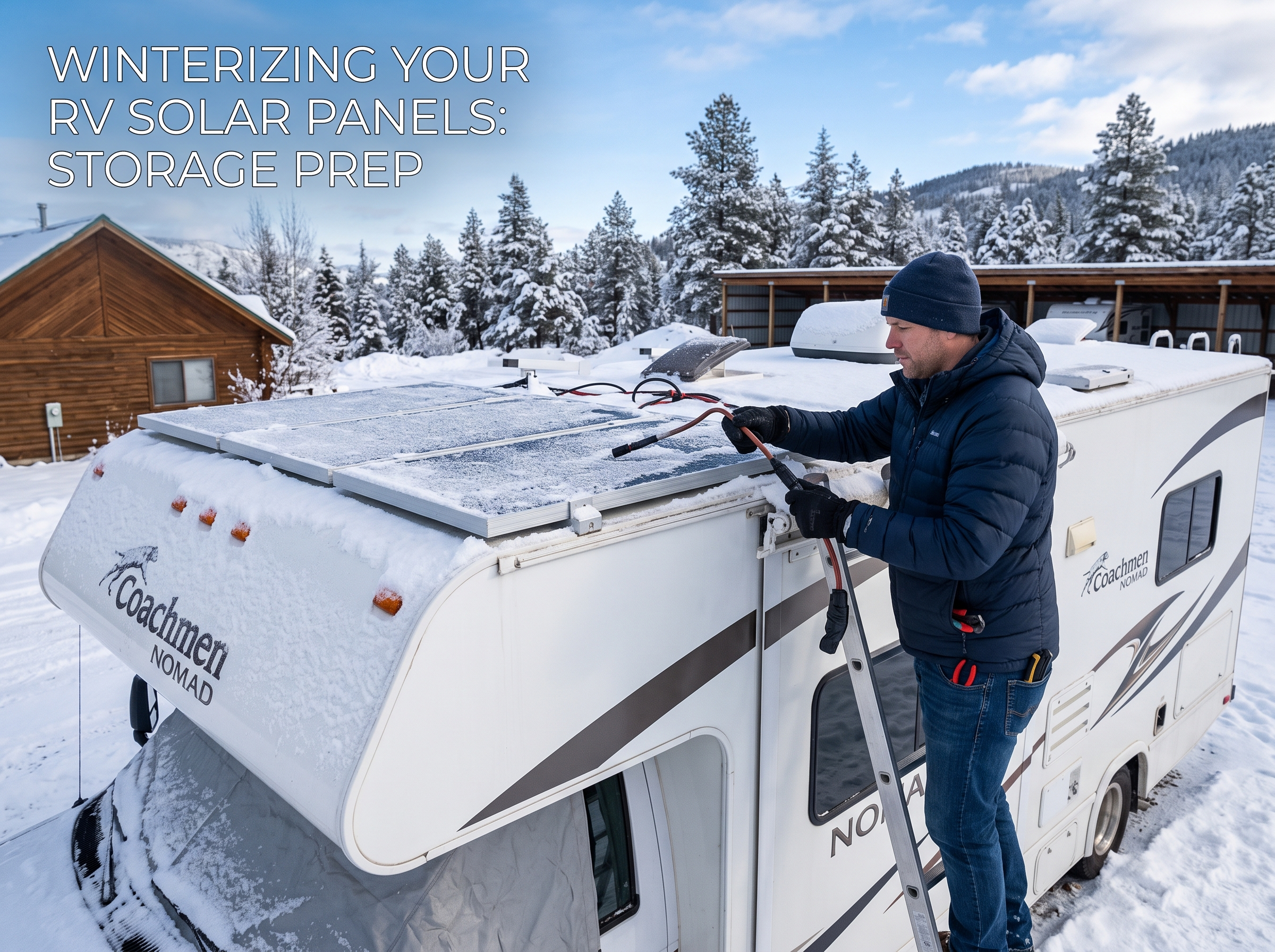
Winterizing an RV solar system is not simply a choice between “leave the panels connected” and “disconnect everything.” The correct setup depends on the battery chemistry, storage temperature, controller design, parasitic loads and whether anyone can inspect the RV during storage.
The panels themselves generally tolerate winter weather when mounted and installed correctly. The larger risk is what their electricity does after it reaches the charge controller—especially when a battery is cold, fully charged, disconnected incorrectly or quietly powering loads for months.
The Panels Are Only One Part of the Winter Decision
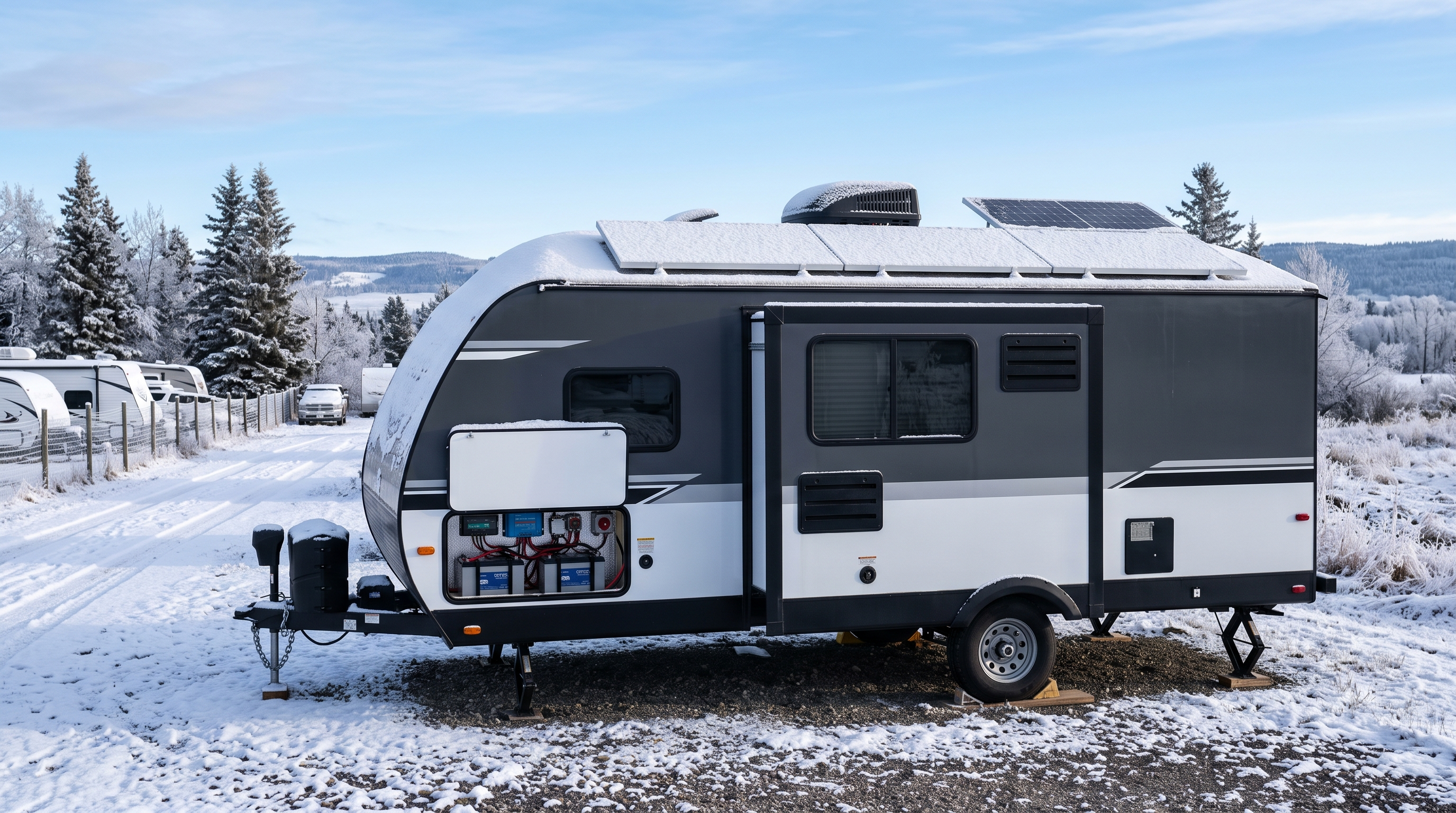
An RV solar system normally includes panels, roof wiring, a disconnect or breaker, charge controller, battery bank, fusing and loads. Inverter/chargers, converters and alternator charging can create additional paths. Winterizing only the visible panels ignores most of the system.
| Storage setup | Solar approach | Main concern |
|---|---|---|
| Battery removed | Isolate array before battery disconnection; leave controller in manufacturer-approved state | Controller may not be designed to receive PV voltage without a battery reference |
| Lead-acid battery remains | Compatible maintenance charging can help if settings and electrolyte care are correct | Self-discharge, freezing at low state of charge, water loss and parasitic loads |
| LiFePO4 battery remains | Allow charging only within the exact model’s temperature limits | Charging cells below their permitted temperature |
| Heated lithium battery remains | Verify heater logic and energy budget | Heater cycling can consume stored energy and does not remove every limit |
| RV remains in use | Keep system operational and monitor snow, shading and temperature | Reduced winter production and changing daily loads |
Why Disconnect Order Matters
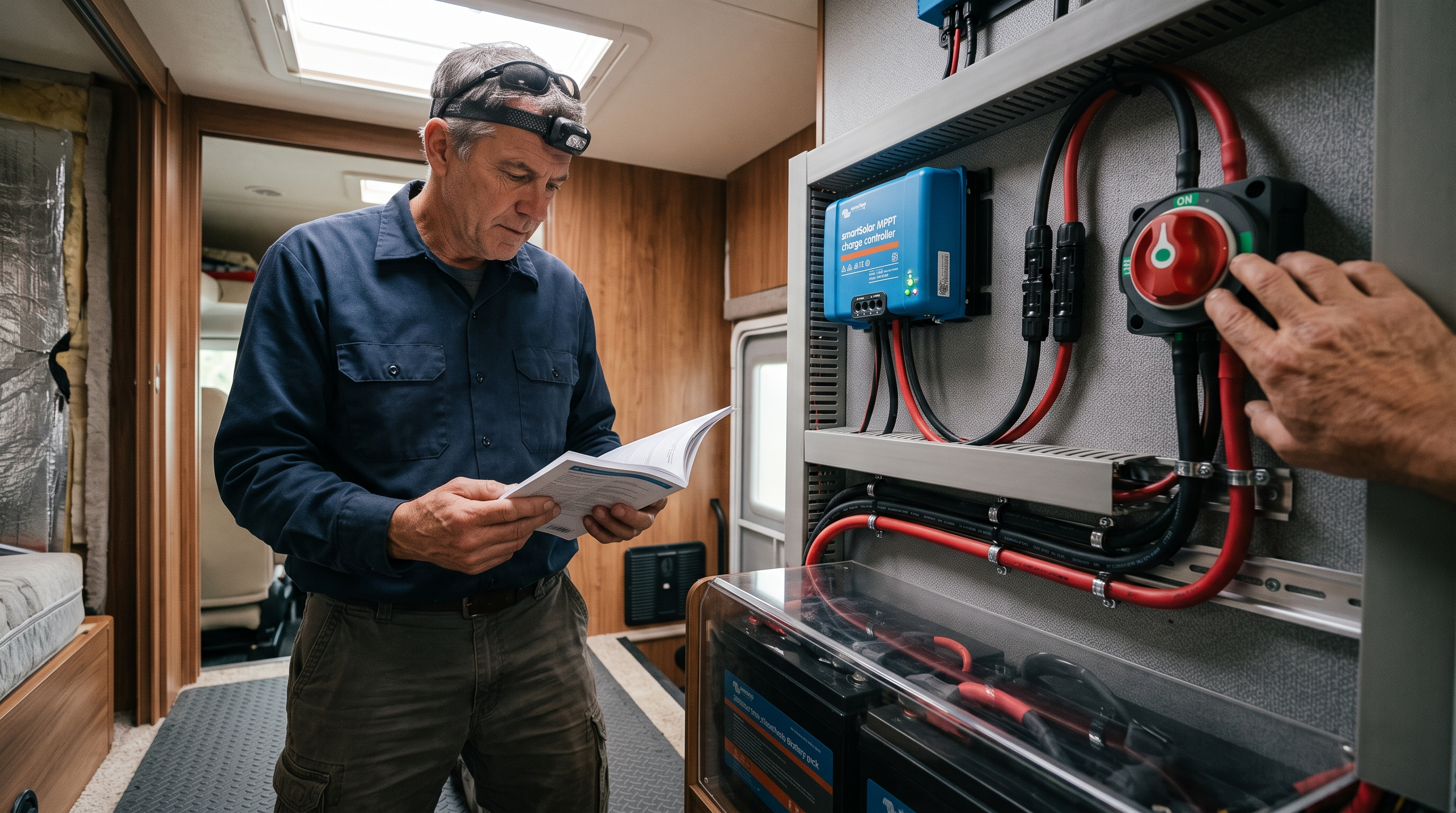
Many charge controllers use battery voltage to establish system voltage and a stable operating reference. Removing the battery while the array is still producing can leave the controller powered from the PV side in a condition its manufacturer does not permit.
How to Winterize RV Solar Panels Step by Step
- Record the system. Photograph labels and note panel wattage, controller, battery, inverter, fuses and disconnect locations.
- Read every storage instruction. The battery and controller manuals control temperature, state of charge, shutdown order and inspection intervals.
- Inspect the roof safely. From a safe access point, look for loose mounts, cracked sealant, damaged cables or lifting glands. Avoid icy roofs.
- Decide whether the battery stays. Base this on chemistry, storage-temperature rating, charging cutoff, access and expected local lows.
- Set the manufacturer-approved state of charge. Lithium storage recommendations differ by brand; lead-acid batteries have different freezing and maintenance needs.
- Shut down in the approved sequence. Use proper disconnects or breakers, not loose connectors or improvised coverings.
- Eliminate unwanted loads. Detectors, radios, monitors, inverters and aftermarket equipment may bypass the main battery switch.
- Document the final positions. Tags or a photo prevent confusion during spring commissioning.
- Schedule inspections. Check voltage, water intrusion, snow loading and unexpected draw at the interval required by the equipment manufacturer.
Do Solar Panels Work in Winter?
Yes. Photovoltaic panels can produce electricity in cold weather whenever sufficient light reaches them. Shorter days, low sun angle, shading and snow cover usually reduce total daily harvest, but bright reflected light and cold panel temperatures can still produce meaningful voltage.
That is why snow does not make an energized array harmless. Snow can slide or melt away while the RV is unattended, allowing production to resume. Treat the array as live unless it has been isolated with approved equipment and verified according to the system documentation.
Should You Cover RV Solar Panels?
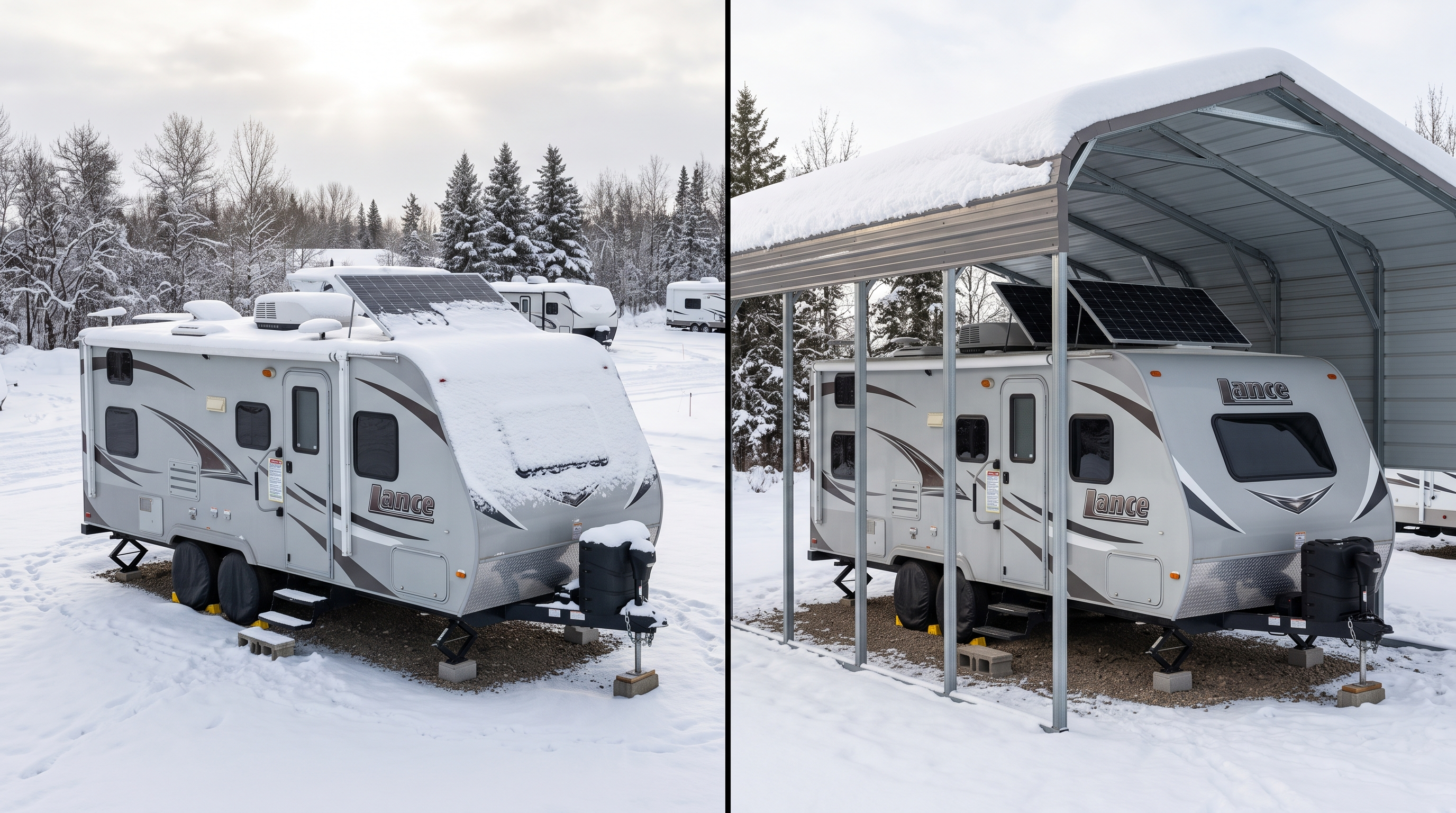
A breathable RV cover may protect the whole unit if it is designed for the RV and secured without rubbing the panels or wiring. It should not be treated as an electrical disconnect. Loose tarps can abrade modules, trap moisture and become a wind load.
Do not scrape panels with metal tools or climb onto an icy roof to clear snow. If the RV is actively used and panel clearing is necessary, follow the panel manufacturer’s method from a safe position.
Battery Chemistry Changes the Plan
Flooded lead-acid
A discharged flooded battery can freeze at a much warmer temperature than a fully charged one. Maintenance charging can be useful, but electrolyte level, ventilation and approved voltage settings still matter.
AGM
AGM batteries avoid routine watering but still self-discharge and suffer when left depleted. Follow the maker’s storage and maintenance-charge guidance.
LiFePO4
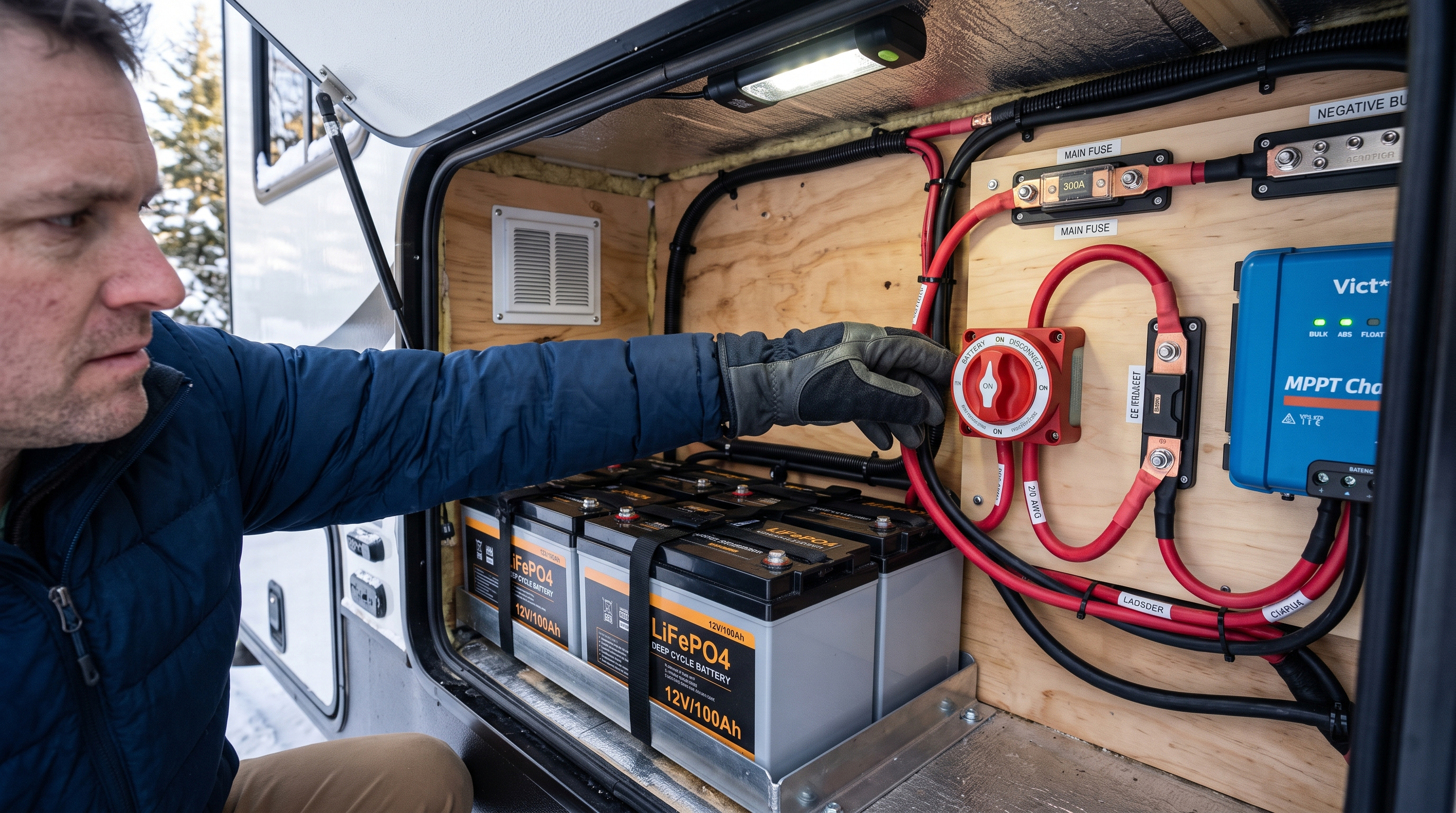
Cold storage and cold charging are separate specifications. Some batteries block low-temperature charging; others do not. Some are heated. Battle Born recommends disconnecting stored batteries from the system, while other brands specify different storage percentages. Use the exact manual.
Spring Recommissioning
- Inspect panels, mounting hardware, sealant, wiring and compartments.
- Check the battery for swelling, cracks, leaks, water intrusion or damaged cables.
- Bring the battery within its permitted charging temperature.
- Verify polarity and that disconnects remain open.
- Reconnect the battery in the manufacturer-approved sequence.
- Confirm the controller recognizes the correct system voltage and battery profile.
- Reconnect PV input and observe voltage, current and fault indicators.
- Restore loads one group at a time.
Common Winter Solar Mistakes
- Removing the battery while panels still feed the controller.
- Assuming a covered or snow-covered panel cannot generate power.
- Leaving an inverter or monitor drawing current for months.
- Assuming every lithium BMS blocks cold charging.
- Using a generic storage percentage for every battery brand.
- Ignoring water intrusion because the RV is not moving.
- Clearing snow from an icy roof without fall protection.
Build a Plan for Your System
Use the RV Solar System Builder to review capacity and components, the RV System Troubleshooter when charging behaviour is unclear, and the RV Maintenance Tracker to schedule winter voltage and condition checks.
Sources
- Battle Born: Winterizing and storing LiFePO4 batteries
- Battle Born: Lithium batteries and freezing conditions
- Victron Energy: SmartSolar MPPT manual
Frequently Asked Questions
Should I disconnect RV solar panels for winter storage?
Disconnect or isolate them when the battery is removed, cold charging is not approved or the controller cannot remain safely configured. If solar stays active, confirm compatible settings, temperature protection and monitoring.
What is the correct order for disconnecting RV solar?
Many systems isolate PV before disconnecting the battery and reconnect the battery before PV, but the exact equipment manuals control the sequence.
Will RV solar panels charge through snow?
Heavy coverage may reduce output greatly, but production can resume when snow thins, slides or melts. Snow is not an electrical disconnect.
Should I cover RV solar panels in winter?
A proper RV cover may be used when compatible with the installation, but it should not replace electrical isolation and must not rub or damage the array.
Can solar damage a lithium battery in winter?
It can if charging occurs below the battery’s permitted cell temperature and the system lacks effective low-temperature protection.
Do I need a 4×4 to winterize solar panels?
No; vehicle drivetrain is unrelated. The safety issue is roof access, ice and electrical isolation.


Leave a Reply