

Affiliate Disclosure: I earn commissions if you shop through the links below at no additional cost to you.
Last Updated on September 14, 2026 by Jeremy
You turn up the thermostat. The furnace runs. Warm air comes out of the vents—yet the floor is still cold, the walls feel chilly and the temperature drops the moment the burner shuts off.
If you have been asking, “Why is my RV so cold?”, the answer is not always a weak furnace. An RV can produce plenty of heat and still lose it faster than the heating system can replace it. After years of living and working from a travel trailer through Canadian shoulder seasons, we have learned that the fastest solution starts with finding the escape route—not automatically buying a bigger heater.
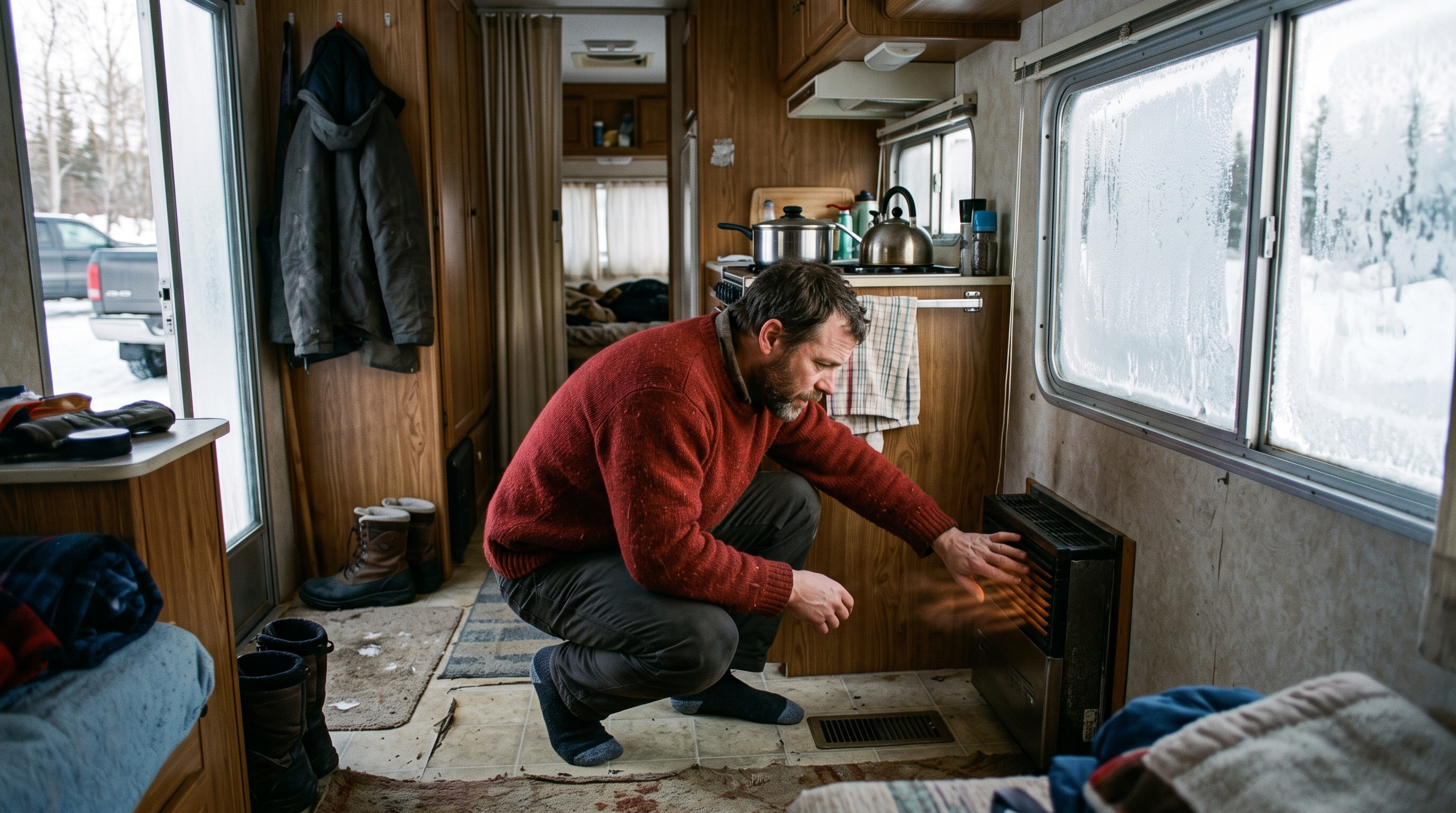
Image transparency: The four editorial illustrations in this article were generated with AI to help explain real RV heat-loss situations.
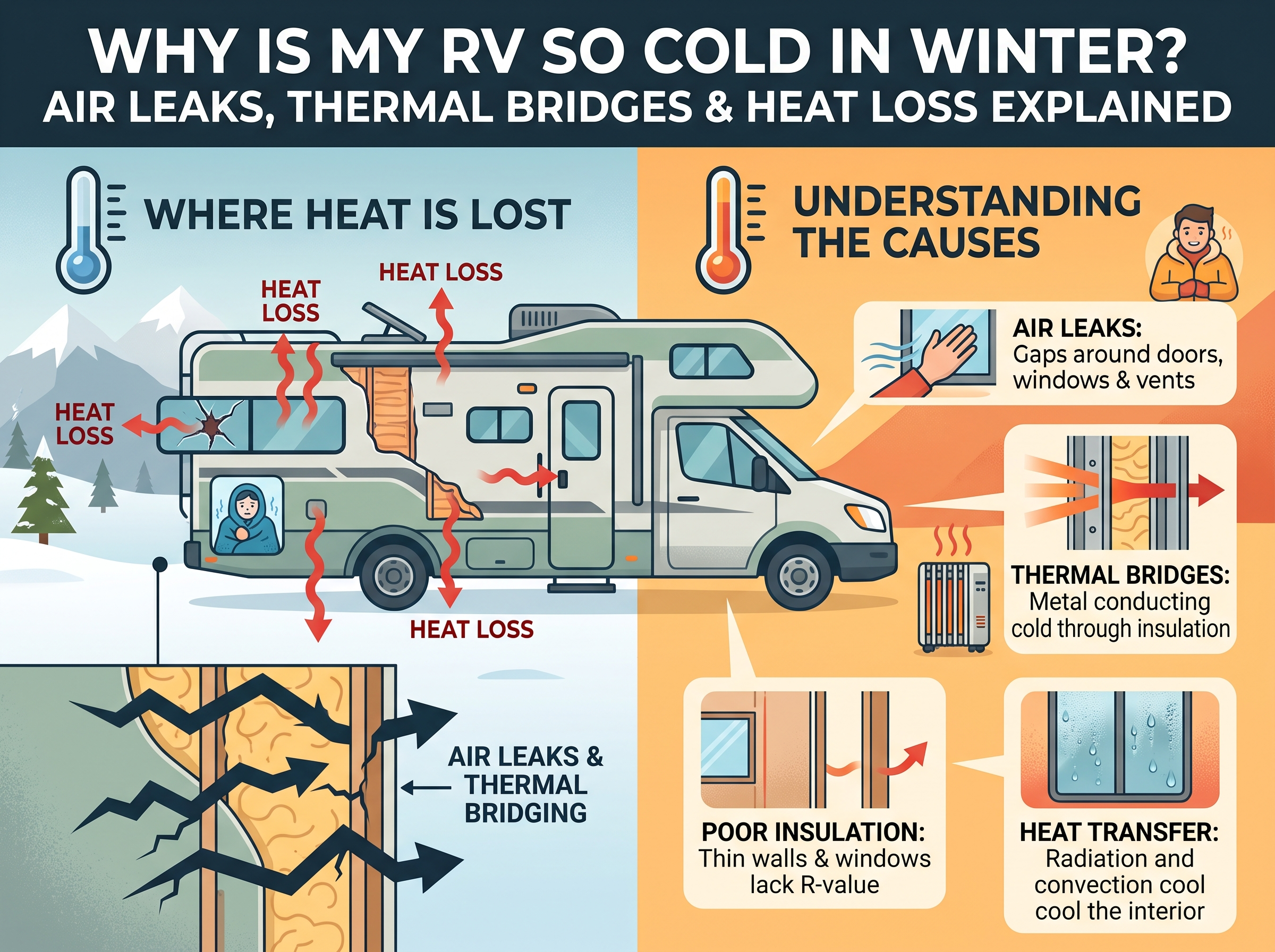
Quick answer: Your RV may feel cold because of air leaking around slides, windows, doors and plumbing openings; heat conducting through aluminum framing; thin or compressed insulation; exposed floors and tanks; poor duct airflow; high interior humidity; or a furnace that is cycling incorrectly. Start by checking airflow and safety, then locate drafts and cold surfaces before adding insulation or heat.
The difference between making heat and keeping heat
Your furnace has one job: make warm air. The RV shell has another: slow the movement of that heat to the outdoors. When the shell loses the contest, the furnace may run longer without ever making the trailer comfortable.
Heat leaves an RV in three practical ways:
Air leakage
Cold outside air enters through gaps while heated inside air escapes. Slide seals, door frames, plumbing penetrations and range-hood dampers are common suspects.
Conduction
Heat travels through solid materials. Metal wall studs, window frames and exposed structural members can become direct pathways to the cold.
Radiation
Warm interior surfaces exchange heat with cold windows and walls. This is why sitting beside an icy window can feel uncomfortable even when the air temperature looks acceptable.
Nine reasons your RV stays cold
1. Air is leaking around the slide-outs
Slide rooms create long seams in the RV envelope. Wipers can curl, bulb seals can flatten and corners can leave small gaps. A leak that feels minor on a calm afternoon can become a steady stream of cold air when the wind rises.
2. The entry door or windows are not sealing evenly
Check the full perimeter rather than assuming a latched door is sealed. Worn weatherstripping, loose hardware or an out-of-square frame can leave one cold corner. Single-pane windows also conduct heat rapidly even when they are not leaking air.
3. Metal framing is creating thermal bridges
A thermal bridge is a material that carries heat through the insulated assembly more easily than the surrounding insulation. Aluminum framing is strong and light, but it conducts heat well. On a cold morning you may be able to see framing lines in condensation or feel them as colder stripes on the wall.
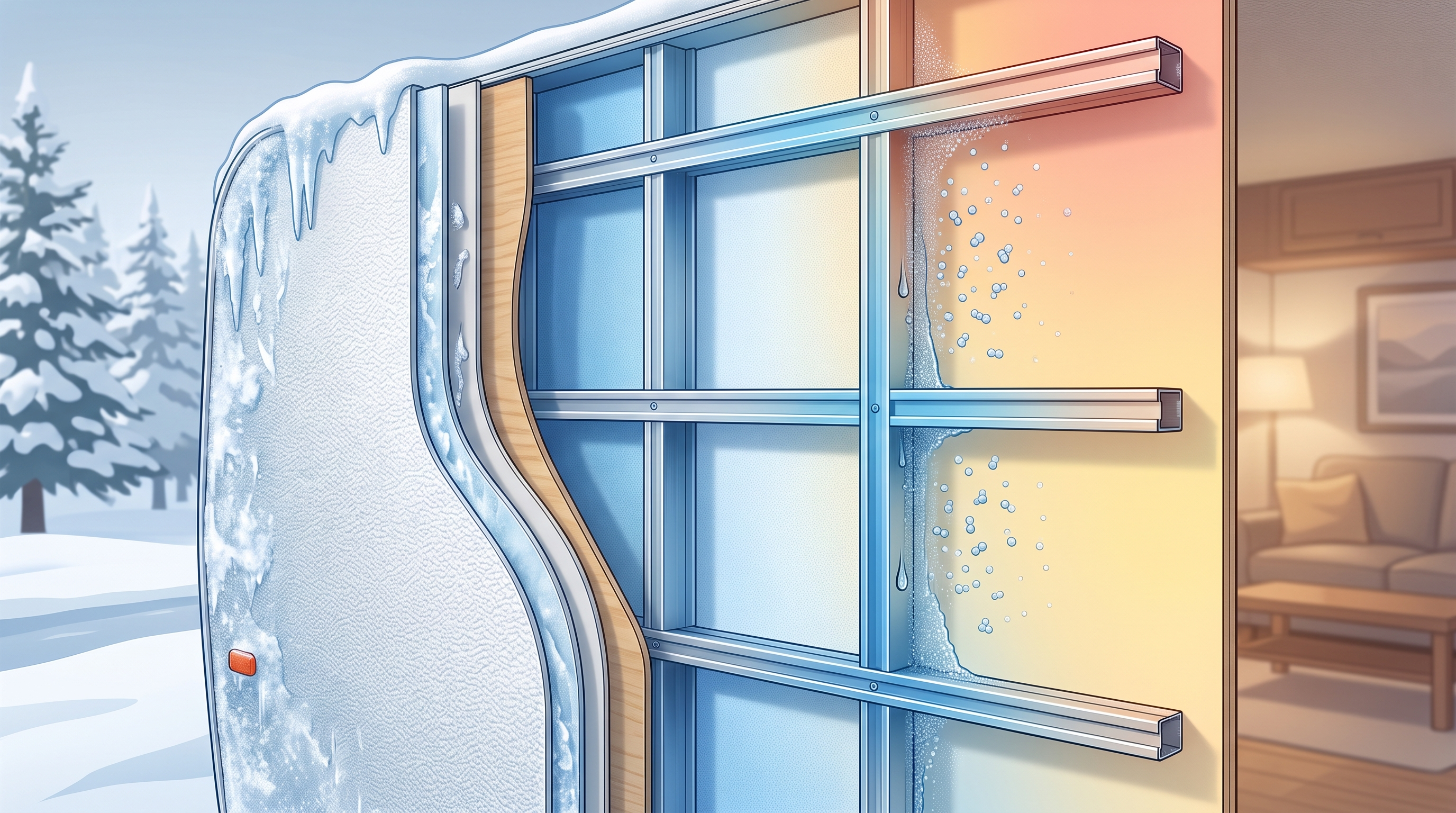
4. Insulation is thin, missing or compressed
Published R-values do not tell the whole story. Openings, curved caps, slide floors and installation gaps can perform differently than the best-insulated portion of the wall. Moisture intrusion can also damage some insulation types. Do not drill or open a wall blindly; wiring, plumbing and structural members may be hidden behind the panel.
5. Cold is coming through the floor and underbelly
An exposed floor loses heat to moving air beneath the trailer. An enclosed underbelly helps only when it is intact and receives enough heat to protect the plumbing. Gaps around low-point drains, tank outlets and stabilizer openings can still funnel cold air inside.
6. Furnace airflow is restricted or unbalanced
A dirty return-air opening, blocked register, crushed duct or separated connection can reduce delivery. Never close several registers in an attempt to force heat elsewhere unless the appliance manufacturer expressly permits it; RV furnaces depend on adequate airflow and excessive restriction can cause overheating or short cycling.
7. The thermostat is in a misleading location
A thermostat near a warm appliance, supply register or sunlit wall may satisfy early while beds, bunks and the floor remain cold. Compare its reading with a second thermometer placed where people actually sit and sleep.
8. Moisture is making the interior feel colder
Cooking, showering, breathing and drying wet gear add moisture. That moisture condenses first on the coldest surfaces and can eventually damage walls, mattresses and cabinetry. Ventilation may seem counterintuitive in winter, but controlled moisture removal is part of keeping an RV healthy. Our broader winter RV living guide covers condensation, propane and cold-weather routines in more detail.
9. The furnace itself is not operating correctly
If airflow is weak, the burner repeatedly stops, you smell combustion products, or the furnace behaves differently than normal, stop treating the problem as insulation alone. Confirm propane supply, battery voltage and unobstructed exterior intake/exhaust openings, then follow the appliance manual or use a qualified RV technician.
How to diagnose the cold before buying anything
| What you notice | Likely area to inspect | First safe check |
|---|---|---|
| Cold stream you can feel | Door, window, slide or utility opening | Move a tissue slowly around the perimeter on a windy day. |
| Cold stripes with no draft | Wall or ceiling framing | Compare surface temperatures; avoid drilling into the wall. |
| Warm ceiling but icy floor | Underbelly, floor perimeter or unheated storage | Inspect the underbelly for tears and open penetrations. |
| One room cold, another hot | Duct routing and register airflow | Confirm registers and return-air paths are unobstructed. |
| Heat falls immediately after shutdown | Large leakage or low thermal mass | Check slides and doors first, then windows and roof vents. |
| Furnace starts and stops abnormally | Appliance, power, propane or airflow fault | Follow the manual; arrange service if the cause is unclear. |
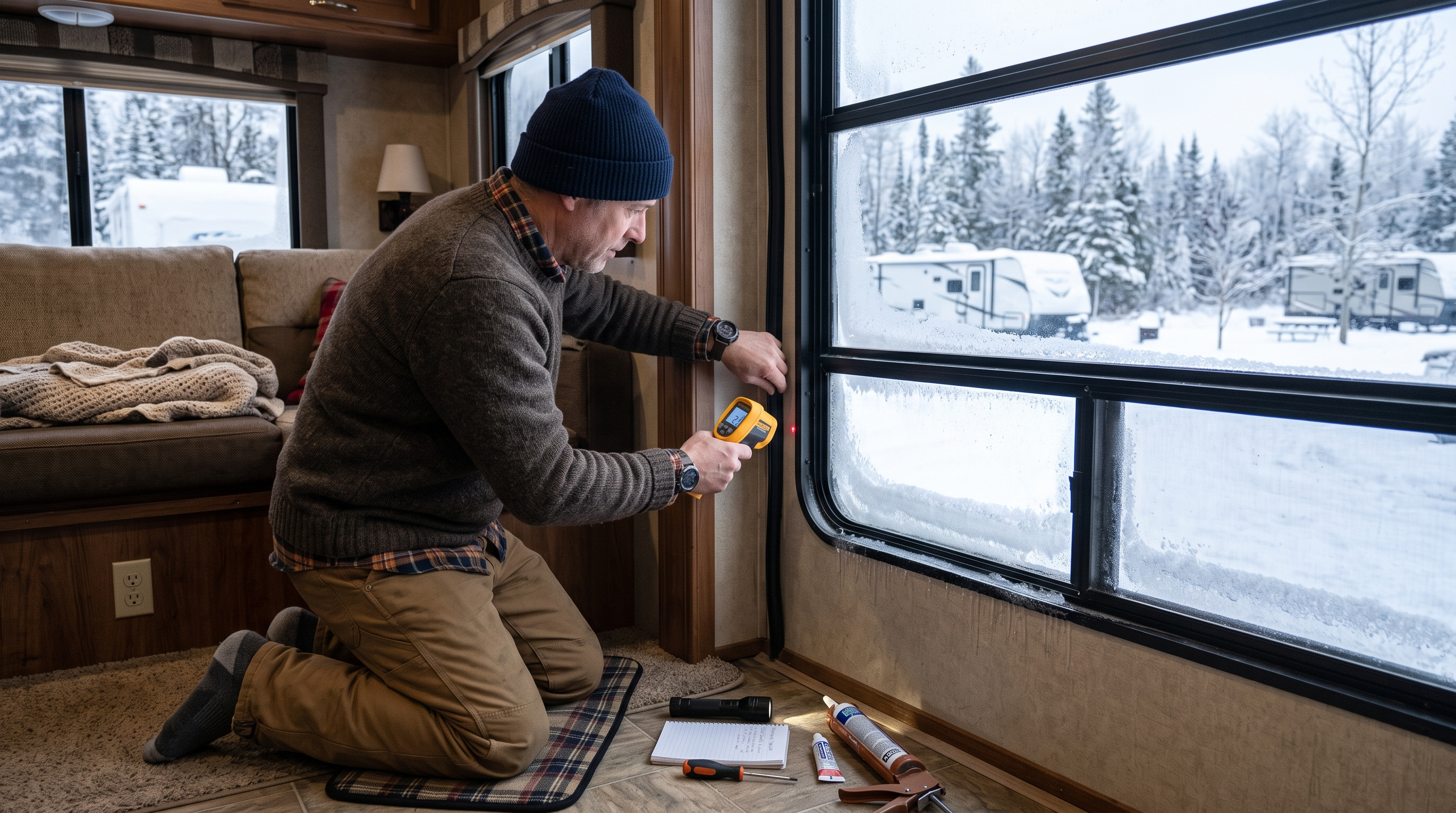
Field test: Pick a cold, windy period and inspect one zone at a time. Record the room temperature, outside temperature, furnace run time and the coldest surface you find. A simple repeatable test makes it easier to tell whether a change actually helped.
RV winter insulation tips that usually help
- Replace damaged door and compartment weatherstripping.
- Seat slide seals correctly and repair gaps using manufacturer-approved products.
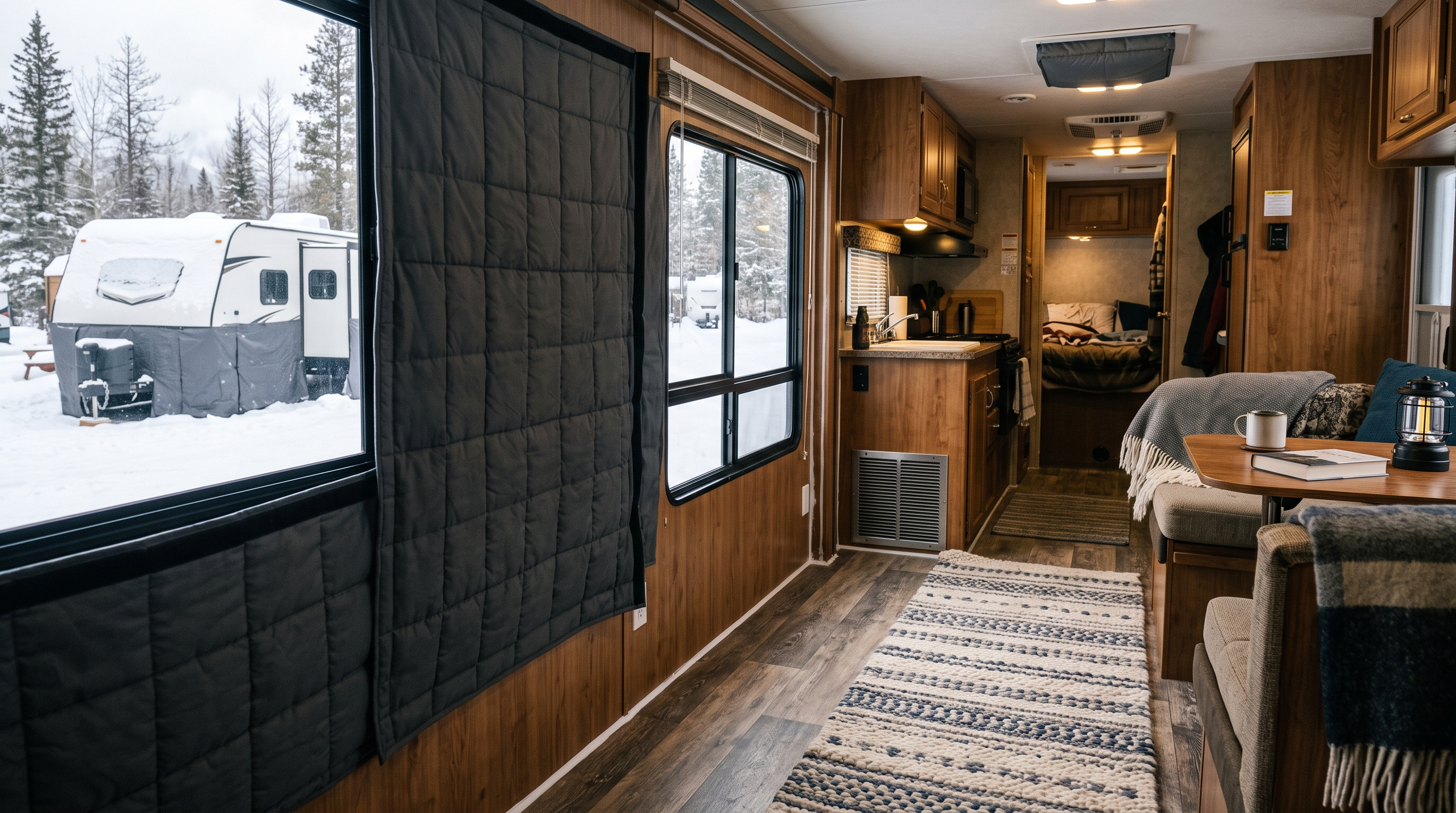
- Add removable insulated window panels while preserving necessary ventilation.
- Use an insulated roof-vent cushion only where it does not block required appliance ventilation.
- Place rugs or foam-backed mats over exposed cold flooring without covering furnace registers.
- Seal accessible plumbing and cable penetrations with an appropriate removable or serviceable material.
- Use properly fitted skirting when stationary, accounting for wind and access to appliances.
- Keep furnace returns, registers and exterior intake/exhaust openings clear.
- Monitor temperature and humidity in sleeping areas, cabinets and the underbelly.
What not to do
Do not use an unvented combustion heater while sleeping, use a cooking appliance for space heating, block required vents, or ignore a carbon-monoxide alarm. Keep working smoke, propane and carbon-monoxide alarms installed as specified by their manufacturers. Portable electric heaters must be plugged into a suitable circuit, kept clear of combustibles and used exactly as directed.
Also avoid permanent foam, caulk or tape until you know what an opening does. Some gaps provide drainage, appliance combustion air or access for maintenance. When in doubt, check the RV and appliance manuals or ask a qualified technician.
When the RV is cold even with the heat on
Tackle the problem in order: safety, furnace operation, airflow, air leakage, then insulation. That sequence keeps you from masking an appliance fault with another heater—or spending money insulating a trailer that simply has a torn slide seal.
If you store rather than occupy the RV through the coldest months, use our guides to winterize the RV, prepare RV solar panels for winter and store LiFePO4 batteries in Canadian winter conditions. Storage and occupied winter camping are different jobs.
Work the problem instead of guessing
Use the RV System Troubleshooter to narrow down heating, power and appliance symptoms, then keep your seasonal work organized with the RV Maintenance Tracker.
Frequently asked questions
Why is my RV so cold when the furnace is running?
The furnace may be producing heat while the RV loses it through air leaks, windows, framing, the floor or underbelly. Restricted ducts, a poorly located thermostat or abnormal furnace cycling can also leave parts of the RV cold.
Why is my RV freezing at night?
Outdoor temperature, wind and reduced overnight activity expose leakage and insulation weaknesses. Check slide and door seals, floor temperature, furnace cycling, propane and battery supply, and temperatures near plumbing before the coldest part of the night.
How can I check my RV insulation?
Compare interior surface temperatures during cold weather, look for condensation patterns and inspect accessible cavities and the underbelly. An infrared thermometer or thermal camera can identify cold areas, but confirm the pattern before opening any wall.
Does RV skirting really help?
Skirting can reduce wind movement beneath a stationary RV and moderate floor and underbelly temperatures. It does not replace safe heat, pipe protection or adequate insulation, and it must not obstruct appliance openings.
Should I cover RV windows in winter?
Removable insulated panels can reduce heat loss, especially through single-pane windows. Open them regularly to check for moisture and maintain any ventilation required for occupants and appliances.
Can I just use a larger heater?
Not safely by default. A larger heater may overload an electrical circuit or hide a furnace, ventilation or envelope problem. Calculate the electrical load, follow heater clearances and correct major air leaks first.
Sources and further reading
- Natural Resources Canada: Keeping the Heat In
- U.S. Consumer Product Safety Commission: Carbon Monoxide Information Center
- Your RV furnace, thermostat and detector manuals—the controlling sources for your installed equipment.


Leave a Reply