

Last Updated on September 19, 2026 by Jeremy
An RV carbon monoxide alarm that starts beeping in the middle of the night creates two immediate problems. First, you do not yet know whether it has detected carbon monoxide, propane, low voltage, an internal fault or the end of its service life. Second, a half-awake person naturally wants to silence the noise before identifying it.
If your RV carbon monoxide alarm keeps going off, treat the first activation as genuine until everyone is safely outside and the alarm pattern has been identified. Troubleshooting comes after people and pets are in fresh air—not while everyone remains inside hoping it is only a weak battery.
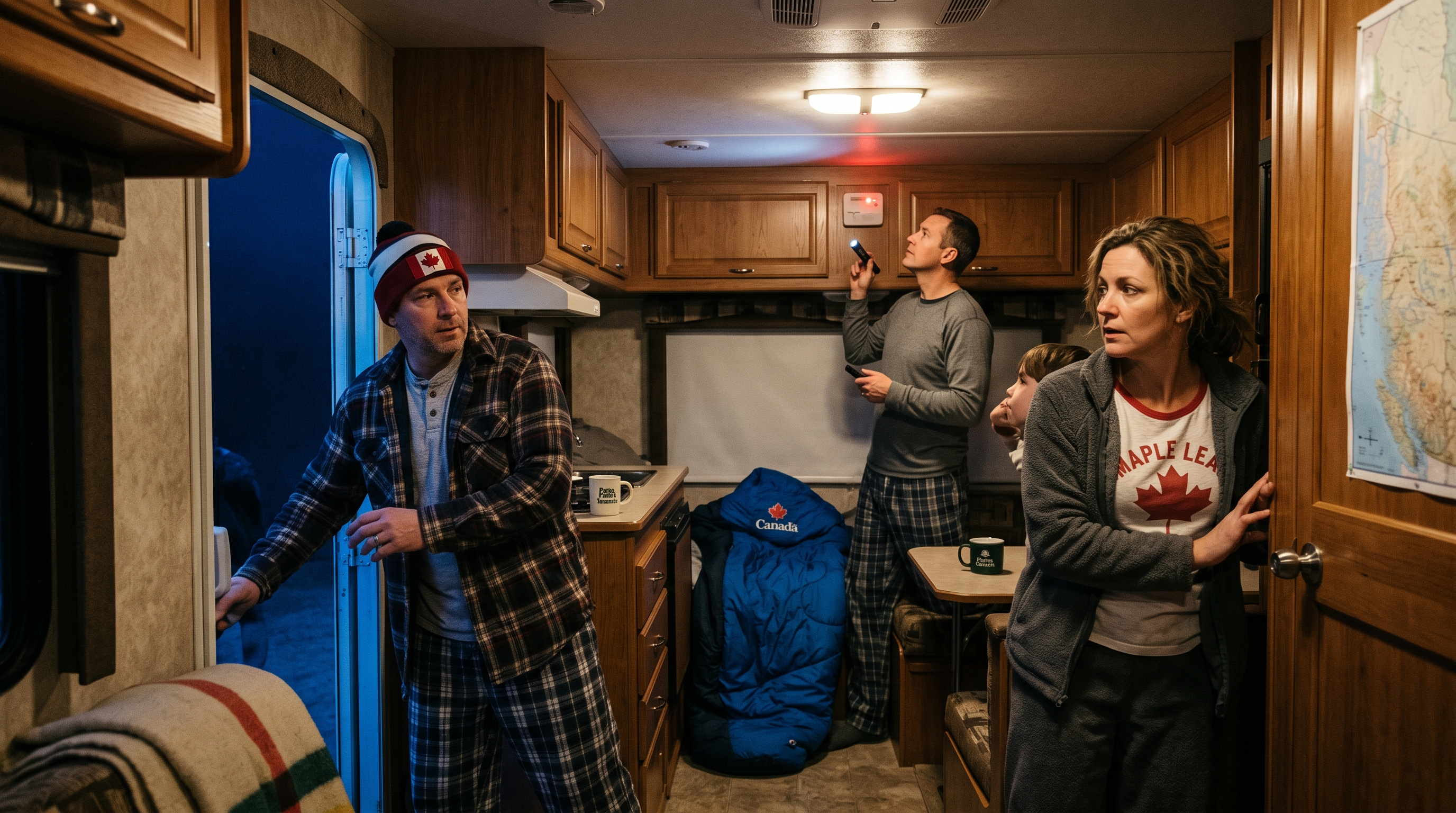
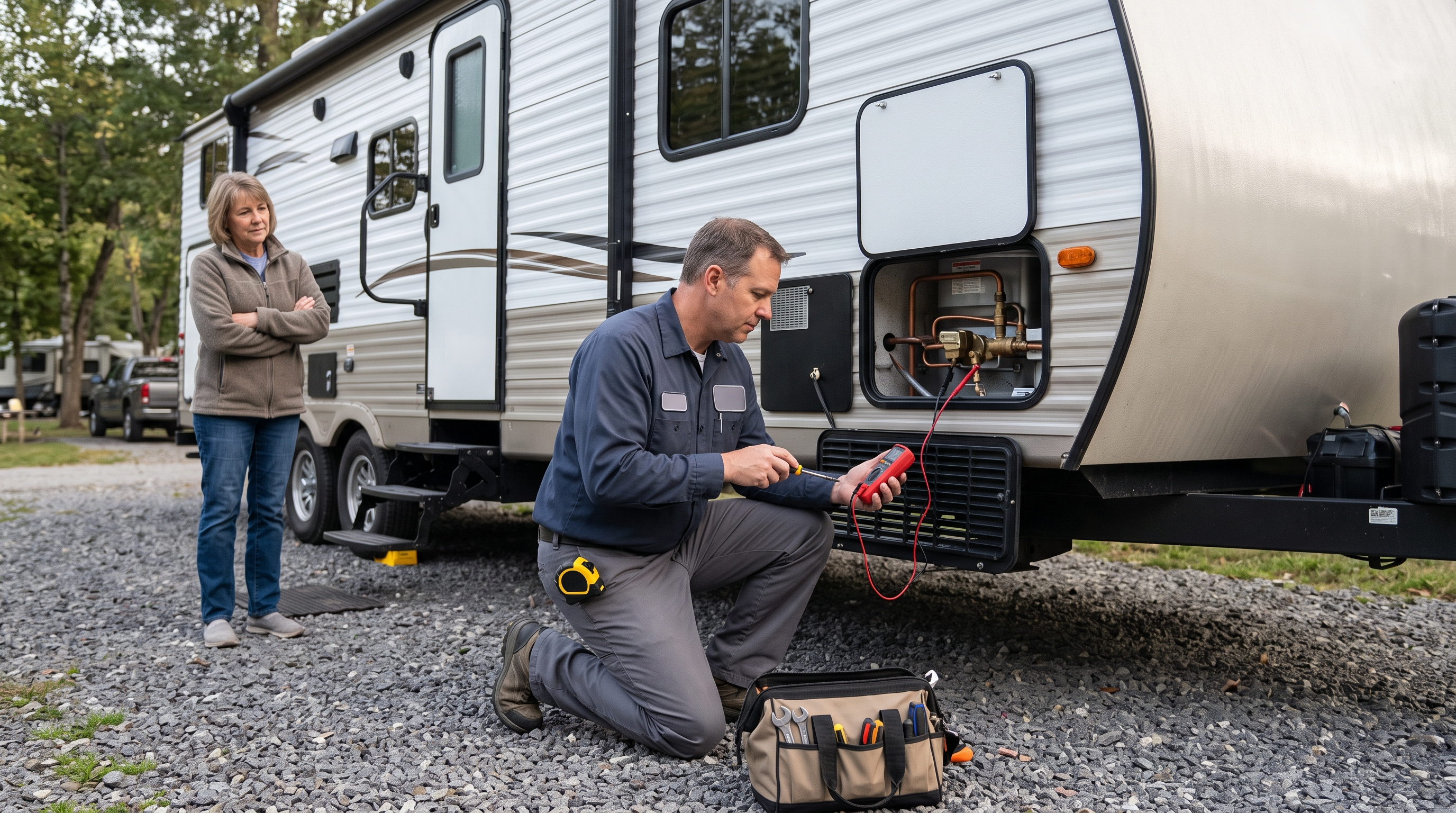
Image transparency: The four editorial illustrations in this article were generated with AI to help explain real RV alarm and exhaust-safety situations.
If the alarm is sounding right now
Move everyone—including pets—outside into fresh air and account for them. Call 911, the fire department or the appropriate local emergency service if the alarm pattern indicates CO, anyone has a headache, dizziness, nausea, weakness, confusion, chest pain or unusual drowsiness, or you cannot confidently rule out exposure. Do not re-enter until emergency personnel or a qualified technician says it is safe.
Do not disconnect the alarm, remove its fuse or assume that opening a window has corrected the source. Carbon monoxide is colourless and odourless, and propane may be present even when someone cannot smell its added odour.
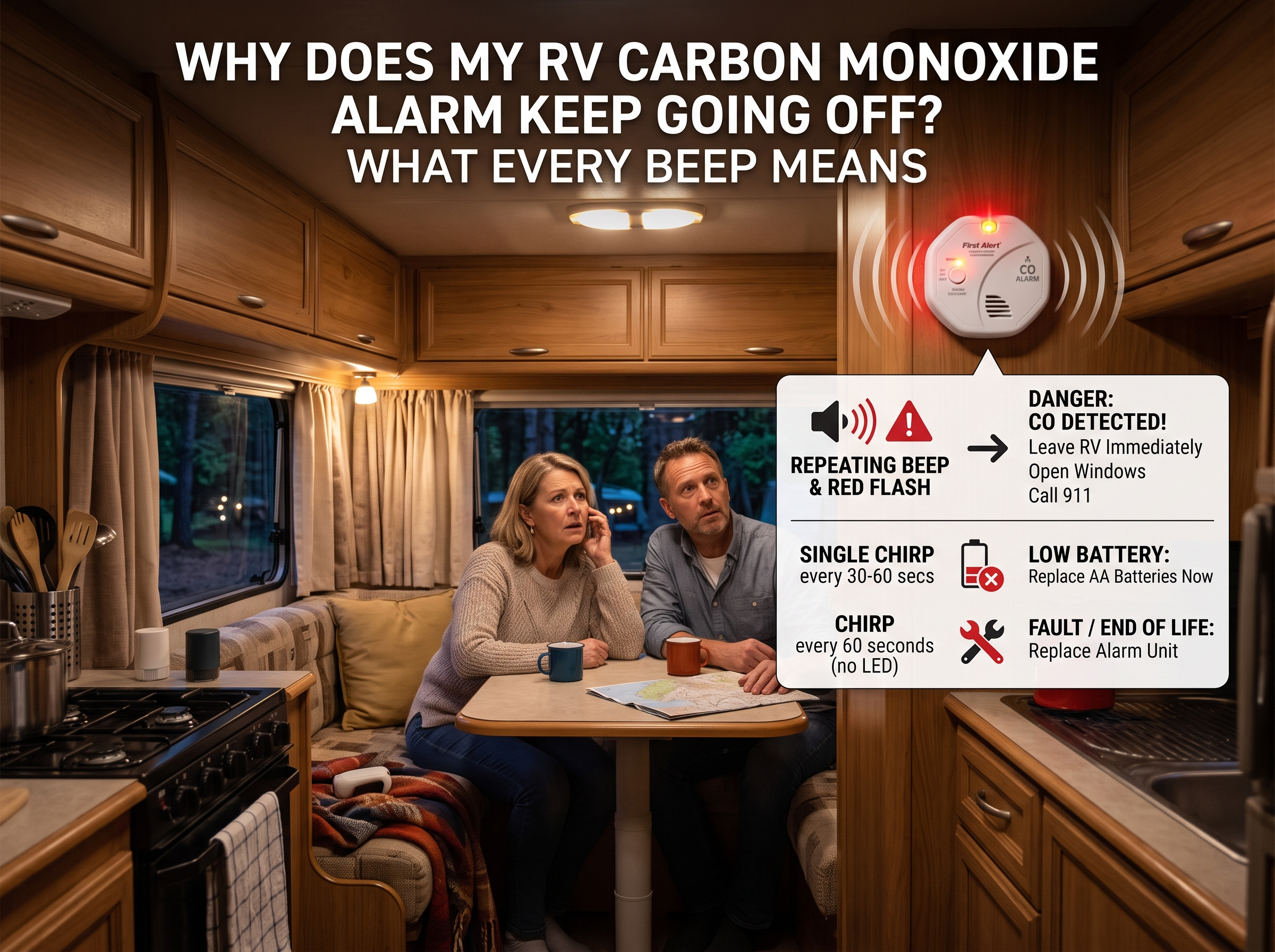
Quick answer: A repeated four-beep CO pattern requires immediate evacuation. A continuous alarm with a flashing propane indicator can mean an LP-gas hazard. A periodic chirp may instead indicate low 12-volt power, a malfunction or an expired sensor. Patterns vary by brand and model, so use the label and manual for your installed alarm as the controlling instructions.
Start by identifying the sound and indicator lights
“Beeping” can describe several completely different warnings. On the Safe‑T‑Alert 25 Series combination alarm, for example, CO, propane, malfunction and end-of-life signals each use a different sound-and-light combination. Another model may not use the same sequence.
| Signal on a Safe‑T‑Alert 25 Series | What it means | What to do |
|---|---|---|
| Four beeps, five seconds of silence; red CO light | CO alarm | Evacuate immediately, account for everyone, call for help and do not re-enter until cleared. |
| Continuous beeping; flashing red gas light | Dangerous propane-gas level | Avoid flames and electrical switches, evacuate, and follow the alarm manual’s gas-emergency procedure. |
| One beep about every 30 seconds; alternating red/green | Malfunction or service warning | Check supply voltage only after the RV is safe. Replace or service the unit if it will not return to normal. |
| Beep every 25–30 seconds; red-red-green-green flashes | Five-year end-of-life signal | Replace the complete alarm. A reset only provides a short replacement window. |
| Flashing green with no alarm after power-up | Warm-up cycle | Allow the specified warm-up time and confirm a steady green operational light afterward. |
| Blinking indicators or irregular behaviour with weak RV power | Possible low 12-volt supply | Check the house-battery voltage, connections and charging system after ruling out an active gas emergency. |
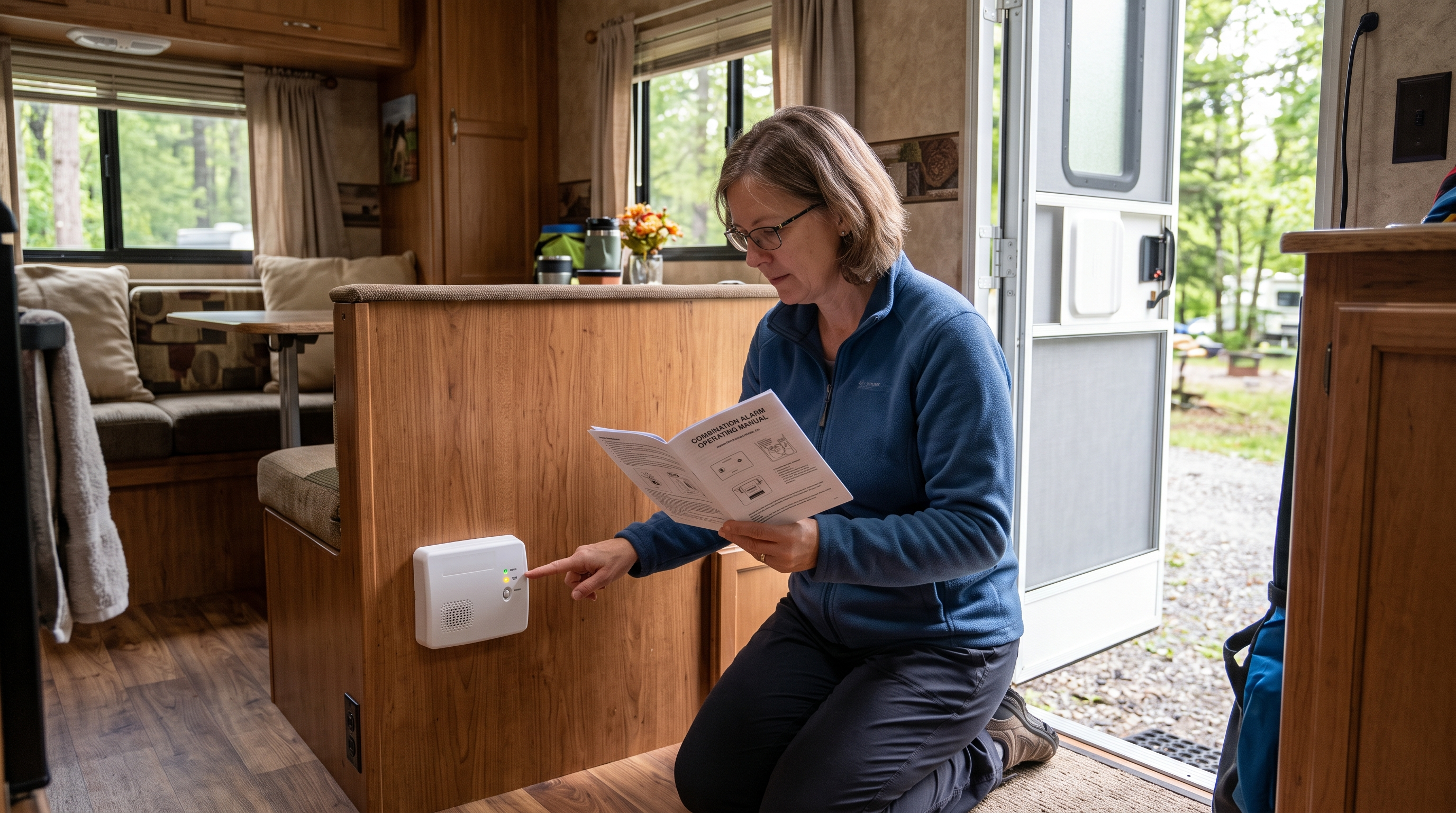
Your manual outranks any general chart. Find the manufacturer, exact model number and date code on the alarm. If the sound or lights do not match the manual—or you are uncertain—stay outside and contact emergency services, the manufacturer or a qualified RV technician.
What to do if an RV carbon monoxide alarm goes off
- Get outside. Move people and pets to fresh air and make sure everyone is accounted for.
- Call for help when CO or exposure is possible. Tell emergency services that an RV carbon monoxide alarm activated and report any symptoms.
- Do not search for the source while exposed. A person affected by CO may become confused or unable to leave without recognizing the danger.
- Do not re-enter because the horn stopped. Muting, ventilation or a temporary reduction in gas concentration does not prove the source is repaired.
- Have combustion equipment and exhaust systems checked. A furnace, water heater, generator, engine, stove, oven, portable heater or neighbouring exhaust source may be involved.
If the alarm specifically indicates propane, the Safe‑T‑Alert 25 Series manual directs occupants to extinguish flames and smoking materials, avoid disconnecting alarm power, evacuate, leave doors and windows open, close the propane-tank valve and repair the leak before re-entry. Only take a step such as closing a valve if it can be done safely and without delaying evacuation.
Why an RV carbon monoxide alarm keeps going off
1. The alarm is detecting real carbon monoxide
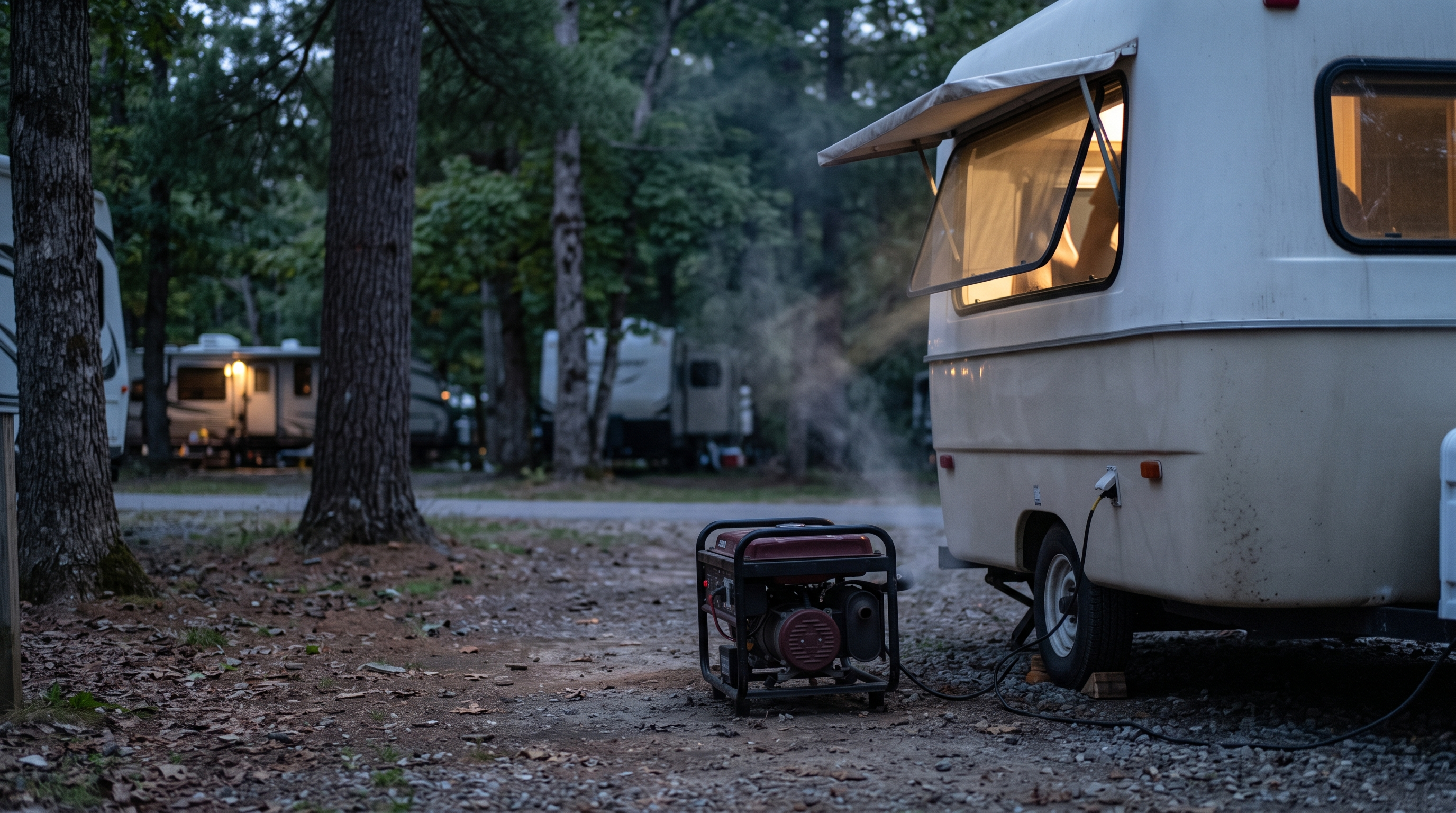
Carbon monoxide is produced when fuel does not burn completely. In and around an RV, possible sources include a furnace, water heater, stove, oven, engine, generator, portable fuel-burning heater, charcoal grill or defective exhaust system. Exhaust can also enter from a nearby vehicle, generator or neighbouring campsite.
Wind can push exhaust toward an opening. Running a roof fan or other exhaust fan can also create negative pressure inside the RV and draw combustion products through an opening or poorly venting appliance. An alarm that activates only under certain wind conditions, while a generator is running or when several exhaust appliances operate deserves a source investigation—not a reset-and-forget response.
2. A combination alarm is detecting propane
Many RV units are combination CO/LP alarms. A propane warning is not the same as a CO warning, but both require immediate action. Potential causes include a leaking fitting, damaged hose, faulty appliance valve, unlit burner or other LP-system fault.
Propane is heavier than air, which is why a combination unit designed to sense LP gas is commonly installed low on the wall. Carbon monoxide, however, mixes with the surrounding air; the low mounting position of a dual alarm should not be explained by claiming that CO simply settles near the floor.
3. The alarm has reached the end of its service life
Alarm sensors do not last forever. Safe‑T‑Alert says its propane and CO alarms over five years old should be replaced, and its 25 Series has a five-year end-of-life signal. Check the replacement date or production date on your unit rather than waiting for nuisance chirps to begin.
4. The RV’s 12-volt voltage is low or unstable
A hardwired RV alarm depends on the house-battery system. A discharged battery, loose ground, corroded connection, blown fuse or charging-system problem can cause warning indicators, resets or abnormal operation.
This is one reason an RV carbon monoxide alarm may go off at night: a weak battery can sag when the furnace blower starts and other 12-volt loads are operating. That is a diagnostic possibility—not permission to dismiss the alarm. Rule out CO and propane first, then measure voltage at the alarm circuit and inspect its connections.
5. Vapours or contamination are affecting the gas sensor
The Safe‑T‑Alert manual states that acetone, alcohol, butane and gasoline can cause false gas alarms. It also warns against spraying cleaning agents, waxes or silicone-based products on or near the alarm because they can trigger, damage or reduce the effectiveness of the sensor.
If an alarm activates after cleaning, painting, using aerosols or storing fuel, do not immediately label it false. Ventilate and leave the RV, verify the pattern, eliminate the hazardous source and replace the alarm if it continues malfunctioning.
6. Dust, grease or physical blockage is interfering
An alarm cannot sample air properly when its openings are covered by dust, pet hair, furniture, bedding or a curtain. Safe‑T‑Alert recommends vacuuming dust from the cover with a soft brush attachment at least monthly and cleaning the cover with a water-dampened cloth—without sprays or solvents.
7. The alarm or its wiring has failed
Alternating lights, periodic service beeps, no green operational light or failure during a test can indicate a wiring or alarm fault. Check for reversed wiring, a poor connection, missing fuse or loss of main power. There are no user-serviceable components inside the 25‑742; opening it can void its warranty.
A safe troubleshooting order after the emergency is over
1. Decode
Photograph or write down the light colour, number of beeps, silence interval, model number and date code.
2. Isolate
Note which appliances, engines, generators, fans and neighbouring equipment were operating when it happened.
3. Verify
Check 12-volt supply, wiring, age and the manufacturer’s manual only after the RV has been cleared as safe.
Once an active gas event has been ruled out, use this sequence:
- Confirm the alarm’s steady normal indicator after its warm-up period.
- Check the installation or replacement date. Replace expired alarms.
- Measure battery and charging voltage; inspect the alarm fuse, positive lead and ground.
- Look for generator or engine exhaust paths, including nearby campsites.
- Have the furnace, water heater, refrigerator, stove and their exterior vents inspected when combustion problems are possible.
- Remove dust with a soft vacuum brush and keep aerosols, silicone, wax and solvents away from the sensor.
- Replace or professionally service any alarm that fails its electrical test or repeatedly indicates malfunction.
How to test an RV carbon monoxide detector
Pressing the test button confirms the alarm’s electrical functions, indicator lights and horn. It does not prove that the CO sensor will respond correctly to gas. Safe‑T‑Alert specifically warns owners not to generate carbon monoxide to test the alarm. Follow the exact manufacturer procedure and use approved test equipment only when instructed.
For the 25 Series, the manufacturer recommends testing after the RV has been in storage, before each trip and at least weekly while the RV is in use. If the alarm does not complete its test properly, replace it or contact the manufacturer rather than assuming it remains protective.
Where the detector should be installed
Placement depends on what the alarm detects. The Safe‑T‑Alert 25 Series is a dual CO/propane alarm, and its manual specifies installation in the kitchen area near potential gas sources, between four and twenty inches above the floor. It should not be behind furniture or drapes, inside a closet, on an outside wall, or within twelve inches of an opening window, exterior door, heating vent or return vent.
Do not move an alarm based only on generic household advice. Use the instructions for the exact RV-listed device, and remember that one sensor only detects gas that reaches its location.
Jeremy’s practical rule: If an alarm wakes us at night, the first question is never “How do I shut this thing up?” It is “What pattern is it sounding, and is everyone outside?” A nuisance explanation can be investigated later. Missing one real event has much higher consequences.
Repair, recharge or replace?
| Finding | Appropriate next step | Do not do this |
|---|---|---|
| Confirmed CO or propane alarm | Emergency response and professional source inspection | Reset repeatedly and continue occupying the RV |
| Low house-battery voltage | Correct the charging, battery, fuse, connection or ground problem | Assume every future warning is only voltage |
| Five-year end-of-life signal | Replace with an RV-listed compatible alarm | Use the temporary reset as a permanent solution |
| Failed electrical test or persistent malfunction | Contact the manufacturer or replace the unit | Open or attempt to repair the sealed alarm |
| Contaminant exposure | Ventilate, clean only as directed and verify normal operation | Spray cleaner directly into the sensor openings |
If you need a flush-mounted dual CO/LP replacement, our updated Safe‑T‑Alert 25‑742 review covers fit, wiring, service life, current specifications and the situations where a universal replacement may make more sense.
Keep the alarm—and diagnose the RV
The detector is the warning device, not necessarily the source of the problem. Use our RV System Troubleshooter to work through related battery, furnace and appliance symptoms, then record replacement dates and recurring tests in the RV Maintenance Tracker.
Frequently asked questions
Why does my RV carbon monoxide alarm keep going off?
Possible causes include real carbon monoxide, propane detected by a combination alarm, generator or engine exhaust, a fuel-burning appliance problem, low 12-volt power, sensor contamination, malfunction or an end-of-life warning. Evacuate first and identify the exact beep-and-light pattern from the model’s manual.
How do I stop my RV carbon monoxide alarm from beeping?
Do not begin by disabling it. Get everyone outside, determine whether it is a CO or propane emergency, and call for help if exposure is possible. A periodic low-power, malfunction or end-of-life chirp can be corrected only after an active gas hazard has been ruled out.
Why does my RV carbon monoxide alarm beep at night?
A genuine combustion or exhaust problem can occur at night. A weak house battery may also experience a voltage drop when the furnace blower and other 12-volt loads operate. Because both are possible, evacuate and identify the signal before testing the battery.
Can an RV generator trigger a carbon monoxide alarm?
Yes. Exhaust from your generator, your RV’s engine or nearby equipment can enter through windows, doors, roof vents and other openings. Wind direction and negative interior pressure can change the path of exhaust.
Can a propane leak set off an RV carbon monoxide alarm?
A CO-only alarm is not designed to detect propane, but many RVs use a combination CO/LP alarm. On those units, the propane warning generally has a different light and sound pattern. Check the exact model manual.
Can a low RV battery make a hardwired alarm beep?
Yes. Low or unstable 12-volt power can produce warning indicators or abnormal operation in a hardwired alarm. Treat the first alarm as a potential hazard, then verify battery voltage, charging, fuses and wiring once the RV is safe.
How often should an RV carbon monoxide alarm be replaced?
Follow the date and instructions printed on the unit. Safe‑T‑Alert says its propane and CO alarms over five years old should be replaced; other manufacturers may specify a different service life.
Does the test button test the carbon monoxide sensor?
Not necessarily. On the Safe‑T‑Alert 25 Series, the button tests electrical functions, lights and the horn—not the sensor’s response to gas. Never create carbon monoxide to test an alarm.
Sources and further reading
- Safe‑T‑Alert: 25 Series combination CO/LP alarm manual
- Safe‑T‑Alert: alarm signals, testing and replacement FAQ
- U.S. Consumer Product Safety Commission: Carbon Monoxide Fact Sheet
- U.S. Centers for Disease Control and Prevention: About Carbon Monoxide Poisoning
- The manual and date label for your installed alarm are the controlling sources for its signals, placement, testing and replacement.


Leave a Reply