

Last Updated on October 1, 2026 by Jeremy
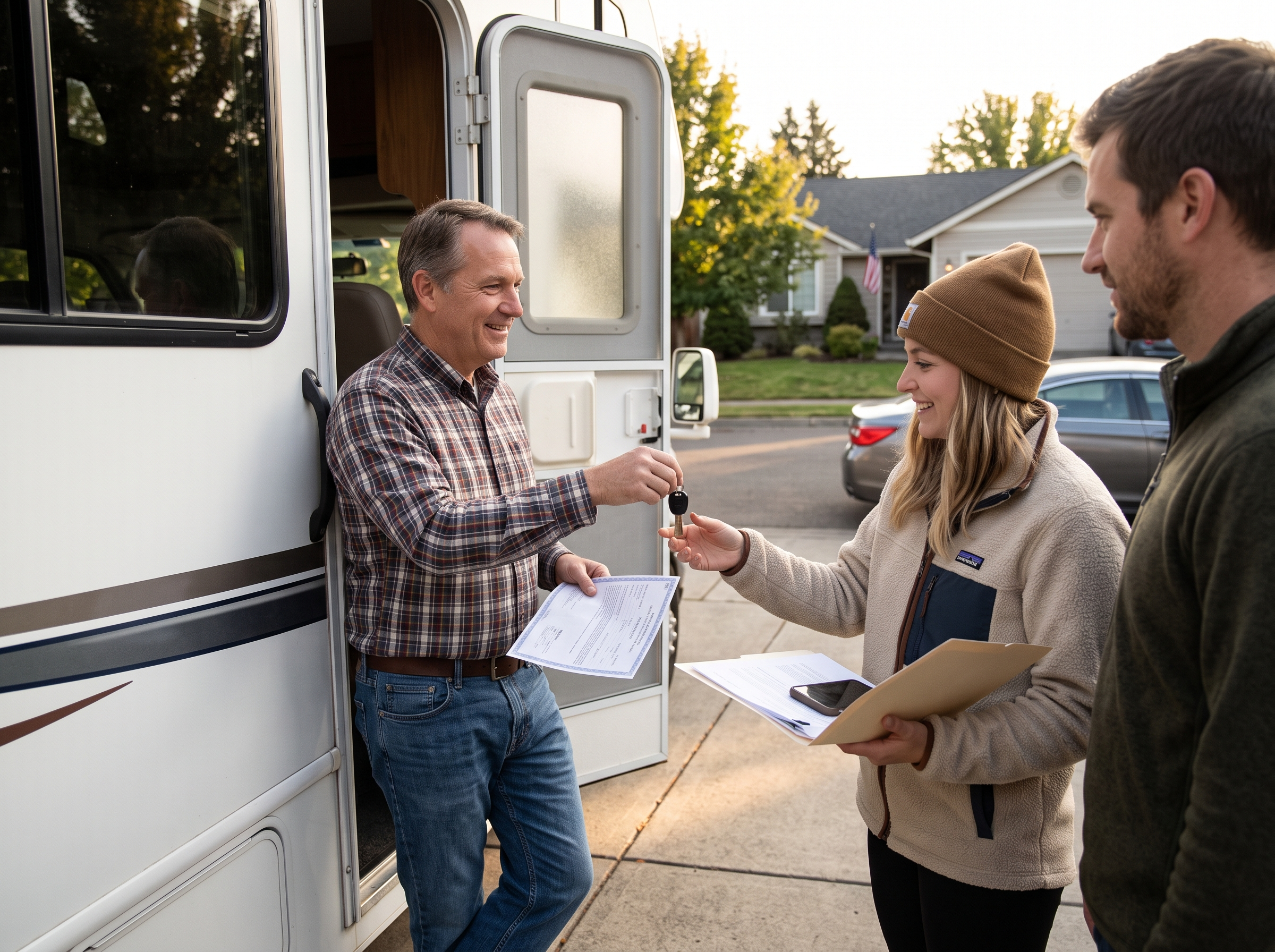
Yes, an RV purchased from a private seller can be financed. The process is usually more involved than financing one through a dealership because there is no dealer finance office coordinating the buyer, seller, lender, title, lien and payment.
When we bought our own RV, the dealership arranged financing through our personal bank. That kept the sale and loan paperwork under one roof. I have not personally financed an RV from a private seller or used Rock Solid Funding, so this guide does not pretend otherwise.
Instead, it explains the private-party process using Rock Solid Funding’s published procedures, U.S. consumer-protection resources and the practical RV checks I would want completed before accepting the keys.
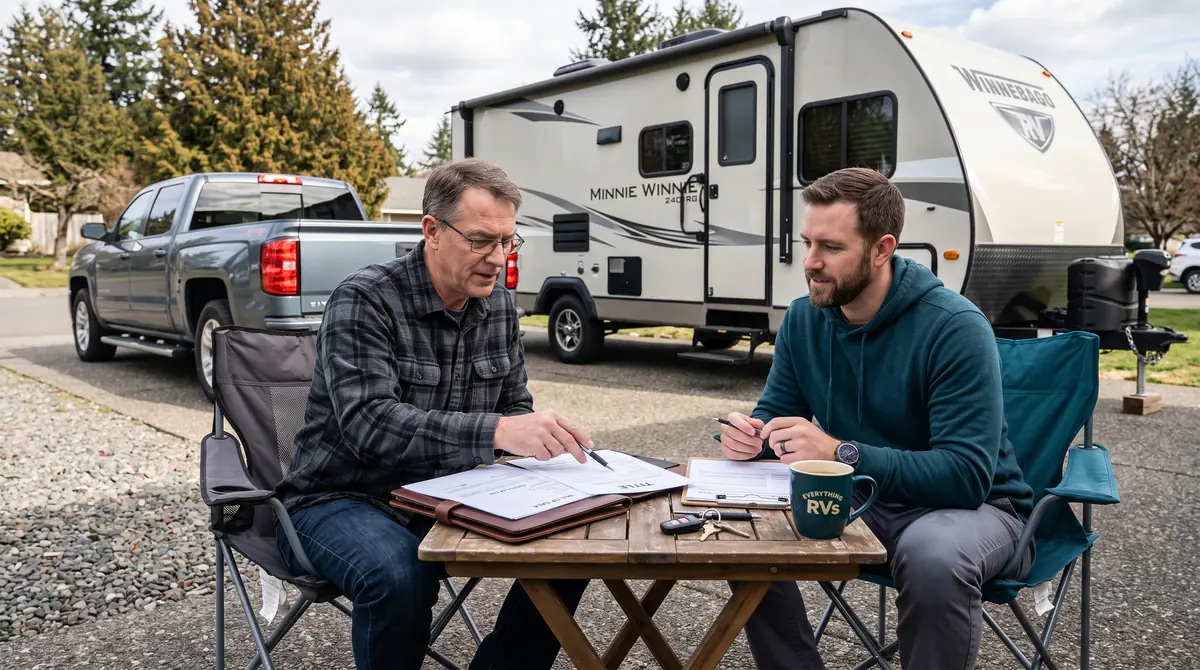
Image disclosure: Supporting images in this article were created with AI for illustrative purposes. Financing procedures and consumer-safety information were verified separately.
- Some banks, credit unions and recreational-financing specialists provide private-party RV loans.
- The buyer, RV, seller, title, value and existing liens may all need verification.
- Conditional approval is not the same as final funding.
- Loan approval does not prove that the RV is mechanically sound.
- Compare APR, term, amount financed and total repayment—not only the monthly payment.
- Rock Solid Funding is one U.S.-focused option that handles private-party recreational-equipment transactions.
Affiliate and financial disclosure: This article contains a sponsored affiliate link. We may earn a commission if you complete an eligible action, at no additional cost to you. This is educational information, not personal financial, legal, tax or lending advice. Approval, rates and terms depend on the applicant, collateral, lender and jurisdiction.
Why Private-Party RV Financing Is Different
A dealership usually has staff who collect the purchase agreement, communicate with the lender, verify inventory records and prepare title documents. In a private sale, those safeguards must be recreated around two individuals and an RV that could be parked several states apart.
That creates four separate questions:
- Does the buyer qualify?
- Does the RV qualify as acceptable collateral?
- Can the seller legally transfer clear ownership?
- Can payment and title transfer be completed safely?
Approval of the buyer does not automatically approve the RV or clear its title. This is why a lender may request VIN information, photos, ownership documents, lien-payoff details and direct communication with the seller.
How a Rock Solid Funding Private-Party Loan Works
Rock Solid Funding publishes an eight-step private-party process. Individual lender and state requirements can vary, but the sequence shows what a buyer should expect.
1. Apply before committing to an RV
The initial application includes information about you and the approximate type, year and value of the RV you intend to purchase. Applying before making a non-refundable commitment can reveal restrictions involving loan size, RV age, condition or value.
2. Receive conditional approval
Conditional approval may outline a potential amount, rate and term. Rock Solid says its conditional approvals commonly remain valid for 45 to 60 days, although the exact window can vary. Conditional approval is not a guarantee that a particular RV will qualify.
3. Find an RV within the approval
Once you locate a unit, the lender may request the seller’s contact information, VIN, photos, mileage, engine hours where applicable and other details needed to identify and value it.
4. Verify the seller and ownership documents
The seller may need to provide identification, the title or registration and information about any existing lien. If the seller still owes money, the transaction may require a formal payoff instead of sending all proceeds directly to the seller.
5. Inspect the RV
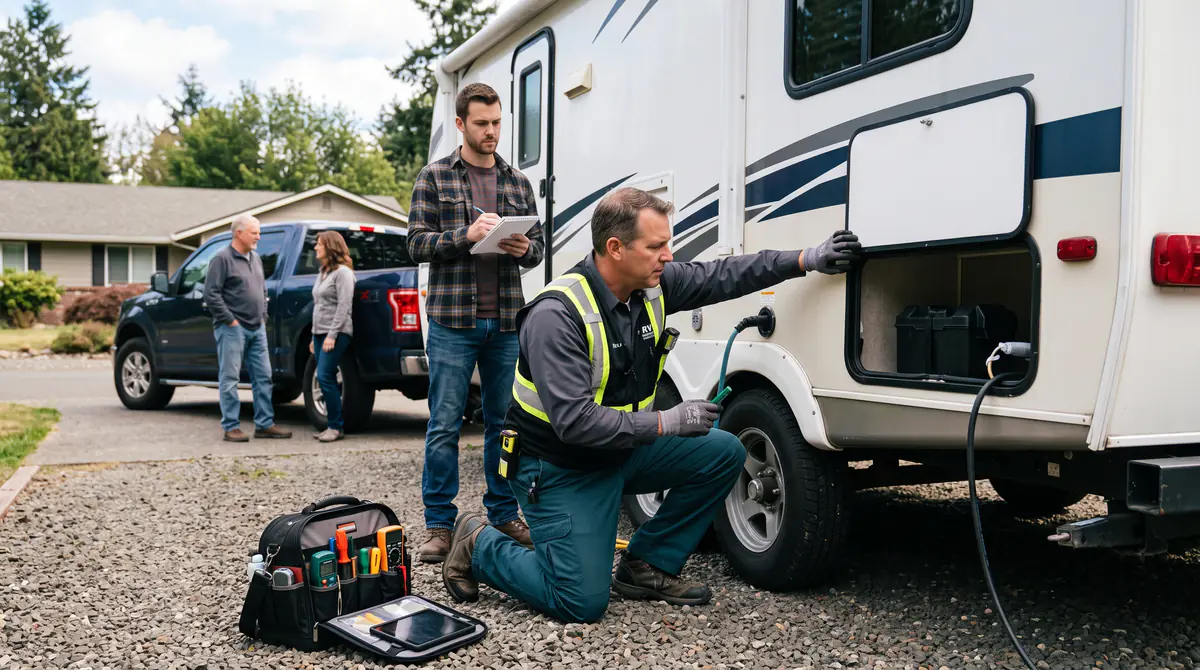
Rock Solid’s private-party process requires the buyer to inspect the unit before funds are released. This confirms that the RV exists and matches expectations, but it should not replace a professional RV inspection.
6. Complete transaction-specific title authorization
The buyer and seller may complete a limited power of attorney with a live online notary. This allows the title department to assist with the transfer and record the lender’s lien. Some states may still require physical paperwork or an in-person DMV visit.
7. Satisfy the final conditions and fund the sale
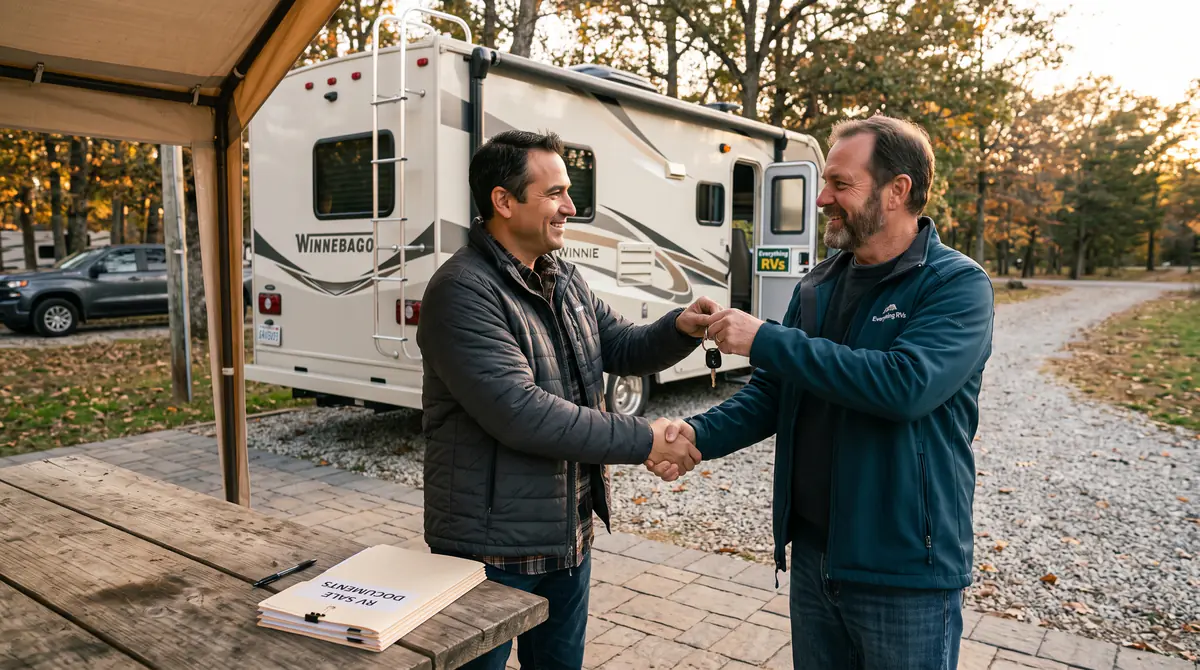
Once the documents and inspection requirements are complete, payment may be issued through business check, ACH or wire transfer. Do not exchange keys based only on a payment screenshot or emailed promise. Follow the lender’s verified closing instructions.
8. Complete the title transfer
The lender’s security interest must be recorded correctly. Keep copies of the purchase agreement, inspection, title forms, payoff records and payment confirmation until the title and lien are complete.

Documents You May Need
| Buyer Documents | Seller and RV Documents | Why They Matter |
|---|---|---|
| Government-issued identification | Seller identification | Confirms the people involved in the transaction. |
| Income and employment verification | Title or registration | Supports the credit decision and verifies ownership. |
| Residence information | VIN, photos, mileage or hours | Identifies and helps value the collateral. |
| Insurance evidence | Bill of sale or purchase agreement | Documents the sale and prepares the RV for funding. |
| Down-payment funds | Lienholder and payoff information | Allows existing debt to be resolved before clear title transfers. |
| Signed loan and title forms | Signed seller and title forms | Authorizes funding, transfer and the new lien. |
Loan Approval Is Not an RV Inspection
Financing does not make an RV a good purchase. A lender evaluates the borrower and collateral. It does not determine whether the roof has leaked for three years, the tires are aged out or the refrigerator works only when the seller is standing beside it.
Private-sale inspection priorities include:
- Roof membrane, seams, vents and water intrusion
- Sidewalls, flooring, slide-outs and structural soft spots
- Tires, bearings, brakes and suspension
- Propane system, alarms and combustion appliances
- 120V AC, 12V DC, converter, batteries and charging
- Plumbing, water heater, tanks and freeze damage
- Air conditioner, furnace and refrigerator
- Engine, chassis and generator on a motorized RV
- VIN compared with the title, registration and loan documents
Before buying a towable RV, enter its numbers into our RV Towing Calculator. Financing approval does not mean your vehicle has enough payload, axle or hitch capacity to tow it safely.
Title and VIN Checks You Should Not Skip
Confirm that:
- The seller’s name matches the ownership document.
- The VIN on the RV matches the title and purchase agreement.
- Any existing lien has a documented payoff route.
- The title does not contain an undisclosed salvage, flood or other brand.
- The seller is not asking you to bypass the lender or send money outside the verified process.
NMVTIS reports can contain title-state information, title brands, the latest reported odometer reading and certain theft or salvage information. They are useful due diligence, but they do not replace an inspection or state title-record search.
Down Payments, Credit and RV Value
There is no universal private-party RV down payment. The result depends on credit, income, debt, loan amount, RV value and the lender’s loan-to-value limit.
Rock Solid currently describes 10% as its standard RV-loan down-payment requirement. It says zero-down options may be available to qualifying applicants with excellent credit, typically 700 or higher.
Rock Solid also states that it considers applications beginning around a 570 credit score. Meeting a published minimum does not guarantee approval or favourable terms.
The RV’s value still matters. If the selling price exceeds the value supported by the lender, the buyer may need to pay the difference regardless of credit score.
Compare Total Cost, Not Just the Payment
A long loan can make an expensive RV look affordable one month at a time. It can also increase total interest and leave you owing more than the RV is worth during the earlier years.
Compare these numbers on every offer:
- Annual percentage rate
- Interest rate
- Loan term
- Amount financed
- Monthly payment
- Finance charge and total of payments
- Fees and optional products added to the loan
Compare APR with APR—not one lender’s APR with another lender’s interest rate. The APR reflects the interest rate plus certain loan costs and provides a more useful comparison.
Where Rock Solid Funding Fits
Rock Solid Funding is a U.S. recreational-equipment financing provider that works with a network of lenders. It finances new and pre-owned RVs and has a defined process for private sellers, ownership verification, funding and title transfer.
That specialization may help when a regular bank or credit union does not want to coordinate an older RV, private seller or multi-state title. It does not automatically mean Rock Solid will approve the application or offer the lowest total cost.
Reasons to consider it
- Private-party RV financing is part of its published process.
- A loan officer communicates with the buyer and seller.
- Its title department helps coordinate transfer and lien recording.
- It considers new and pre-owned manufacturer-built RVs.
- It advertises simple-interest loans without prepayment penalties.
Questions to ask before applying
- Will checking my options create a hard credit inquiry?
- What APR, fees, term and total repayment apply?
- Does this specific RV qualify based on age, mileage and value?
- How will an existing seller lien be paid?
- Who pays title, notary, wire and registration costs?
- What happens if I reject the RV after inspecting it?
- What documents or DMV visits does my state require?
Review Rock Solid Funding for RV Buyers
Bank, Credit Union, Specialist or Personal Loan?
| Option | Potential Strength | Potential Limitation |
|---|---|---|
| Bank | Existing relationship and potentially competitive terms | May restrict RV age or private transactions |
| Credit union | Member-focused service and possible rate advantages | Membership and transaction restrictions vary |
| RV financing specialist | Understands recreational collateral and private sellers | Specialization does not guarantee the lowest APR |
| Unsecured personal loan | May simplify the seller transaction by avoiding an RV lien | May have shorter terms, higher rates or lower limits |
| Cash | No lender approval or loan interest | Uses savings and does not eliminate title or inspection risk |
Services such as KOHO may help with budgeting or credit-building, but that is not the same as a secured private-party RV loan. Match the financial product to the actual transaction.
Private-Party RV Financing Checklist
- Set a total budget including tax, inspection, insurance and immediate repairs.
- Check your credit reports and correct errors.
- Compare a bank, credit union and RV-financing specialist.
- Ask whether the application uses a soft or hard credit inquiry.
- Get conditional approval before promising a closing date.
- Confirm that the RV fits the lender’s age and value rules.
- Match the VIN across the RV, title and purchase documents.
- Order an independent RV inspection.
- Check open recalls where applicable.
- Verify lien-payoff instructions directly.
- Read the final APR, fees, term and total repayment.
- Exchange funds and keys through the verified closing process.
- Keep copies until the title and new lien are properly recorded.
Frequently Asked Questions
Can I finance an RV bought from a private party?
Yes. Some banks, credit unions and recreational-financing specialists finance private-party RV purchases. The buyer and RV must qualify, and the lender will normally verify the seller, title, liens and purchase documents.
Is private-party financing harder than dealership financing?
It can involve more coordination because there is no dealership handling seller verification, title review, lien payoff, payment and transfer paperwork.
What credit score is required?
Requirements vary. Rock Solid says it considers applications beginning around a 570 score, but meeting a minimum does not guarantee approval. Income, debt, down payment, credit history and RV value also matter.
Can I finance an older RV?
Possibly. Lenders can restrict collateral based on age, mileage, condition, book value and loan size. Verify the exact year and model before making a non-refundable commitment.
Who receives the money?
Payment may be issued through business check, ACH or wire after funding conditions are met. An existing lienholder may need to be paid before the seller receives the remaining proceeds.
Do I need an inspection?
Yes. Financing approval evaluates the loan and collateral, not every mechanical, structural, electrical, plumbing or water-damage risk.
Is Rock Solid Funding available in Canada?
Rock Solid describes its recreational-financing service as serving customers across the United States. Canadian buyers should compare Canadian banks, credit unions and RV-financing providers.
Why You Can Trust This Guide
Everything RVs and More combines firsthand RV ownership and campground-operating experience with source-based research. Our RV was financed through a dealership and our personal bank, so that experience has been clearly separated from the private-party process described here.
We have not used Rock Solid Funding and do not present this as a personal customer review. Program details were checked against Rock Solid’s published documentation, while loan, title-history and recall recommendations were checked against U.S. consumer resources.


Leave a Reply