

Last Updated on September 24, 2026 by Jeremy
Crossing the US Canada border with an RV is usually easy… until it’s not. One missing document, one snack you didn’t think counted, or one pet rule you didn’t realize changed, and suddenly you’re doing the awkward “hold on, it’s in here somewhere” shuffle at the booth. Start with the checklist below, then check the rules for the country you are entering. You’ll leave with your documents together, your food and pet questions answered, and a clear plan for the booth.
2026 Border Checklist for RVs and Travel Trailers
This is the “make it boring” checklist. Print it, screenshot it, or keep it open on your phone when you’re lining up.
Printable version (on-page)
Use your browser’s print command to save or print the guide. The checklist is first, so you can also screenshot its columns for quick access.
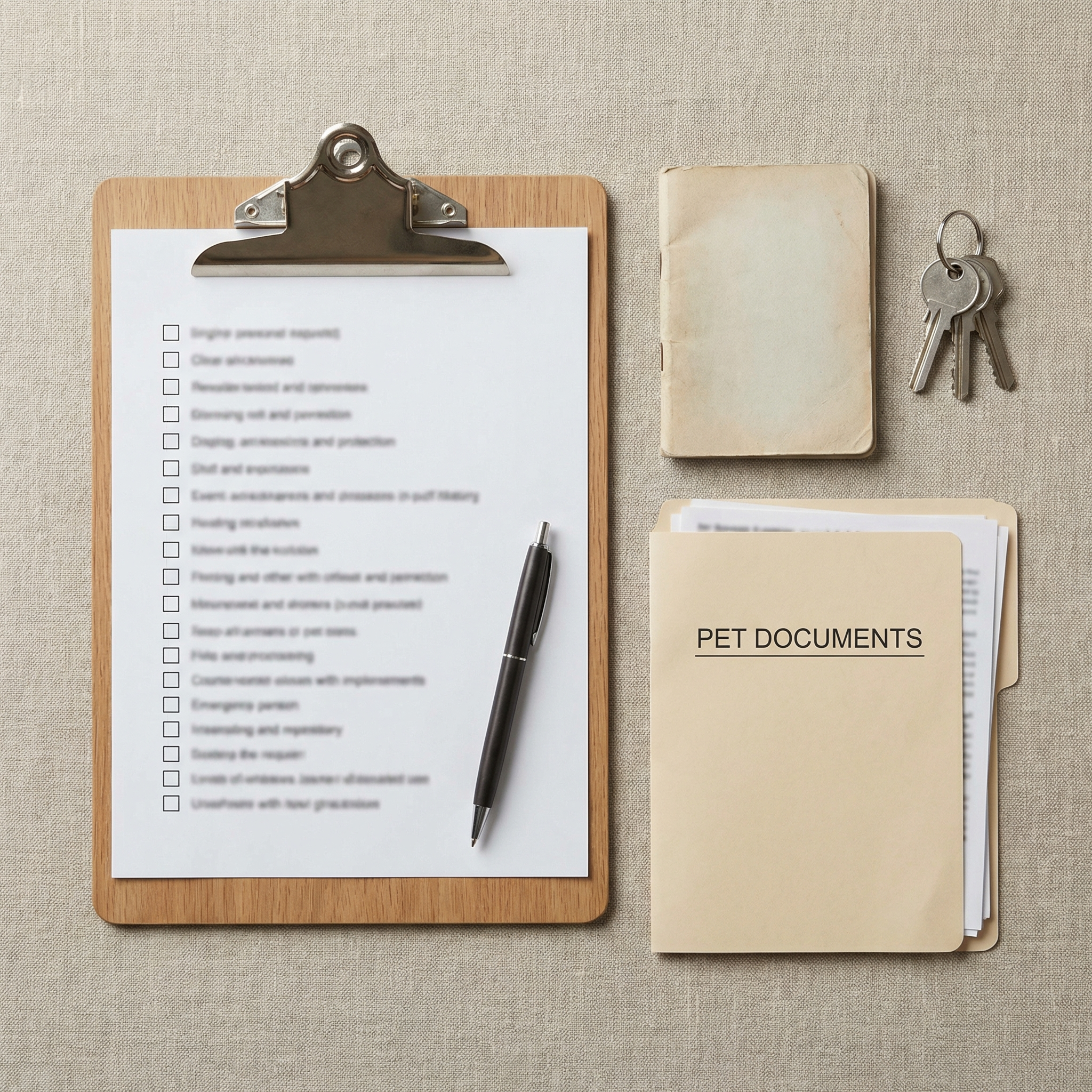
Checklist visual
People + documents
- Check the document accepted for each person and direction: entering Canada (CBSA) · entering the U.S. (CBP). A passport is the simplest choice.
- Minors: consent letter if one parent/guardian isn’t present
- Address for your first stop (campground, hotel, family, etc.)
- Receipts for major purchases (and a rough total)
RV + trailer
- Registration + proof of insurance (tow vehicle + RV + trailer)
- If financed/leased: check the agreement and carry any required cross-border authorization
- If borrowed: owner permission letter (notarized is even better)
- Know what’s in your exterior compartments (they do ask)
Food + restricted items
- Declare food and agricultural items, including snacks. Check Canada’s rules or U.S. land-border rules
- Avoid guessing with fresh produce/meat unless you verified current rules
- Do not cross with cannabis/CBD products
- Prescription meds: keep in original containers when possible
Pets
- Entering Canada: check the CFIA pet requirements by species, age, origin and travel purpose; bring applicable records
- Entering or returning to the U.S. with a dog: bring a CDC Dog Import Form receipt and check extra rules for recent travel
- Declare pet food and check current restrictions; keep original packaging
- Leash/harness ready in case you’re asked to step out
Fast “booth answers” that keep things smooth
- Where are you going? (first stop is enough)
- How long are you staying?
- What are you bringing back / what did you buy?
- Any food, alcohol, tobacco, firearms/weapons, or cannabis/CBD?
Border Crossing Requirements for RVs and Travel Trailers
1) Valid identification and travel documents
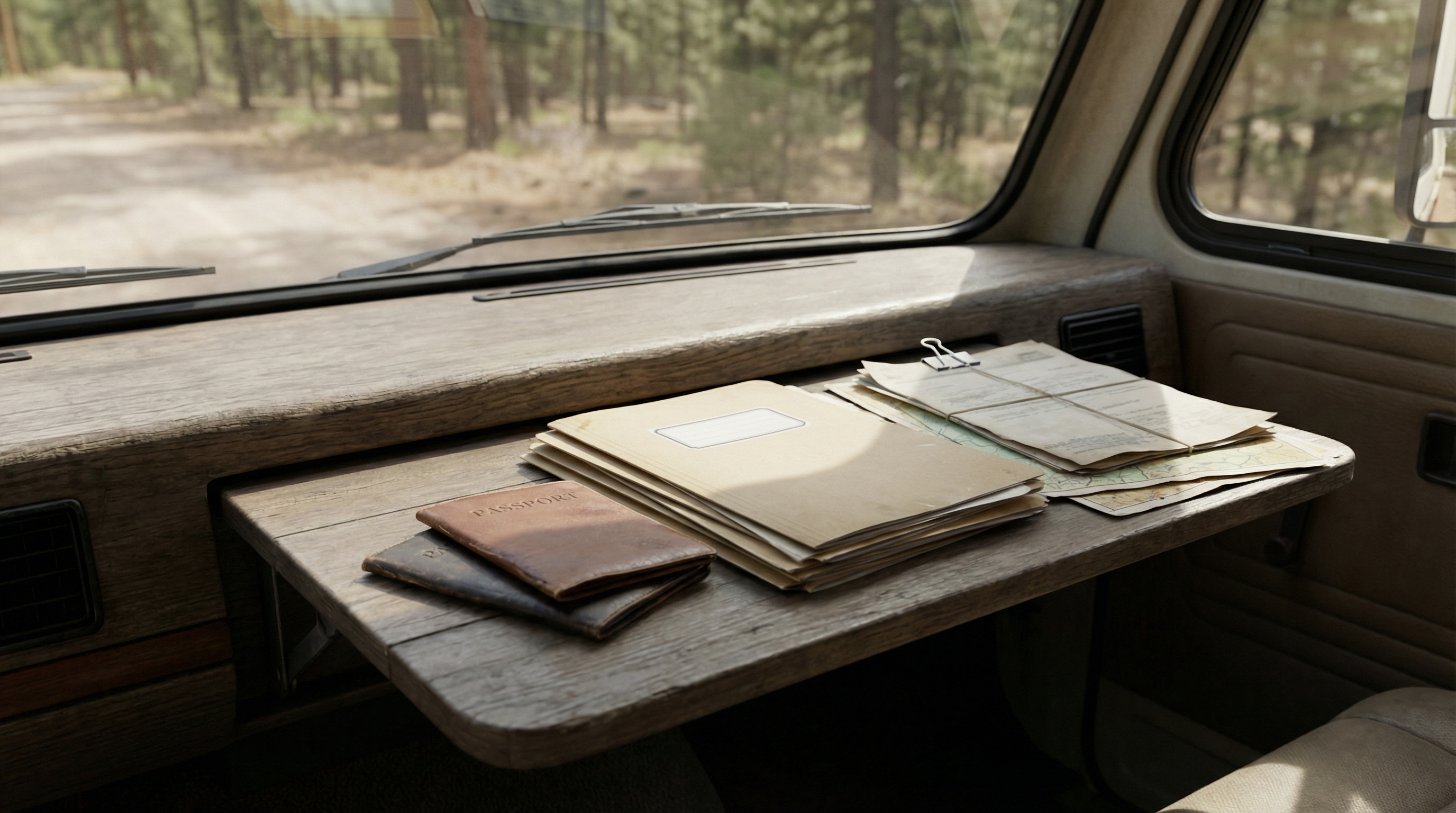
The cleanest play is still a passport. Other document options may be valid for land/sea travel depending on your citizenship and circumstances (for example, certain trusted traveler cards or eligible enhanced IDs).
Common options RVers use
- Passport (most universal)
- Trusted traveler card (like NEXUS) if you cross often
- Eligible enhanced ID where available (confirm first)
Traveling with minors
If one parent or guardian is absent, carry a consent letter and applicable custody documents. Check the destination’s identification rules for children. Have the child’s documents accessible at the booth.
2) Vehicle registration and insurance
- Registration + proof of insurance should be easy to access
- If financed/leased: check the agreement and carry any required cross-border authorization
- If borrowed: written permission from the owner is strongly recommended
- Rental RV/trailer: keep the rental agreement and insurance paperwork handy
3) Temporary import basics
Most RV trips are temporary entry as long as you’re visiting and bringing your rig back home. The friction usually shows up when ownership is unclear, documents are missing, or restricted goods are involved.
What to Expect at the Booth (and Why RVs Get Asked More Questions)
RVs and trailers carry more stuff. More stuff means more follow-up questions. That’s not “you’re in trouble,” it’s just reality.
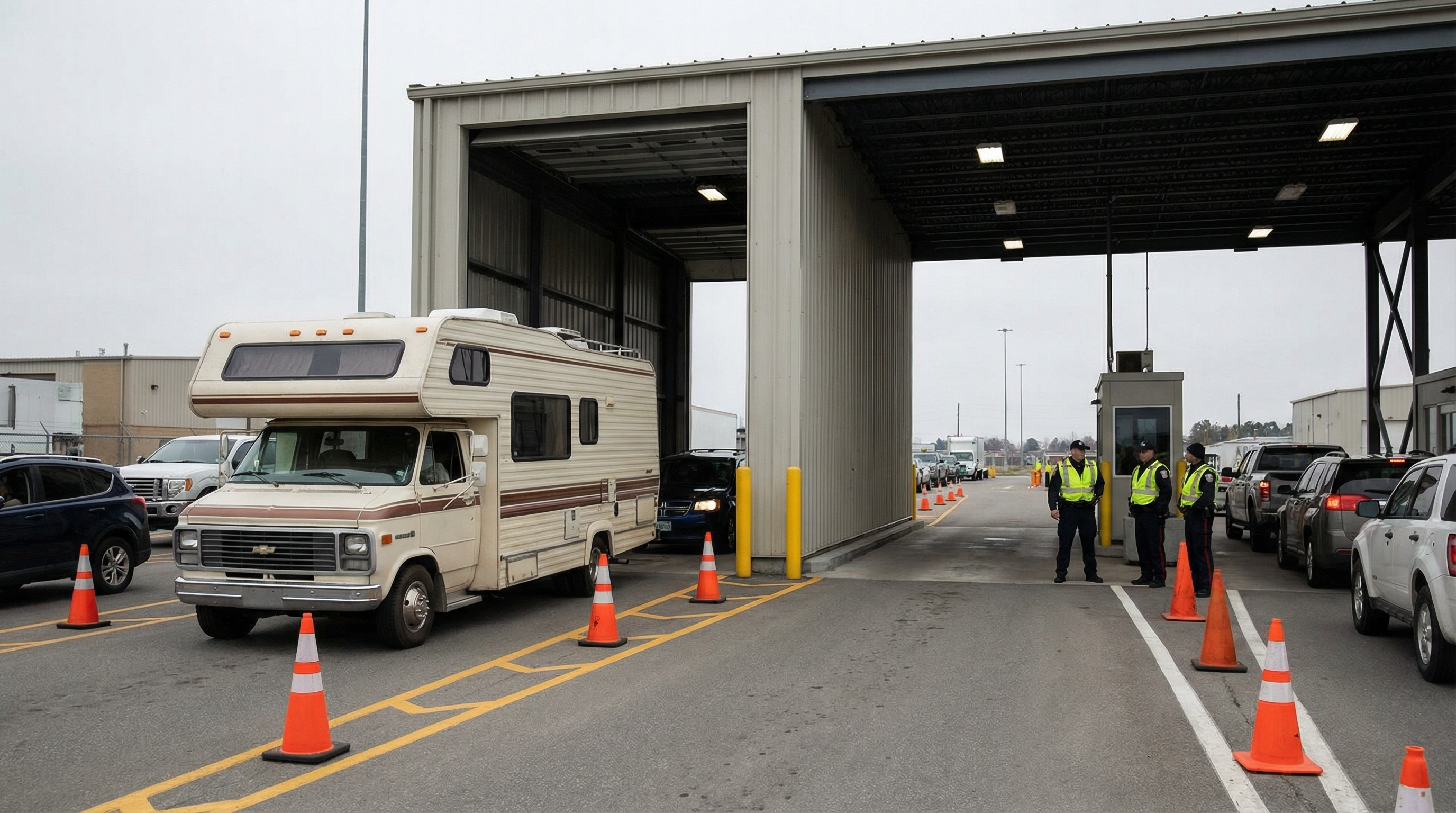
Common questions you’ll hear
- Where are you going and for how long?
- Any food, alcohol, tobacco, firearms/weapons, cannabis/CBD?
- Are you carrying pepper spray, bear spray, or protection items?
- Who owns the RV and trailer?
Secondary inspection isn’t the end of the world
Secondary is often about verification or a closer look at items. Stay calm, answer directly, and don’t treat it like a courtroom drama. Clear documents and direct answers make the inspection easier to navigate.
Canada vs U.S. RV Border Crossing Differences
Here’s the quick comparison RVers usually wish they had before pulling into the line. Always verify sensitive categories using the official links in the next section.
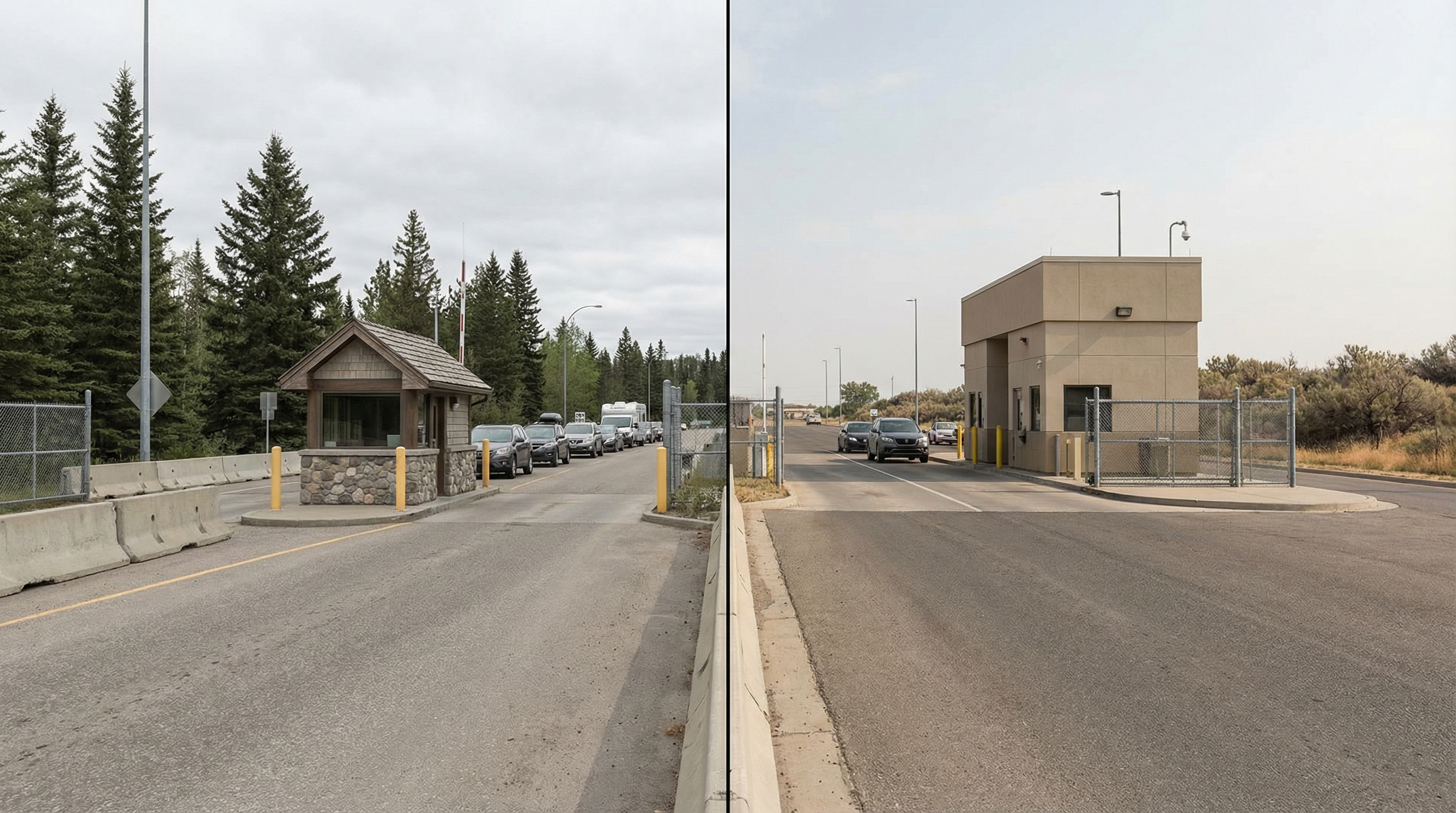
| Topic | Entering Canada | Entering the U.S. |
|---|---|---|
| Documents | Passport is the simplest universal option; other options depend on traveler type. | Land/sea entry follows WHTI document rules (passport, trusted traveler cards, eligible enhanced IDs where applicable). |
| Food & agriculture | Declare all food/plant/animal products; restrictions can change quickly. | Declare all food items; certain meats/agriculture can trigger extra scrutiny. |
| Cannabis/CBD | Do not bring it in or take it out across the border. | Still illegal federally; don’t cross with it. |
| Pets (dogs) | Use the CFIA pet tool for species, age, origin and travel purpose; rabies documentation depends on the case. | A CDC Dog Import Form receipt is required; other conditions depend on travel during the previous six months. |
| Cash / money reporting | Large amounts must be declared; don’t assume “it’s my money” means “no rules.” | Large amounts must be declared; same concept, different process. |
Customs Regulations & Prohibited Items
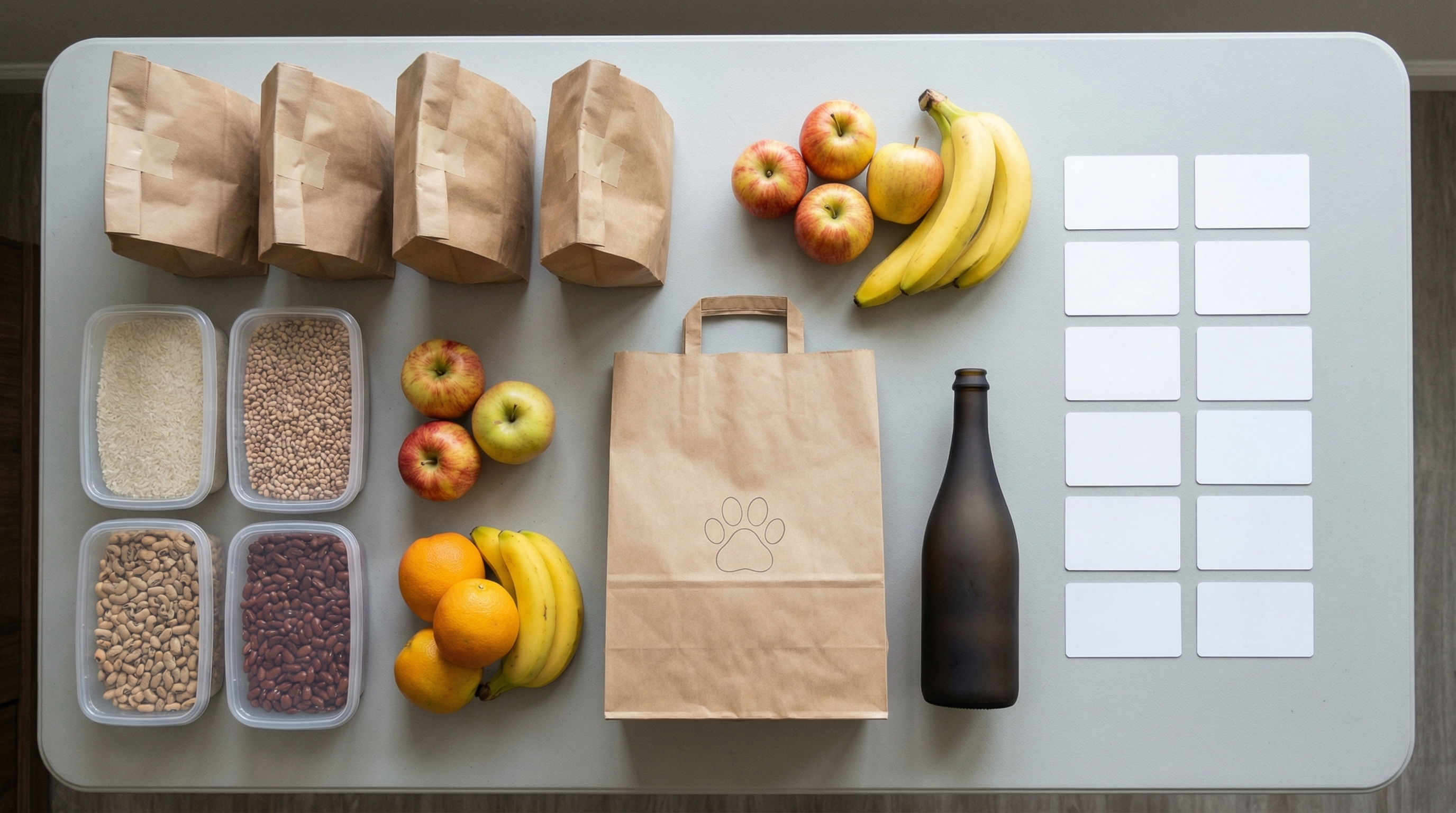
1) What you must declare
- Purchases and gifts
- Food, plant, and animal products (snacks count too)
- Alcohol and tobacco
- Pets and pet food
- Currency/monetary instruments above reporting thresholds
2) What’s not worth risking
- Cannabis/CBD: do not attempt to cross with it in any form (including CBD products).
- Food/agriculture guessing: declare everything, verify fresh produce/meat rules before you travel.
- Weapons/protection items: rules vary and can be strict. Verify before you arrive if you carry anything for “protection.”
2026 “Quiet Problems” That Cause Loud Delays
These are the things people forget to think about because they’re normal in RV life. They’re also the things that can trigger extra questions.
Prescription medications
- Keep meds in original containers when possible
- If you carry controlled prescriptions, keep documentation handy
- Don’t try to “simplify” by putting everything into one unmarked bottle
Cash and large amounts
- If you’re traveling with a large amount of cash, declare it
- This applies even if it’s your money and for a legitimate reason
Propane, fuel cans, and “RV stuff”
- Propane on an RV is normal. Extra fuel cans can draw questions.
- If you carry jerry cans, keep them secured and be ready to explain use-case.
Devices and data
- Lock your phone (PIN/biometrics), keep backups, and know what accounts are logged in
- Avoid traveling with anything that looks like “work equipment for sale” if it’s personal use
How to Avoid Long Border Wait Times
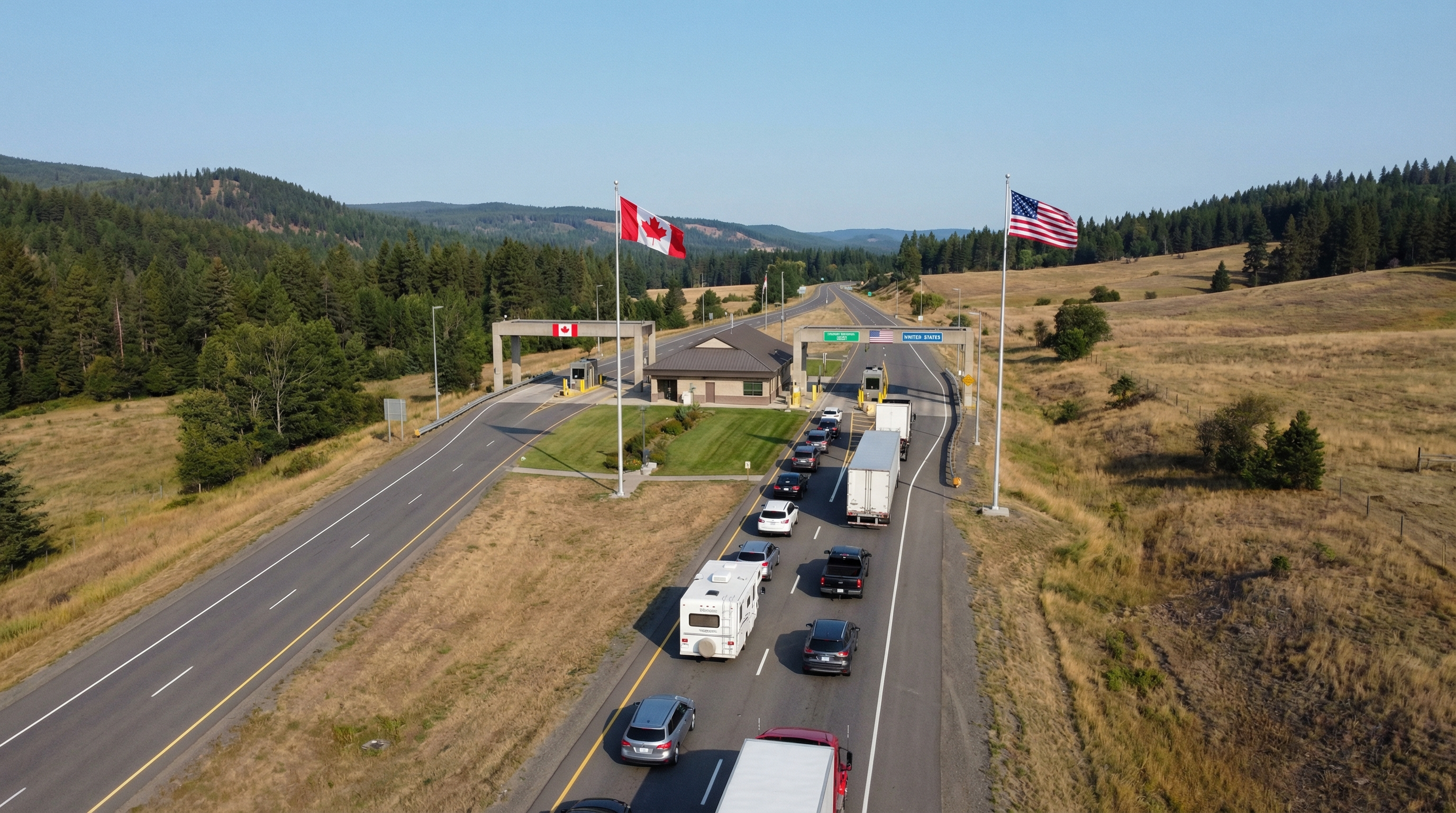
Timing that usually helps
- Often best: early mornings and mid-week crossings
- Often worst: Friday evenings, weekend afternoons, and long-weekend return traffic
Pick the right crossing, not the closest one
Not all crossings are created equal. Some are fast most days. Some are consistently slammed. If you’re towing, a slightly longer route to a calmer crossing can be a win.
Traveling With Pets in 2026
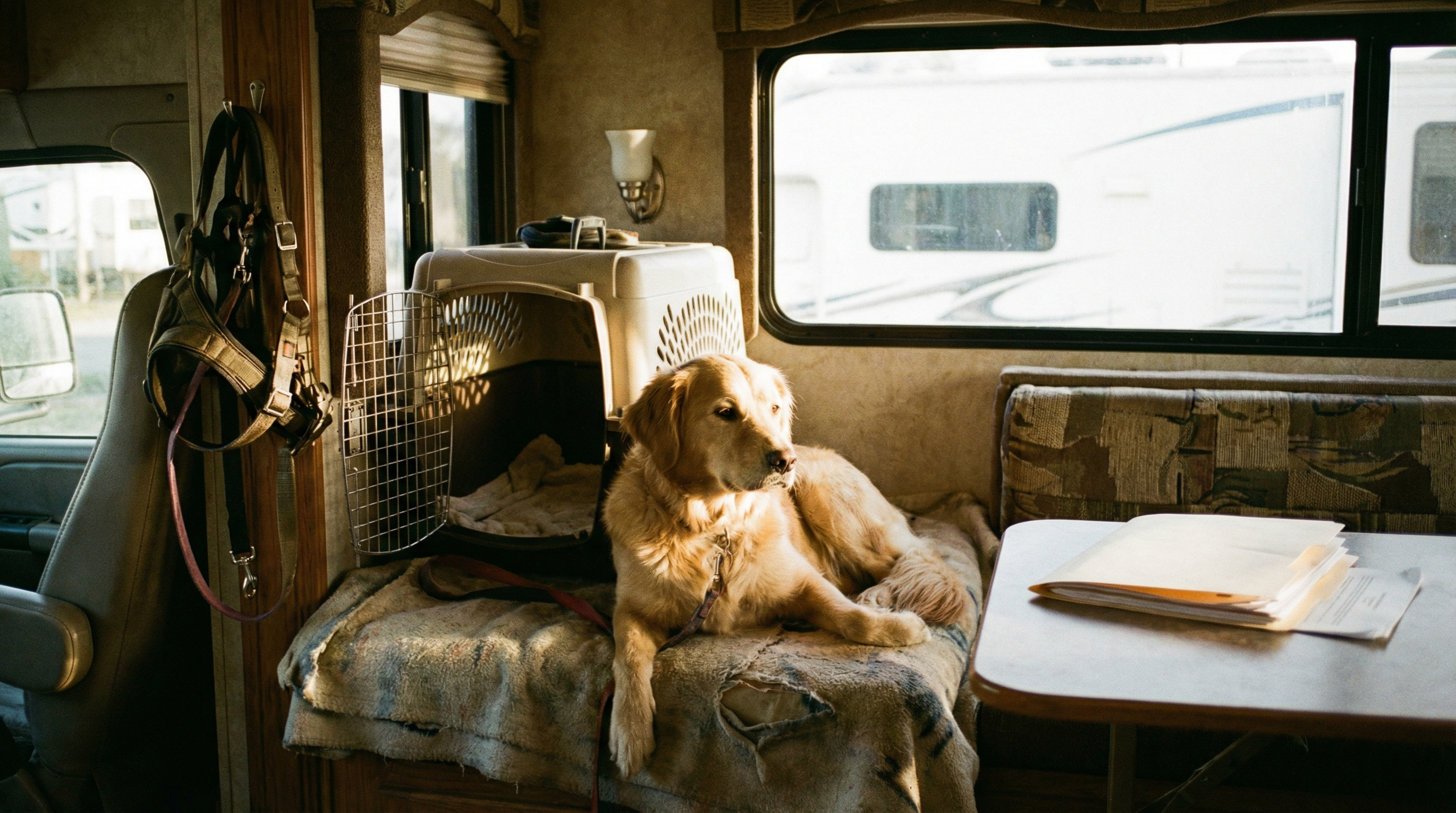
Most pet crossings are smooth when you have documentation ready. In 2026, the key is not guessing on dog entry requirements to the U.S.
Core pet paperwork
- For entry to Canada, check CFIA requirements by species, age, origin and purpose; bring applicable vaccination or health records
- Keep paperwork accessible, not buried under campground receipts
Dogs entering the U.S.
- Bring a CDC Dog Import Form receipt for every dog entering or returning to the U.S.
- Check countries visited in the past six months; high-risk travel triggers additional requirements. Dogs must meet CDC age, microchip and health conditions.
- Official checks: CDC dog entry decision · CFIA pet entry tool
Pet food
Keep pet food in its original packaging and declare it. Check current restrictions before crossing, especially for raw food. If you’re crossing frequently, check current import restrictions because they can change based on disease/outbreak conditions.
Going South Instead?
If your route continues past the U.S. and you’re heading toward Mexico (and eventually Central America), this is the next corridor guide to bookmark before you roll.
Next corridor guide
Step-by-step and checklist-driven, built for RVs and travel trailers.
What changes when you go south
- Paperwork becomes more step-based (multiple stops and windows)
- Cash in small bills becomes more important
- Border “helpers” can appear fast, so clarity matters
FAQ
Do I need a passport to cross the US–Canada border in an RV?
A passport is the simplest universal option. Depending on your citizenship and circumstances, other document types may be accepted for land/sea travel (such as certain trusted traveler cards or eligible enhanced IDs). Official reference for the U.S. land/sea framework: CBP WHTI.
What RV and trailer documents should I keep handy?
Keep registration and proof of insurance accessible for your tow vehicle, RV, and trailer. If the unit is financed or leased, check the agreement and carry any required authorization. If borrowed, carry a written permission letter from the owner.
What happens if I forget paperwork?
Best case is delay and extra questions. Worst case is being denied entry until you can provide proof of ownership/insurance/permission.
Can I cross with cannabis or CBD products?
No. Canada states it is illegal to take cannabis across the Canadian border, whether entering or leaving Canada, including CBD products. Official reference: Canada.ca: cannabis and borders.
What food items cause the most issues at the border?
Food, plant, and animal products are common delay triggers because restrictions can change. Declare everything and verify the rules for fresh produce/meats before travel. Official reference: CBSA: bringing food/plant/animal products.
Can I cross with my dog in 2026?
Often yes, but don’t guess. Canada has requirements by species, age, origin and purpose. Every dog entering or returning to the U.S. needs a CDC Dog Import Form receipt; extra rules depend on recent travel. Official reference: CDC Dog Import Form instructions.
How do I reduce border wait times when towing?
Cross early morning or mid-week when possible, avoid peak holiday/weekend return times, and organize documents before you get into the lineup. If you can choose crossings, a slightly longer drive can be worth it.
Should I declare snacks and small groceries?
Yes. Declare food items. “It’s just snacks” is one of the most common ways RVers end up delayed.
Do I need anything special if my RV is financed or leased?
Check your financing or lease agreement for cross-border restrictions and bring any authorization it requires. Ask the lender or lessor if the terms are unclear.
What should I do if I get sent to secondary inspection?
Stay calm, answer directly, and follow instructions. Secondary is often verification or a closer look at items. Have your documents ready and follow the officer’s instructions.


Leave a Reply