
US–Canada Border Crossing Rules for RVs and Travel Trailers in 2026: Documents, Pets, Food, and a Printable Checklist

Affiliate Disclosure: I earn commissions if you shop through the links below at no additional cost to you.


Last Updated on February 1, 2026 by Jeremy

2026 update

Crossing the US Canada border with an RV is usually easy… until it’s not. One missing document, one snack you didn’t think counted, or one pet rule you didn’t realize changed, and suddenly you’re doing the awkward “hold on, it’s in here somewhere” shuffle at the booth. This guide keeps it simple, practical, and current for 2026 so your crossing feels boring (the best outcome).
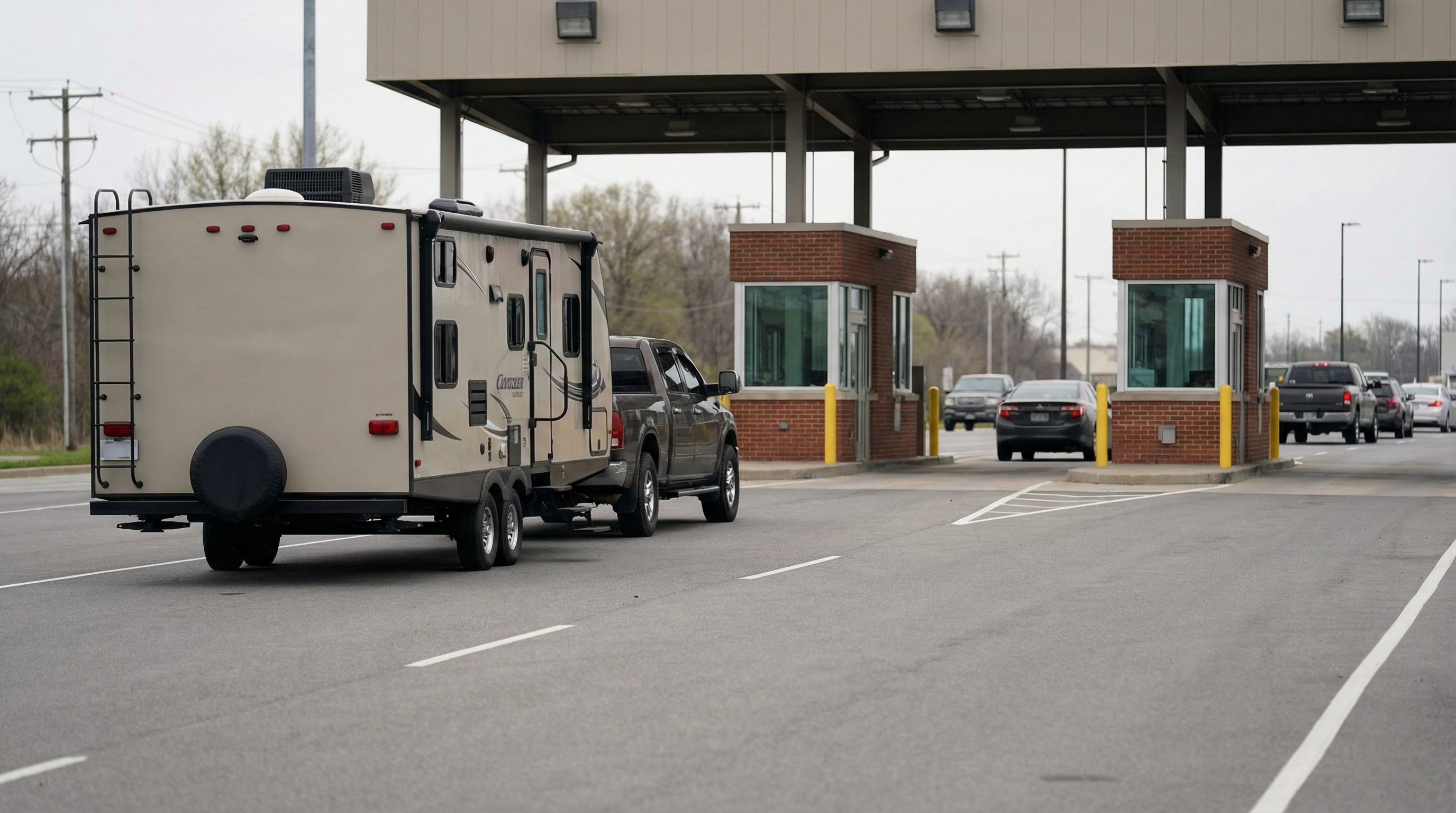
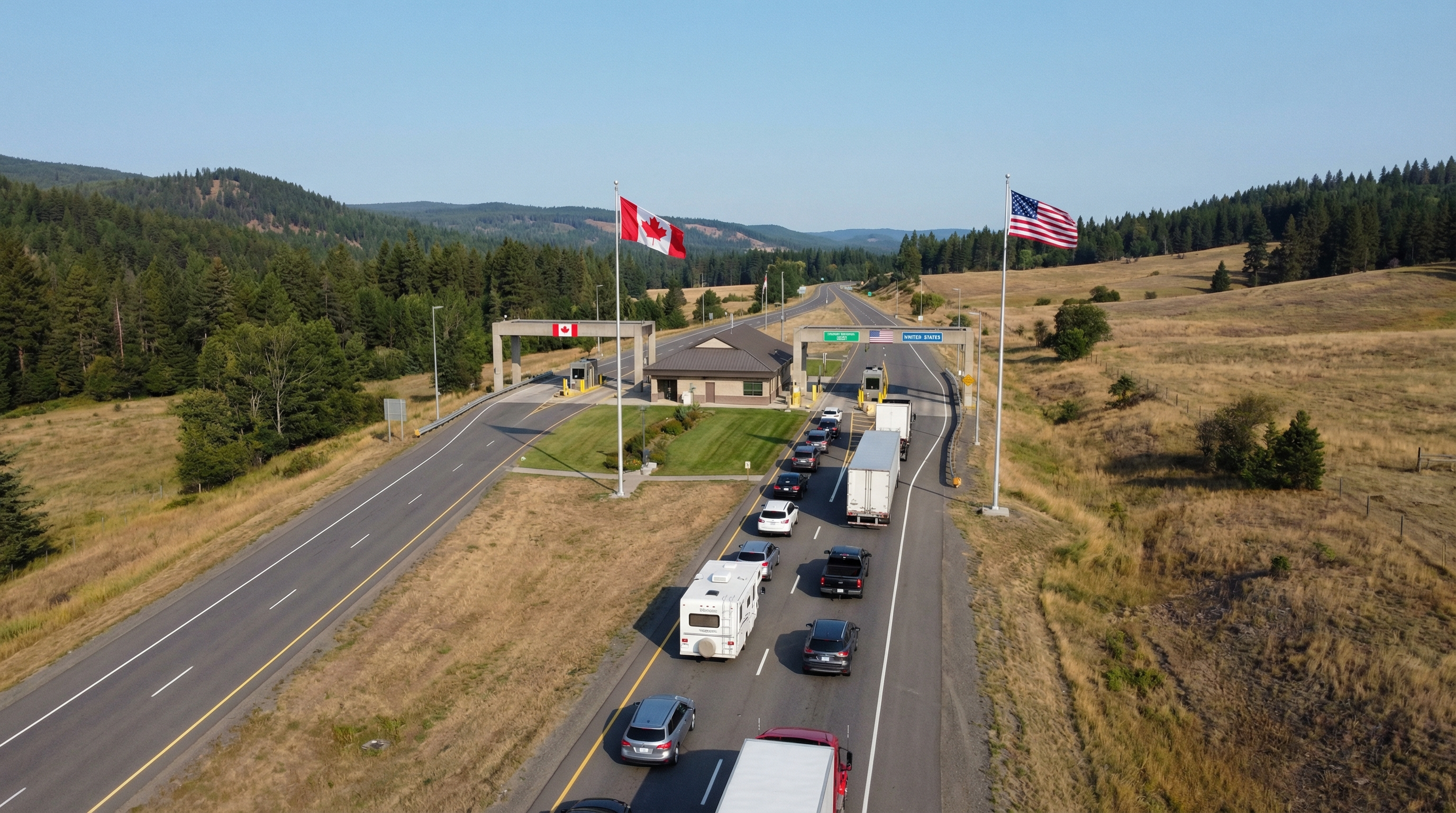
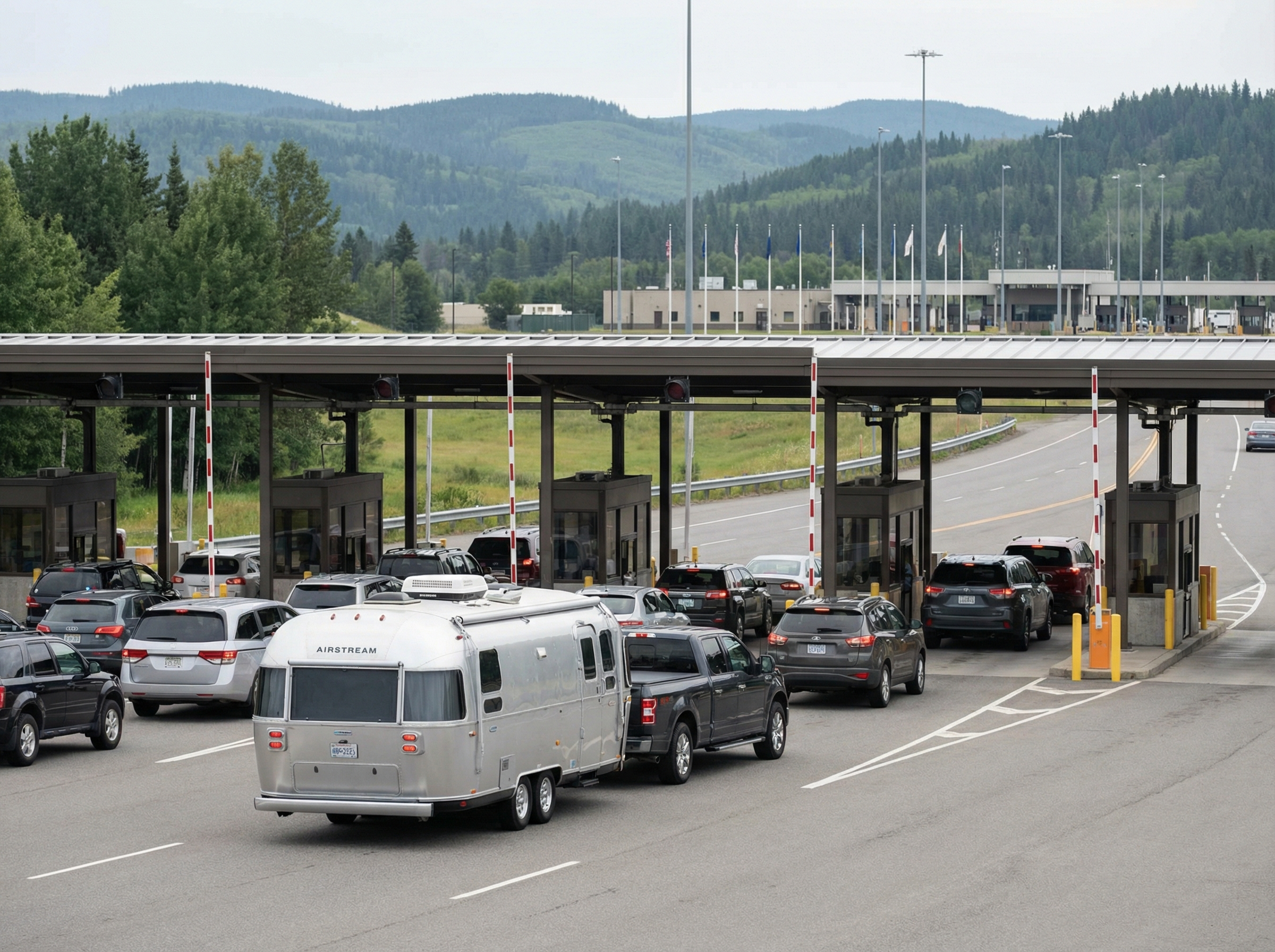
RV and travel trailer at a US–Canada land border crossing
The goal is a calm, confident crossing. Have answers, have documents, declare honestly, and keep the glovebox chaos to a minimum.
Important: Rules can vary by citizenship, where you cross, and what you’re carrying. Use this guide to prep, then verify anything sensitive (pets, food, weapons, medications) on the official sites linked below.

2026 Border Checklist for RVs and Travel Trailers

This is the “make it boring” checklist. Print it, screenshot it, or keep it open on your phone when you’re lining up.

Printable version (on-page)

Use the print button below. It hides the images and keeps only the checklist content.

Jump to FAQ

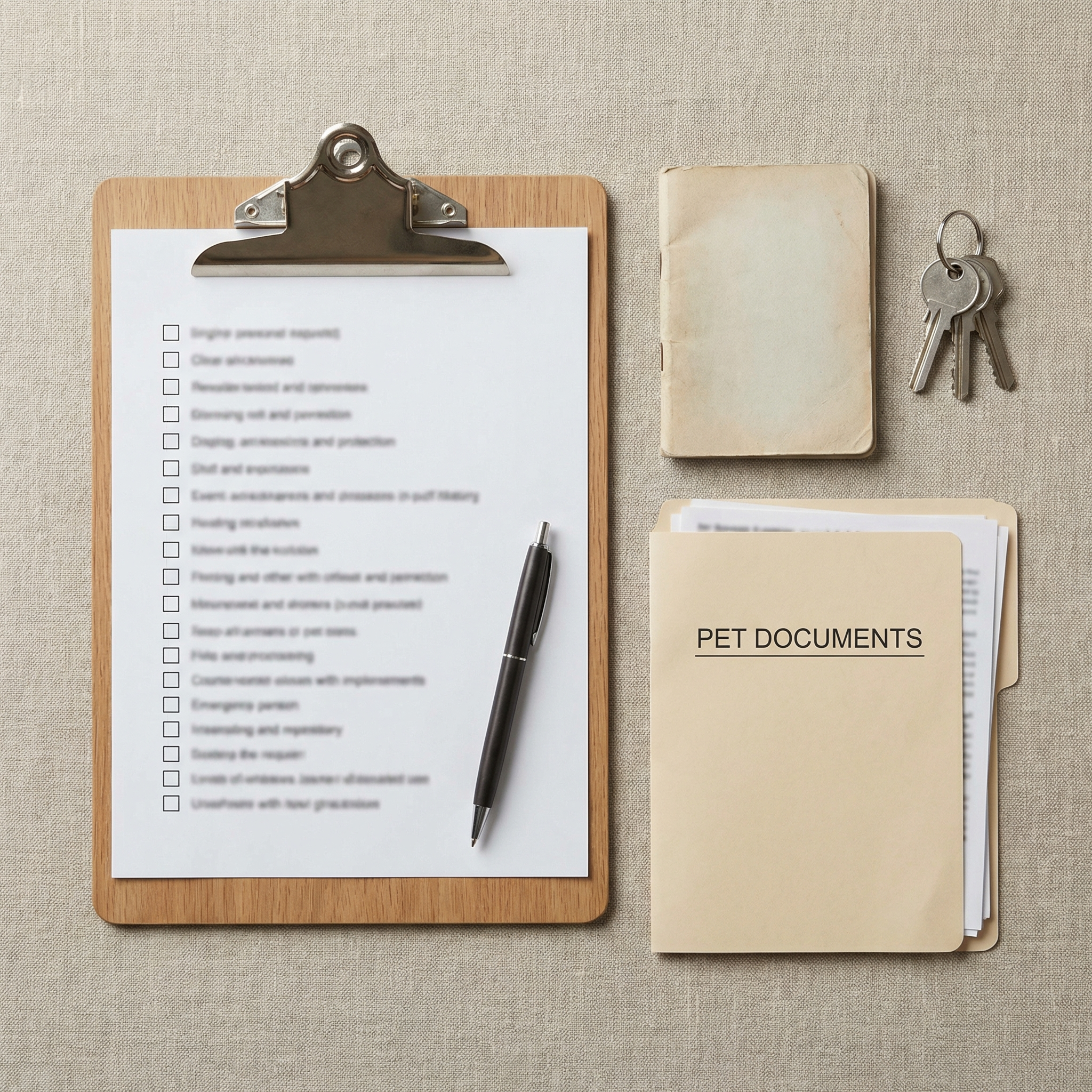
Checklist visual

RV border prep checklist flat lay

People + documents

  • Passport / passport card / NEXUS / eligible enhanced ID (as applicable)
  • Minors: consent letter if one parent/guardian isn’t present
  • Address for your first stop (campground, hotel, family, etc.)
  • Receipts for major purchases (and a rough total)

RV + trailer

  • Registration + proof of insurance (tow vehicle + RV + trailer)
  • If financed/leased: written permission letter from lender/lienholder
  • If borrowed: owner permission letter (notarized is even better)
  • Know what’s in your exterior compartments (they do ask)

Food + restricted items

  • Declare all food, alcohol, and agricultural items (even if it’s “just snacks”)
  • Avoid guessing with fresh produce/meat unless you verified current rules
  • Do not cross with cannabis/CBD products
  • Prescription meds: keep in original containers when possible

Pets

  • Rabies certificate (dogs + cats)
  • For dogs entering the U.S.: CDC Dog Import Form requirements may apply
  • Stick to commercially packaged pet food (skip raw)
  • Leash/harness ready in case you’re asked to step out

Fast “booth answers” that keep things smooth

  • Where are you going? (first stop is enough)
  • How long are you staying?
  • What are you bringing back / what did you buy?
  • Any food, alcohol, tobacco, firearms/weapons, or cannabis/CBD?
Quick copy tip: open this section on your phone and screenshot it. That’s faster than digging through email while you’re three cars from the booth.

Border Crossing Requirements for RVs and Travel Trailers
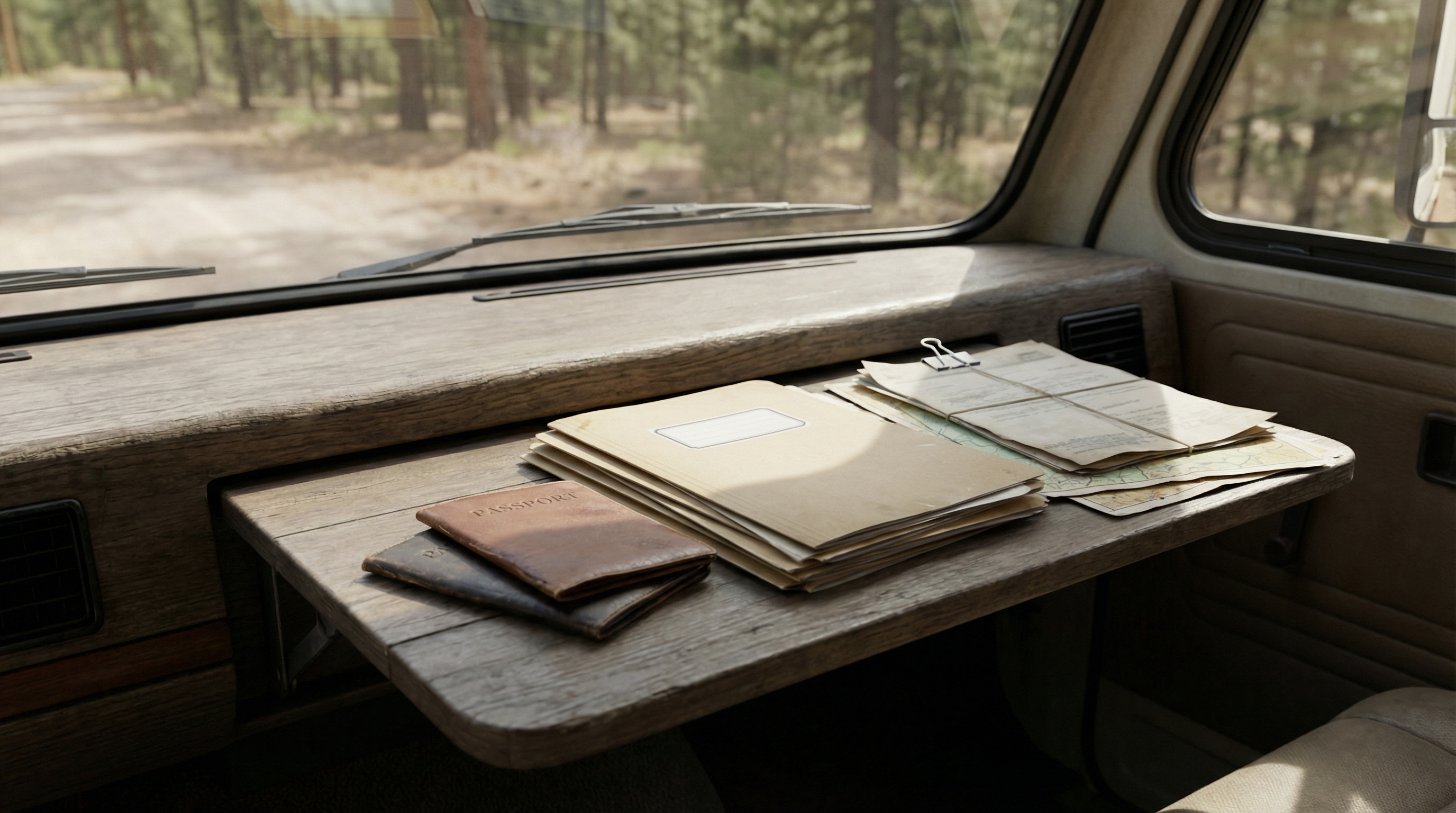
Travel documents organized for an RV border crossing

1) Valid identification and travel documents

The cleanest play is still a passport. Other document options may be valid for land/sea travel depending on your citizenship and circumstances (for example, certain trusted traveler cards or eligible enhanced IDs).

Common options RVers use

  • Passport (most universal)
  • Trusted traveler card (like NEXUS) if you cross often
  • Eligible enhanced ID where available (confirm first)

Traveling with minors

If one parent/guardian isn’t present, carry a signed consent letter (and custody documents if relevant). Extra questions are normal when documentation is thin.

Keep it simple: Put all documents in one folder that lives in the same place every trip. Border crossings get annoying when you’re flipping through receipts like you’re trying to win a contest.

2) Vehicle registration and insurance

  • Registration + proof of insurance should be easy to access
  • If financed/leased: bring written permission from the lender/lienholder
  • If borrowed: written permission from the owner is strongly recommended
  • Rental RV/trailer: keep the rental agreement and insurance paperwork handy

3) Temporary import basics

Most RV trips are temporary entry as long as you’re visiting and bringing your rig back home. The friction usually shows up when ownership is unclear, documents are missing, or restricted goods are involved.

What to Expect at the Booth (and Why RVs Get Asked More Questions)

RVs and trailers carry more stuff. More stuff means more follow-up questions. That’s not “you’re in trouble,” it’s just reality.
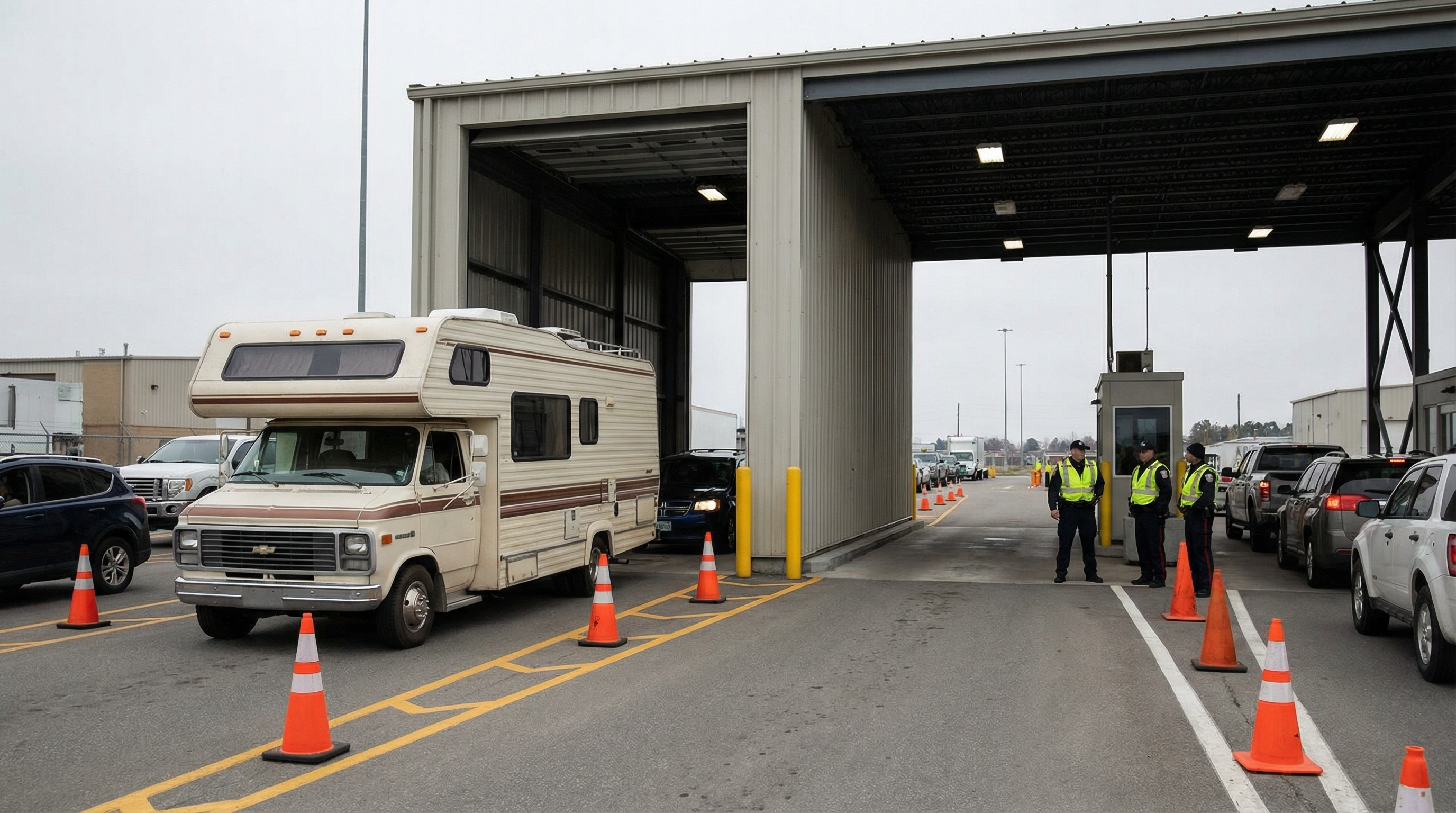
RV in a secondary inspection area at a border crossing

Common questions you’ll hear

  • Where are you going and for how long?
  • Any food, alcohol, tobacco, firearms/weapons, cannabis/CBD?
  • Are you carrying pepper spray, bear spray, or protection items?
  • Who owns the RV and trailer?

Secondary inspection isn’t the end of the world

Secondary is often about verification or a closer look at items. Stay calm, answer directly, and don’t treat it like a courtroom drama. Most delays come from disorganization or inconsistent answers.

Pro RV move: Before you get in line, quickly scan your compartments and remember what’s “unusual” (tools, fuel cans, large grocery loads, gifts, expensive gear). If asked, you’ll answer confidently instead of guessing.

Canada vs U.S. RV Border Crossing Differences

Here’s the quick comparison RVers usually wish they had before pulling into the line. Always verify sensitive categories using the official links in the next section.
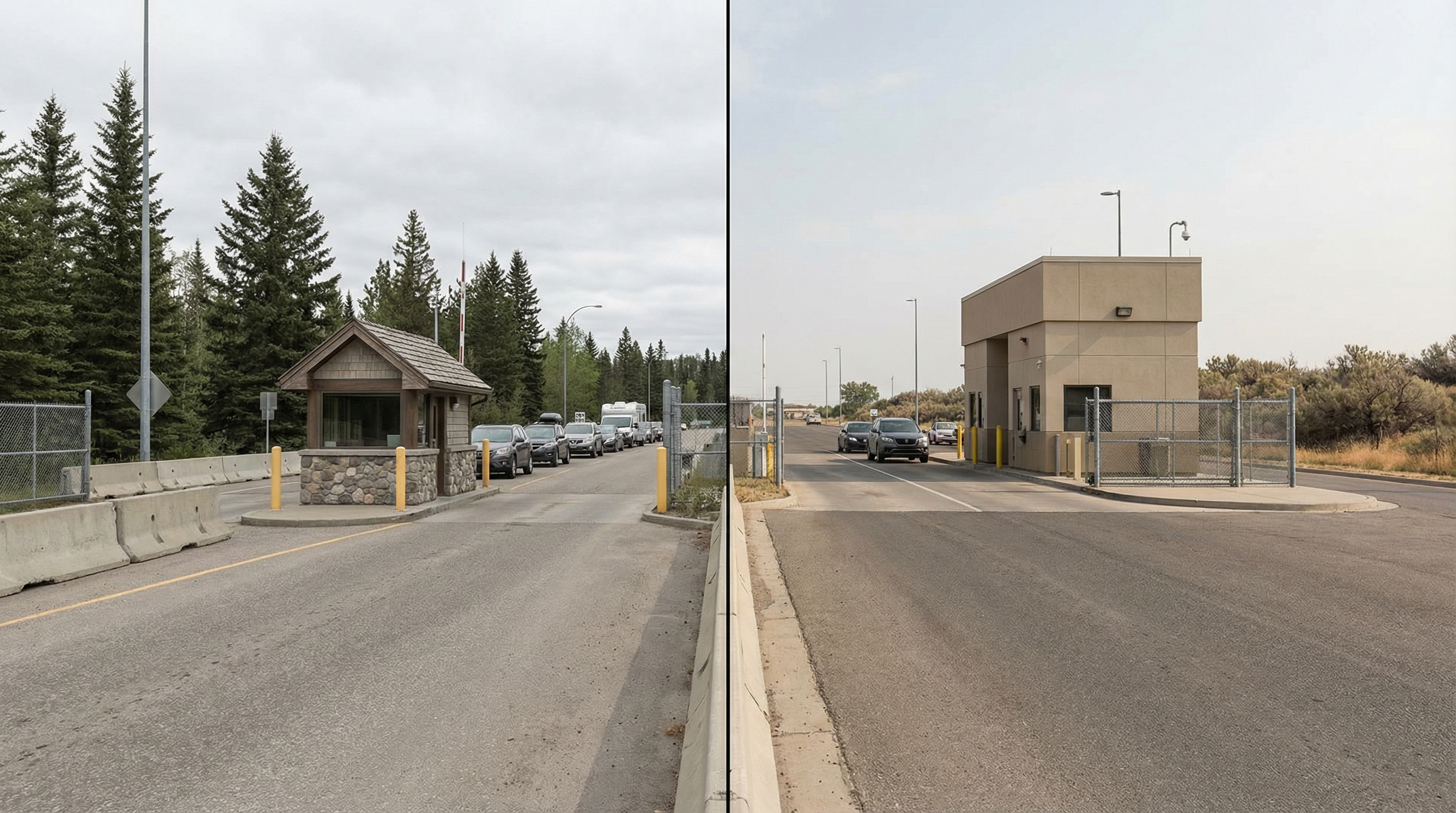
Split view representing Canada and US border crossing environments
Topic Entering Canada Entering the U.S.
Documents Passport is the simplest universal option; other options depend on traveler type. Land/sea entry follows WHTI document rules (passport, trusted traveler cards, eligible enhanced IDs where applicable).
Food & agriculture Declare all food/plant/animal products; restrictions can change quickly. Declare all food items; certain meats/agriculture can trigger extra scrutiny.
Cannabis/CBD Do not bring it in or take it out across the border. Still illegal federally; don’t cross with it.
Pets (dogs) Rabies proof commonly required; follow CFIA guidance by species/origin. CDC dog requirements can include a CDC Dog Import Form and additional rules depending on travel history.
Cash / money reporting Large amounts must be declared; don’t assume “it’s my money” means “no rules.” Large amounts must be declared; same concept, different process.

Customs Regulations & Prohibited Items

Common items travelers may need to declare at the US–Canada border

1) What you must declare

  • Purchases and gifts
  • Food, plant, and animal products (snacks count too)
  • Alcohol and tobacco
  • Pets and pet food
  • Currency/monetary instruments above reporting thresholds

2) What’s not worth risking

  • Cannabis/CBD: do not attempt to cross with it in any form (including CBD products).
  • Food/agriculture guessing: declare everything, verify fresh produce/meat rules before you travel.
  • Weapons/protection items: rules vary and can be strict. Verify before you arrive if you carry anything for “protection.”

2026 “Quiet Problems” That Cause Loud Delays

These are the things people forget to think about because they’re normal in RV life. They’re also the things that can trigger extra questions.

Prescription medications

  • Keep meds in original containers when possible
  • If you carry controlled prescriptions, keep documentation handy
  • Don’t try to “simplify” by putting everything into one unmarked bottle

Cash and large amounts

  • If you’re traveling with a large amount of cash, declare it
  • This applies even if it’s your money and for a legitimate reason

Propane, fuel cans, and “RV stuff”

  • Propane on an RV is normal. Extra fuel cans can draw questions.
  • If you carry jerry cans, keep them secured and be ready to explain use-case.

Devices and data

  • Lock your phone (PIN/biometrics), keep backups, and know what accounts are logged in
  • Avoid traveling with anything that looks like “work equipment for sale” if it’s personal use
Not legal advice: This is practical travel prep based on typical border experiences. If you have special circumstances (past charges, custody matters, unusual cargo), verify your situation with official sources or professional counsel before travel.

How to Avoid Long Border Wait Times

Border crossing lanes showing typical wait time conditions

Timing that usually helps

  • Often best: early mornings and mid-week crossings
  • Often worst: Friday evenings, weekend afternoons, and long-weekend return traffic

Pick the right crossing, not the closest one

Not all crossings are created equal. Some are fast most days. Some are consistently slammed. If you’re towing, a slightly longer route to a calmer crossing can be a win.

Pro tip: Don’t wait until you’re 5 minutes from the border to “organize paperwork.” Do it before you get into the lineup so your booth time stays short.

Traveling With Pets in 2026

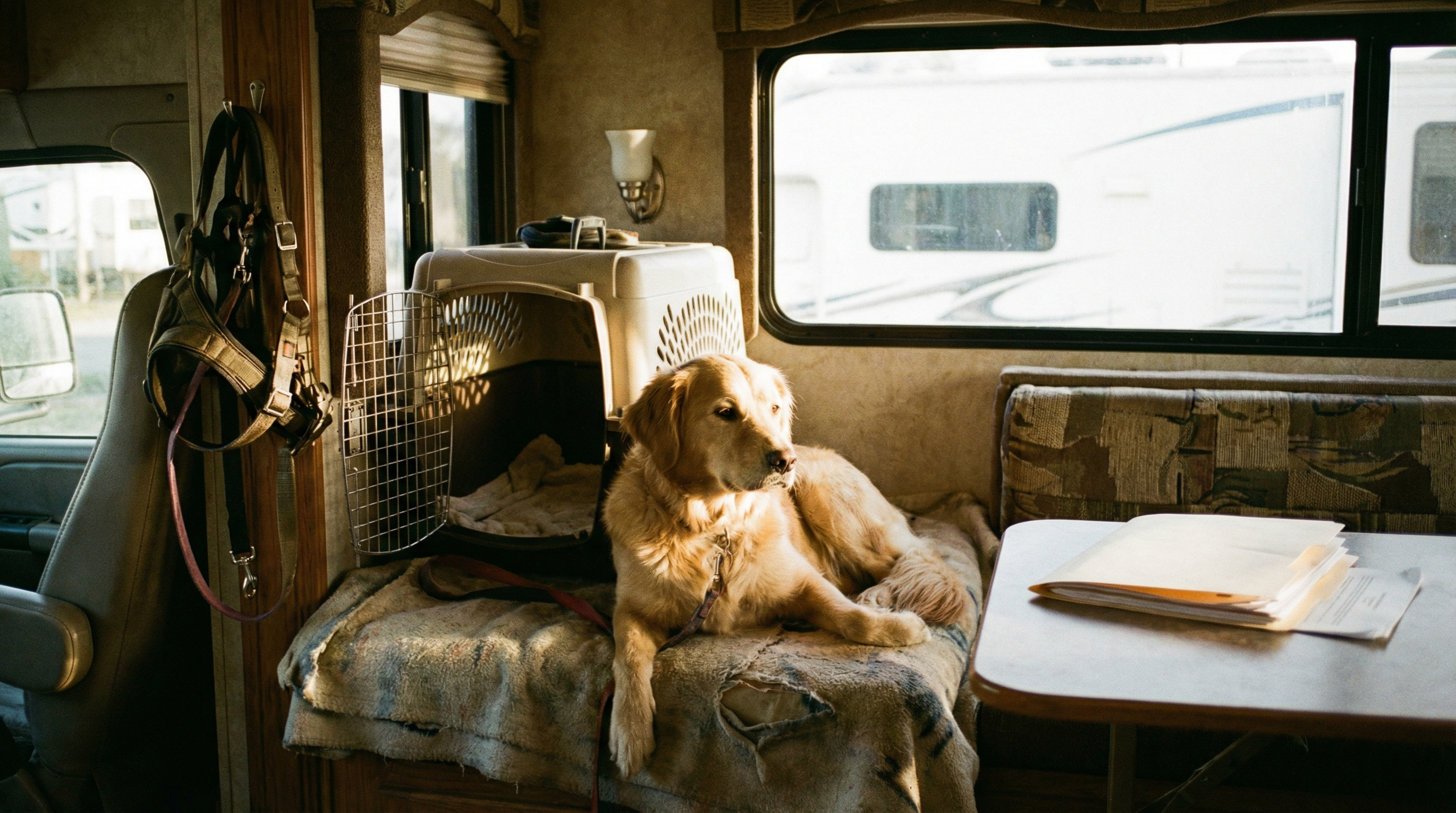
Dog resting calmly inside an RV during travel

Most pet crossings are smooth when you have documentation ready. In 2026, the key is not guessing on dog entry requirements to the U.S.

Core pet paperwork

  • Rabies vaccination certificate for dogs and cats (issued by a licensed vet)
  • Keep paperwork accessible, not buried under campground receipts

Dogs entering the U.S.

  • CDC dog requirements may apply, including the CDC Dog Import Form
  • Extra requirements can apply depending on travel history
  • Official reference: CDC Dog Import Form instructions

Pet food

Stick with commercially packaged kibble or canned food. Skip raw pet food when crossing. If you’re crossing frequently, check current import restrictions because they can change based on disease/outbreak conditions.

Legal & Identity Protection for Frequent Crossers

If you cross often, a small issue can become a big time sink fast. This is less about “expecting problems” and more about having a plan for the “what if” moments.

LegalShield

  • Useful for guidance when rules and paperwork get complicated
  • Helps you prep documents ahead of time (permission letters, etc.)
  • Good fit for frequent crossers who want clarity without guessing

Read more: LegalShield – Legal Protection for RVers

IDShield

  • Travel often means more logins, more WiFi, and more data exposure
  • Monitoring/alerts help you catch issues earlier
  • Better to react early than clean up identity damage later

Read more: IDShield – Identity Monitoring for Travelers

Simple takeaway: if you cross once a year, you might never need this. If you cross often, it’s the kind of thing you’re glad you already set up.

Going South Instead?

If your route continues past the U.S. and you’re heading toward Mexico (and eventually Central America), this is the next corridor guide to bookmark before you roll.

Next corridor guide

Step-by-step and checklist-driven, built for RVs and travel trailers.

Crossing the Mexican Border in an RV (2026)

What changes when you go south

  • Paperwork becomes more step-based (multiple stops and windows)
  • Cash in small bills becomes more important
  • Border “helpers” can appear fast, so clarity matters
Small prep win: open that Mexico guide now, screenshot the checklist, and save it offline. Cellular coverage around borders can be inconsistent right when you want it most.
Please follow and like us:

14 responses to “US–Canada Border Crossing Rules for RVs and Travel Trailers in 2026: Documents, Pets, Food, and a Printable Checklist”

  1. angelce903 Avatar
    angelce903

    I’ve never traveled from the US to Canada, but these border regulations seem pretty strict! Coming from France, I always assumed the US-Canada border would be similar to the open borders within the EU, but clearly, that’s not the case.

    One thing that really caught my attention was the restriction on meat products. I had no idea you couldn’t bring certain food items across the border. It makes sense from a biosecurity standpoint, but I can see how it could surprise travelers who aren’t aware of the rules.

    This was a really informative guide! Definitely something I’d refer to if I ever planned a road trip through North America.

    1. Jeremy Avatar
      Jeremy

      Hey angelce903,

      That’s a great observation! Many people assume the US-Canada border is as open as European borders, but both countries have strict regulations—especially regarding food, firearms, and certain imports.

      The restrictions on meat, dairy, and even fresh produce are all about protecting local agriculture and preventing the spread of diseases. A lot of travelers get caught off guard, which is why being informed ahead of time is key.

      If you ever do plan a trip through North America, this guide will definitely help smooth out the process! Thanks for your comment.

      Cheers,
      Jeremy

  2. LineCowley Avatar
    LineCowley

    This is such a helpful guide for anyone driving from the USA to Canada! A few years ago (pre-COVID), we drove from Michigan into Canada for a ski trip. We had a rental car, so our crossing was fairly easy, but my brother-in-law was in his personal vehicle and got pulled aside for additional screening.

    Looking back, reading a guide like this before our trip would have saved us time and stress at the border! You mention the requirements for US and Canadian citizens, but it would also be great to include information for tourists traveling on a visa—what documents they need and if there are any special rules.

    This guide is a must-read for anyone crossing the border in an RV or car!

    1. Jeremy Avatar
      Jeremy

      Hey LineCowley,

      That’s a great point! A rental car does make things easier, but personal vehicles—especially RVs—often go through extra screening because of potential prohibited items. Border agents tend to check for food, alcohol, or even certain camping gear that might not be allowed.

      As for tourists on visas, that’s a solid suggestion! While this guide mainly focuses on US and Canadian citizens, I’ll look into adding more details for international travelers—including which visas apply and what extra documents they might need.

      Thanks for the feedback, and I’m glad you found the guide useful!

      Safe travels,
      Jeremy

  3. Paco Avatar
    Paco

    I’m a Mexican citizen, but I keep an RV in Texas for my USA road trips. I use my multiple-entry green card when entering the US.

    Now, I’m planning an RV road trip from Texas to Quebec in my 1985 Toyota Granville (22 ft, only 57K miles, registered in Dallas). I have a couple of questions before crossing into Canada:

    Will Canada allow my 1985 RV to enter?
    Do I need a mechanical or emissions verification for any state crossings or for entering Canada?
    Looking forward to your advice—thanks!

    1. Jeremy Avatar

      Hey Paco,

      Sounds like an amazing road trip! Here’s what you need to know:

      Bringing an older RV into Canada – Canada does not have an age restriction on RVs entering as long as they are for temporary travel (not being imported permanently). Your 1985 Toyota Granville should be fine as long as it’s in good working condition, fully registered, and insured.

      Mechanical & Emissions Requirements –

      No special emissions tests are required for crossing US state lines or for entering Canada.
      However, some Canadian provinces (like Quebec and British Columbia) have strict emissions laws—so if you’re staying long-term, you may want to check their regulations.
      Pro tip: It’s always smart to carry recent service records and do a maintenance check before long trips—especially for an older RV.

      Have an awesome trip, and feel free to ask if you need more info!

      Safe travels,
      Jeremy

  4. Sharon Avatar
    Sharon

    I’m getting ready to complete my 5th travel trip through Canada, going from the US to Alaska. The most memorable crossing was 9-11-2001. I stayed in Canada just before the border crossing into the US, Vancouver if I remember right. It was 0800 in the morning. I kept hearing the Canadian radio personnel who kept saying it was a huge tragedy for the Americans. But no one ever said what it was! My boyfriend called me from Alaska and told me what happened. The border was closed a couple hours, but finally opened. I had 3 Rottweilers, and it was not an easy crossing. I hope this last time will be uneventful.

    1. Jeremy Avatar

      Wow, Sharon—five trips through Canada on your way to Alaska? That’s incredible! I bet you’ve got some unforgettable stories from the road. What’s been your most memorable border crossing experience so far? Any surprises along the way, or has it all been smooth sailing? Always great to hear from seasoned travelers like you!

  5. SAM HERSCHEID-ROHDE Avatar
    SAM HERSCHEID-ROHDE

    WHEN TRANSPORTING A FIFTH-WHEEL CAMP TRAILER FROM USA THRU CANADA TO ALASKA TO ANOTHER RV DEALER, ARE ANY SPECIAL PERMITS NECESSARY TO CROSS THE BORDER(S)?

    1. Jeremy Avatar

      Hey Sam, great question—and one that pops up more often than you’d think!

      If you’re transporting a fifth-wheel from the U.S. through Canada to Alaska for delivery to another RV dealer, here’s the gist:

      1. U.S. to Canada Border (Entry):
      You generally don’t need a special permit if the RV is already registered, and you’re just transporting it through. But border agents may ask for:

      Proof of ownership or a bill of sale

      A letter of authorization if it’s not registered to you

      Insurance documents

      Your passport or required travel ID

      2. Temporary Import/Transit Through Canada:
      Because you’re not importing it permanently, you’ll want to explain clearly that this is a transit move. Mention it’s en route to another dealer in Alaska. You may be asked to fill out a Form E29B (Temporary Importation Permit), which just confirms it’s leaving Canada again. There may be a deposit involved, but that varies.

      3. Canada to U.S. (Re-entry into Alaska):
      Make sure all your U.S. paperwork is on hand. U.S. Customs may want to verify ownership and that it’s entering for legitimate business/delivery purposes. Commercial carriers might need to file additional paperwork, but personal transport is typically simpler.

      Heads-up: If it’s a commercial haul or you’re getting paid to move it, you might fall into different rules depending on your license and whether you’re bonded for cross-border freight. That’s worth a double-check with a border broker or transport service.

      Let me know how it goes—or if you want me to dig deeper into the latest requirements. Safe haulin’!

      Cheers!

  6. James Avatar
    James

    Handy guide. I’m leaving in 2 days to go from Ontario to western Michigan for an outdoor concert weekend. I’ll let you know how it goes. I don’t have insurance on the old trailer I’m bringing (1975 prowler) but I called my insurance broker and he’s going to add coverage. I may only have an email on my phone and not paperwork but I think that will be good enough.

    1. Jeremy Avatar

      Hey James,

      Thanks for chiming in—and wow, a 1975 Prowler? That’s a classic rig with some real character! I bet it turns heads at the campground. I hope the outdoor concert in western Michigan was a blast, and that your border crossing went smooth as a fresh oil change.

      Great call on checking in with your broker too—insurance is one of those things that’s easy to overlook until it’s suddenly the most important detail of the whole trip. Even just having the email proof on your phone can be a lifesaver at the booth.

      Let me know how the trip went when you’re back and unpacked. Always love hearing real road stories from fellow travelers—especially when it involves vintage trailers and outdoor adventures!

      Safe travels, and thanks again for stopping by!

      —Jeremy

  7. Kathy Perry Avatar

    We will be traveling into Canada with our Class A on a ferry in a few weeks. Are any vehicle tools allowed? IE: tire iron , wrenches, etc.

    1. Jeremy Avatar

      Hey Kathy!

      Sorry for the delayed response!

      Thanks for stopping by the blog—and great question! Yes, you can bring vehicle tools like a tire iron, wrenches, and basic repair gear with you into Canada. In fact, I always recommend having a small tool kit on board when traveling by RV, especially when you’re rolling in a Class A. You never know when you’ll need to tighten something or help a fellow traveler out.

      Just a heads-up: tools for vehicle maintenance are totally fine, but anything that could be considered a weapon (like large axes, machetes, or bear spray over a certain volume) might raise eyebrows at customs. Stick to your tire iron, socket set, pliers, and your trusty wrench and you’ll be golden.

      Also, enjoy the ferry ride—it’s a beautiful way to enter Canada. If you’re heading into B.C. and have any route questions or camping stops in mind, feel free to reach out. Safe travels and smooth roads ahead!

      Cheers,
      Jeremy from Everything RVs and More

Leave a Reply

Your email address will not be published. Required fields are marked *

Under the Picnic Table Book Cover

Under the Picnic Table

Real stories from life on the road — from campground chaos to those quiet lakeside mornings only RVers truly understand. This book was written during our park seasons, capturing the highs, lows, and laughs of full-time RV life.

Perfect for anyone who’s ever dreamed of hitting the road, living simply, and finding freedom in unexpected places.

📖 Get the Paperback
💻 Kindle Edition As an Amazon Associate, I earn from qualifying purchases. Thank you for supporting my journey — every book purchase helps me keep this site running and continue sharing our RV stories from the road.
From 0 to 100K — practical income systems for RVers RVers • No Hype

Fuel Your RV Life with Ethical Online Income

Real, repeatable systems—not get-rich gimmicks. Follow my From 0 → 100K build in public: weekly updates, playbooks, and the exact steps I use to turn content into income while living on the road.

Transparency first: some pages include affiliate links that help support the work—at no extra cost to you.

Built by full-time RV travelers. Skills you can learn and apply—one step at a time.

Fly fishing adventure in Costa Rica Costa Rica • Guided
Jungle river fly fishing — lodge and RV-friendly options

Fly Fishing Adventure in Costa Rica

Escape to Costa Rica’s pristine rivers for an unforgettable fly-fishing experience. Stay at the lodge or bring your RV and camp nearby — either way, you’ll fish from professional U.S.-made drift boats with local expert Gilberto guiding every cast.

“Excellent location and the lodge is awesome! Gilberto the guide is very good. Fishing from a nice US-made driftboat is the only way to fish!! A true getaway fishing adventure only a couple of hours away from the Liberia airport!”

Randy McIntosh Verified Guest

FTC Disclosure: As an Amazon Associate, I earn from qualifying purchases. This does not affect your price—it simply helps keep our RV content rolling down the road. Thank you for your support!

Shop RV Deals on Amazon

Discover hand-picked RV accessories, tools, and travel gear that make every camping trip smoother and safer.

Fun Only • No Real Prizes

RV Slots — Spin for Gear Ideas

One spin per day per browser. Match symbols to unlock recommended RV gear and Amazon links.

Wheel chocks
Camping chair
Camping tent
Suggestions only. Some links use Amazon affiliate tracking, which may earn a small commission at no extra cost to you.