

Last Updated on September 14, 2026 by Jeremy
Introduction: The Day My Hitch Bent in Mexico
Every RVer has a moment where they realize the difference between “tips” and actual survival-level hacks.
For me, it happened somewhere between Aldama and the Guatemala border, when a pothole and a bad angle bent my entire travel trailer hitch. I knew exactly how it needed to be fixed — but I had no tools, no space, no leverage, and no backup plan.
That day taught me more about “expert RV hacks” than any blog or YouTube video ever could. If you want the story, it’s here:
👉 How to Repair a Bumper-Pull Hitch (My Actual Breakdown Story)
If you’re new to RVing or already have a couple seasons under your belt, these are the hacks that actually matter — the ones full-time RVers learn from miles, mistakes, and sheer repetition.
Below are the real-world expert RV travel hacks that kept our family moving from Alberta to Central America… and all the way back.
Hack #1 — The One-Minute Setup System (The Four-Person Method)
Here’s the real secret:
The fastest setups aren’t fast because you rush — they’re fast because every person knows their job.
For us, it became a rhythm:
Outside Team (2 people)
- Unhitch
- Level
- Stabilizers down
- Water hookup
- Electrical hookup
- Accessories (BBQ, chairs, mats)
Inside Team (2 people)
– Undo the “travel setup”
– Reset the beds, counters, and kitchen
– Organize for the length of stay
– Secure items that shift during travel
We got so good at this during our journey south that we could go from highway-ready to fully set up in under 30 minutes.
Tools that make this even faster:
– Cordless drill or impact with 3/4″ socket
– Quick-connect water fittings
– Organized tubs or bins for gear
– (Optional) Auto-level systems on newer trailers
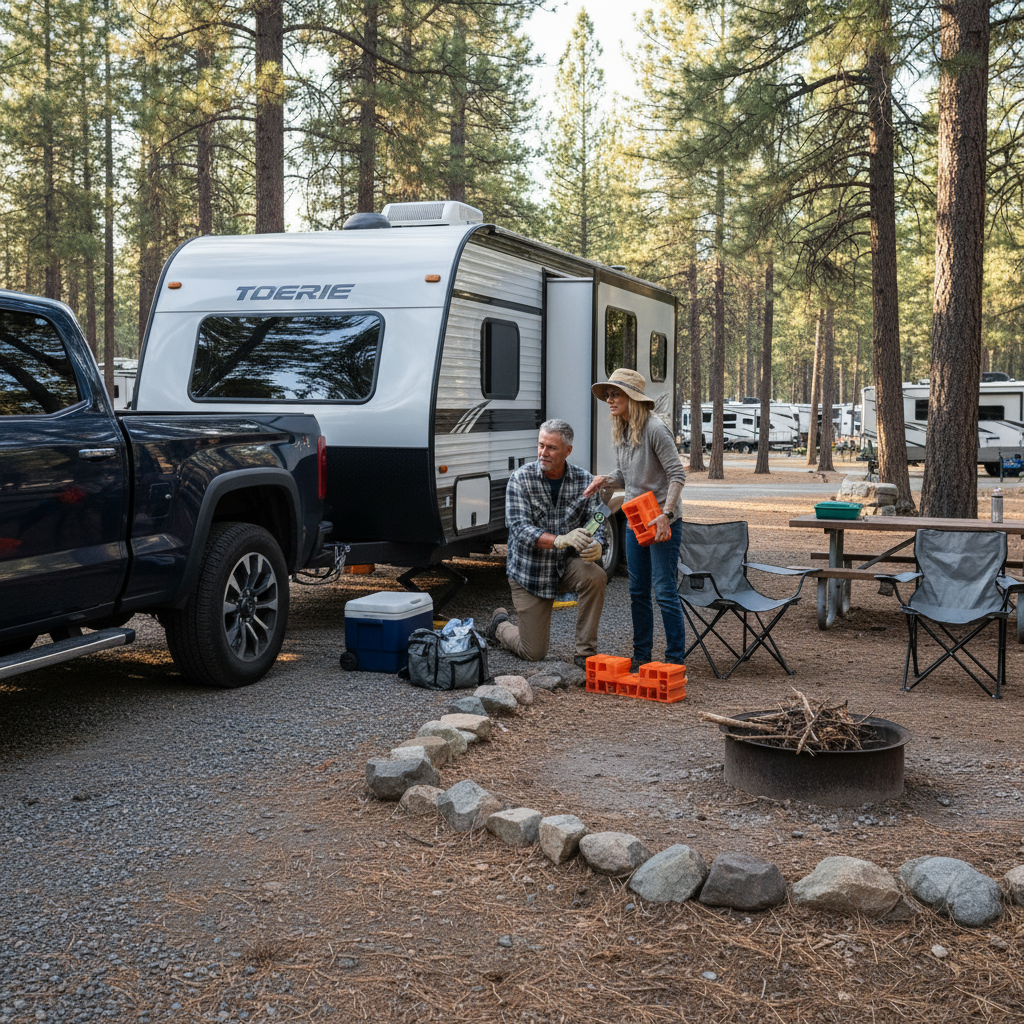
Hack #2 — How to Read a Campsite Like a Park Operator
When you’ve operated parks for years, you get good at reading sites in seconds.
Here’s what I look for immediately:
Red Flags:
- Uneven ground
- Tight corners for backing in
- No shade in summer
- Too much shade in fall (falling branches, pinecones)
- Your slideouts hitting obstacles
- Connection points too far for your hoses or cables
If you’ve ever had a pinecone drop on your roof at 4 AM, you know the sound is one step away from a heart attack.
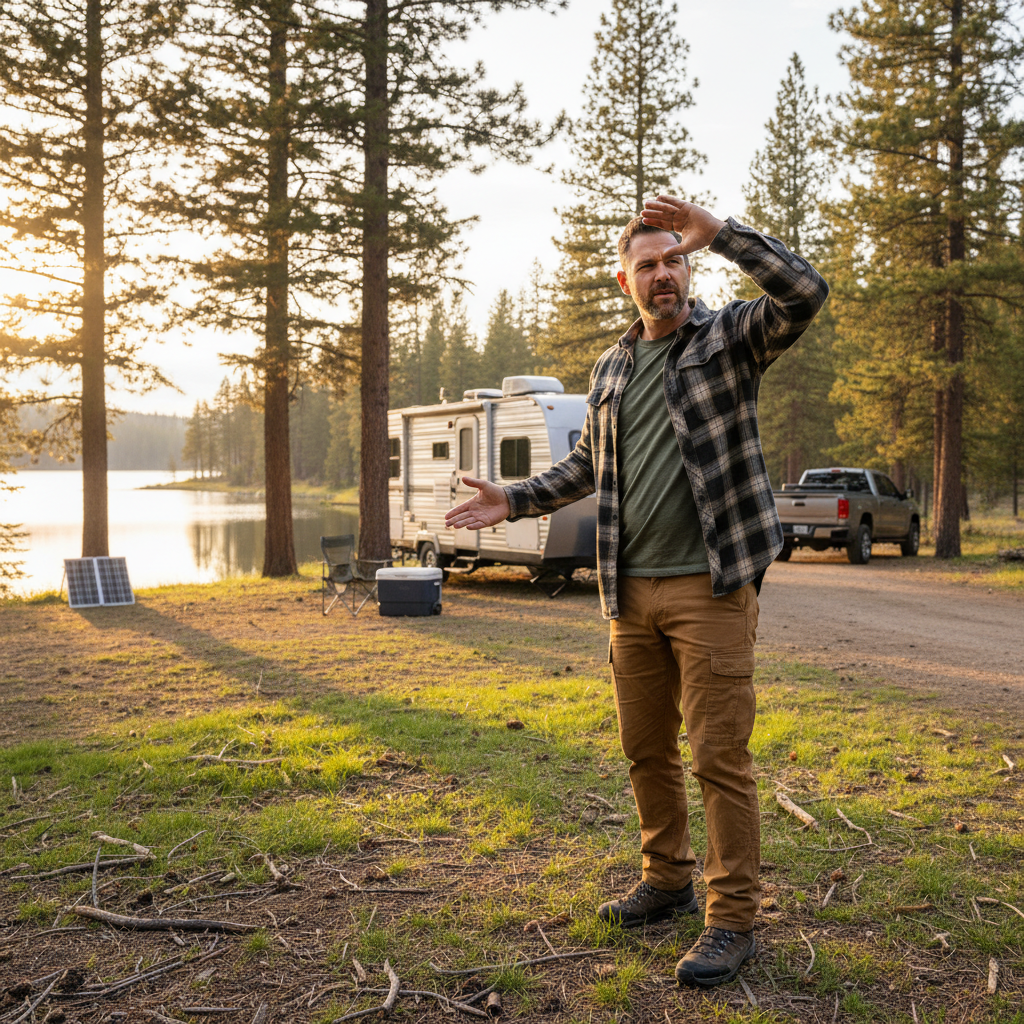
Hack #3 — Water, Power & Propane Redundancy
If you travel long distances, especially off-grid, you need backup plans for your backup plans.
What saved us most:
- Our generator (Benchmark 4500W )
- Two extra propane tanks
- A portable waste tank
- Apps to find dump stations (Allstays)
A power lesson learned the hard way:
We damaged our Kohree surge protector in Costa Rica during rainy season. Moisture got into it despite being a top-tier protector. Still one of the best tools we had:
https://everythingrvsandmore.com/30-amp-rv-surge-protector/
Hack #4 — The Packing System That Actually Works
If you full-time, you learn fast: the difference between sanity and chaos is how you pack.
Our must-haves:
- Extension cords (we carry at least eight — all lengths)
- Silicone + waterproof tape for emergency leaks
Nice-to-have:
- An axe for campfire wood
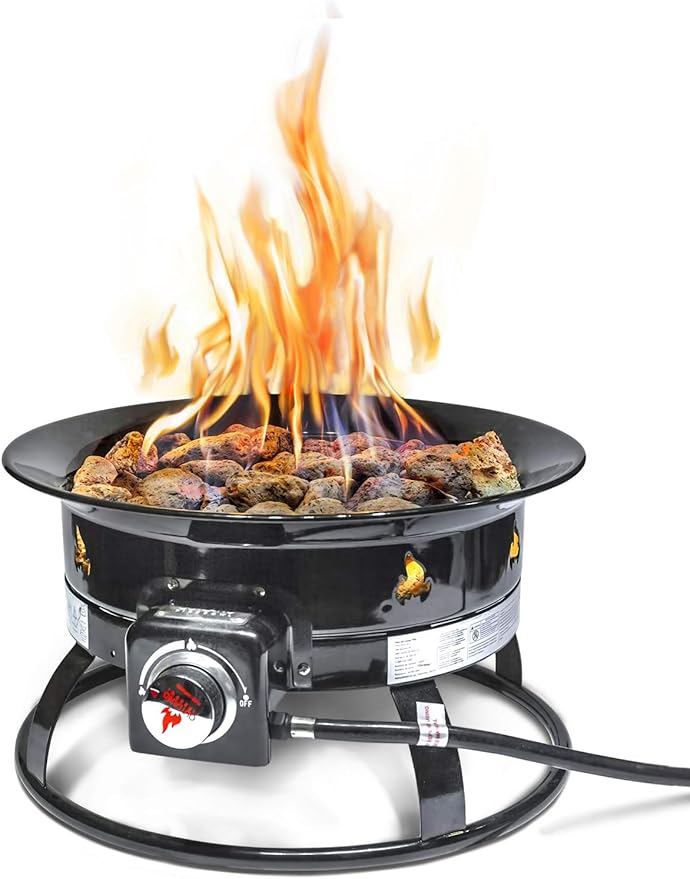
- A propane fire pit (necessary during fire bans)
Hack #5 — Weather Buffering & Knowing When to Quit
Bad weather has one job — to make you humble.
Two moments I’ll never forget:
- Wind storms between Alberta and BC — strong enough that we pulled into Willow Rock Campground early.
- Wet snow in Utah while pulling a trailer through mountain passes.
Weather tools we rely on:
– ALLSTAYS (again)
– My custom weather tool:
https://everythingrvsandmore.com/weather-travel-conditions-get-real-time-updates-for-your-route/
Hack #6 — Connectivity (What Actually Works)
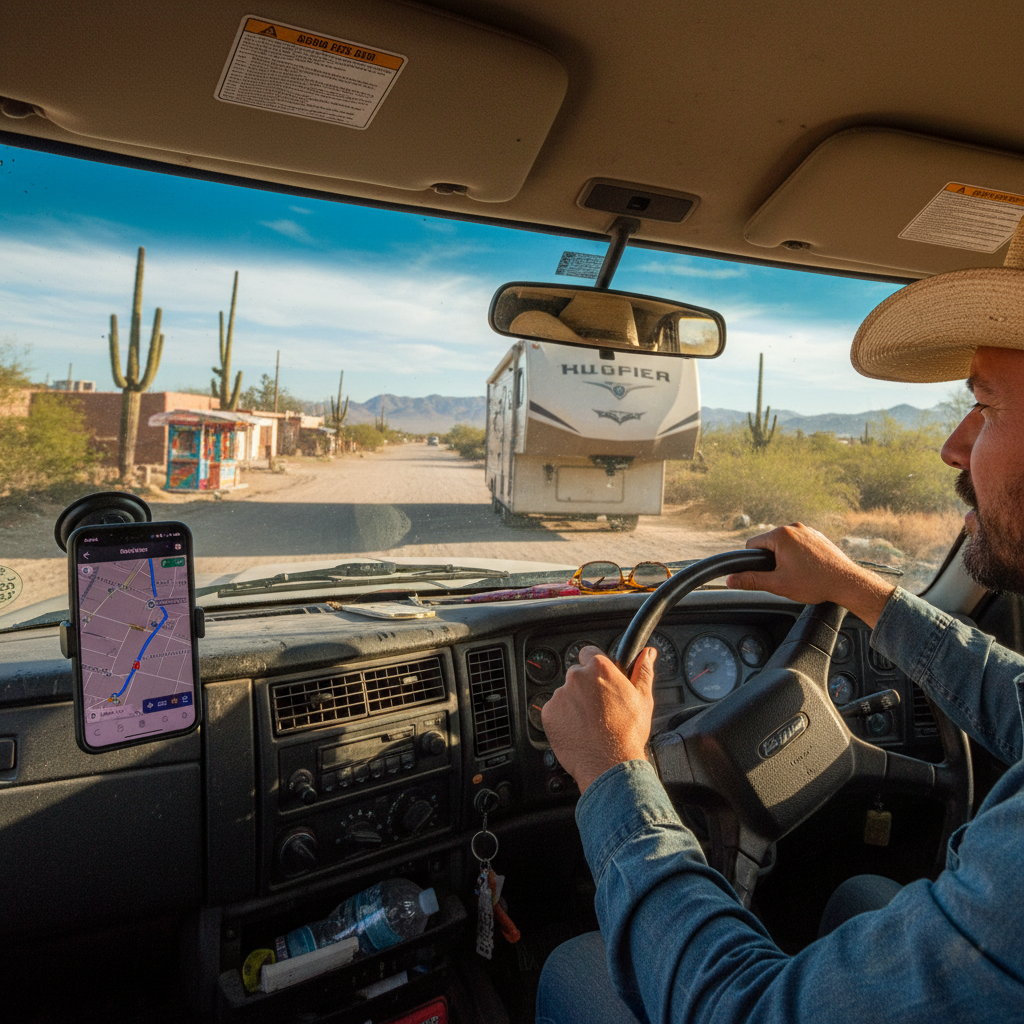
The worst “no-signal” moment happened in Mexico — half a day of driving with no data, relying on offline maps and paper backups.
The tool that saved us:
Roamless.
We still use it today:
If you want to know why – Read here: https://everythingrvsandmore.com/canadian-travel-to-costa-rica/
Hack #7 — Security You Can Actually Trust
My #1 rule:
Lock the doors and hide valuables.
Common sense — but you’d be shocked how many people ignore it.
A park incident I’ll never forget:
A camper “claimed” a site early by bringing their items in before checkout.
When the outgoing campers finally left, they took the guy’s propane tank and paddle board paddles, leaving his tent and duffle bag behind.
People get bold when they think nobody is watching.
Hack #8 — The Small Upgrade Worth Every Penny
Not under $40, but my most useful upgrade:
The slow cooker.
You can cook anything in a trailer that you can at home.
Second place:
The Kohree Electric Trailer Jack (5000 lbs)
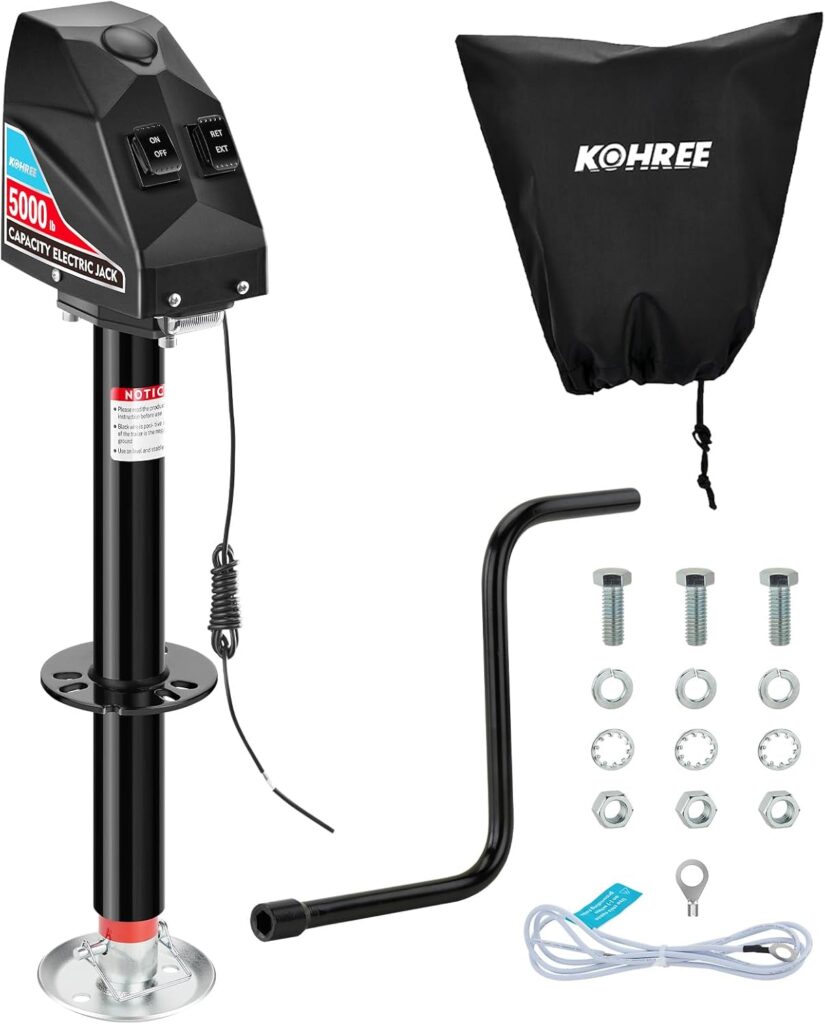
Once you’ve had one, you’ll never hand-crank again.
Hack #9 — Waste Management Without the Horror
Two lessons from park operations:
- Never dump into pit toilets.
Someone did this once. I wish I caught them — but also glad I didn’t. - Never leave your black tank valve open.
You’ll create a poop pyramid, and the only fix is dumping multiple buckets of scalding water down the toilet.
A real moment:
Once at a sani-dump, the wind shifted and the smell was strong enough to “gag a maggot.”
Sometimes survival is simply holding your breath.
Hack #10 — The Re-Entry Routine
After long travel days, especially after boondocking, you need to mentally shift.
Here’s mine:
- Slow down
- Remember city traffic doesn’t respect your stopping distance
- Take extra-wide turns
- Don’t rush parking or backing
It sounds simple, but after remote roads, it’s surprisingly easy to forget.
Bonus Hack — Route Planning That Won’t Trap You
What I use the most today:
- Waze
- iOverlander
- Allstays
- Campspot
- Harvest Hosts
Big lesson:
Never trust Google Maps blindly.
In Mexico, we followed it into tight corners, tiny streets, and brutal downtown traffic — when a safer alternate route existed.
Maps can’t predict construction unless manually updated.
Final Thoughts
These aren’t generic RV tips — these are the tricks learned through thousands of miles, park operations, breakdowns, long border crossings, and the kind of weather that forces you to pull over early.
If just one of these hacks saves someone a breakdown, a bad campsite, or a long night on a mountain road, then the miles were worth it.


Leave a Reply