

Last Updated on September 14, 2026 by Jeremy
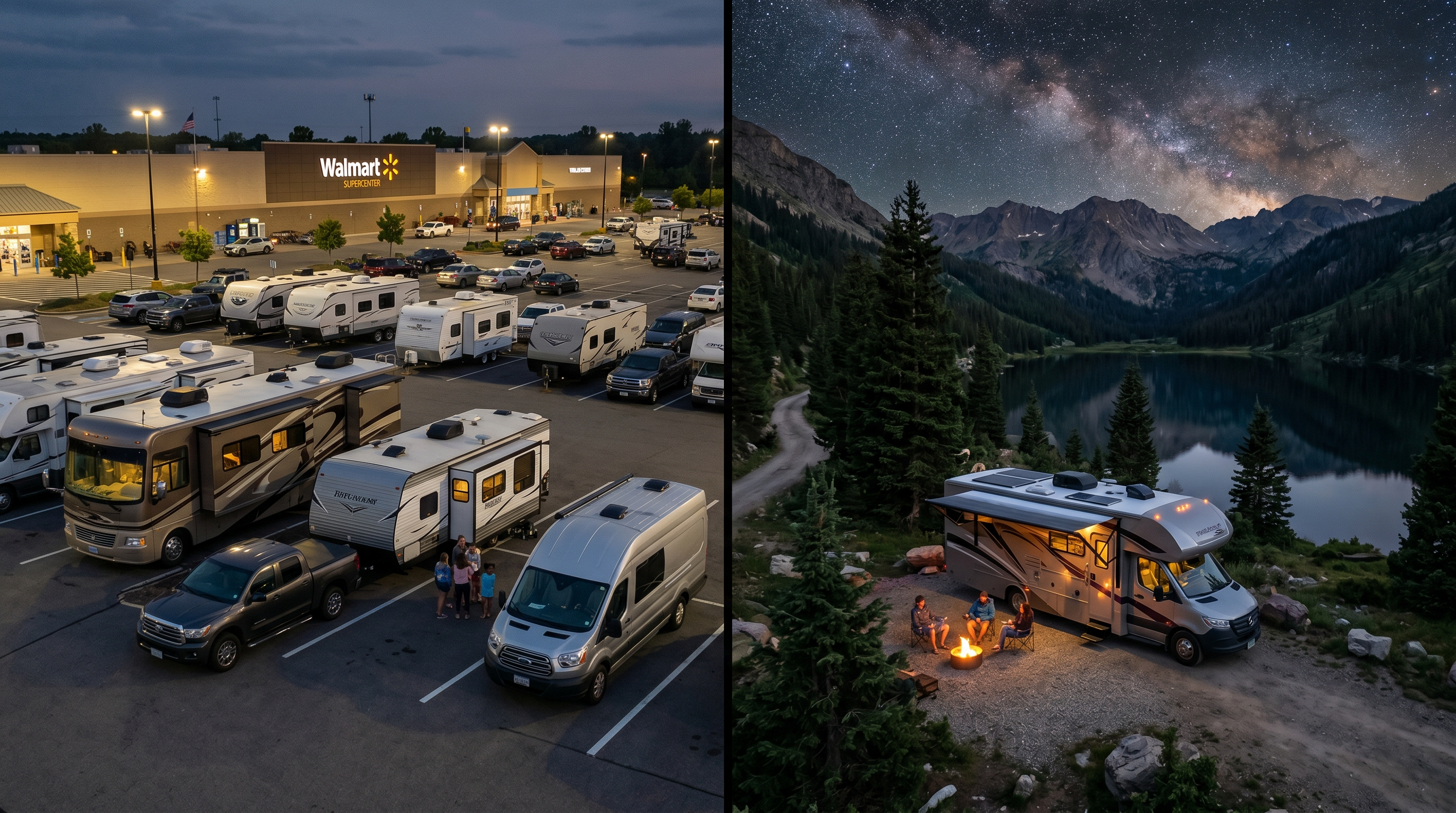
Free camping in 2026 is not just about finding a random Walmart parking lot and hoping nobody knocks on your window at 1:37 in the morning. It is about knowing your options, understanding the rules, planning your route, and choosing the right overnight stop for the kind of trip you are actually taking.
After years of full-time RV travel and four seasons working around campgrounds and provincial parks, I have watched camping change. Campground rates have climbed, last-minute sites have become harder to find, and more RVers are looking for ways to keep traveling without turning every overnight stop into a hotel bill on wheels.
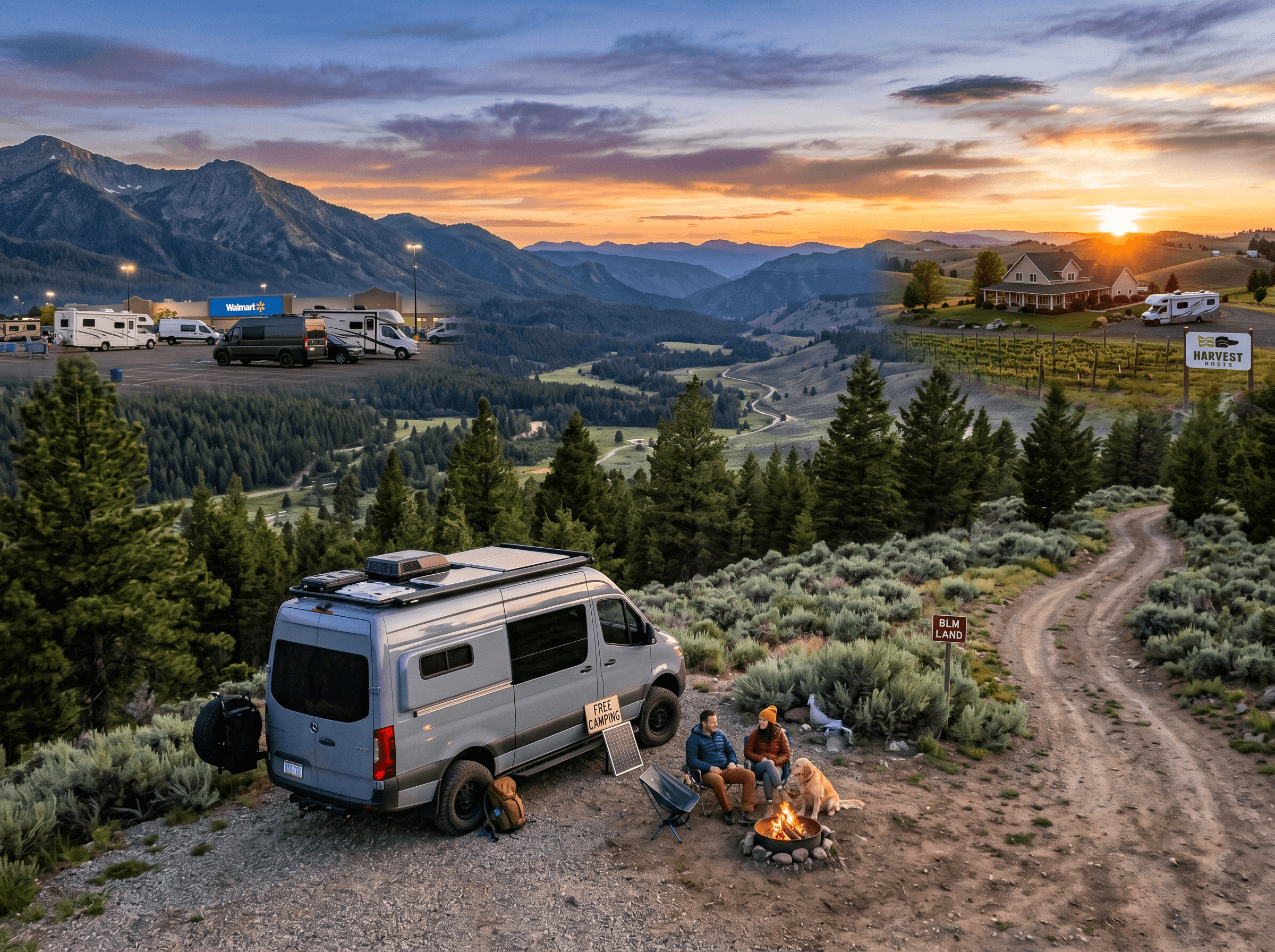
That is where free and low-cost camping comes in. Public land, Crown land, BLM land, Walmart-style parking lot camping, casino stops, rest areas, Harvest Hosts locations, and hidden overnight options can all play a role if you know when to use each one.
Why More RVers Are Looking For Free Camping In 2026
The other day, I drove past a few RV storage lots and had one of those thoughts that kind of sticks with you.
There were rows and rows of RVs sitting there. Travel trailers, fifth wheels, motorhomes, toy haulers. Some probably worth more than the house I grew up in. Meanwhile, on the road, I was seeing more people stopping in parking lots, pulling into big-box stores, and clearly trying to stretch their camping budget a little further.
And honestly, I get it.
Camping is not as cheap as it used to be. Fuel costs more. Groceries cost more. Campground rates can easily run $50, $70, $90, or more per night depending on where you are. Add in reservation fees, dump fees, pet fees, firewood, propane, and the odd “convenience fee” that feels about as convenient as a flat tire in the rain, and suddenly the weekend getaway starts looking like a small financial decision.
Free camping is not about being cheap. Well, sometimes it is. But mostly, it is about keeping the trip possible.
What Counts As Free Camping?
Free camping is a broad term. Some people use it to mean public land boondocking. Others mean overnight parking at Walmart. Some mean dry camping without hookups. Others include membership-based stays like Harvest Hosts because the nightly camping fee is often replaced by supporting a host business.
For this guide, we are looking at the whole picture.
Parking Lot Camping
Quick overnight stops at approved retail lots, casinos, truck stops, or similar places while traveling.
Public Land Camping
Camping on Crown land, BLM land, national forest land, or other legal public-use areas.
Low-Cost Experience Camping
Options like Harvest Hosts, farms, wineries, breweries, museums, and other unique host locations.
Parking Lot Camping: When You Just Need A Safe Place To Sleep
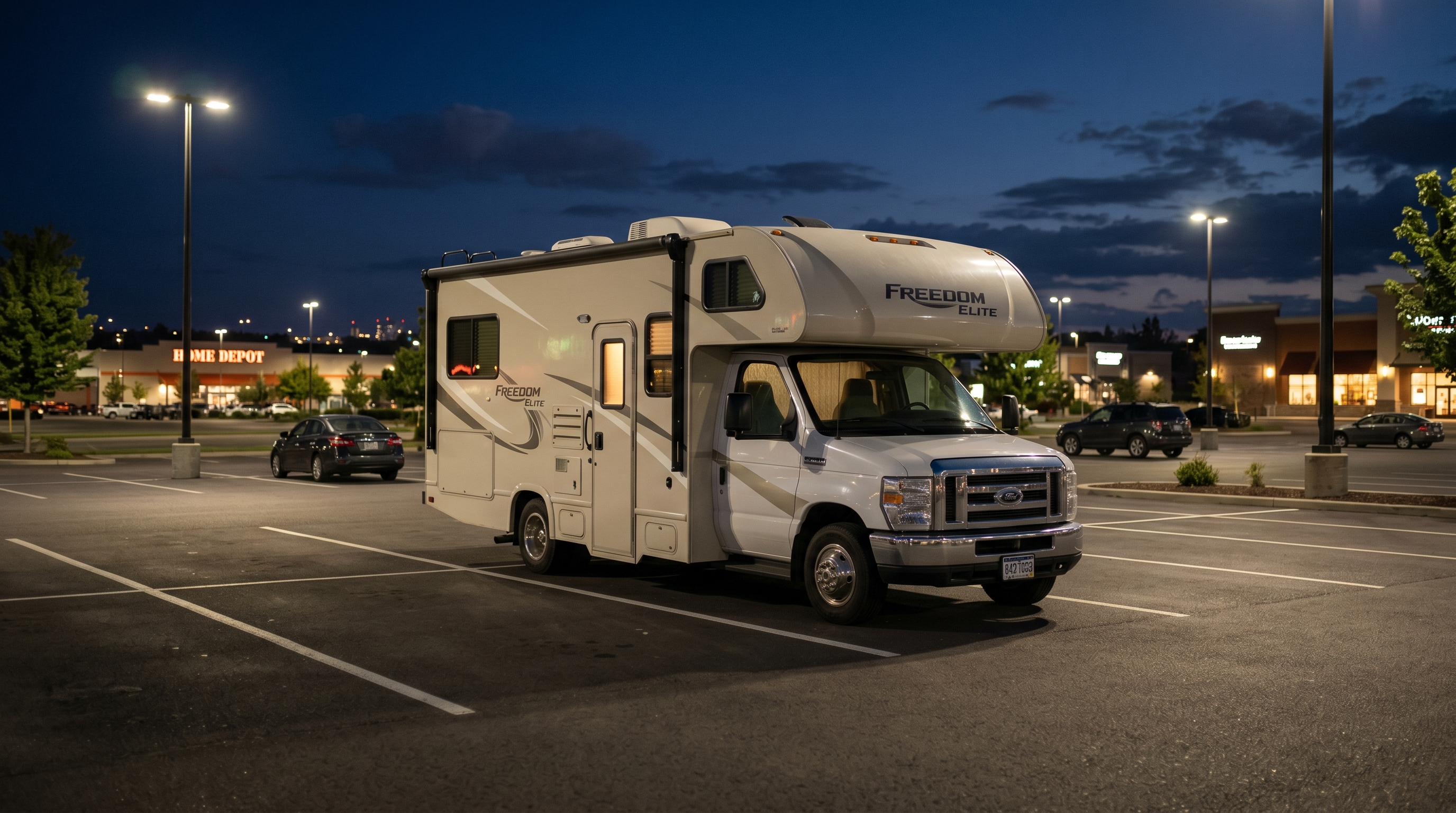
Parking lot camping is not really camping in the romantic sense. Nobody is roasting marshmallows beside the garden center while a security camera watches from above. At least, I hope not.
Parking lot camping is a travel tool. It is useful when you are covering miles, arriving late, leaving early, or simply need a legal place to stop before continuing down the road.
Common parking lot and overnight stop options may include:
- Some Walmart locations
- Cabela’s or Bass Pro Shops locations
- Cracker Barrel locations in the United States
- Casinos
- Truck stops
- Rest areas where overnight parking is allowed
- Some municipal or visitor center lots
Parking Lot Camping Best Practices
- Ask permission when possible.
- Park out of the way, not near the front doors.
- Do not put out awnings, chairs, rugs, grills, or full campsite setups.
- Keep slides in unless absolutely necessary and safe.
- Arrive late and leave early.
- Buy something from the business if you are using their lot.
- Leave no trash behind.
- Trust your gut if the area feels wrong.
This is where AllStays can be extremely useful because it helps RVers research overnight parking, fuel stops, dump stations, campgrounds, grades, low clearances, and other travel details before pulling in blind.
Public Land Camping: The Better Option When You Want Space
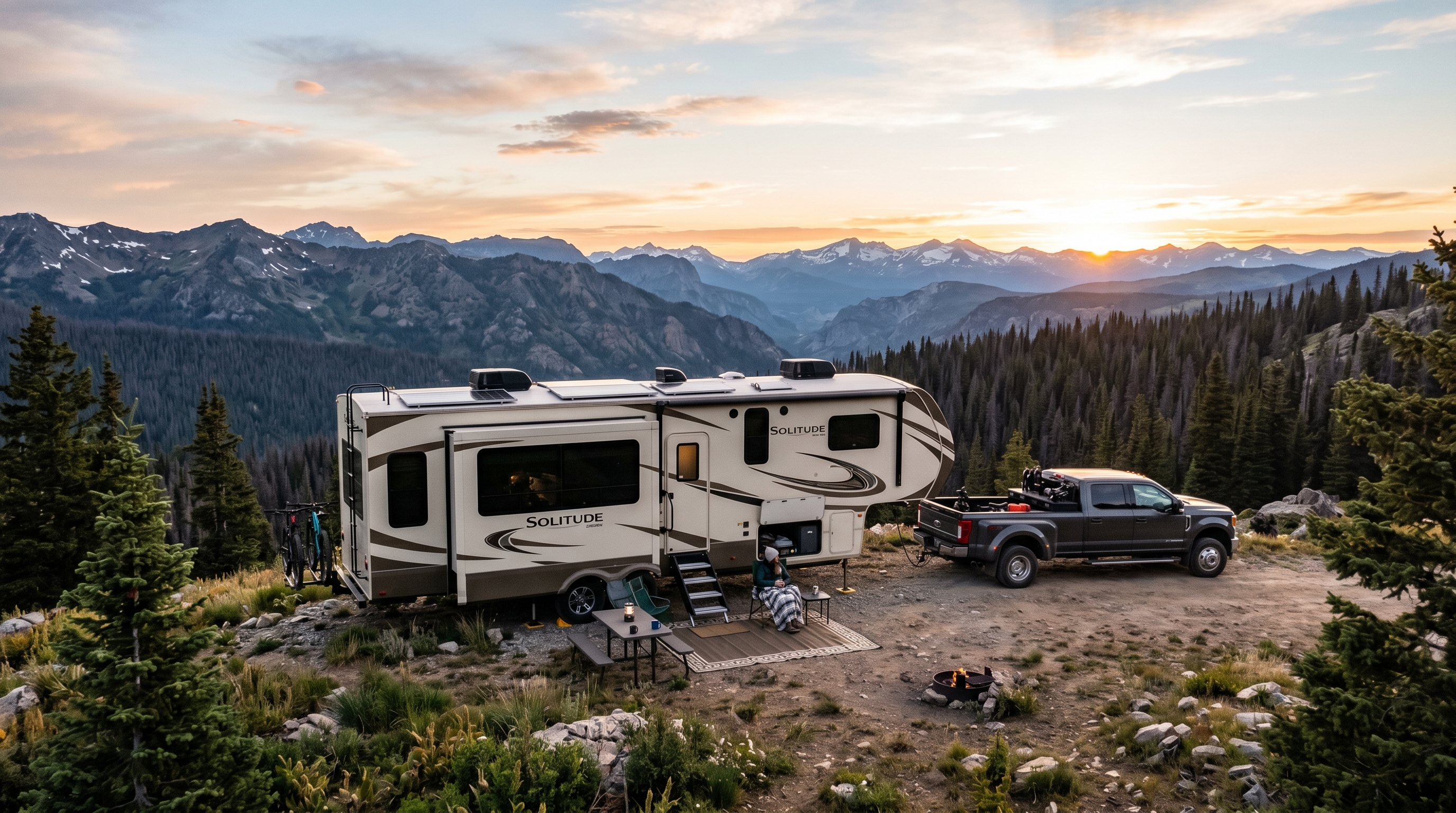
Public land camping is where free camping starts to feel like actual camping again.
Instead of sleeping under parking lot lights, you might be tucked beside a forest road, overlooking a valley, parked near a lake, or camped somewhere quiet enough that the loudest thing around is your own fridge cycling on and off.
Depending on where you are, public land camping may include:
- Crown land in Canada
- BLM land in the United States
- National forest land
- Some state or provincial public-use lands
- Designated dispersed camping areas
This is usually the better option when you want to stay more than one night, spread out a little, enjoy nature, or actually feel like you escaped something.
Public Land Camping Rules To Know
Public land does not mean “do whatever you want land.” That is usually where people get themselves in trouble.
Rules vary by country, province, state, district, and land manager. Before camping, check:
- Whether camping is allowed in that specific area.
- How many nights you can stay.
- Whether campfires are allowed.
- If permits are required.
- Road conditions and RV access.
- Seasonal closures.
- Wildlife restrictions.
- Garbage and waste rules.
In Canada, Crown land rules vary by province. In the United States, BLM and national forest rules vary by field office or district. So yes, it takes a little homework. That homework is still better than driving down a questionable road and realizing your “free campsite” is actually a mud trap with mosquitoes and regret.
Parking Lot Camping vs Public Land Camping
Both options have a place. The mistake is treating them like they serve the same purpose.
| Category | Parking Lot Camping | Public Land Camping |
|---|---|---|
| Best For | Quick overnight travel stops | Longer off-grid stays |
| Atmosphere | Urban, busy, convenient | Quiet, natural, remote |
| Setup | Minimal setup only | More campsite-style setup if allowed |
| Length of Stay | Usually one night | Often multiple nights, depending on rules |
| Comfort | Easy access to stores and roads | Better scenery and space |
| Main Risk | Security, permission, bylaws | Road access, weather, isolation, regulations |
My personal rule is pretty simple. If I am just trying to get from Point A to Point B, a legal parking lot stop can make sense. If I want to actually camp, I am looking for public land, a lower-cost campground, or a unique stay like Harvest Hosts.
Where Harvest Hosts Fits Into The Free Camping Conversation
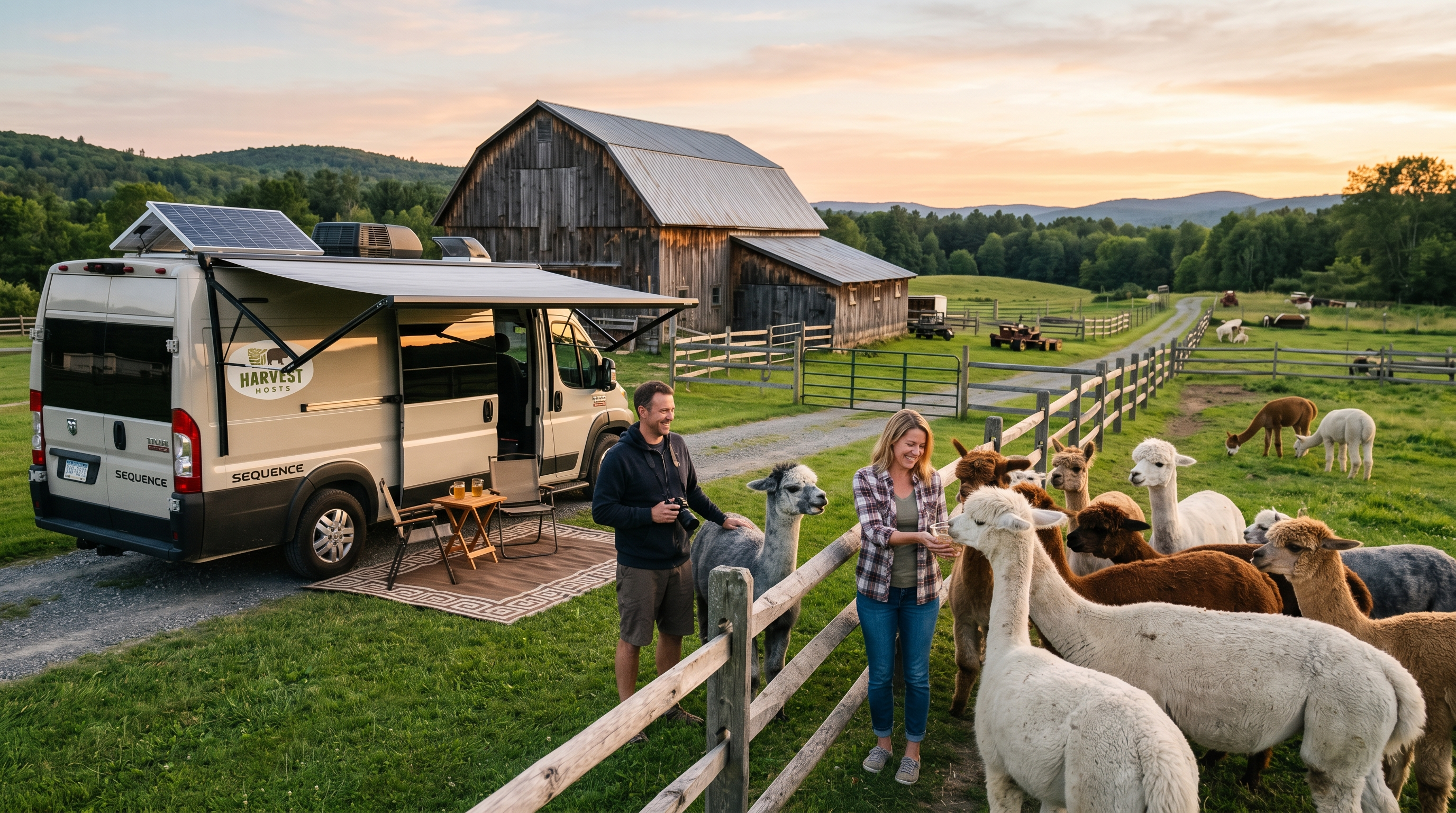
Harvest Hosts is not exactly free camping in the traditional sense because it is a membership. But it belongs in this conversation because it solves the same problem in a much better way for many RVers.
Instead of pulling into a bright parking lot beside shopping carts and hoping the street sweeper is not scheduled for 4 a.m., Harvest Hosts gives RVers access to unique overnight stays at places like farms, wineries, breweries, museums, golf courses, and attractions.
The expectation is usually that you support the host business. Buy a bottle of wine. Grab dinner. Pick up farm products. Book an experience. That is not a bad trade when the alternative is sitting beside a loading dock listening to a delivery truck reverse-beep its way into your dreams.
Harvest Hosts vs Walmart Parking Lot Camping
| Walmart-Style Parking | Harvest Hosts |
|---|---|
| Usually convenient for travel days | Better for memorable overnight stops |
| Often busy, noisy, and exposed | Usually quieter and more scenic |
| Permission varies by location | Hosts are listed for RV overnight stays |
| No real travel experience | Can become part of the trip itself |
| Free if allowed | Membership plus supporting host businesses |
Best Apps And Tools For Finding Free And Cheap Camping
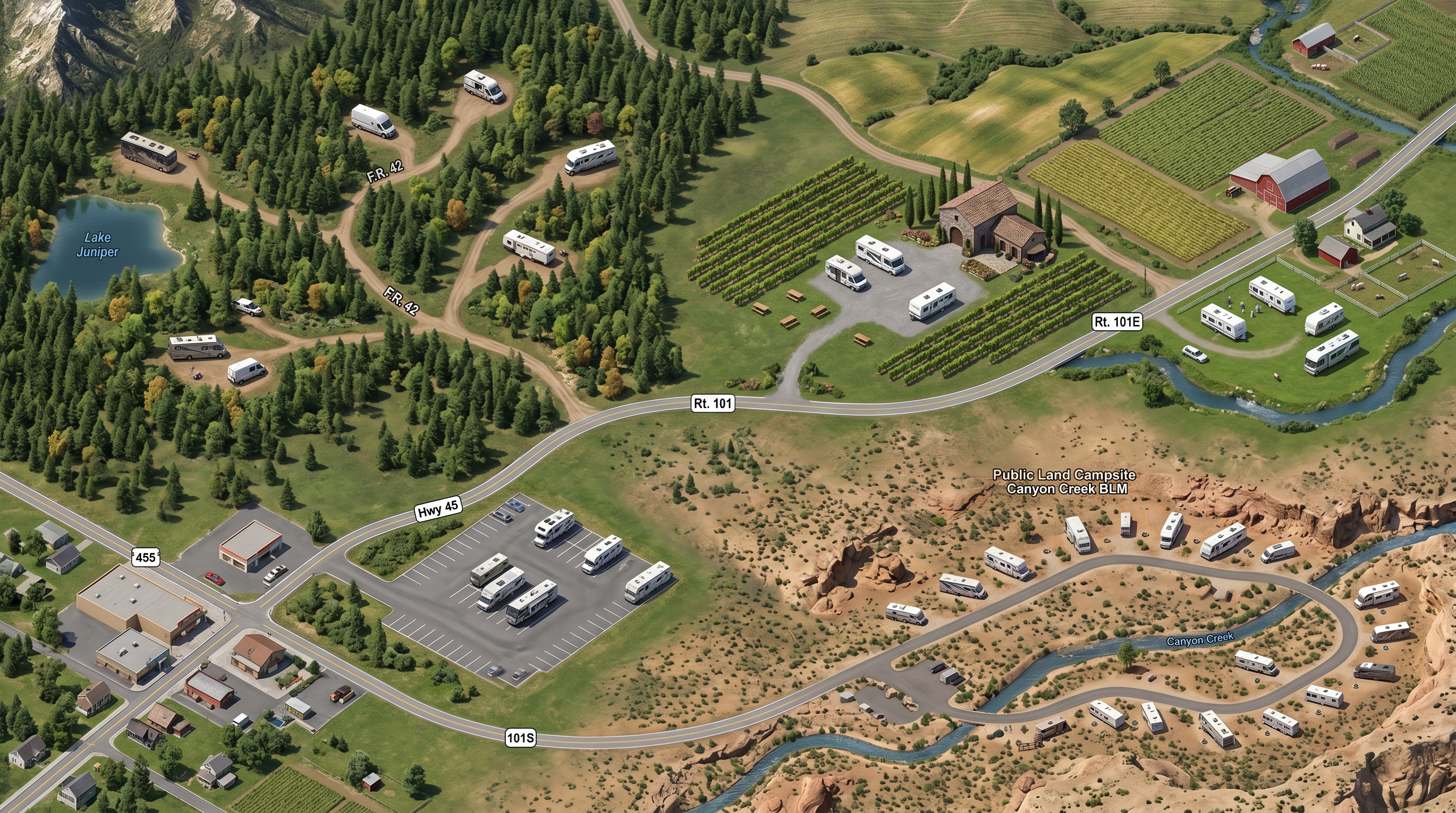
The difference between a good free camping night and a complete gong show often comes down to planning. The best spot in the world is not helpful if your rig cannot get there, your tanks are full, your battery is dead, or the road looks like it was designed by someone who hates axles.
These are the tools I would build into the planning process:
AllStays
Useful for researching overnight parking, campgrounds, fuel stops, dump stations, low clearances, and RV travel hazards.
View AllStays GuideRV LIFE
Helpful for RV-safe routing, trip planning, campground research, and building a realistic route before travel day.
View RV LIFE GuideRV Trip Cost Estimator
Use our planner to estimate fuel, campground costs, food, distance, and travel budget before deciding where free camping fits.
Use The Trip Cost EstimatorPlanning tools do not replace common sense, but they do reduce the number of “well, this was dumb” moments. And with RV travel, that alone is worth something.
Free Camping Is Not Always Free
This is the part people skip.
Free camping can save a lot of money, but it can also create other costs if you are not prepared.
- You may burn extra fuel reaching remote public land.
- You may need solar, batteries, or a generator for longer stays.
- You may pay for dump stations or water fills.
- You may spend more time searching for legal places to stay.
- You may need better internet options if you work from the road.
- You may need to backtrack if a road is unsuitable for your RV.
That is why I like mixing options instead of relying on one style of camping. Use public land when it makes sense. Use parking lots when you are traveling through. Use Harvest Hosts when you want the overnight stop to feel like part of the trip. Use paid campgrounds when you need laundry, showers, hookups, water, sewer, or a reset day.
The goal is not to avoid campgrounds forever. The goal is to stop letting campground prices control your entire trip.
Free Camping Checklist For RVers
Before heading out for any free or low-cost overnight stay, run through this quick checklist.
- Confirm overnight camping or parking is allowed.
- Check local bylaws, land-use rules, or host instructions.
- Know where the nearest dump station is.
- Fill your fresh water before heading remote.
- Check your battery levels and power needs.
- Have a backup overnight option.
- Download maps before losing cell service.
- Keep pets secure and follow leash rules.
- Pack out all garbage.
- Leave the site better than you found it.
Best Free Camping Option By Travel Style
| Travel Situation | Best Option | Why |
|---|---|---|
| Long highway travel day | Parking lot, truck stop, casino, or rest area where allowed | Fast, convenient, and usually close to your route |
| Want nature and quiet | Public land or dispersed camping | More space, better scenery, and less noise |
| Want a memorable overnight stop | Harvest Hosts | Farms, wineries, breweries, attractions, and unique hosts |
| New to RVing | Low-cost campground or easy Harvest Hosts location | Less stressful than jumping straight into remote boondocking |
| Traveling with pets | Public land, pet-friendly hosts, or campgrounds | More space and fewer parking lot risks |
| Need hookups or laundry | Paid campground | Sometimes the boring practical option is the right one |
Beginner Mistakes To Avoid
Free camping is not difficult, but beginners can make it difficult in a hurry.
1. Treating A Parking Lot Like A Campground
Do not put out the grill, awning, mat, chairs, and full patio setup in a retail parking lot. That is not camping. That is how overnight parking disappears for everyone else.
2. Assuming Public Land Means No Rules
Public land still has rules. Stay limits, fire bans, waste rules, road closures, permits, and local restrictions all matter.
3. Forgetting About Water And Waste
Free camping gets less charming when your fresh tank is empty and your black tank is giving you that “we need to talk” feeling.
4. Chasing Free So Hard You Spend More
Driving an extra 80 miles to avoid a $30 campground does not always make sense. Use the RV Trip Cost Estimator to make the math less emotional.
5. Not Having A Backup Plan
Sometimes the lot is posted. Sometimes the road is closed. Sometimes the public land site is full. Sometimes your gut says, “Nope.” Listen to that. Always have a Plan B.
How To Build A Smarter Free Camping Route
The best RV routes usually mix overnight styles. That is how you save money without making the whole trip feel like a survival test.
For example:
- Night 1: Parking lot stop while covering highway miles.
- Night 2-4: Public land boondocking near a scenic area.
- Night 5: Paid campground for showers, laundry, water, sewer, and reset.
- Night 6: Harvest Hosts location for a unique travel experience.
- Night 7: Low-cost campground or another public land stop.
That kind of route can reduce your camping costs dramatically without making you feel like you are living behind a strip mall for a week.
For more help planning the budget side, read How To Plan A Budget-Friendly Camping Trip and use the RV Trip Cost Estimator before your next longer route.
Final Thoughts: Free Camping Is A Tool, Not A Personality
Some RVers love public land. Some swear by Walmart stops. Some prefer Harvest Hosts. Some want full hookups every night and have no interest in playing “guess the dump station” on a Tuesday morning.
Fair enough.
The real trick is knowing your options. Free camping in 2026 is not one thing. It is a collection of tools that can help you travel farther, spend less, and avoid turning every RV trip into a campground reservation marathon.
Use parking lots when you need convenience. Use public land when you want space. Use Harvest Hosts when you want the overnight stop to become part of the story. Use paid campgrounds when your tanks, laundry pile, or sanity require it.
That is not being cheap. That is being a smarter RVer.
FAQ: Free Camping In 2026
Is free camping legal?
Free camping can be legal when you are staying in an approved location and following local rules. Parking lots, public land, Crown land, BLM land, rest areas, and casinos all have different rules depending on the specific location.
Can you sleep overnight in a Walmart parking lot?
Some Walmart locations allow overnight RV parking, but many do not. Local bylaws, store policies, and property managers all affect whether overnight parking is permitted. Always ask or verify before staying.
What is public land camping?
Public land camping usually refers to camping on government-managed land where dispersed camping is allowed. This can include Crown land in Canada, BLM land in the United States, national forests, or other public-use areas.
Is Harvest Hosts free camping?
Harvest Hosts is a membership-based RV overnight network, so it is not technically free. However, many RVers consider it a low-cost alternative because overnight stays are usually included with membership and guests are encouraged to support the host business.
What is the best app for finding free RV camping?
AllStays is useful for finding overnight parking, dump stations, low clearances, fuel stops, and campgrounds. RV LIFE is helpful for route planning and RV-safe navigation. Many RVers use more than one tool when planning free or low-cost camping routes.
Is free camping safe?
Free camping can be safe when you choose legal locations, trust your instincts, avoid isolated risky areas, keep your setup simple, and have a backup plan. Parking lot camping and remote public land camping require different safety considerations.


Leave a Reply