

Last Updated on September 14, 2026 by Jeremy
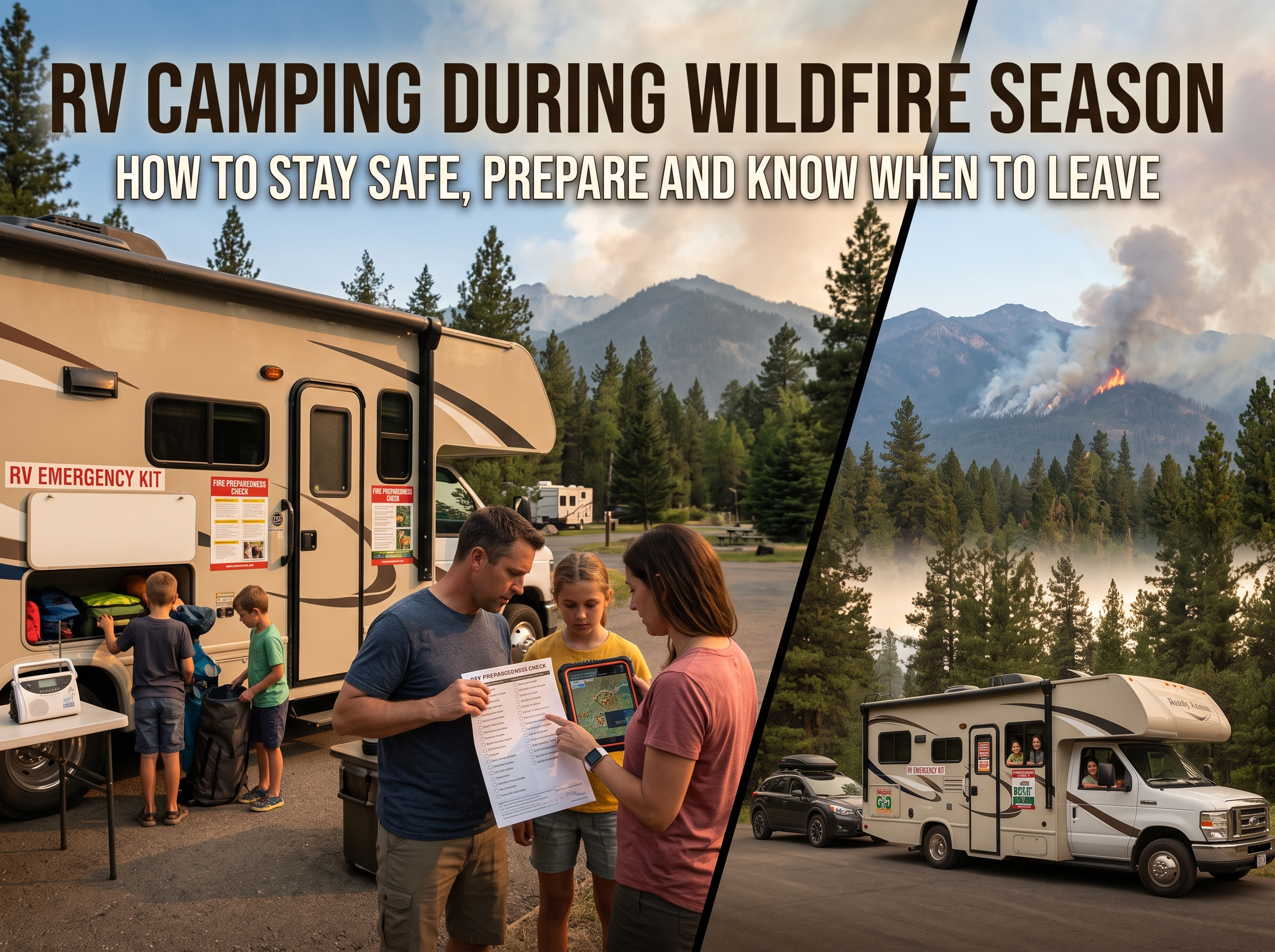
Wildfire season changes RV camping in a way that a normal weather forecast cannot capture. A campground can look calm at breakfast and be under an evacuation alert by supper. Smoke can arrive from a fire hundreds of kilometres away. A road that was your easy way home can become the route everyone is trying to use at once.
I do not say that to scare people away from camping. I say it because we have operated campgrounds while fires were close enough to change the season—and once, to end it before we even knew we had worked our final day.
Quick answer
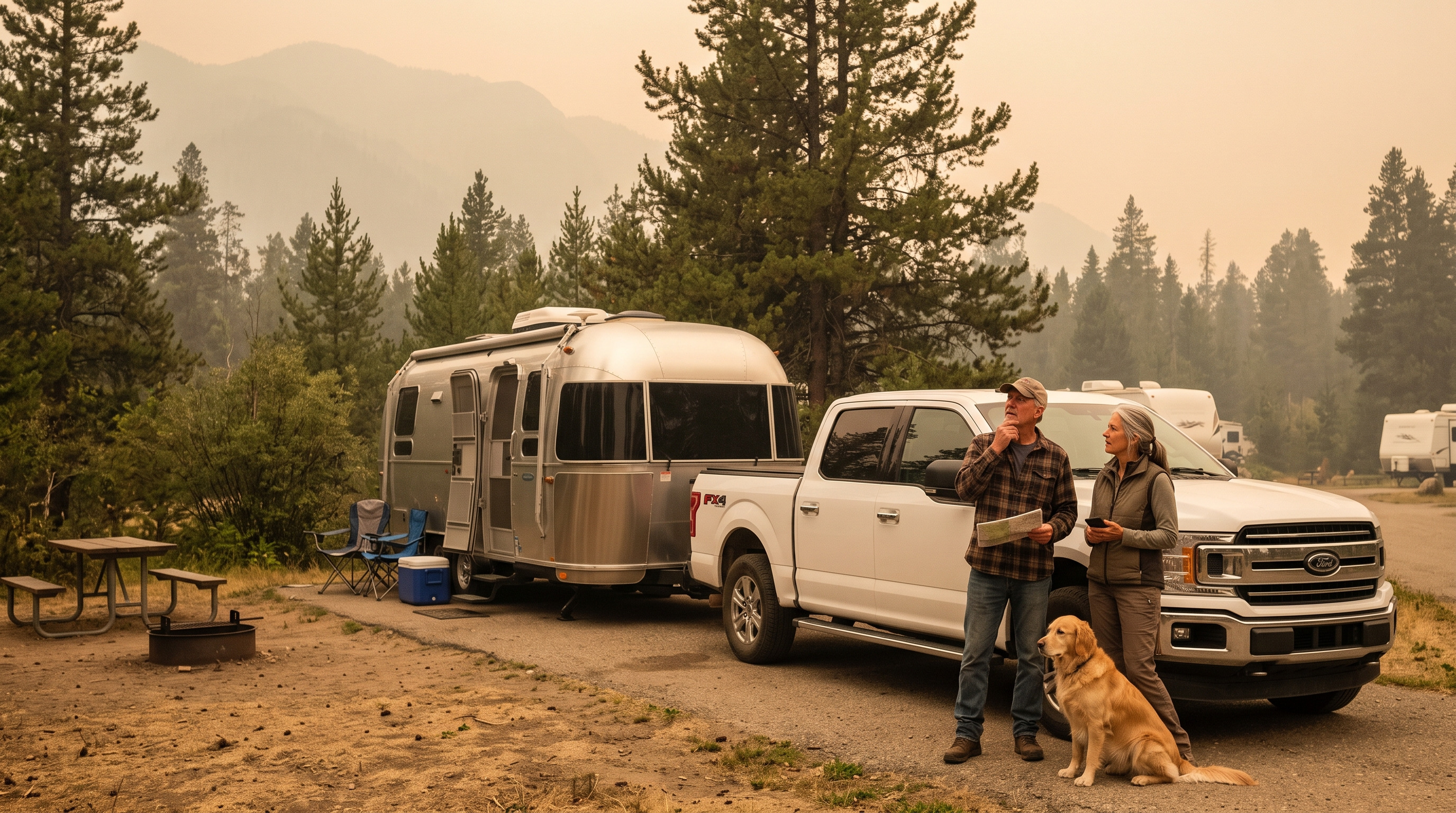
- Check official fire, evacuation, road, and air-quality sources before leaving and at least daily while camping.
- Know the difference between an evacuation alert and an evacuation order.
- Keep enough fuel to leave, identify two exit routes, and make the RV departure-ready when conditions worsen.
- Leave immediately when ordered. An RV is property, not a reason to delay evacuation.
- Smoke alone can make a trip unsafe for some people even when flames are nowhere near the campground.
What wildfire season taught us as campground operators
In our second year operating Seymour Park, the Scotch Creek fires shut us down a full month early. We were under evacuation, and the strangest part was that we did not know our last working day had already happened until two days later, when we were told the season was over.
During our fourth season overall—our second year at Kentucky-Alleyne—fires started near the campground. Those were contained quickly and nothing major developed, but the situation reinforced the same lesson: “nearby fire” is not one fixed condition. It can stabilize, or it can change faster than your normal camping routine is prepared for.
What stayed with me was not dramatic flames at the campsite. It was uncertainty. You keep working, checking updates, watching the sky, and trying to make sensible decisions while information evolves. Campers need a plan that still works during that uncertain middle period.
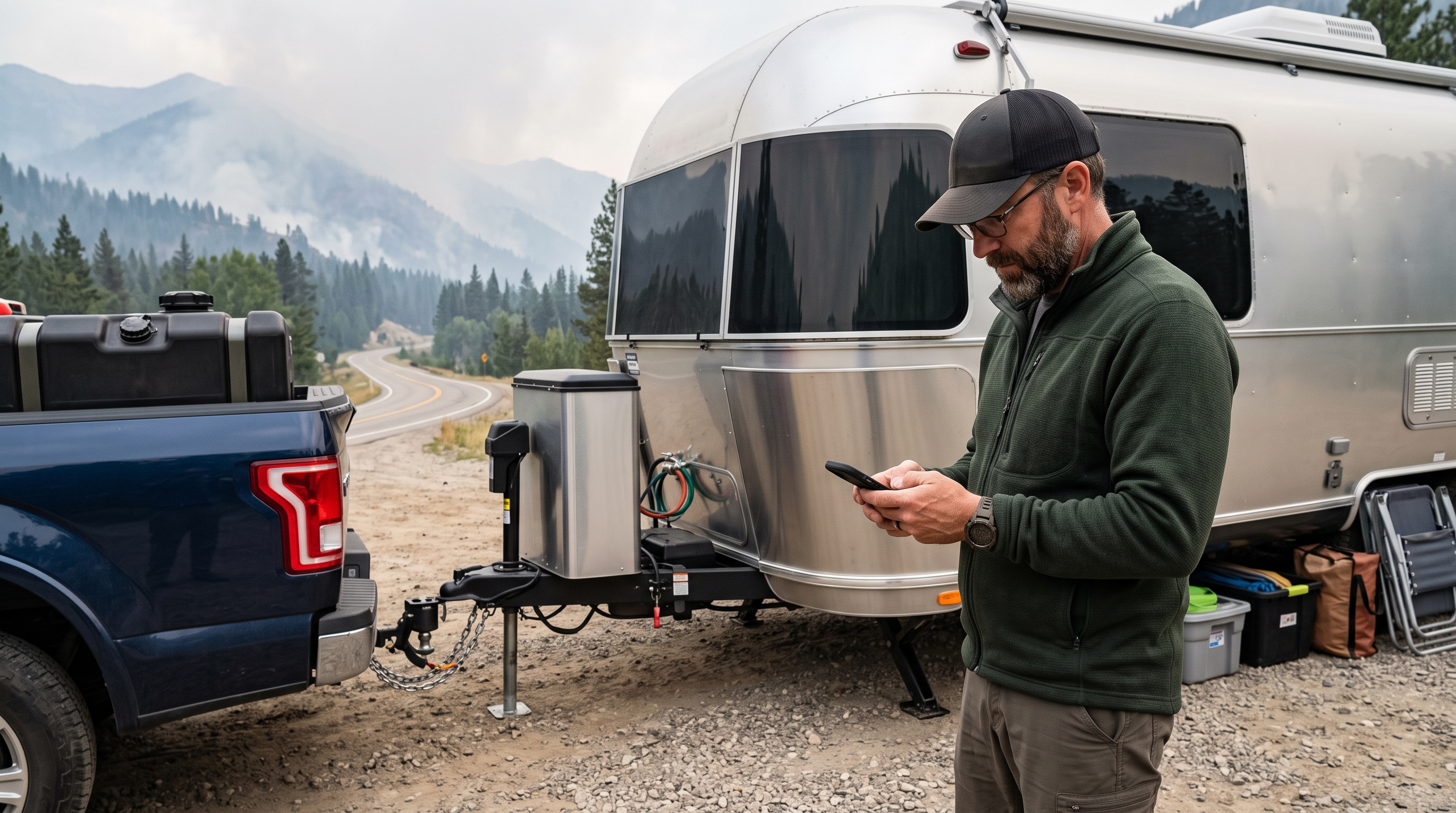
Official information matters more than smoke colour, rumours, or a social-media screenshot.
Alert versus order: know the words before you need them
| Status | What it generally means in British Columbia | What an RVer should do |
|---|---|---|
| Evacuation alert | Be ready to leave on short notice if the situation worsens. | Pack immediately, attach the tow vehicle if practical, confirm routes, fuel up safely, and keep everyone together. |
| Evacuation order | Leave the area immediately. | Follow the designated route and instructions. Do not delay to finish campsite chores or collect non-essential property. |
| Order rescinded / all clear | Authorities have lifted the order, but hazards or restrictions may remain. | Return only when permitted and verify campground, road, utility, and air-quality conditions first. |
Check four kinds of information—not just the fire map
The fourth is air quality. A campground may be open and outside an evacuation zone while smoke reaches unhealthy levels. That is a separate decision, especially for children, older adults, pregnant people, anyone with heart or lung conditions, and pets affected by smoke.
In British Columbia, use BC Wildfire Service and EmergencyInfoBC, plus the relevant local authority and road service. In the United States, the AirNow Fire and Smoke Map is a useful layer. Local emergency agencies remain the authority.
Before leaving home: build a wildfire-ready trip
- Check active incidents along the destination and every realistic route.
- Save official alert pages and enable emergency notifications where offered.
- Download offline maps and screenshot the campground’s exit road.
- Identify two exits, then confirm both can handle your RV’s size, grade, and clearance.
- Carry medications, identification, insurance details, pet records, water, and essential food where they can be reached quickly.
- Start with sufficient fuel. Do not assume a small community station will remain open during an evacuation.
- Tell someone your campground, site number, route, and expected return.
- Read the reservation’s wildfire, closure, cancellation, and refund terms.
Make the routine parts easier
Use the planning tools before departure, then add your wildfire-specific supplies and official alert links.
Build a camping checklist Check weather and travel conditions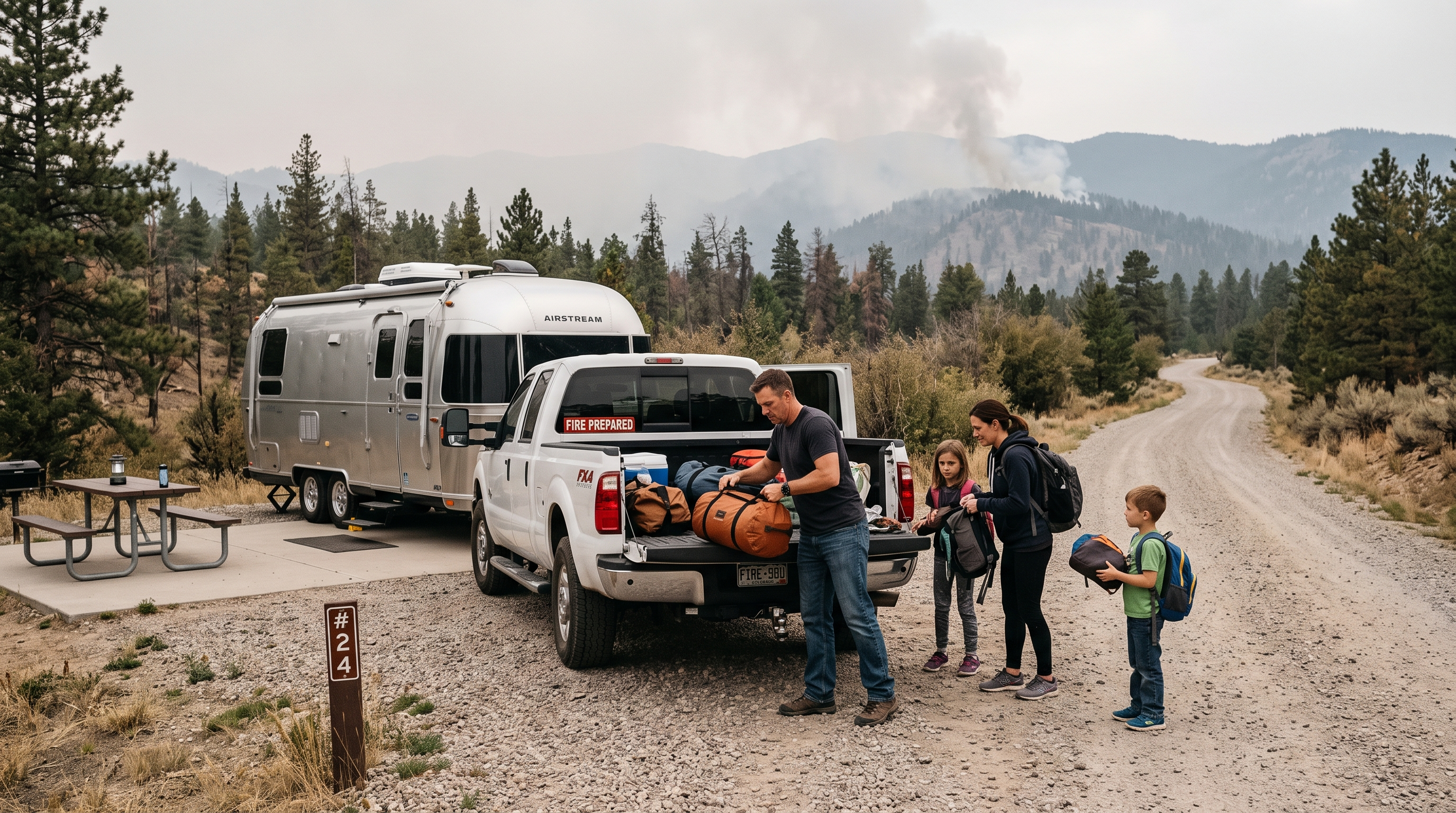
How to keep an RV ready to move
When conditions are normal, spreading out is part of camping. Under an alert, the goal changes. You want the departure process to be boring and fast.
- Put the awning away before wind or ash becomes a problem.
- Keep chairs, rugs, toys, cooking gear, and decorations contained.
- Disconnect non-essential hoses and accessories if officials advise readiness.
- If you tow, connect the trailer when conditions and campsite layout allow.
- Park the tow vehicle or motorhome facing the exit where practical.
- Keep keys, shoes, phones, pet leashes, and go-bags in assigned places.
- Do not block campground roads while preparing.
Never run a vehicle, generator, grill, or combustion heater in an enclosed space to “prepare” or filter the air. Carbon monoxide is colourless and deadly.
Smoke inside an RV: what helps and what does not
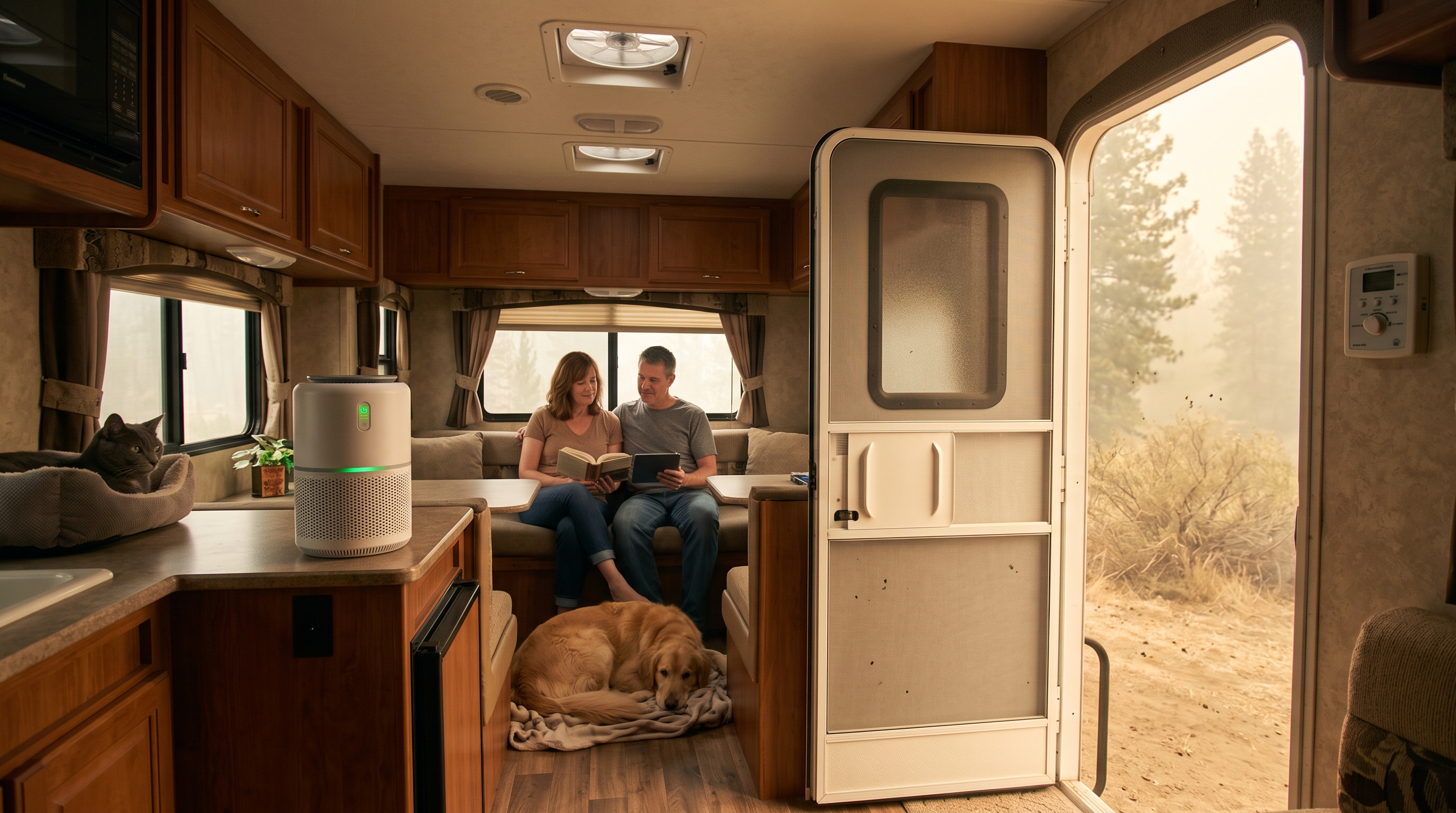
RVs are not airtight. Closing windows and using recirculation may reduce smoke entry, but seals, vents, slide-outs, and frequent door opening still let particles in.
A correctly sized portable HEPA air cleaner can reduce fine particles in a closed interior. It does not make an RV safe from carbon monoxide or every gas in wildfire smoke. Health Canada recommends creating cleaner-air spaces, limiting outdoor exertion, and paying attention to symptoms and local guidance.
- Close windows and doors when outdoor smoke worsens.
- Set vehicle ventilation to recirculate while driving through smoky areas.
- Avoid frying, candles, smoking, and vacuuming without HEPA filtration, which add indoor particles.
- Use a well-fitting respirator such as an N95 when appropriate; cloth face coverings do not filter fine smoke particles effectively.
- Move to a cleaner building or leave the area if the RV cannot maintain tolerable indoor air.
Seek medical help for severe breathing difficulty, chest pain, confusion, or other urgent symptoms. Public health guidance should override a camping itinerary.
When should you leave before an order?
You do not need to wait for an order if the trip no longer feels safe. Leaving earlier may be the smarter choice when:
- Someone in your group is medically vulnerable to smoke.
- Air quality is worsening and the RV cannot maintain cleaner indoor air.
- Your only safe exit is long, narrow, steep, or at risk of closure.
- You need extra time because of mobility needs, children, pets, livestock, or a large rig.
- Fuel, phone service, power, or essential supplies are becoming unreliable.
- Officials recommend non-residents leave to reduce traffic or demand on local services.
- Your instincts are telling you the margin is disappearing.
Leaving early is not overreacting. It can keep you out of the way when emergency traffic needs the road most.
What if you cannot take the RV?
People lose time because the RV feels too valuable to abandon. If the order arrives and safely moving the unit would delay your family, use the vehicle that gets people out fastest. Property can be replaced. People cannot.
If authorities direct you to leave in a certain direction, follow that direction even if your preferred route looks shorter. Do not stop to film, retrieve campsite items, or watch fire activity.
Choosing a campground during wildfire season
No campground can promise it is “wildfire safe.” You can, however, choose a location with better decision-making conditions.
- Ask about exit routes and how alerts are communicated.
- Look at the surrounding road network before booking.
- Avoid assuming waterfront or open sites are automatic fire shelters.
- Check generator rules, open-fire bans, and propane restrictions.
- Prefer flexible cancellations when regional conditions are unstable.
- Do not select a site solely because it is farther from the current fire icon; wind and access matter.
The Campground Picker can help narrow normal trip needs. Wildfire status must still be verified separately using official, current sources.
A five-minute departure checklist
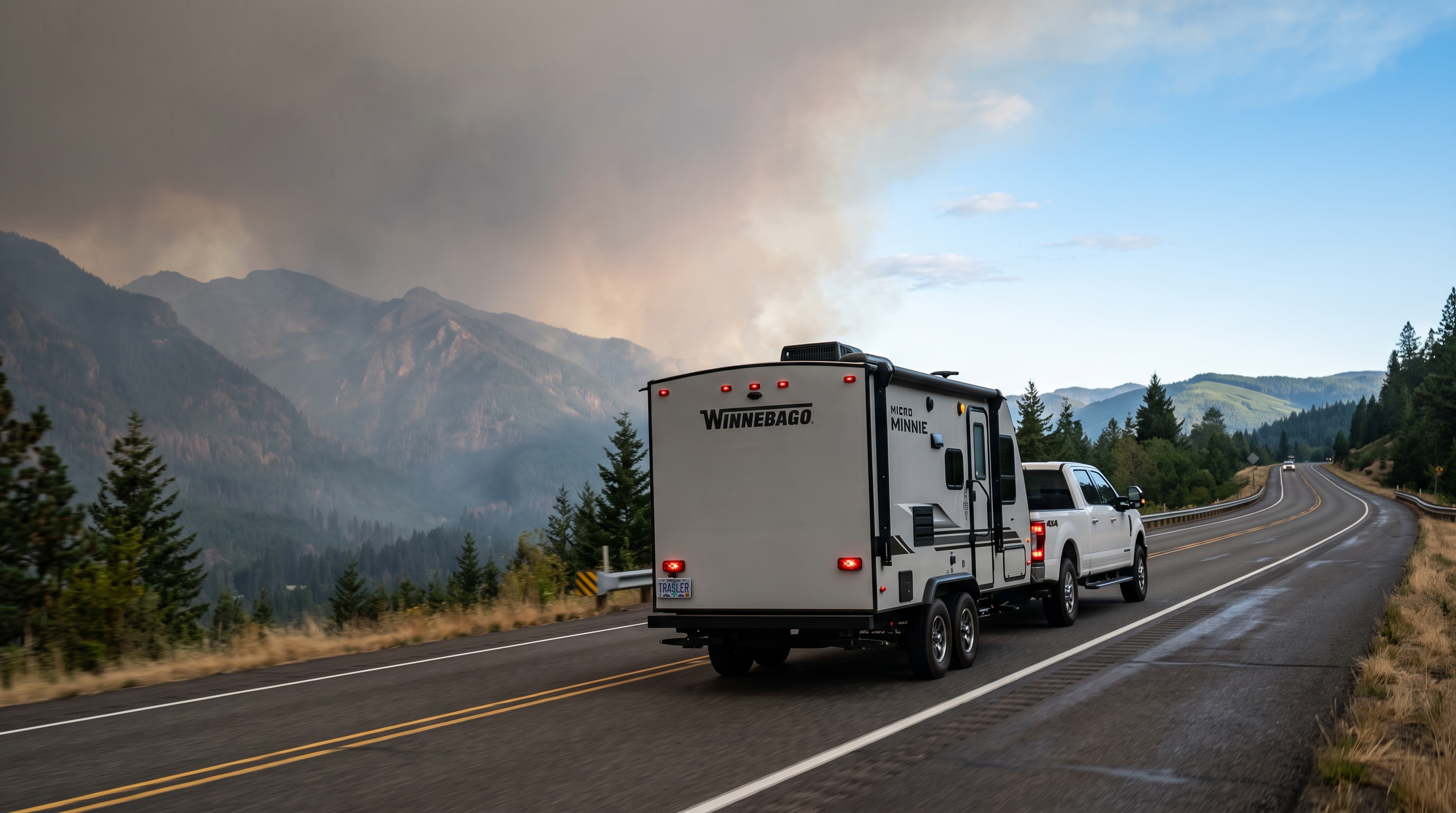
- Get every person and pet into the departure vehicle.
- Take go-bags, medication, phones, keys, identification, and water.
- Follow the official route and instructions.
- Do not add time for dumping tanks, perfect packing, or campsite cleanup.
- Register at a reception centre if instructed and notify your contact once safely stopped.
Final thought
RV camping during wildfire season can still be worthwhile. The goal is not to spend the whole trip staring at a fire map. The goal is to do the preparation once, check reliable information at sensible intervals, and recognize when the situation has changed.
We learned firsthand that a season can end before you know you have worked the final day. A good plan will not control the fire. It will help you make the next decision while you still have time and options.
Frequently asked questions
Is it safe to RV camp when there is a wildfire nearby?
Distance alone does not determine safety. Wind, smoke, road access, evacuation status, terrain, and local instructions all matter. Check official sources and leave whenever ordered or when your group’s needs make an early departure wiser.
What should I pack for RV camping during wildfire season?
Carry go-bags with medication, identification, insurance information, water, food, phone power, offline maps, respirators, pet supplies, and suitable clothing. Keep them easy to reach.
Can an RV protect me from wildfire smoke?
An RV can reduce exposure when closed and equipped with suitable HEPA filtration, but it is not airtight and cannot filter every pollutant. Leave for cleaner air if indoor conditions remain poor or health guidance advises it.
Should I wait for an evacuation order before leaving?
No. An alert means be ready, and people who need more time or are vulnerable to smoke may choose to leave earlier. An order means leave immediately.
What happens if I cannot safely tow my RV during an evacuation?
Prioritize people and pets. Use the fastest safe vehicle and follow official instructions. Never delay an evacuation to save the RV or campsite equipment.
Where should I get wildfire updates?
Use the official wildfire agency, emergency-management authority, local government, road service, campground operator, and public-health air-quality system for the area you are visiting.
Official resources


Leave a Reply