

Last Updated on September 14, 2026 by Jeremy
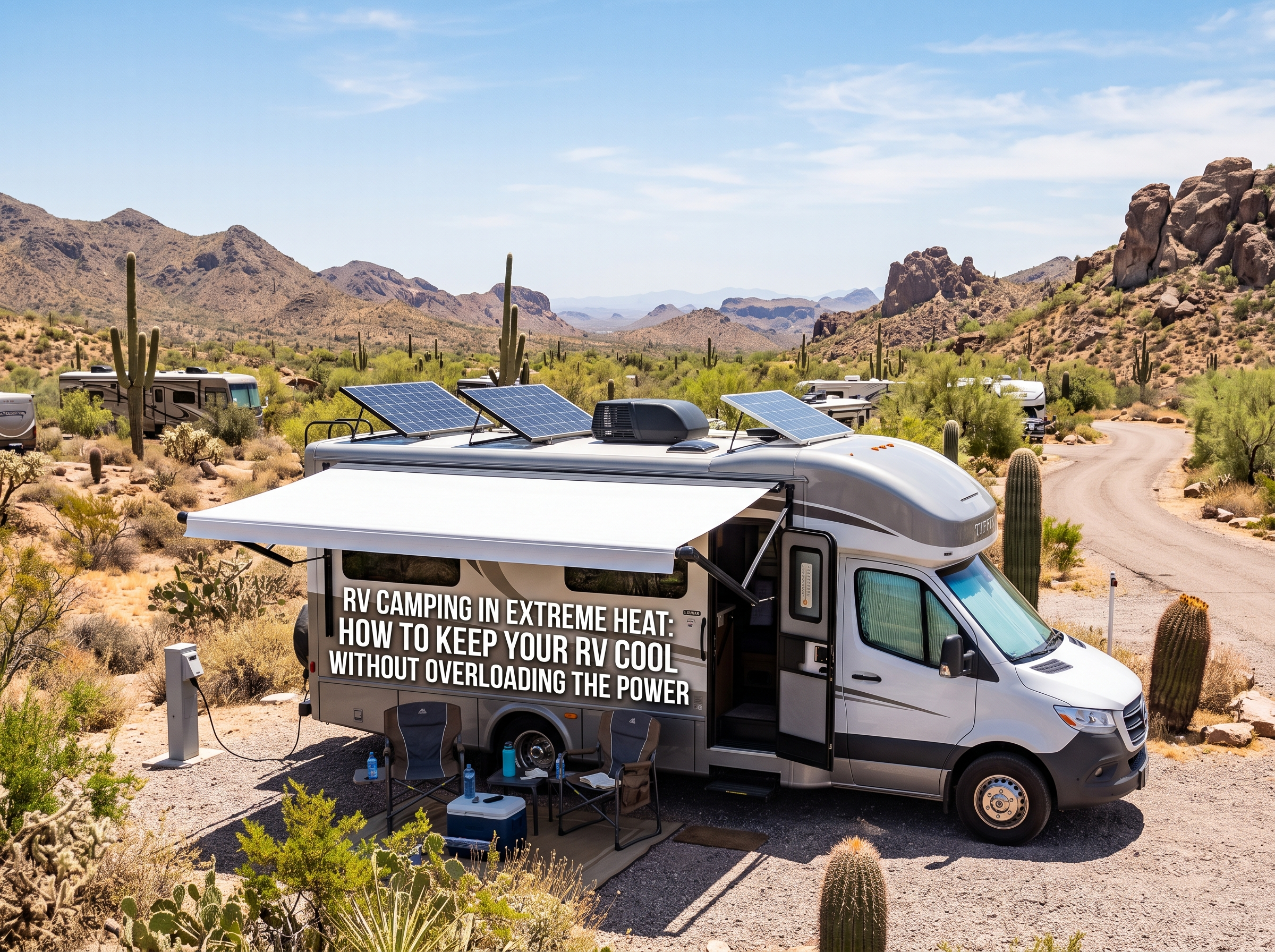
Extreme heat changes RV camping. The question is no longer whether the campsite looks nice. It is whether your electrical supply can support cooling, whether the rig has shade, and what you will do if the air conditioner cannot keep up.
We have lived this in Costa Rica’s humid 30°C jungle weather and during Shuswap summers that pushed into the 40s. The biggest lesson was simple: an RV is a metal box. Stop heat before it enters, move air intelligently, and never assume one appliance will rescue a poor setup.
Quick Answer: How Do You Keep an RV Cool?
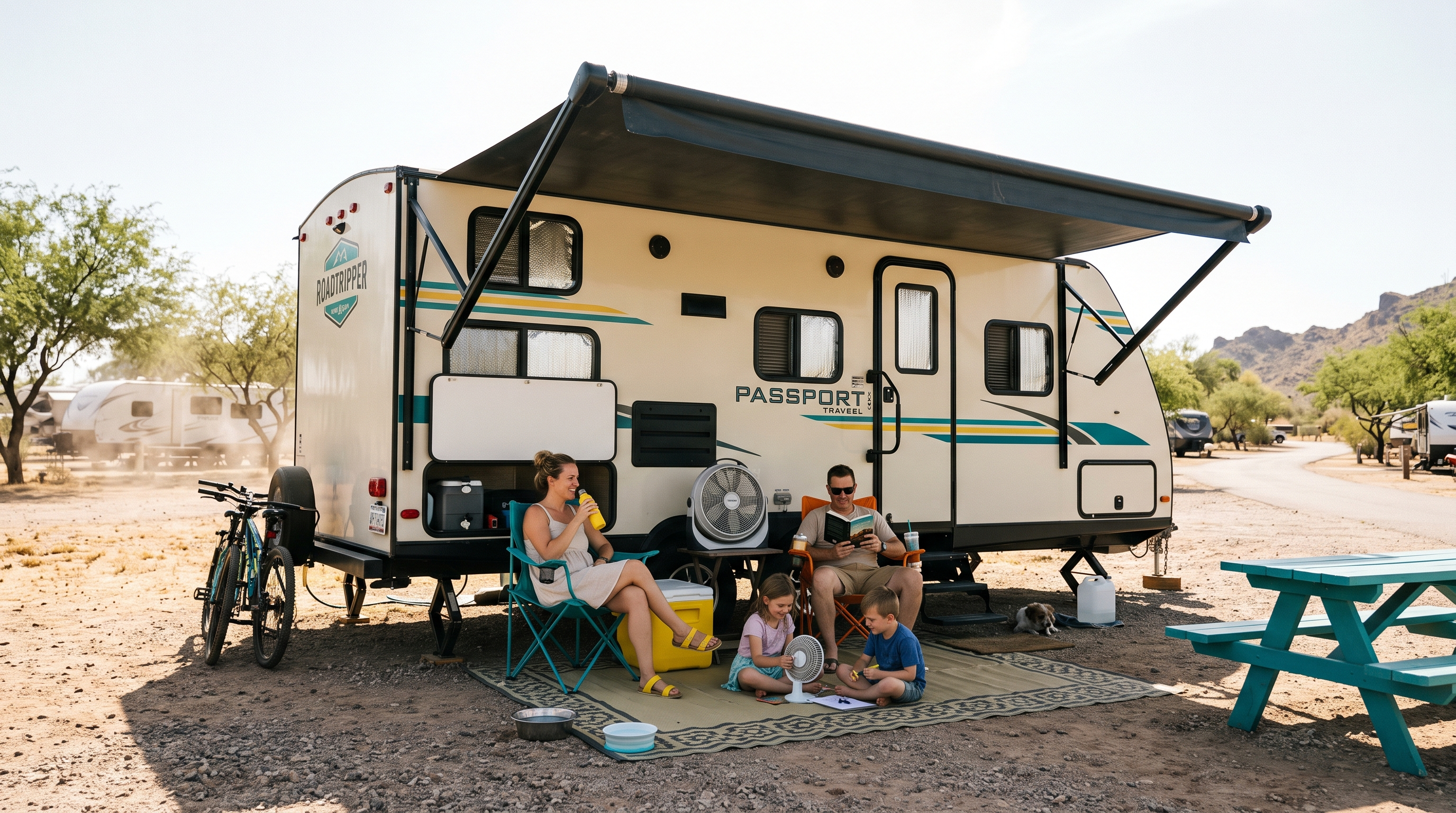
- Choose afternoon shade whenever possible.
- Block direct sun at windows and the windshield.
- Use fans to move cool air toward occupied areas.
- Know the amperage available before starting the air conditioner.
- Reduce other heavy electrical loads while the AC compressor starts.
- Create a night-cooling plan for safe outdoor temperatures.
- Have a backup destination if indoor temperatures become unsafe.
Our Real-World Heat Test
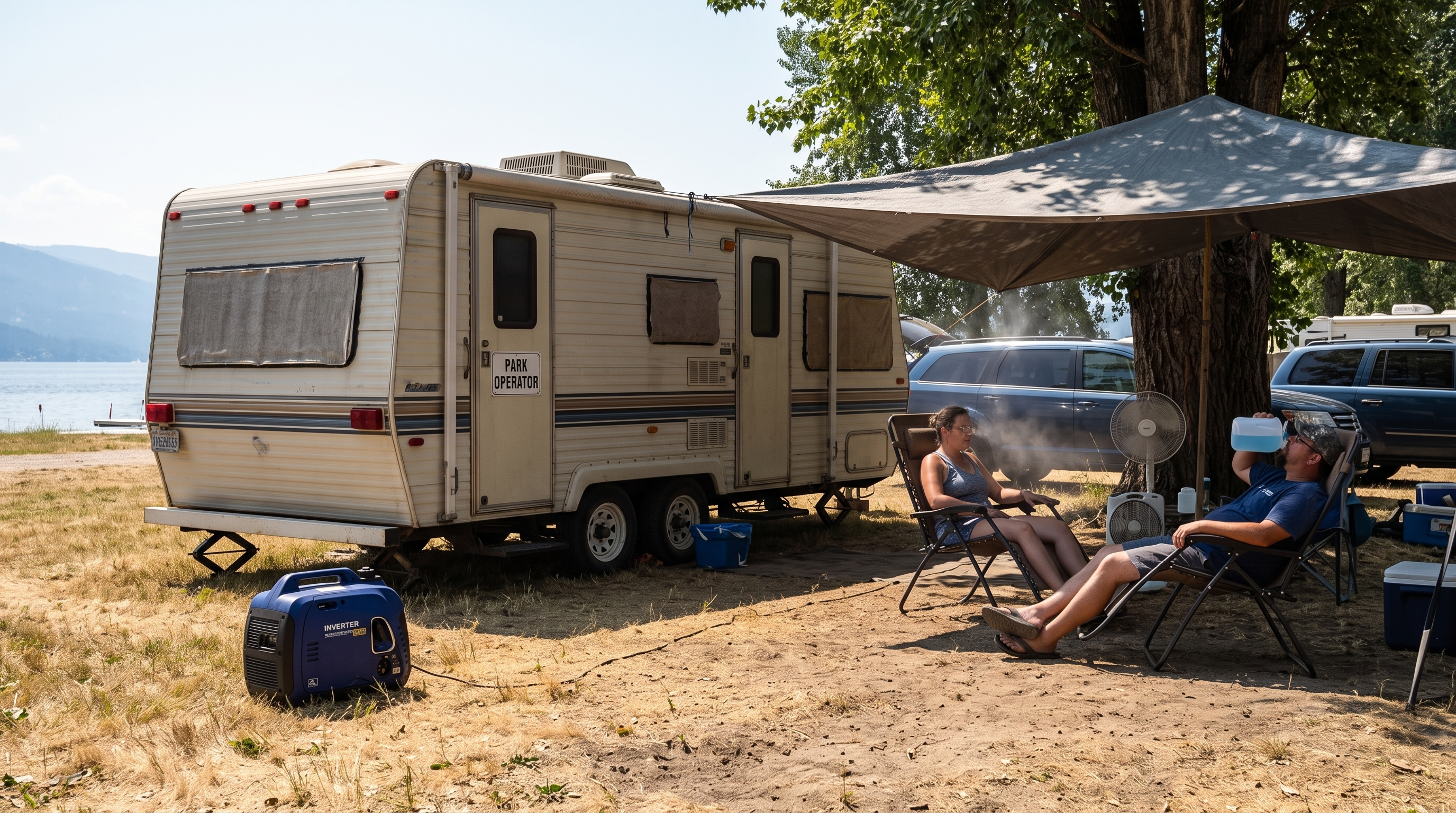
At Silver Beach in the Shuswap, we operated through very hot summers with generator power and an air conditioner that was not working properly. During the day, we kept the doors closed and often stayed outside. At night, we ran the generator and opened windows once the outdoor air finally cooled. It was not glamorous; it was simply what the conditions allowed.
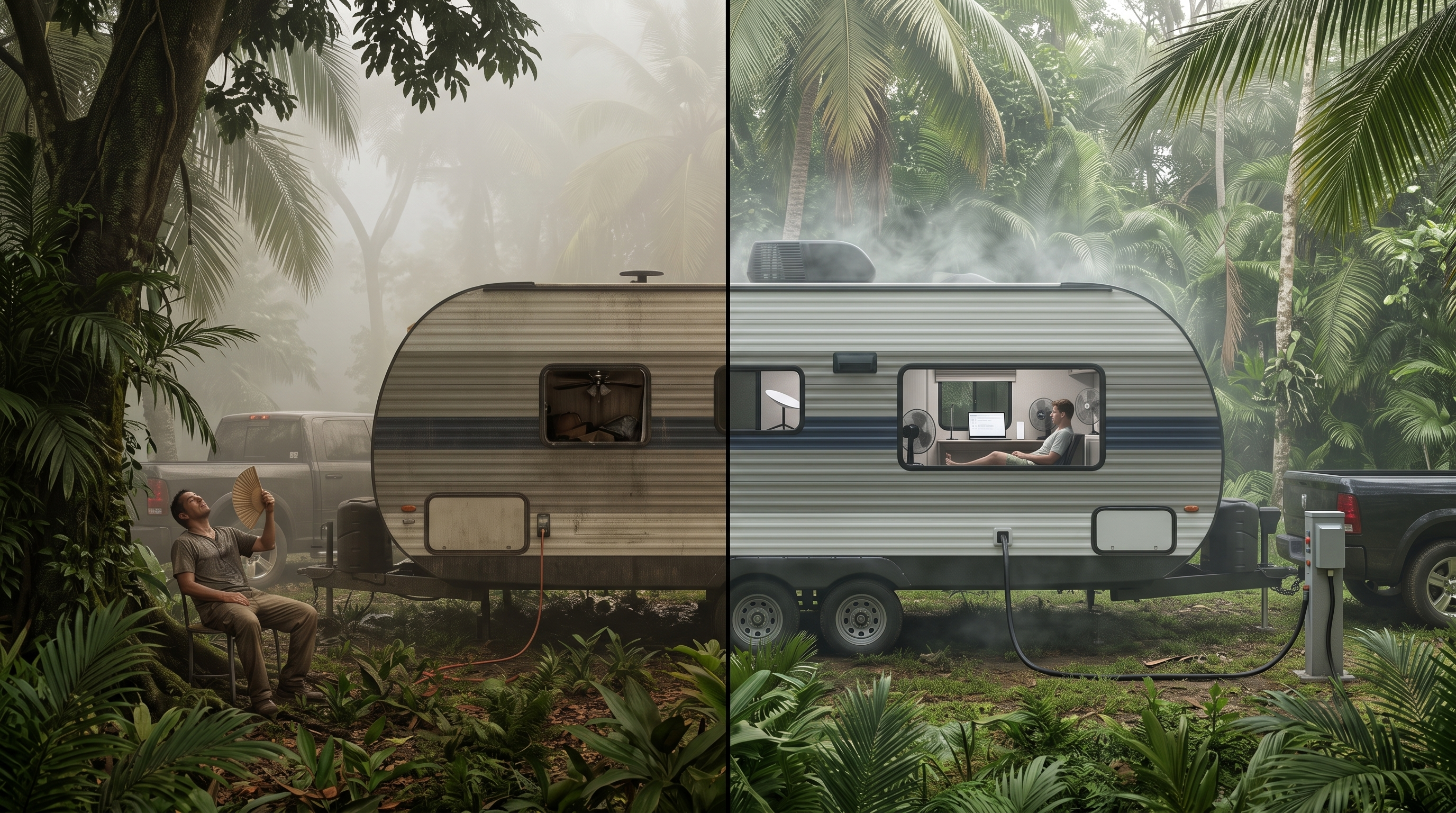
Our first six-month stint in Costa Rica brought inconsistent power, and the AC would not reliably work. During the second stint, full grid power let us run air conditioning, fans and Starlink. The difference was enormous. It also proved that cooling advice detached from the available power supply is not useful.
Start With Shade, Not Machinery
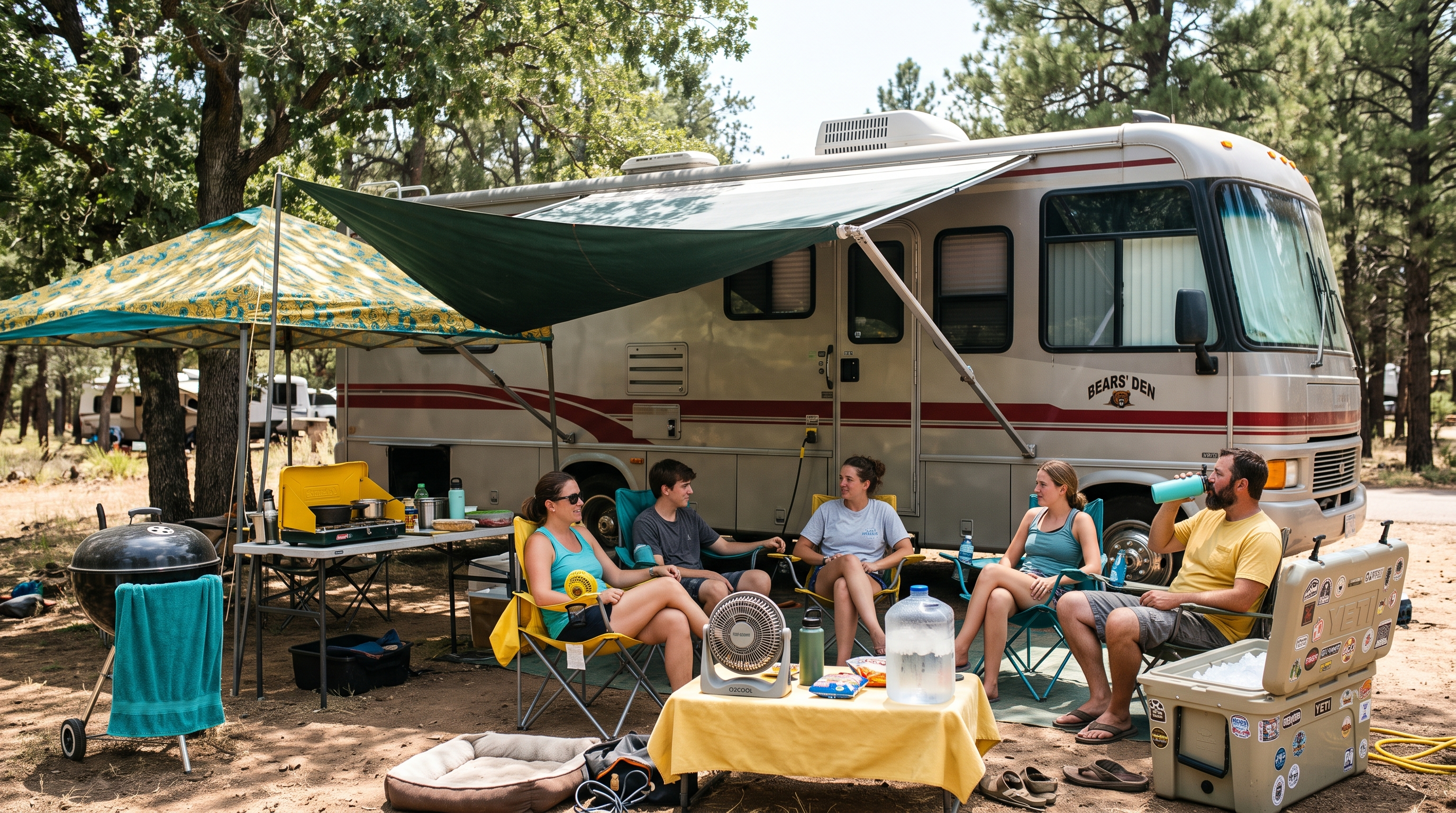
Parking orientation can matter as much as another fan. Afternoon sun striking a large windshield or unshaded wall loads the RV with heat for hours. If you have a choice, look at where the sun will be between roughly 2 p.m. and 7 p.m.—not just where the shade sits at check-in.
Use awnings only when wind conditions permit. Exterior shade screens are effective because they stop radiation before it passes through glass. Inside, reflective inserts, insulated curtains and closed blinds help, though they work best before the interior is already hot.
Manage Air Conditioning Without Overloading Power
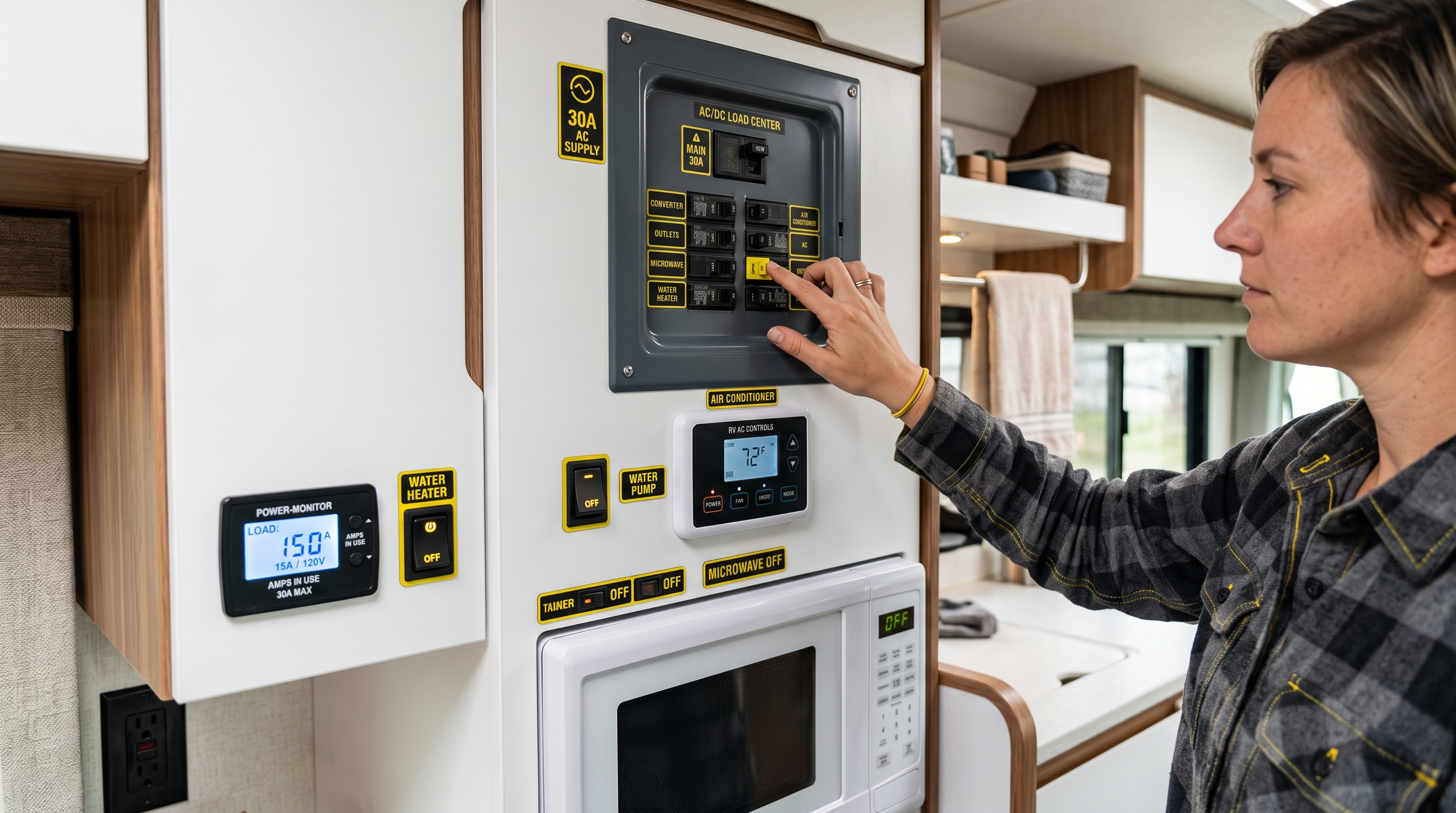
An RV air conditioner draws more power when its compressor starts than it does while running. That is why an apparently adequate source may trip when the microwave, water heater or another large appliance is operating at the same time.
| Power situation | Cooling strategy | Watch for |
|---|---|---|
| 30-amp hookup | Run one major cooling load and stagger other appliances. | Low voltage, warm plugs, repeated breaker trips. |
| 50-amp hookup | More capacity, but still monitor voltage and pedestal condition. | Assuming every campground pedestal is healthy. |
| Generator | Confirm continuous and surge ratings; follow the manufacturer’s instructions. | Carbon monoxide, noise rules, fuel and overload. |
| Battery/solar | Excellent for fans and electronics; AC requires a deliberately sized system. | Overestimating usable battery capacity. |
Fans Are Small but Valuable
Fans do not lower air temperature, but they improve comfort through evaporation and help distribute cooled air. In a long RV, aim one fan from the cooled area toward the bedroom rather than placing every fan directly on people. A roof vent can exhaust hot air when outdoor air is cooler; during peak daytime heat, an open vent may simply invite more heat inside.
Humidity matters. In Costa Rica, the same temperature felt harder because sweat evaporated slowly. Air conditioning helped not only by cooling but by removing moisture. When AC was unreliable, fans still helped—but they could not duplicate dehumidification.
Build a Day-and-Night Heat Plan
- Morning: ventilate if outside air is cooler, then close and shade the RV before temperatures climb.
- Afternoon: minimize door openings, cook outside when safe, hydrate and use the shaded living area.
- Evening: compare indoor and outdoor temperatures before opening windows.
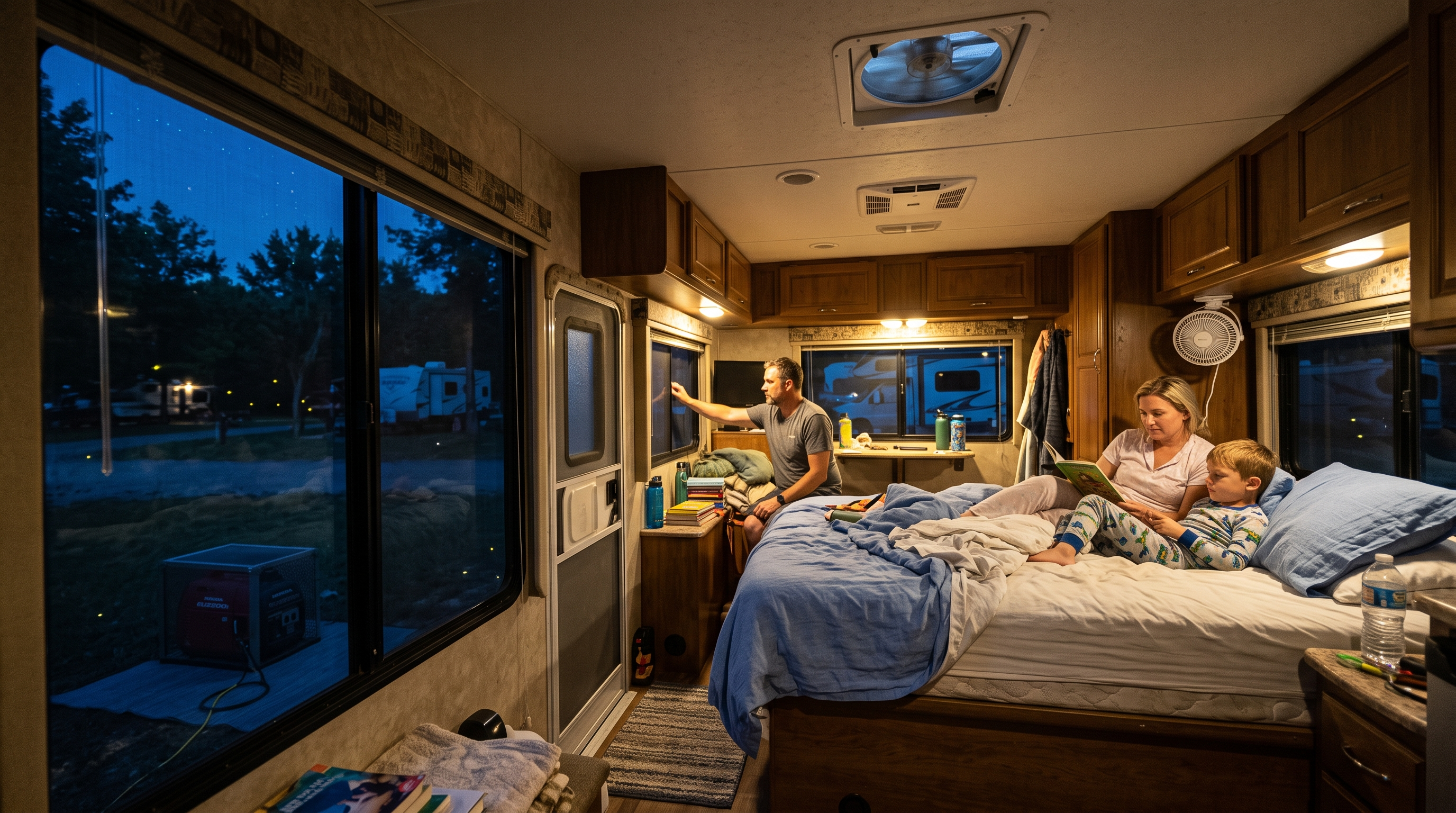
- Night: use screened cross-ventilation only when air quality, security and weather permit.
When Heat Becomes a Safety Problem
Extreme heat can become dangerous quickly, especially for children, older adults, pets and people with health conditions. Headache, nausea, dizziness, weakness, confusion or fainting are warning signs that should not be dismissed as ordinary camping discomfort. Move to a cool location and seek appropriate medical help.
Before departure, check the route and campground conditions with our weather and travel conditions tool. If the forecast exceeds what your equipment can safely handle, changing plans is good RV judgment—not failure.
Hot-Weather Departure Checklist
- Test air conditioning and fans before leaving.
- Inspect power cords, plugs and surge/voltage protection.
- Pack window coverings and a safe outdoor shade solution.
- Carry more drinking water than the normal plan requires.
- Confirm campground amperage and generator-hour rules.
- Identify nearby cooled public spaces and veterinary help.
- Never leave people or pets in a dangerously hot RV.
Frequently Asked Questions
Should I leave RV windows open during the day?
Usually not when outdoor air is hotter than indoor air. Shade and close the RV during peak heat, then ventilate when conditions outside become cooler and safe.
Can solar panels run an RV air conditioner?
Sometimes, but only with a system deliberately sized for the AC’s starting surge, continuous draw and desired runtime. Panels alone are not the full system; battery storage, inverter capacity and wiring matter.
Is one fan enough?
A single fan can help, but two strategically placed fans often work better—one moving air through the living area and another serving the sleeping space or exhausting hot air when conditions permit.
What is the best RV site during a heat wave?
A site with reliable electrical service, afternoon shade, airflow and access to a safe cooled building. Verify conditions directly because shade and power quality vary by individual site.
Sources: U.S. EPA: Extreme Heat · EPA: Extreme Heat and Indoor Air Quality. This guide is general information; follow equipment manuals and local safety directions.


Leave a Reply