

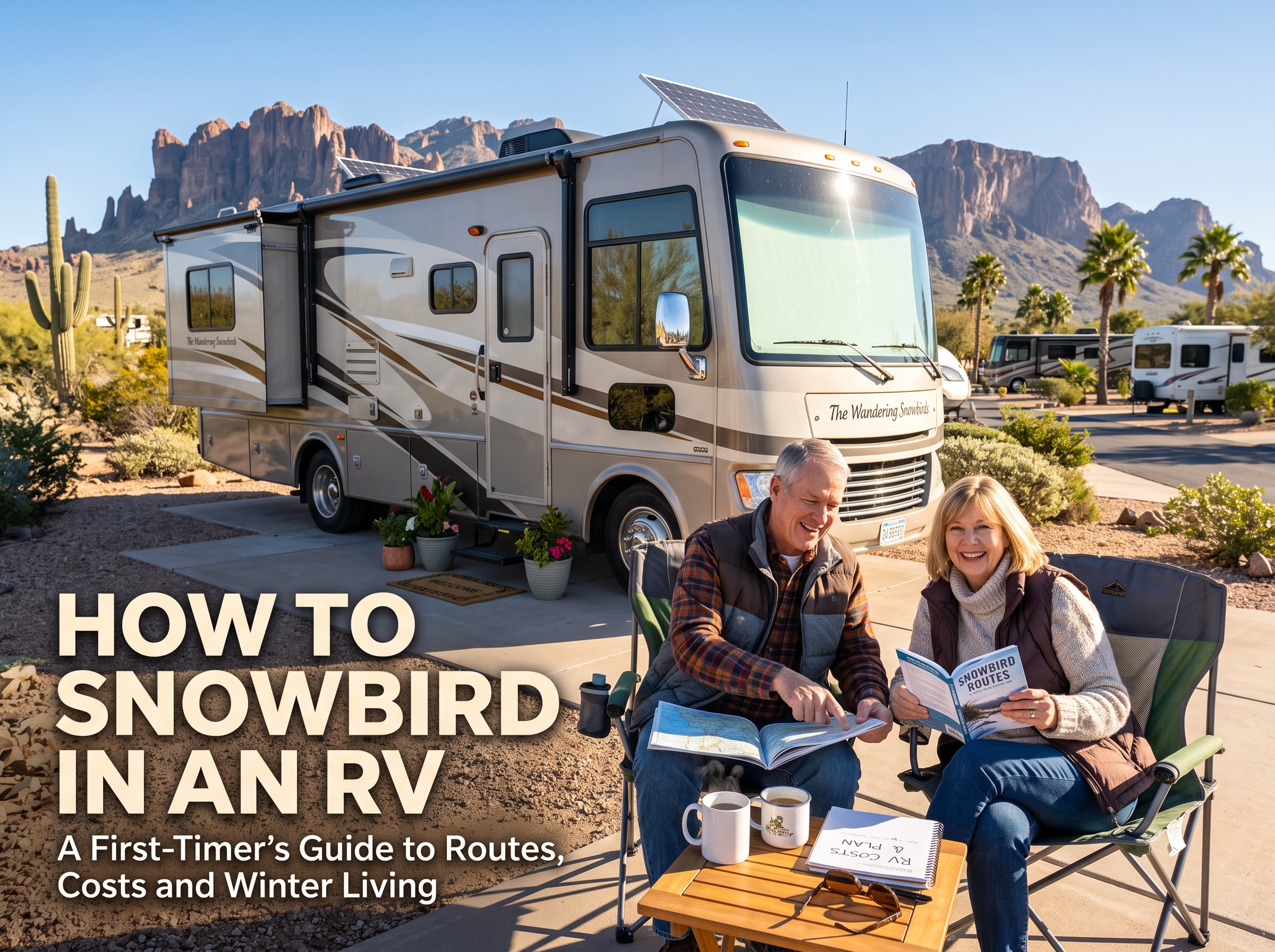
Last Updated on October 8, 2026 by Jeremy
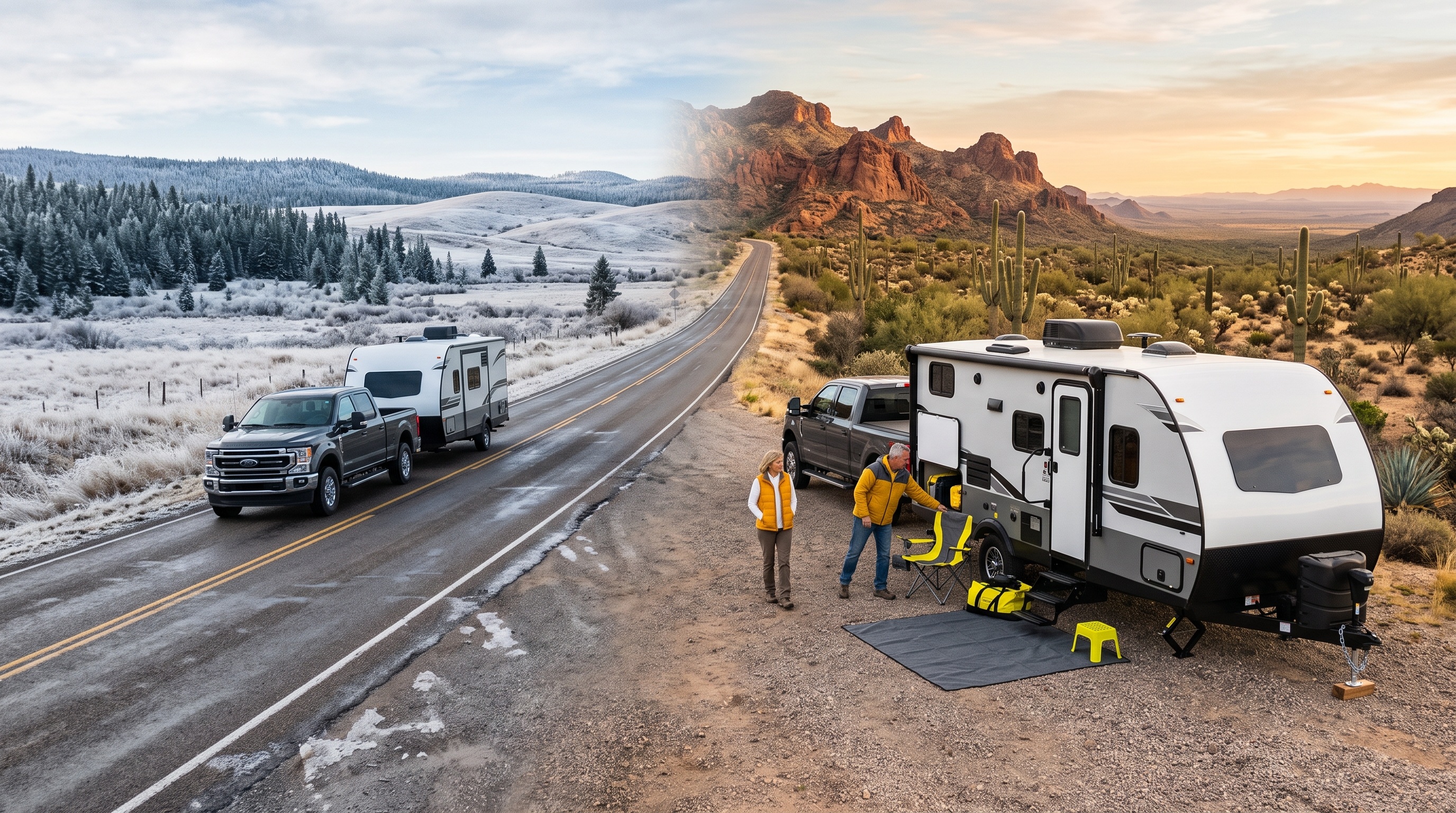
Image transparency: The editorial illustrations in this article were created with AI to help visualize real snowbird planning situations. This disclosure applies to all four article images.
Learning how to snowbird in an RV is not simply a matter of pointing the rig south. The real work happens before departure: choosing a route your RV can safely handle, calculating an honest winter budget, protecting your home systems, understanding border requirements and deciding what kind of campground life you actually want.
A warm destination is only one part of the plan. You are also moving a small home through changing weather, unfamiliar roads and multiple camping systems. That can be incredibly freeing—but only after the practical details stop competing for your attention.
Our experience does not come from spending every winter in the same Arizona resort. It comes from building family life around four seasons as campground operators in British Columbia, travelling between seasonal workplaces, living through an RV winter in Creston and using the off-season to relocate, reset and spend time in places such as Costa Rica.
Our first full RV winter taught us how quickly a trailer can feel like a tin can when the temperature drops. Operating campgrounds then taught us the opposite side of the equation: how seasonal parks open, fill, function and close—and what campers often forget during each transition.
Those experiences became part of my book, Under the Picnic Table: Tales of a Park Operator. We were not following the traditional snowbird script, but we were living the same central challenge: move with the seasons, keep the RV functioning and build a routine wherever you land.
What Does It Mean to Snowbird in an RV?
An RV snowbird generally spends the colder months in a warmer region and returns north when temperatures improve. Some travellers stay in one resort for several months. Others move between public land, private campgrounds, membership stops and short-term destinations.
There is no single correct snowbird lifestyle. The better question is what level of movement, comfort, community and cost makes the season enjoyable for you.
One Long-Term Base
You reserve one monthly or seasonal site and treat it as home. This can provide predictable hookups, neighbours, activities and easier budgeting.
Best for: People who value routine, community and fewer travel days.
Several Winter Stops
You build a slower route through multiple warm-weather regions, using campgrounds, public land and overnight membership stops.
Best for: People who want variety and are comfortable planning more often.
Before Choosing a Destination, Define Your Winter
It is easy to begin with a popular name such as Quartzsite, Yuma, Phoenix, southern Texas or Florida. However, a location that works for a social, off-grid boondocker may be frustrating for someone who wants a pool, full hookups and a stable internet connection.
Before making reservations, decide which of these matter most:
- Full hookups or the ability to camp without them
- Monthly community or frequent movement
- Reliable internet for work, banking or family communication
- Nearby medical care, groceries and propane
- Pet rules, dog areas and veterinary access
- Warm afternoons versus warm overnight temperatures
- Access to hiking, golf, fishing, markets or social activities
- Distance from the border and the number of travel days required
Plan the Route Like You Are Towing a House
A route that looks easy in a car can be exhausting with a trailer or motorhome. Elevation, crosswinds, fuel availability, bridge restrictions, construction and early winter storms can all change an otherwise simple drive.
During our own seasonal moves, route planning was never just about mileage. We planned fuel stops, checked the weather, accounted for the size of the rig and avoided treating a long driving day like a competition.
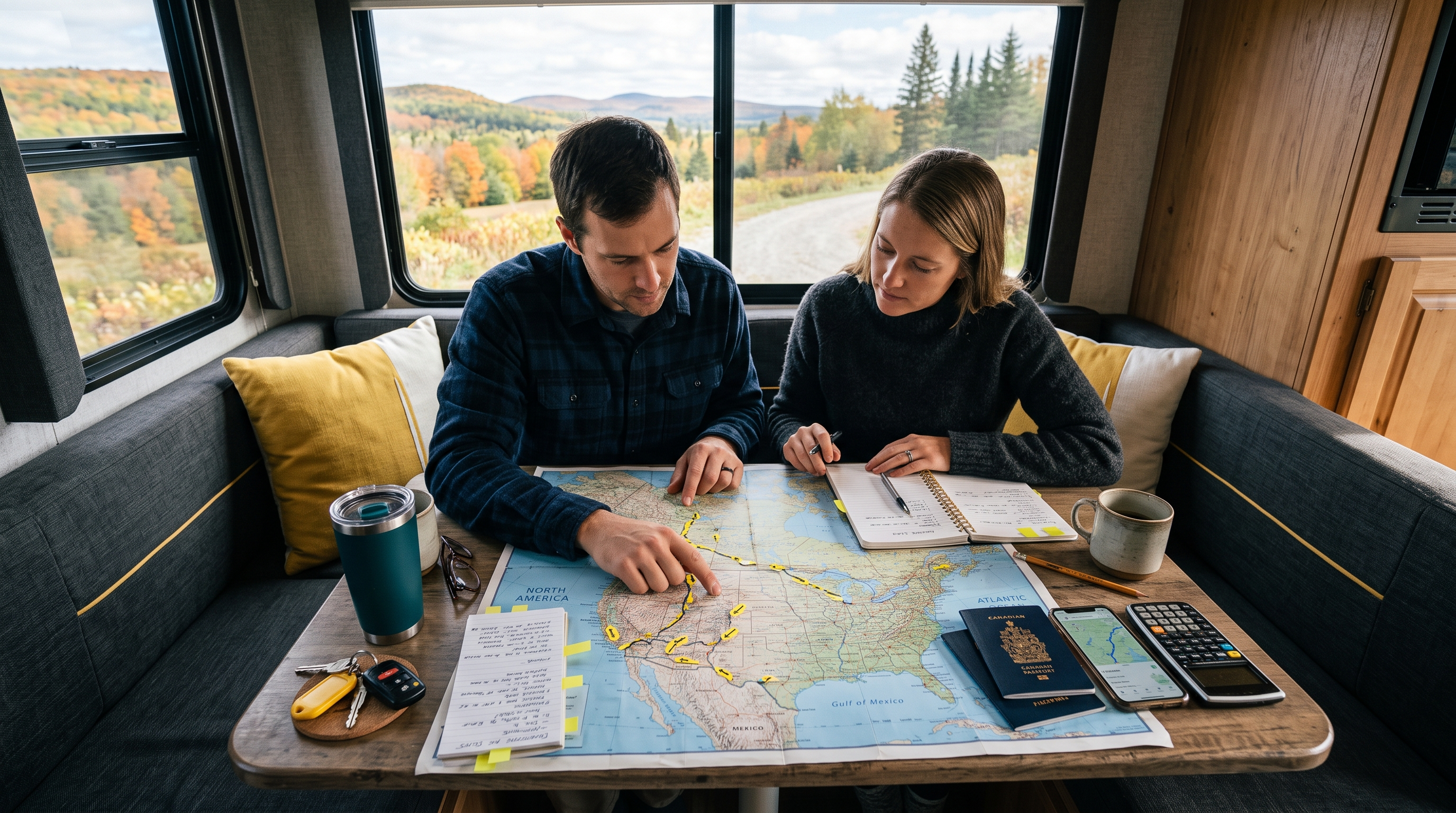
Use a two-route plan
Build your preferred route and a second route that avoids the most weather-sensitive section. The backup does not need to be perfect. It simply needs to prevent you from feeling trapped when conditions change.
| Planning Item | What to Decide | Why It Matters |
|---|---|---|
| Daily distance | Choose a comfortable towing day, not your theoretical maximum. | Shorter days leave time for fuel, groceries, weather delays and setup before dark. |
| Fuel stops | Identify big-rig-friendly stations before entering sparse areas. | A station may sell fuel without having enough room for your turning radius. |
| Overnight stops | Select a preferred stop and at least one backup. | Weather, closures and fatigue can change the day. |
| Arrival time | Aim to arrive with daylight remaining. | Backing, levelling and diagnosing site problems are easier when you can see. |
| Weather limits | Decide which wind, ice or snowfall conditions will stop the trip. | A decision made at home is easier to follow than one made under travel pressure. |
Use the RV Weather and Travel Conditions tool before each travel day, especially when towing through mountain corridors or open prairie.
How Much Does RV Snowbirding Cost?
Snowbird costs are not limited to fuel and campground fees. A realistic plan includes the expenses that continue at home, the costs created by travelling and a repair reserve for the RV or tow vehicle.
Build the Budget in Five Buckets
- Travel: fuel, tolls, overnight stops, meals and emergency detours.
- Winter site: nightly, weekly or monthly campground fees plus metered electricity where applicable.
- Living expenses: groceries, propane, laundry, internet, entertainment and local transportation.
- Protection: travel medical insurance, RV insurance and any required roadside coverage.
- Repair reserve: tires, batteries, plumbing, appliances and unexpected vehicle service.
Do not calculate fuel using your best unloaded mileage. Headwinds, elevation, cold starts and towing weight can quickly make that number unrealistic.
Travel costs + campground costs + monthly living costs + insurance + repair reserve + home expenses = your seasonal snowbird budget.
Run several versions through our RV Trip Cost Estimator. Compare a paid-campground route, a mixed camping route and a lower-cost public-land route. The cheapest version is not automatically the best if it requires equipment or routines you do not enjoy.
Mix Campground Types Instead of Forcing One Solution
A practical first season may include several kinds of stays. A predictable campground can make a valuable reset night, while a unique host location can break up a long route. Public land can reduce costs, but it requires more self-sufficiency.
| Option | Best Use | What to Watch |
|---|---|---|
| KOA | Predictable travel nights, hookups and familiar amenities | Nightly rates can be higher, and individual locations still vary. |
| Harvest Hosts | Interesting overnight stops at farms, wineries, attractions and other hosts | These are generally short stays for self-contained RVs, not replacements for a full-service seasonal site. |
| Monthly RV park | A stable winter base with community and routine | Deposits, electricity, cancellation terms and seasonal availability vary. |
| Public land or LTVA | Lower-cost desert camping and longer off-grid stays | You need sufficient water, waste, power and weather-management capacity. |
Choose Stops That Match How You Travel
KOA works well when you want recognizable campground infrastructure. Harvest Hosts is better suited to interesting stopovers between longer stays. Neither needs to become your entire snowbird plan.
Explore KOA for RV Travel Explore Harvest HostsQuartzsite as a First Snowbird Destination
Quartzsite, Arizona attracts RVers because it combines desert camping, winter gatherings, services and access to Bureau of Land Management areas. It can be inexpensive compared with resort camping, but it is not a full-service resort experience.
The Bureau of Land Management’s La Posa Long Term Visitor Area provides basic facilities such as water access, waste services and vault toilets. Its official page currently lists a long-term permit covering the winter season and a shorter renewable permit. Fees and rules can change, so verify the current information before arrival.
Our complete Quartzsite Arizona RV camping guide explains what the area feels like, where RVers stay and what first-time visitors should know before committing to desert camping.
Prepare the RV for Both Cold and Heat
Snowbirds may leave during freezing weather, drive through mountain conditions and arrive in a warmer climate several days later. That creates a difficult packing and maintenance problem: the RV must function across more than one season.
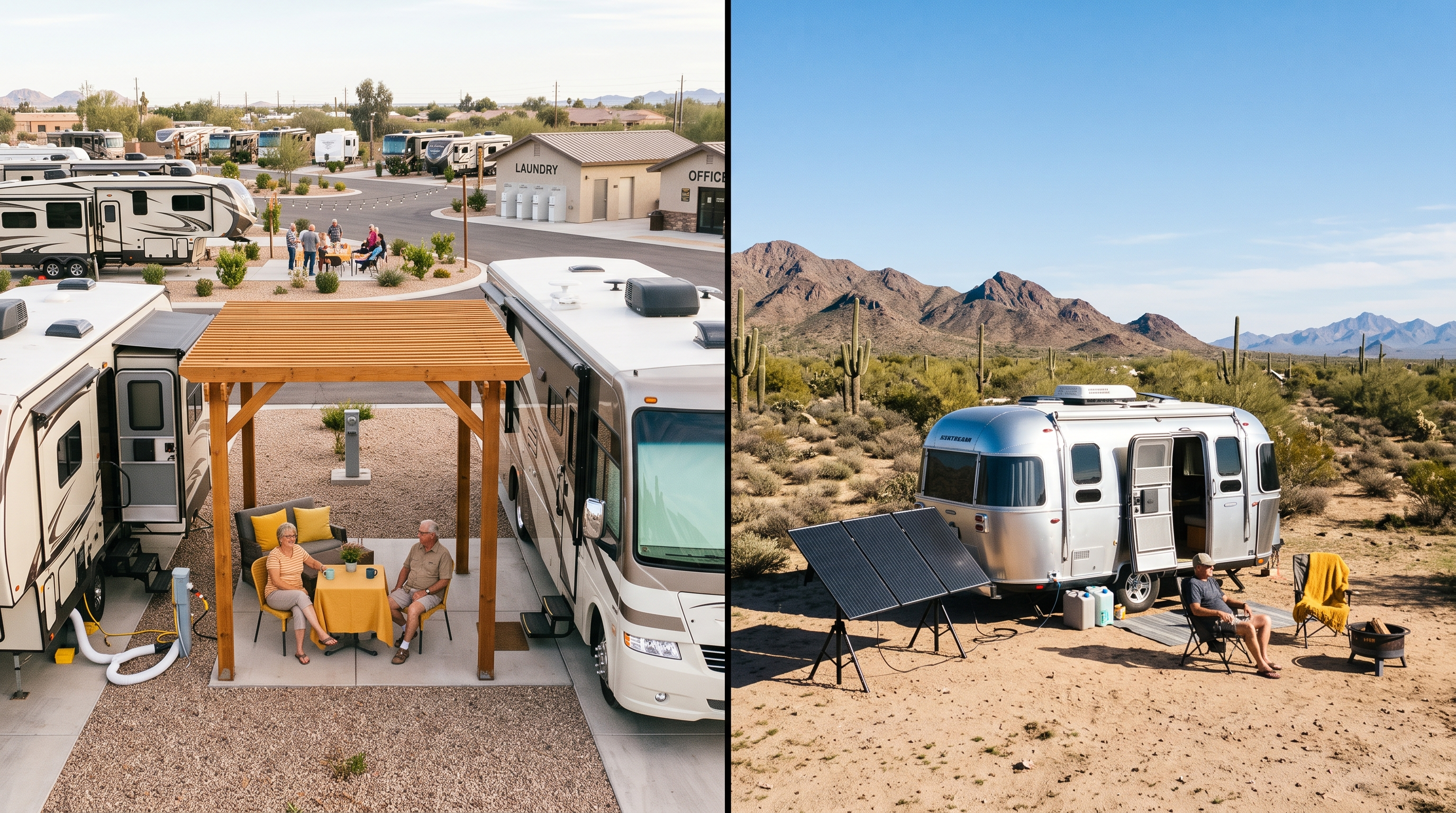
Cold-departure equipment
- Working furnace and sufficient propane
- Protected freshwater lines and tanks
- Cold-weather clothing accessible without opening exterior storage
- Ice scraper, shovel and traction supplies appropriate for the route
- Charged batteries and verified carbon-monoxide, propane and smoke alarms
Warm-destination equipment
- Ventilation and air-conditioning plan
- Sunshade, awning equipment and tire protection
- Extra drinking water capacity for desert camping
- Waste-transfer plan for extended off-grid stays
- Surge protection and electrical adapters for campground hookups
If the RV struggles to retain heat even while the furnace runs, diagnose the envelope before adding another heater. Our guide to why an RV stays cold in winter explains air leakage, thermal bridges, floor loss and furnace airflow.
RV Snowbird Packing List for Beginners
Documents
- Passports and entry documents
- Driver’s licences
- Vehicle and trailer registrations
- Insurance policies
- Travel medical coverage
- Pet vaccination and health records
- Prescription and medication information
- Emergency contact list
RV and Road Gear
- Tire-pressure equipment
- Levelling and stabilizing equipment
- Water-pressure regulator
- Potable-water hose
- Sewer hose and fittings
- Electrical adapters and surge protector
- Roadside emergency equipment
- Basic tools and spare fuses
Seasonal Living
- Cold- and warm-weather clothing
- Outdoor chairs and shade
- Laundry and cleaning supplies
- Refillable drinking-water containers
- Mail and banking plan
- Internet or cellular backup
- Medications for the full trip
- Copies of important records
Home Departure
- Heat and water plan
- Mail forwarding or monitoring
- Automatic payment review
- Emergency home contact
- Security and camera checks
- Snow removal arrangements
- Fridge and food inspection
- Departure-day walkthrough
Canadian Snowbirds Need More Than a Passport
Canadian RVers travelling into the United States need to consider immigration, taxation, provincial health eligibility, travel medical insurance and vehicle coverage separately. One rule does not automatically answer the others.
Track every day in the United States
U.S. admission is determined at the border. Canadian travellers should retain evidence of their ties to Canada and verify their authorized stay rather than assuming that crossing into another country automatically resets the clock.
The IRS substantial-presence calculation is separate from immigration status. It uses days from the current year and portions of the previous two years. Long-term snowbirds should keep accurate entry and exit records and obtain qualified cross-border tax advice when necessary.
Check provincial health requirements
Provincial and territorial plans establish their own residency requirements. Canada’s federal guidance recommends notifying the applicable health plan before an extended absence and purchasing private travel health insurance for trips outside Canada.
Confirm how the RV is insured
Tell the insurer how long the unit will be outside its home province, where it will be stored and whether it will remain parked for an extended period. Confirm coverage for the tow vehicle, trailer or motorhome instead of assuming the policies work as one package.
Common First-Time Snowbird Mistakes
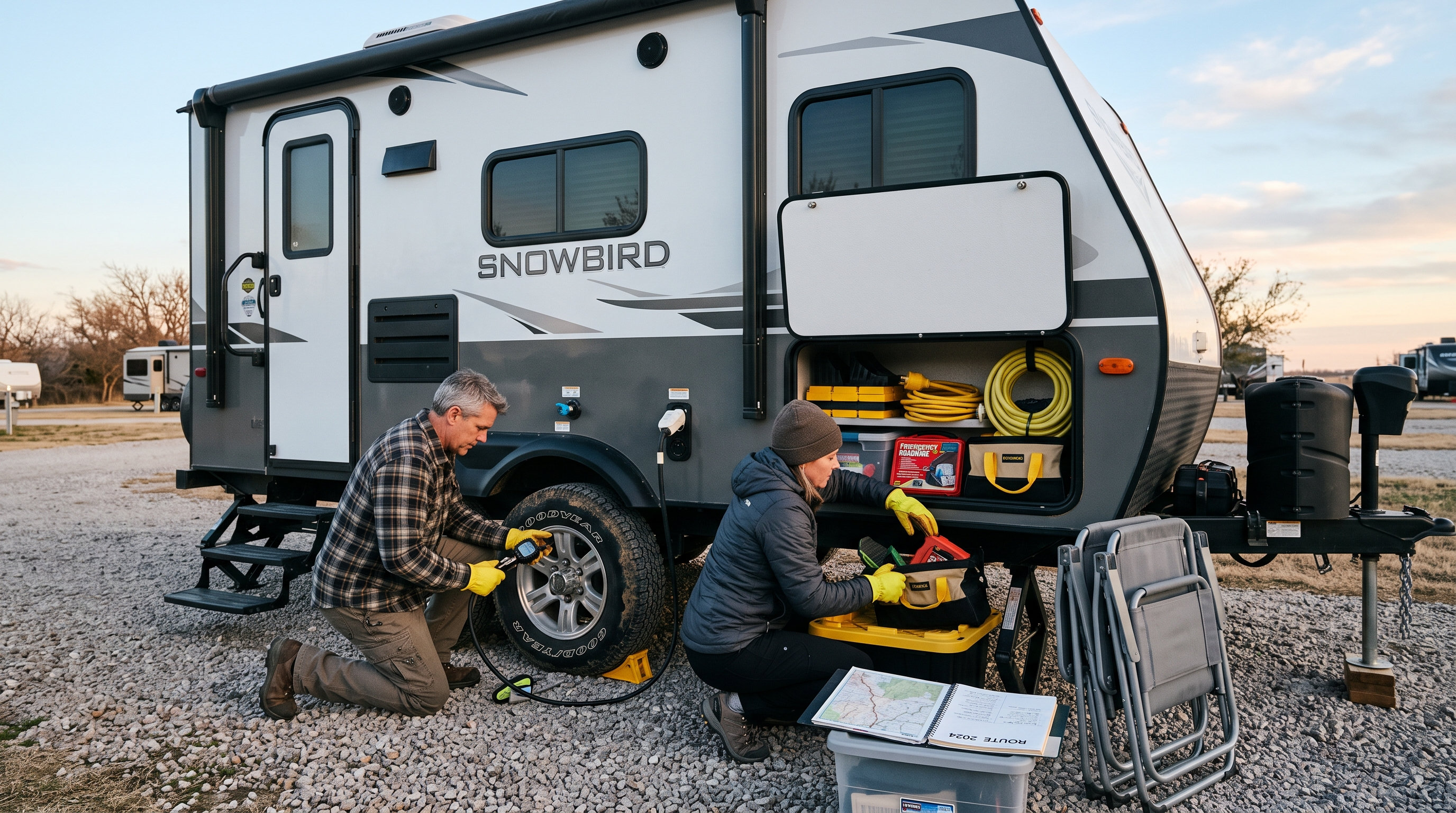
Leaving too late in the season
Waiting for severe winter weather can turn the first travel days into a fight against frozen equipment, poor roads and short daylight hours. Leave enough flexibility to pause when conditions are unsuitable.
Driving too far each day
Long travel days sound efficient until a fuel stop takes longer than expected, the wind increases or the campground office closes. Plan days that preserve time and energy for arrival.
Booking the entire winter without testing the area
A destination can look perfect online and still feel wrong in person. Noise, wind, dust, traffic, internet quality and campground culture are difficult to judge from photographs.
Buying every membership before travelling
Start with the problem you need to solve. Choose KOA for predictable campground nights, Harvest Hosts for interesting travel stops or an RV-specific planning tool for safer routing. A membership you never use is not a discount.
Underestimating ongoing costs
Monthly rates may exclude electricity. Public-land camping may require additional water, waste, power or connectivity equipment. Both options have costs; they simply place the costs in different categories.
Expecting the RV to work without a systems check
Test the furnace, water system, battery charging, propane appliances, detectors, tires and electrical connections before departure. Repairs are easier at home than on the shoulder of a winter highway.
A Simple First-Snowbird Plan
- Define the season: Choose your approximate departure, return and total travel window.
- Choose the travel style: Decide between a single winter base and a multi-stop route.
- Build two routes: Create a preferred route and a weather-sensitive backup.
- Calculate three budgets: Comfortable, expected and emergency.
- Reserve key stays: Book the hardest-to-replace stops without scheduling every night.
- Check documents: Review passports, registrations, insurance and medical coverage.
- Inspect the RV: Address tires, batteries, propane, heating, plumbing and alarms.
- Conduct a practice trip: Camp close to home using the equipment and routines planned for winter.
- Leave margin: Keep enough time and money available for weather, repairs and changed plans.
Snowbirding Is Seasonal Life, Not a Permanent Vacation
Snowbirding can offer warmth, freedom and a completely different winter routine. It also requires ongoing decisions about weather, money, borders, campground availability and RV systems.
After four seasons of operating campgrounds and arranging our lives around seasonal moves, one lesson keeps returning: the transition matters as much as the destination. The final campsite feels far more enjoyable when you have not spent the journey racing weather, worrying about fuel or discovering that the plan depended on equipment you never tested.
Build the first season around your actual comfort level. Give yourself a stable base, realistic travel days and permission to change the plan. That is not failed planning. It is the flexibility RV travel is supposed to provide.
Build Your Snowbird Camping Mix
Compare predictable campgrounds, unique overnight stops and RV planning memberships before paying for a full season of services you may not use.
Compare RV Memberships Find an RV CampgroundFrequently Asked Questions About RV Snowbirding
How do I start snowbirding in an RV?
Begin with a shorter season, a dependable destination and conservative travel days. Calculate the full cost, confirm border and insurance requirements, inspect the RV and leave room to change the route when weather changes.
How much money do RV snowbirds need?
The amount depends on distance, fuel economy, campground style, length of stay, insurance and how often you move. Build separate estimates for travel, camping, monthly living, protection and repairs instead of relying on one general figure.
Is Quartzsite good for first-time snowbirds?
Quartzsite can be a good fit for RVers prepared for desert conditions and more self-sufficient camping. First-time visitors who need full hookups or structured amenities may prefer beginning at an RV park and testing public-land camping in shorter stretches.
Should snowbirds use KOA or Harvest Hosts?
They solve different problems. KOA can provide predictable campground amenities and reset nights. Harvest Hosts can provide interesting short stopovers for qualifying self-contained RVs. Many seasonal travellers can use both at different points in the route.
How far should an RV snowbird drive each day?
Choose a distance that leaves time for breaks, fuel, delays and daylight setup. Your safe distance depends on the rig, route, driver experience and weather. A comfortable arrival is more valuable than reaching an arbitrary mileage target.
Do Canadian snowbirds need travel medical insurance?
Canadian government guidance recommends private travel health insurance when travelling outside Canada. Provincial coverage may reimburse only part of the cost of care received elsewhere, and residency requirements vary by province or territory.
Official Sources and Further Planning


Leave a Reply